From standing on a homemade wooden platform to reaching the Youth Olympic podium, Colombia's Emanuel Otalvaro has come a long way. Behind his historic table tennis silver at Dakar 2026 lies more than a decade of family sacrifice, from selling food and organizing raffles to taking out bank loans to keep his Olympic dream alive.
by sportswriter Hu Jiali
DAKAR, Nov. 13 (Xinhua) -- When Emanuel Otalvaro first picked up a table tennis racket at age 4, he could barely see over the edge of the table. His parents built him a wooden platform so he could stand high enough to play.
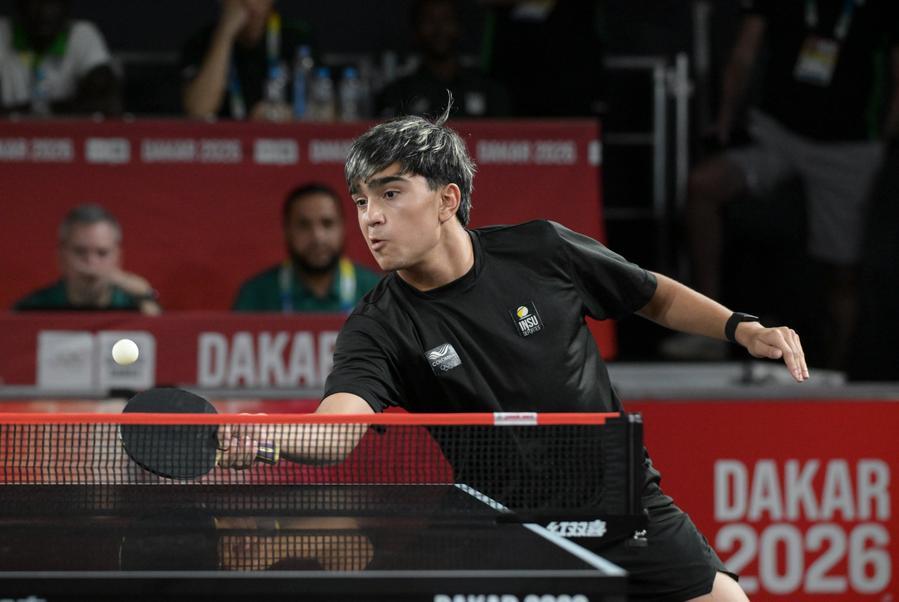
Twelve years later, the Colombian teenager stood on the podium at the 2026 Youth Olympic Games, a silver medal around his neck and a place in his country's sporting history secured.
Behind that achievement lay more than a decade of sacrifice by a family determined to give their son the chance to pursue his dream.
"We have done everything," said his mother, Yolanda Jenith Garcia. "We have sold things, organized raffles, borrowed money from the bank. You cannot imagine how many things we have had to do."
Otalvaro grew up in Las Cuchillas, a rural community in Rionegro, in Colombia's Antioquia department. His introduction to table tennis came through his older brother, Federico, whom he accompanied to training sessions.
Before long, the younger boy wanted to play, too. His parents built the wooden platform that allowed him to reach the table, and his talent soon became apparent.
He began winning youth competitions and challenging older opponents. What started as a childhood pastime gradually became a serious sporting ambition.
By age 10, Otalvaro was ready for a bigger challenge, one that would take him thousands of kilometers from home.
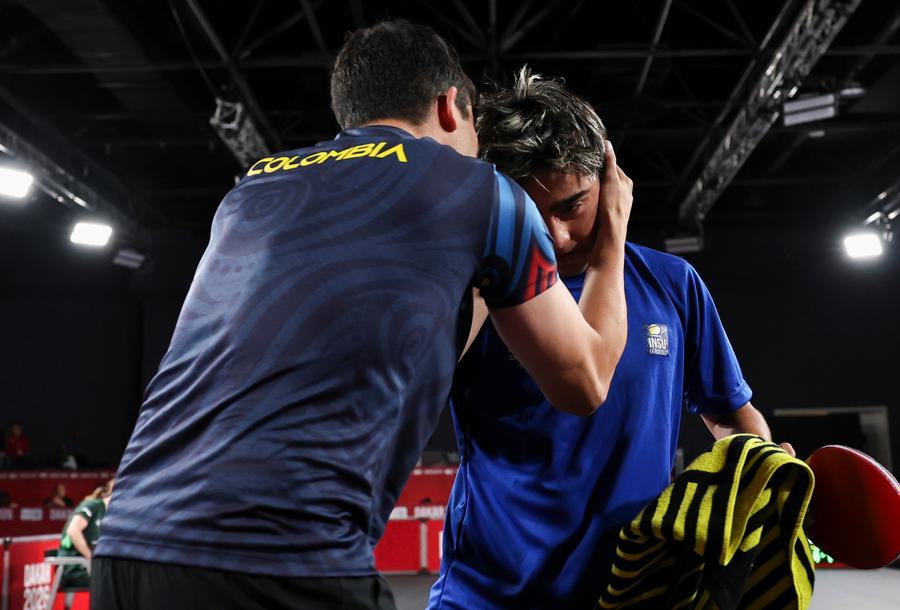
Accompanied by Federico and coach Juan Camilo Giraldo, he moved first to Spain and later to Portugal, where stronger competition and better training opportunities offered a pathway toward international success.
His parents, Garcia and Ricardo Otalvaro, remained in Colombia.
The separation was difficult, but Garcia said Giraldo became far more than a coach to the brothers.
"He was their coach, but also their father, mother, friend, adviser, doctor and everything else," she said.
Keeping two young athletes in Europe, however, came at an enormous financial cost.
Accommodation, food, training, travel and competition expenses sometimes ran to several million Colombian pesos each month, far beyond what Garcia could afford on her salary as an educator.
She began making and selling tamales and other food, selling sweets, organizing raffles and approaching people in her community for help.
"I learned not to be embarrassed," Garcia said.
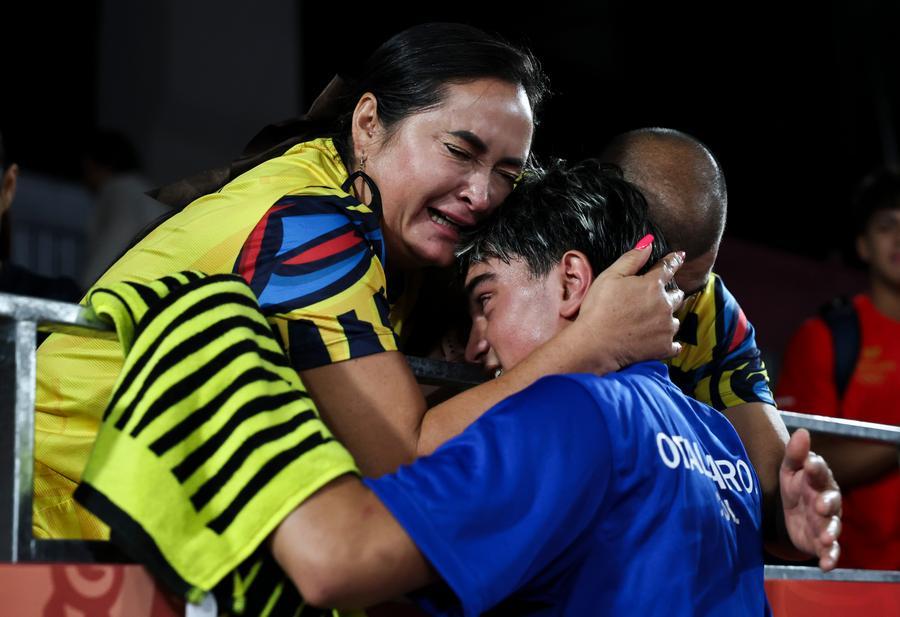
Neighbors, friends and local supporters responded, buying what she made and contributing whatever they could. But there were months when even that was not enough.
Garcia turned to bank loans to cover the shortfall and keep her sons' sporting ambitions alive.
"We had to send three, four or even six million pesos every month so they could continue training, traveling and competing," she said.
The sacrifices extended to Otalvaro himself.
As a child, he wore shoes several sizes too big, using insoles and sometimes two pairs of socks to keep them on his feet. He saved his pocket money for months until he could afford his first pair of custom table tennis shoes.
Those memories came flooding back for Garcia as she watched her son compete in Dakar.
"I thought about my little boy when he used to go with me to the sports hall and sell sweets," she said. "I remembered how he saved every bit of money. I remembered him helping me sell tamales."
A HISTORIC BREAKTHROUGH
The family's sacrifices were accompanied by steady progress on the international stage.
Training in Europe exposed Otalvaro to stronger opponents and a more demanding competitive environment. He began collecting medals on the international youth circuit and established himself among the leading players in his age group.
In 2024, he partnered Italy's Danilo Faso to win silver in boys' doubles at the World Youth Table Tennis Championships in Helsingborg, Sweden, securing Colombia's first medal at a world youth table tennis championship.
Over the following two years, he continued competing internationally, establishing himself among the leading players in the U-17 and U-19 categories.
His development also attracted outside support, including backing from Colombian Olympic BMX champion Mariana Pajon and her foundation.
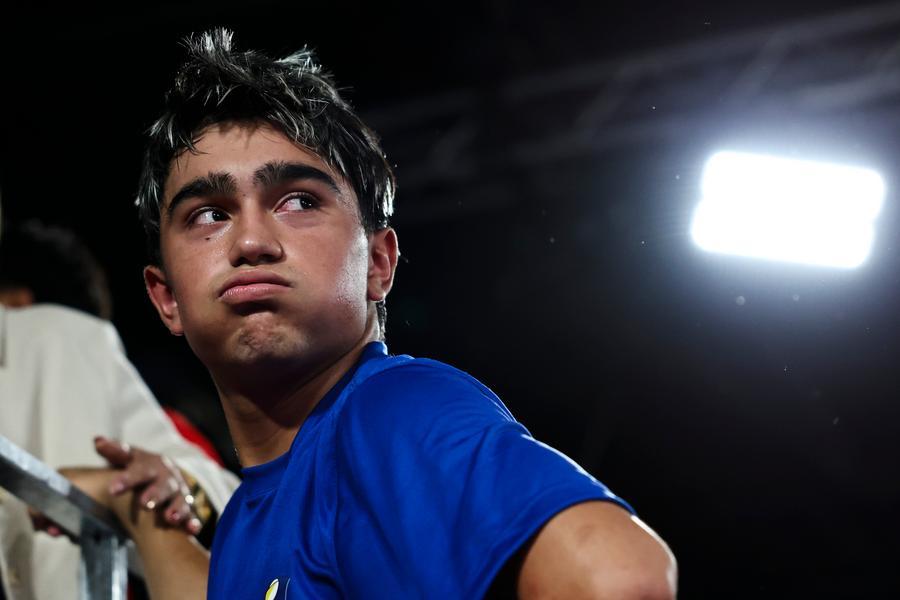
By the time he arrived in Dakar, Otalvaro was no longer an unknown prospect. He was a genuine medal contender in a sport traditionally dominated by Asian nations.
He was also chosen as one of Colombia's flagbearers at the opening ceremony, alongside swimmer Maria Gabriela Becerra.
Otalvaro swept through the group stage without dropping a game before advancing through the knockout rounds.
He defeated China's Li Hechen 4-1 in the quarterfinals before overcoming Li Ki Ho of Hong Kong, China by the same score in the semifinals.
For Garcia, the quarterfinal victory was an unforgettable moment.
"When Emanuel beat the Chinese player, our happiness was impossible to describe," she said.
The teenager's run ended with a 4-2 defeat to top seed Ryuusei Kawakami of Japan in the final.
Missing out on gold was disappointing, particularly after coming so close. But his silver medal represented another landmark for Colombian table tennis and a reward for years of perseverance.
For Garcia and her husband, simply being there to witness it was an achievement in itself.
SAVING FOR DAKAR, DREAMING OF LOS ANGELES
Three years before the Youth Olympic Games, the couple had made a promise to themselves: Whatever happened, they would find a way to watch their son compete in Senegal.
They began putting money aside each month, cutting back on everyday expenses to make the trip possible.
"We decided three years ago that we had to come to Senegal and be with Emanuel," Garcia said. "From that moment on, we started saving money every month. We even stopped buying ice pops."
Even those savings were not enough. The couple eventually took out another bank loan to finance their journey.
"Everything here has to be paid by us: the flights, the accommodation, the food, the transport and even the tickets to enter the competition venue," Garcia said.
But after years of following their son's career from thousands of kilometers away, watching matches on screens and waiting for phone calls, they could finally cheer him on from the stands.
It was something Emanuel had wanted since childhood.
"But it has been so beautiful," Garcia said. "You cannot imagine how many times I have cried."
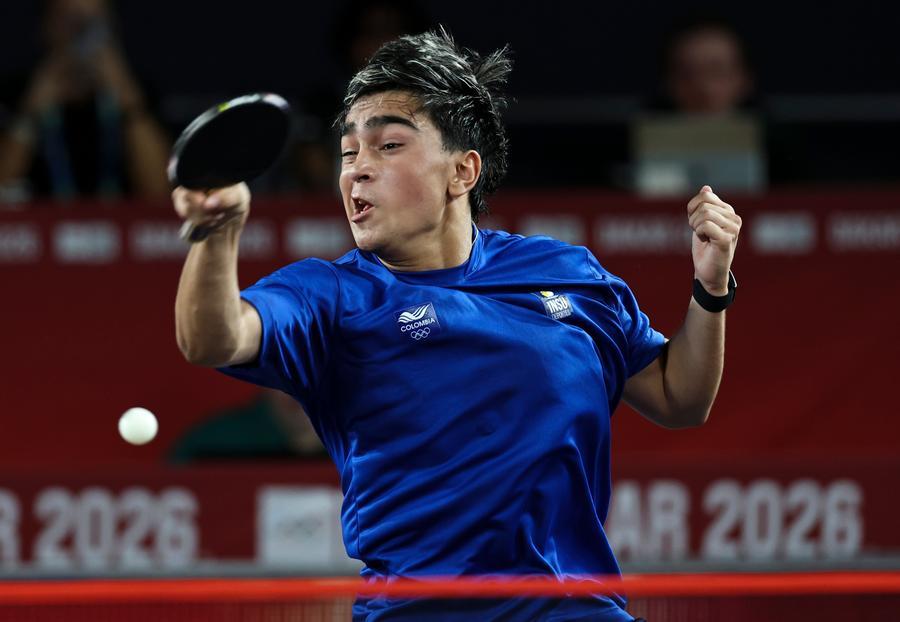
For Otalvaro, there is little time to dwell on his silver medal. His sights are already set on an even bigger stage: the 2028 Olympic Games in Los Angeles.
"I'm training very hard to qualify for the 2028 Los Angeles Olympic Games first, and [if I get there] I hope to be on the podium with the best," he said.
For his parents, that ambition means more planning, more saving and, almost certainly, more sacrifices.
But Garcia said their commitment has never depended on medals or results.
"We always tell them that as long as they still want to work for their dreams, we will keep fighting and do everything we can to help them achieve their goals," she said.
From the wooden platform that helped a 4-year-old reach a table tennis table to the Olympic podium in Dakar, the journey has been built on determination, family support and a willingness to overcome seemingly impossible odds.
For the Otalvaros, the silver medal is not the end of that journey. It is another step toward a dream they have spent more than a decade pursuing together. ■