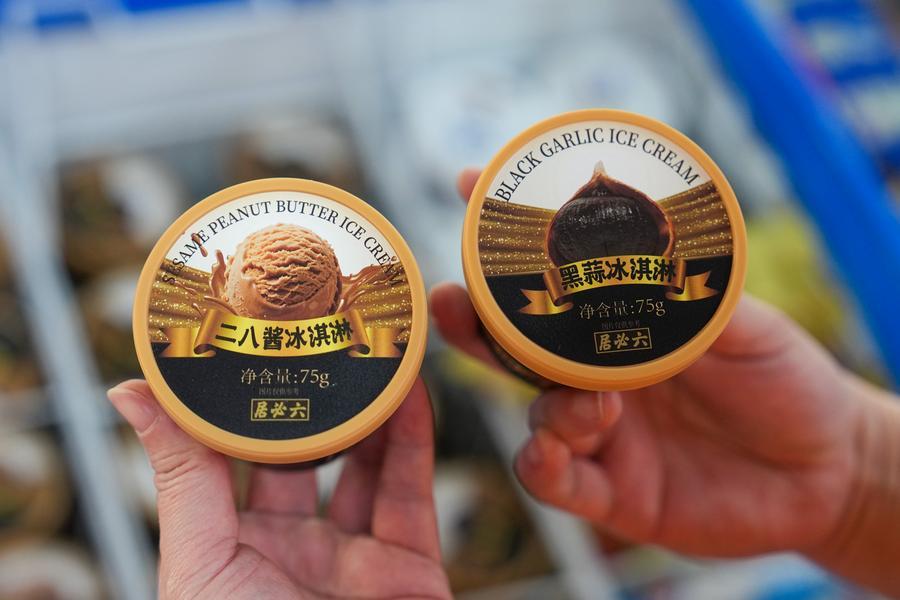
BEIJING, Nov. 13 (Xinhua) -- For generations, Beijing families have bought Liubiju's sweet pickled garlic to go with hotpot and sweet bean sauce to accompany roast duck. These days, customers at the company's historic Qianmen store can also find peanut-sesame-paste ice cream, vinegar slushies and freshly baked pastries flavored with traditional Chinese condiments.
The new offerings would have been hard to imagine at Liubiju a few years ago, when the 590-year-old food maker was struggling to stay afloat. After losing more than 15 million yuan (about 2.23 million U.S. dollars) in 2021, the company returned to profit, earning over 26 million yuan in 2025, its best result in decades. The recovery followed an overhaul of its products, sales channels and management.
Liubiju's experience offers a window into how China's traditional brands are responding to changing consumer habits. The country's total retail sales of consumer goods rose 1.1 percent in the first nine months of 2026, while online food sales grew 15.8 percent, according to the National Bureau of Statistics.
Founded in 1436, Liubiju had long relied on the appeal of its pickled vegetables and sauces, products closely associated with Beijing cuisine but less familiar elsewhere in China. Their production also imposed limits on growth.
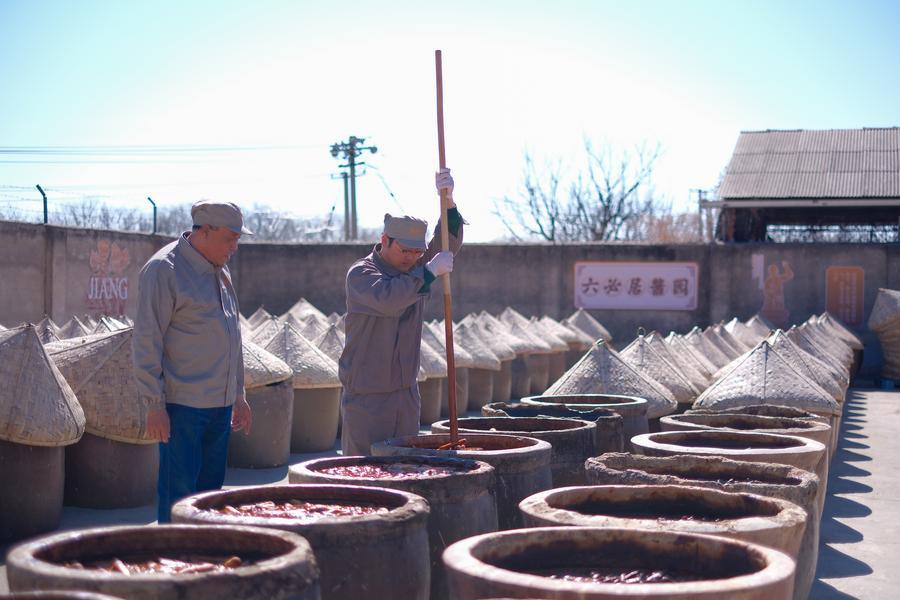
At its factory in southern Beijing, more than 2,000 earthenware vats stand in neat rows, half-buried in the ground. Workers use long wooden paddles to stir the vegetables and sauce, turning loads weighing 50 kilograms or more. The company's sweet pickled garlic undergoes roughly 150 days of fermentation, during which workers must repeatedly roll the sealed jars by hand.
Such labor-intensive methods help preserve Liubiju's distinctive flavors, but leave little room to increase production at short notice.
When Yu Jiangfu joined Liubiju as marketing director in 2020, the company's core business had been losing money for years, with rental income helping cover the shortfall. Many younger consumers knew Liubiju sold pickles but had little idea of what kinds. The company had kept adding products in an attempt to revive sales, eventually amassing more than 900 items without improving profitability.
Yu, now the general manager of Liubiju, recalled that the company faced a stark question: "Could this time-honored brand even survive?" His team cut the product range from more than 900 items at its peak to fewer than 300, retaining traditional staples such as pickles, soybean pastes and rice vinegar while selectively introducing new products.
A native of coastal Fujian Province in east China, Yu saw limited prospects for traditional northern Chinese pickles in the country's southern markets, where tastes differed. A sauce used in a variety of everyday dishes, however, seemed a more promising bet.
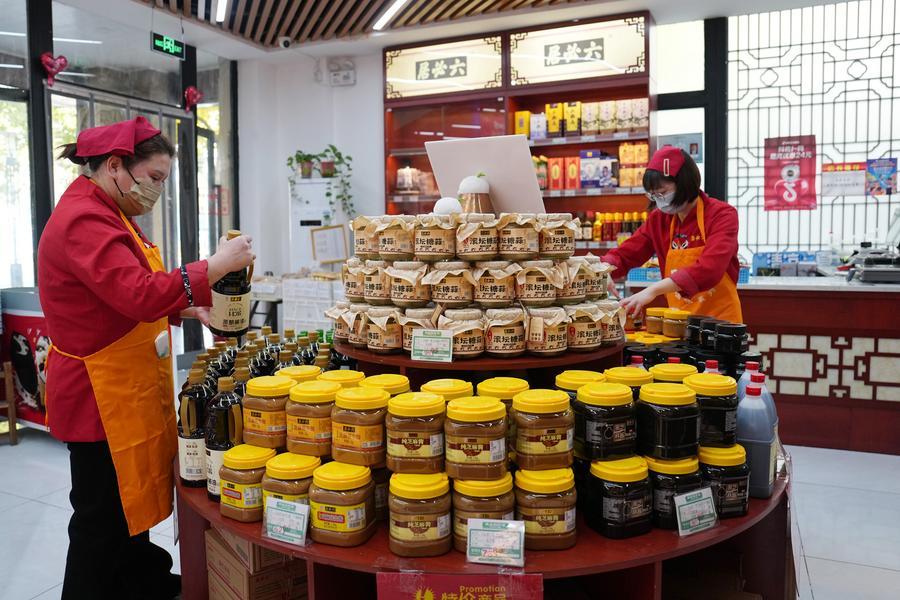
Liubiju turned to erba jiang, a traditional Beijing dipping sauce made from sesame and peanut pastes in a 2-to-8 ratio. Easier to mix than pure sesame paste and with a sweeter, nuttier flavor, it can accompany hotpot, noodles and cold dishes. In late 2021, Liubiju partnered with supermarket chain Freshippo to bring the sauce to new retail customers.
The time-honored pickle maker went on to develop sesame-paste wafer biscuits with another established brand and a stout beer flavored with its signature sauce. The first 3,000 cases of beer sold out quickly. In a separate partnership with a snack manufacturer, Liubiju helped refine the flavor and texture of a sesame-flavored vegetarian snack, insisting on a role in product development rather than merely supplying ingredients. The packaging prominently identified Liubiju as the source of the sesame paste.
The collaborations took Liubiju's traditional flavors beyond the condiment aisle. The company also introduced ready-to-eat pickles with 25 percent less salt and instant noodles with fried soybean paste sauce. Mild sterilization extended the shelf life of some products sold online, making them easier to store and ship.
In 2025, Liubiju's e-commerce revenue exceeded 100 million yuan, while its network of stores in Beijing had expanded from fewer than 10 to more than 30. For overseas expansion, the company is prioritizing areas with large Chinese communities and established demand for sesame paste.
The turnaround also required changes in how Liubiju was run. Yu tightened cost controls, introduced individual performance assessments and set aside a portion of profits above target to reward outstanding sales teams, with bonuses weighted toward frontline workers. Its parent company, Beijing Capital Agribusiness & Foods Group, introduced support measures for its time-honored brands, including halving required profit payments and providing additional funding for research and brand development.
At the factory, Yang Yinxi, 69, a nationally recognized inheritor of Liubiju's traditional pickling techniques, continues to train apprentices. One specialty involves hollowing out young melons, filling them with eight kinds of nuts and carefully binding them with cotton thread before pickling.
"Handmade pickles and those made on an assembly line are two different things," Yang said. "Machines make the work easier, but they can't replace the human touch." ■