
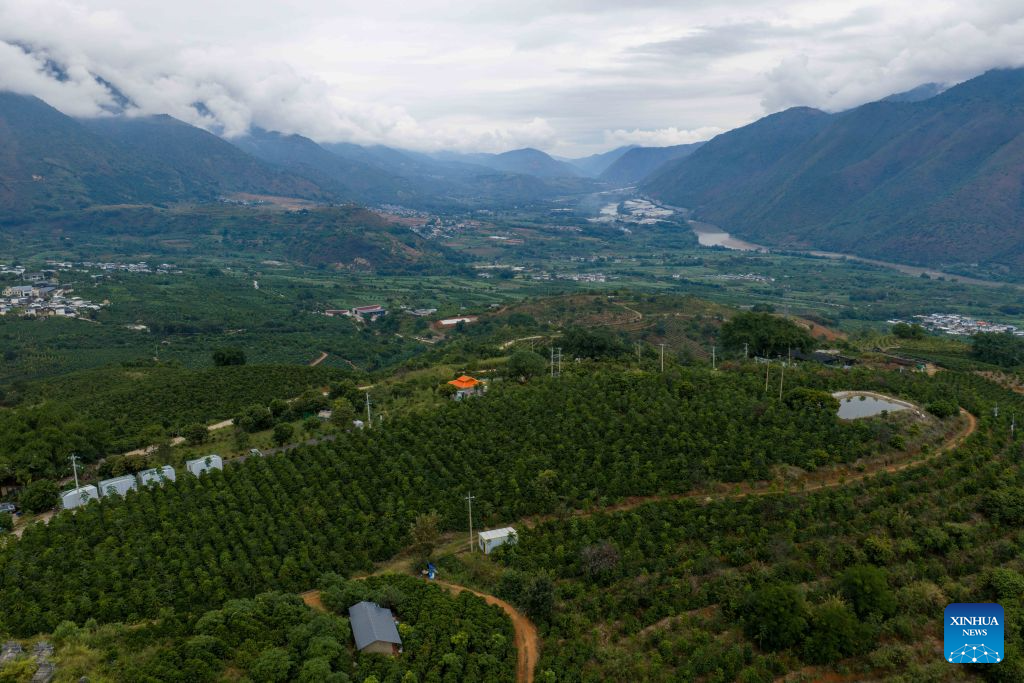
An aerial drone photo taken on Nov. 11, 2026 shows a coffee planting base at Lujiangba in Longyang District of Baoshan City, southwest China's Yunnan Province. As an important origin of premium small-grain coffee, Baoshan City has recently been making systematic efforts to promote the transformation and upgrading of the coffee industry from a raw material base to a high-quality, brand-oriented and integrated industry.
According to statistics, the planting area of small-grain coffee in Baoshan reached 189,000 mu (about 12,600 hectares), with an output of 26,400 tonnes and a comprehensive output value of 15.7 billion yuan (about 2.35 billion U.S. dollars) in the first three quarters of 2026. (Xinhua/Jiang Wenyao)
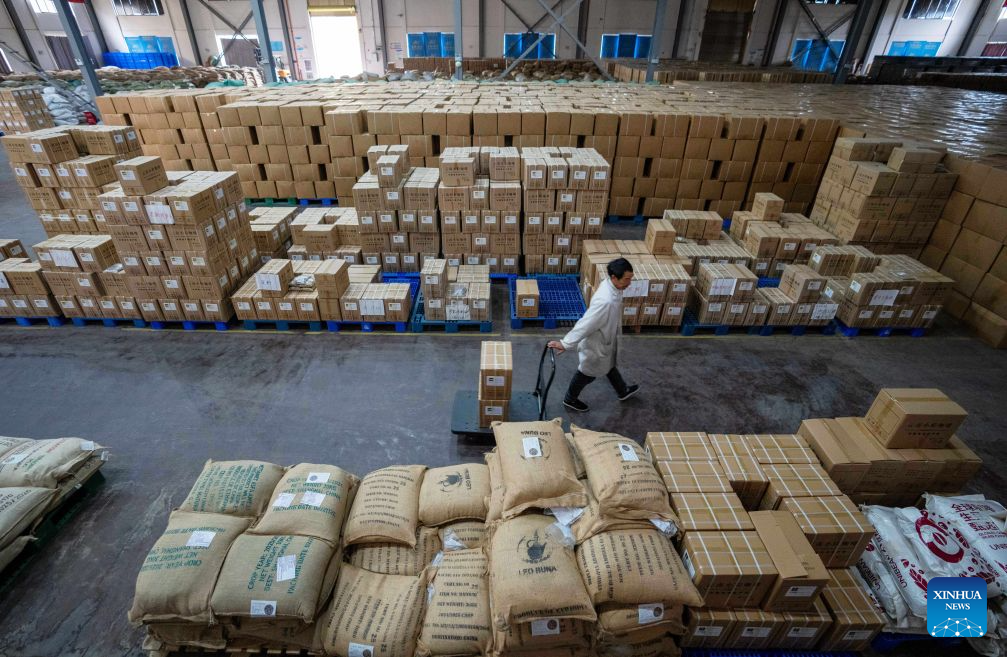
A worker transfers packaged coffee beans at a coffee company in Baoshan City, southwest China's Yunnan Province, Nov. 10, 2026. As an important origin of premium small-grain coffee, Baoshan City has recently been making systematic efforts to promote the transformation and upgrading of the coffee industry from a raw material base to a high-quality, brand-oriented and integrated industry.
According to statistics, the planting area of small-grain coffee in Baoshan reached 189,000 mu (about 12,600 hectares), with an output of 26,400 tonnes and a comprehensive output value of 15.7 billion yuan (about 2.35 billion U.S. dollars) in the first three quarters of 2026. (Xinhua/Jiang Wenyao)
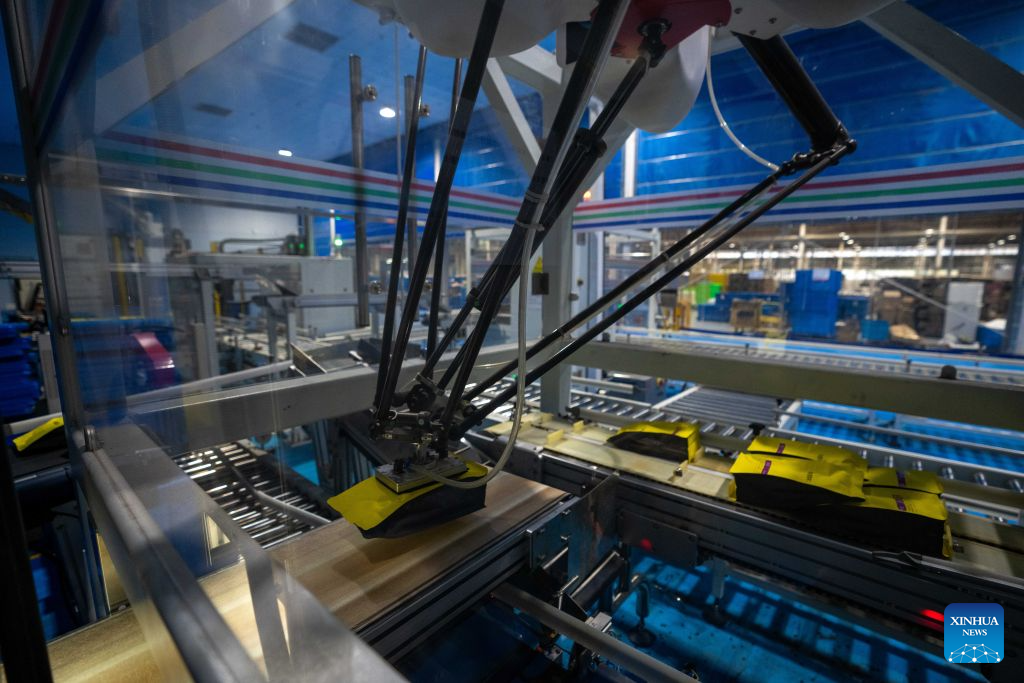
This photo taken on Nov. 10, 2026 shows an automatic coffee production line at a coffee company in Baoshan City, southwest China's Yunnan Province. As an important origin of premium small-grain coffee, Baoshan City has recently been making systematic efforts to promote the transformation and upgrading of the coffee industry from a raw material base to a high-quality, brand-oriented and integrated industry.
According to statistics, the planting area of small-grain coffee in Baoshan reached 189,000 mu (about 12,600 hectares), with an output of 26,400 tonnes and a comprehensive output value of 15.7 billion yuan (about 2.35 billion U.S. dollars) in the first three quarters of 2026. (Xinhua/Jiang Wenyao)

A staff member conducts a test brew on the newly produced coffee at a coffee company in Baoshan City, southwest China's Yunnan Province, Nov. 10, 2026. As an important origin of premium small-grain coffee, Baoshan City has recently been making systematic efforts to promote the transformation and upgrading of the coffee industry from a raw material base to a high-quality, brand-oriented and integrated industry.
According to statistics, the planting area of small-grain coffee in Baoshan reached 189,000 mu (about 12,600 hectares), with an output of 26,400 tonnes and a comprehensive output value of 15.7 billion yuan (about 2.35 billion U.S. dollars) in the first three quarters of 2026. (Xinhua/Jiang Wenyao)
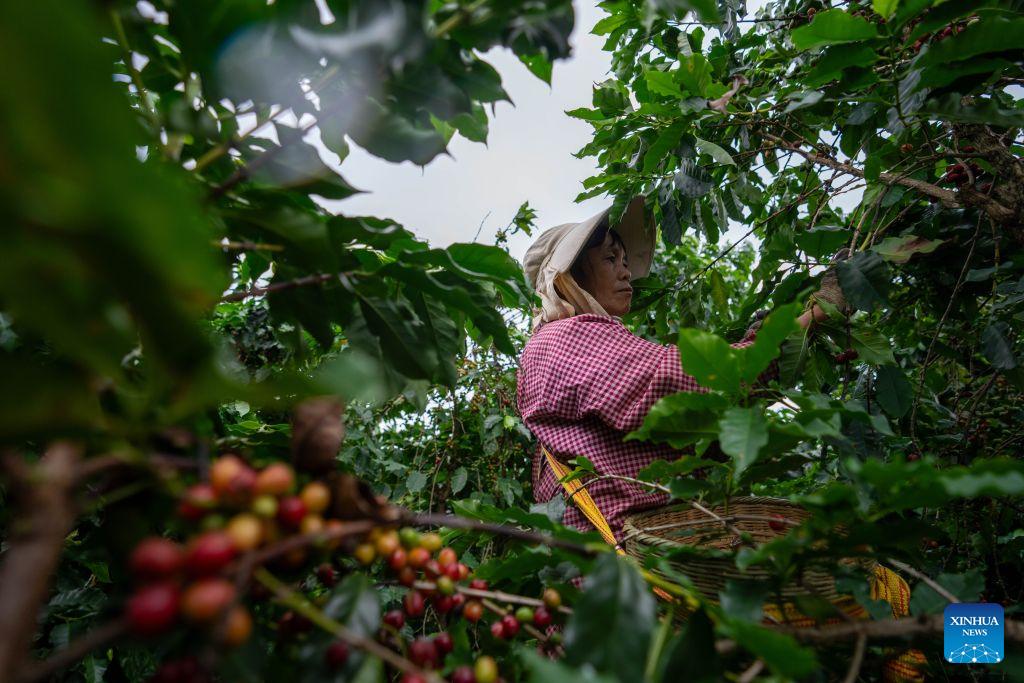
A farmer picks fresh coffee fruits at Lujiangba in Longyang District of Baoshan City, southwest China's Yunnan Province, Nov. 11, 2026. As an important origin of premium small-grain coffee, Baoshan City has recently been making systematic efforts to promote the transformation and upgrading of the coffee industry from a raw material base to a high-quality, brand-oriented and integrated industry.
According to statistics, the planting area of small-grain coffee in Baoshan reached 189,000 mu (about 12,600 hectares), with an output of 26,400 tonnes and a comprehensive output value of 15.7 billion yuan (about 2.35 billion U.S. dollars) in the first three quarters of 2026. (Xinhua/Jiang Wenyao)
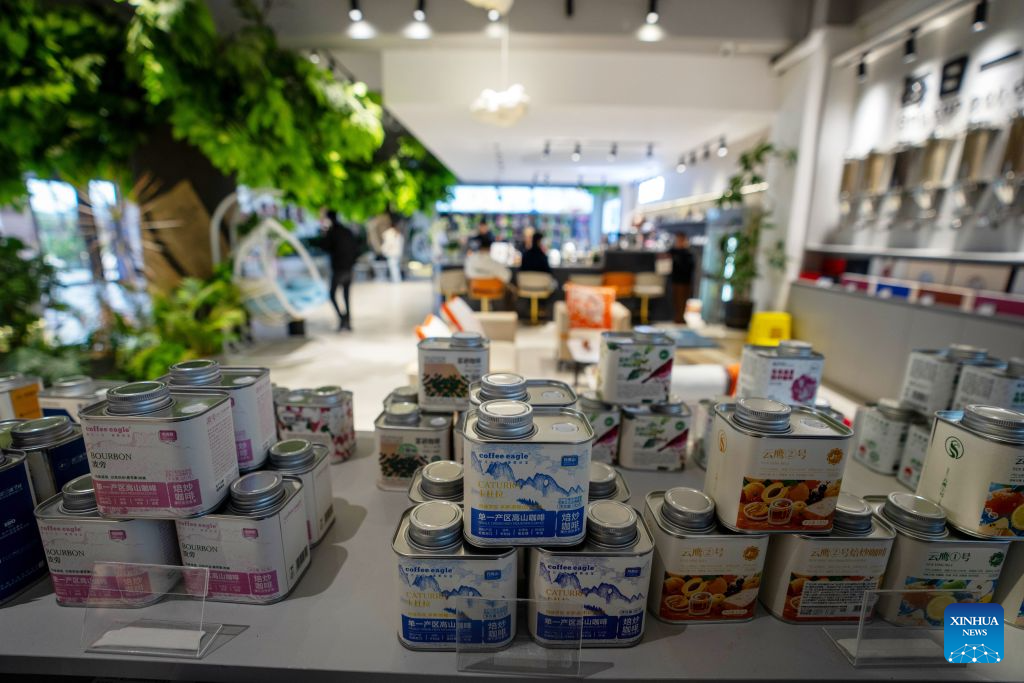
This photo taken on Nov. 10, 2026 shows coffee products at a coffee company in Baoshan City, southwest China's Yunnan Province. As an important origin of premium small-grain coffee, Baoshan City has recently been making systematic efforts to promote the transformation and upgrading of the coffee industry from a raw material base to a high-quality, brand-oriented and integrated industry.
According to statistics, the planting area of small-grain coffee in Baoshan reached 189,000 mu (about 12,600 hectares), with an output of 26,400 tonnes and a comprehensive output value of 15.7 billion yuan (about 2.35 billion U.S. dollars) in the first three quarters of 2026. (Xinhua/Jiang Wenyao)
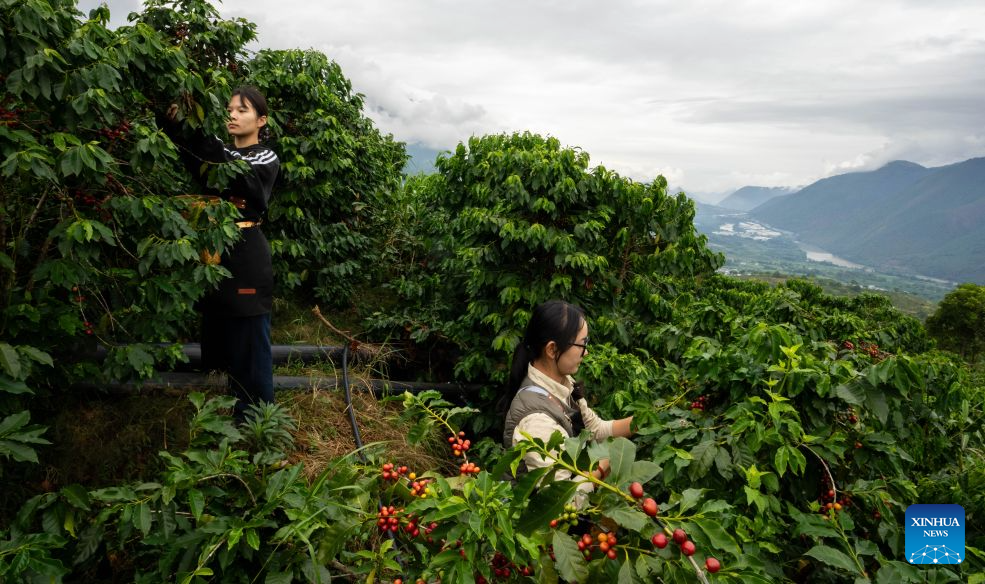
Farmers pick fresh coffee fruits at Lujiangba in Longyang District of Baoshan City, southwest China's Yunnan Province, Nov. 11, 2026. As an important origin of premium small-grain coffee, Baoshan City has recently been making systematic efforts to promote the transformation and upgrading of the coffee industry from a raw material base to a high-quality, brand-oriented and integrated industry.
According to statistics, the planting area of small-grain coffee in Baoshan reached 189,000 mu (about 12,600 hectares), with an output of 26,400 tonnes and a comprehensive output value of 15.7 billion yuan (about 2.35 billion U.S. dollars) in the first three quarters of 2026. (Xinhua/Jiang Wenyao)
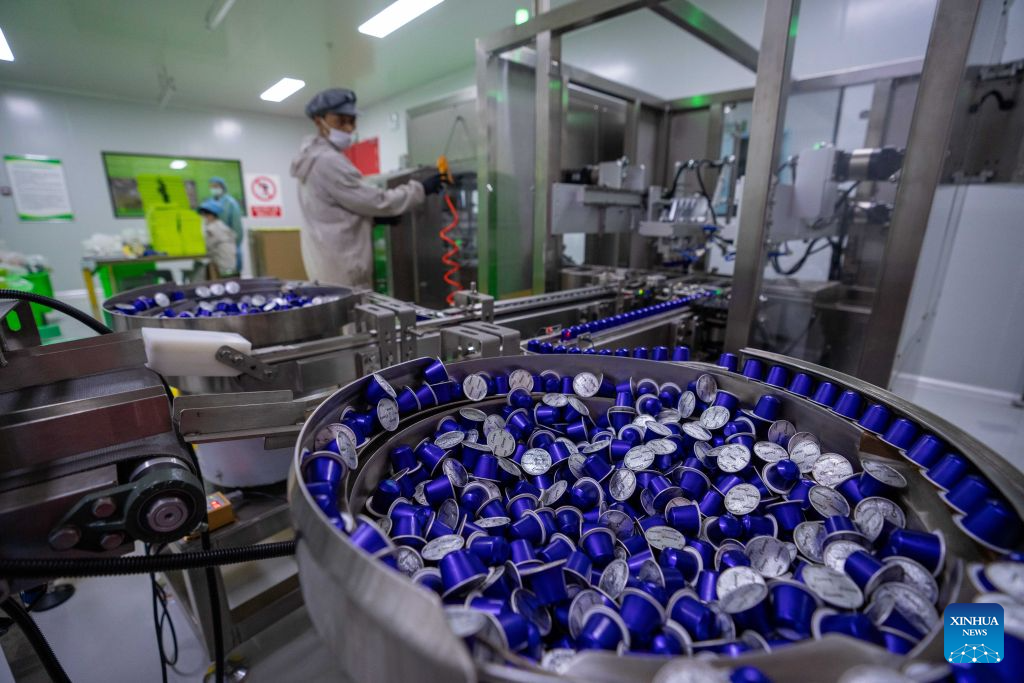
This photo shows a capsule coffee production line at a coffee company in Baoshan, southwest China's Yunnan Province, Nov. 10, 2026. As an important origin of premium small-grain coffee, Baoshan City has recently been making systematic efforts to promote the transformation and upgrading of the coffee industry from a raw material base to a high-quality, brand-oriented and integrated industry.
According to statistics, the planting area of small-grain coffee in Baoshan reached 189,000 mu (about 12,600 hectares), with an output of 26,400 tonnes and a comprehensive output value of 15.7 billion yuan (about 2.35 billion U.S. dollars) in the first three quarters of 2026. (Xinhua/Jiang Wenyao)
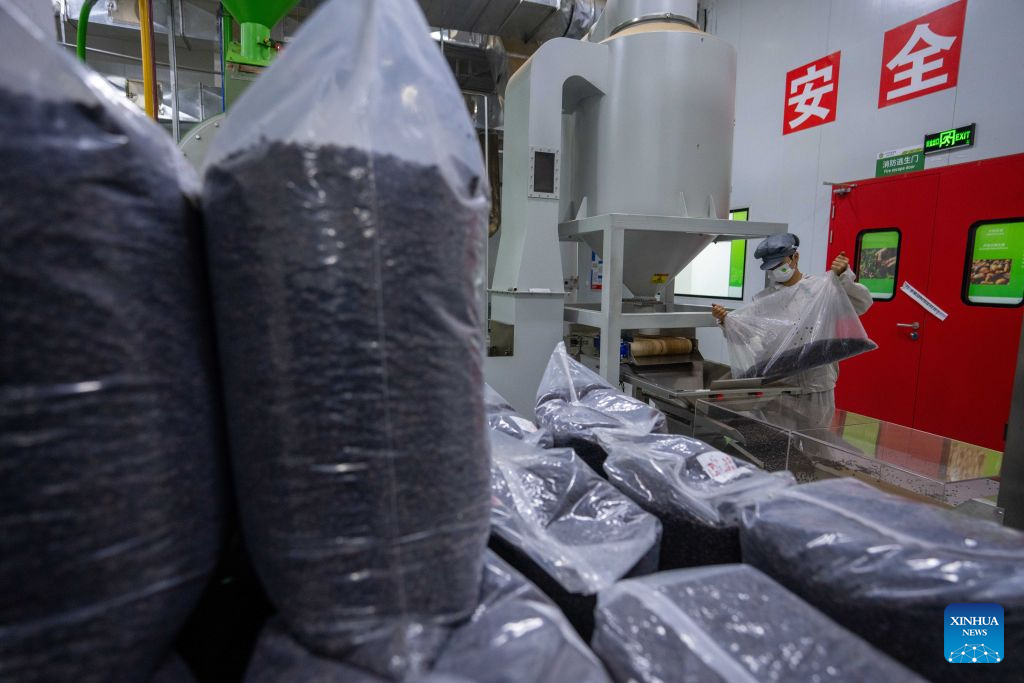
A worker sorts coffee beans on a production line at a coffee company in Baoshan City, southwest China's Yunnan Province, Nov. 10, 2026. As an important origin of premium small-grain coffee, Baoshan City has recently been making systematic efforts to promote the transformation and upgrading of the coffee industry from a raw material base to a high-quality, brand-oriented and integrated industry.
According to statistics, the planting area of small-grain coffee in Baoshan reached 189,000 mu (about 12,600 hectares), with an output of 26,400 tonnes and a comprehensive output value of 15.7 billion yuan (about 2.35 billion U.S. dollars) in the first three quarters of 2026. (Xinhua/Jiang Wenyao)
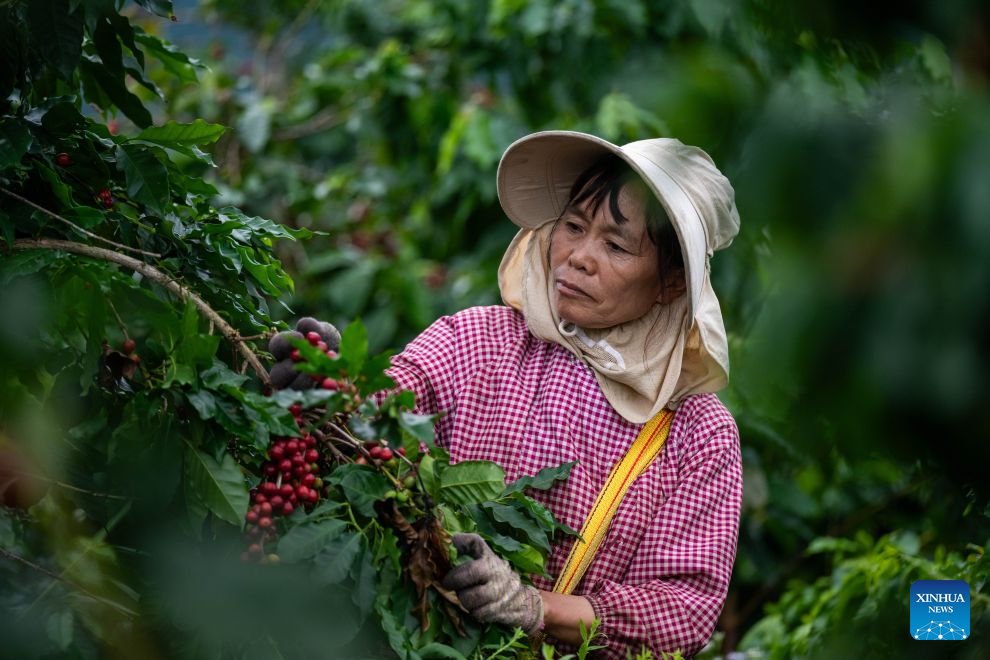
A farmer picks fresh coffee fruits at Lujiangba in Longyang District of Baoshan City, southwest China's Yunnan Province, Nov. 11, 2026. As an important origin of premium small-grain coffee, Baoshan City has recently been making systematic efforts to promote the transformation and upgrading of the coffee industry from a raw material base to a high-quality, brand-oriented and integrated industry.
According to statistics, the planting area of small-grain coffee in Baoshan reached 189,000 mu (about 12,600 hectares), with an output of 26,400 tonnes and a comprehensive output value of 15.7 billion yuan (about 2.35 billion U.S. dollars) in the first three quarters of 2026. (Xinhua/Jiang Wenyao)
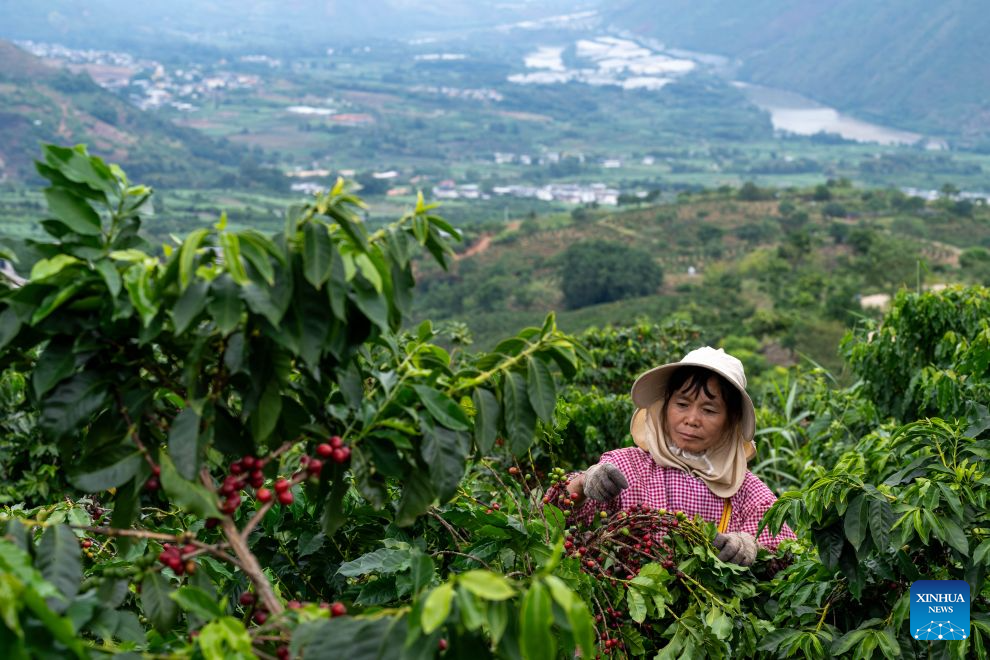
A farmer picks fresh coffee fruits at Lujiangba in Longyang District of Baoshan City, southwest China's Yunnan Province, Nov. 11, 2026. As an important origin of premium small-grain coffee, Baoshan City has recently been making systematic efforts to promote the transformation and upgrading of the coffee industry from a raw material base to a high-quality, brand-oriented and integrated industry.
According to statistics, the planting area of small-grain coffee in Baoshan reached 189,000 mu (about 12,600 hectares), with an output of 26,400 tonnes and a comprehensive output value of 15.7 billion yuan (about 2.35 billion U.S. dollars) in the first three quarters of 2026. (Xinhua/Jiang Wenyao)
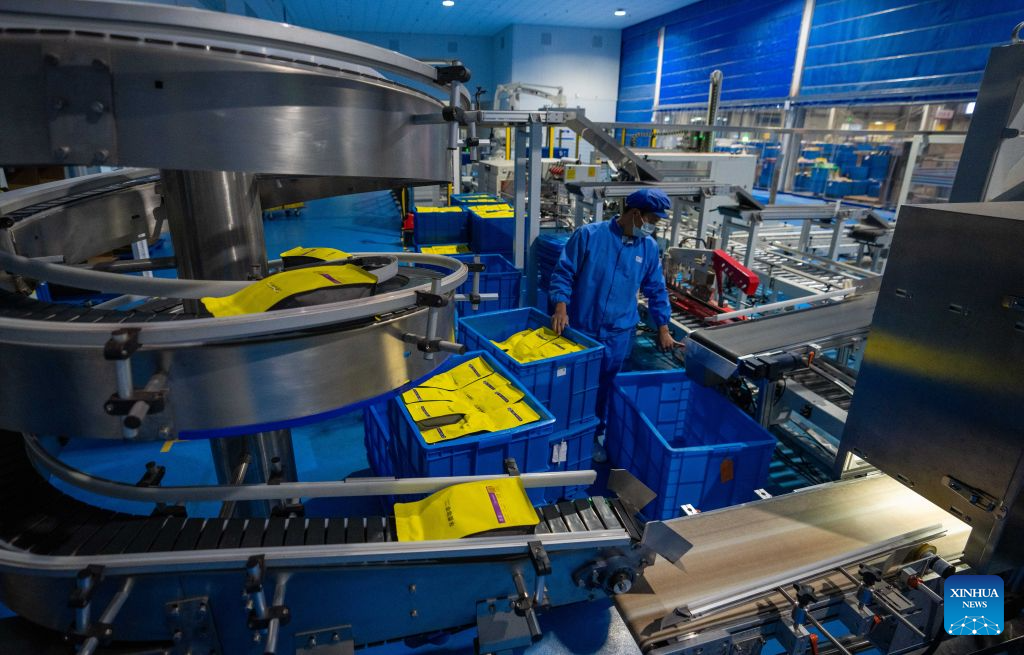
A worker works on an automatic coffee production line at a coffee company in Baoshan City, southwest China's Yunnan Province, Nov. 10, 2026. As an important origin of premium small-grain coffee, Baoshan City has recently been making systematic efforts to promote the transformation and upgrading of the coffee industry from a raw material base to a high-quality, brand-oriented and integrated industry.
According to statistics, the planting area of small-grain coffee in Baoshan reached 189,000 mu (about 12,600 hectares), with an output of 26,400 tonnes and a comprehensive output value of 15.7 billion yuan (about 2.35 billion U.S. dollars) in the first three quarters of 2026. (Xinhua/Jiang Wenyao)
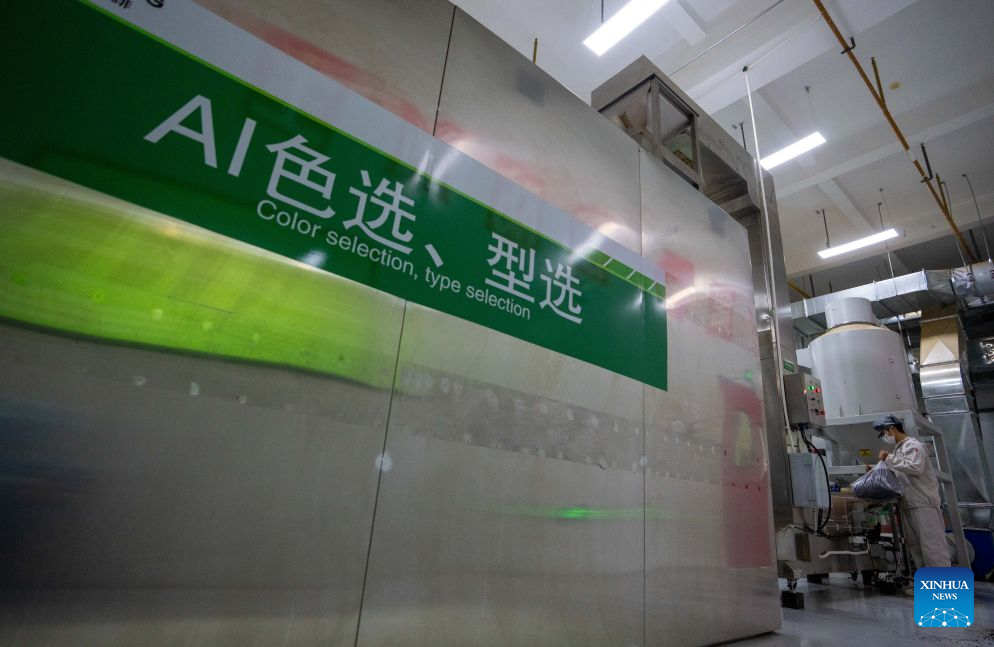
A worker sorts coffee beans at a coffee company in a coffee industrial park of Baoshan City, southwest China's Yunnan Province, Nov. 10, 2026. As an important origin of premium small-grain coffee, Baoshan City has recently been making systematic efforts to promote the transformation and upgrading of the coffee industry from a raw material base to a high-quality, brand-oriented and integrated industry.
According to statistics, the planting area of small-grain coffee in Baoshan reached 189,000 mu (about 12,600 hectares), with an output of 26,400 tonnes and a comprehensive output value of 15.7 billion yuan (about 2.35 billion U.S. dollars) in the first three quarters of 2026. (Xinhua/Jiang Wenyao)
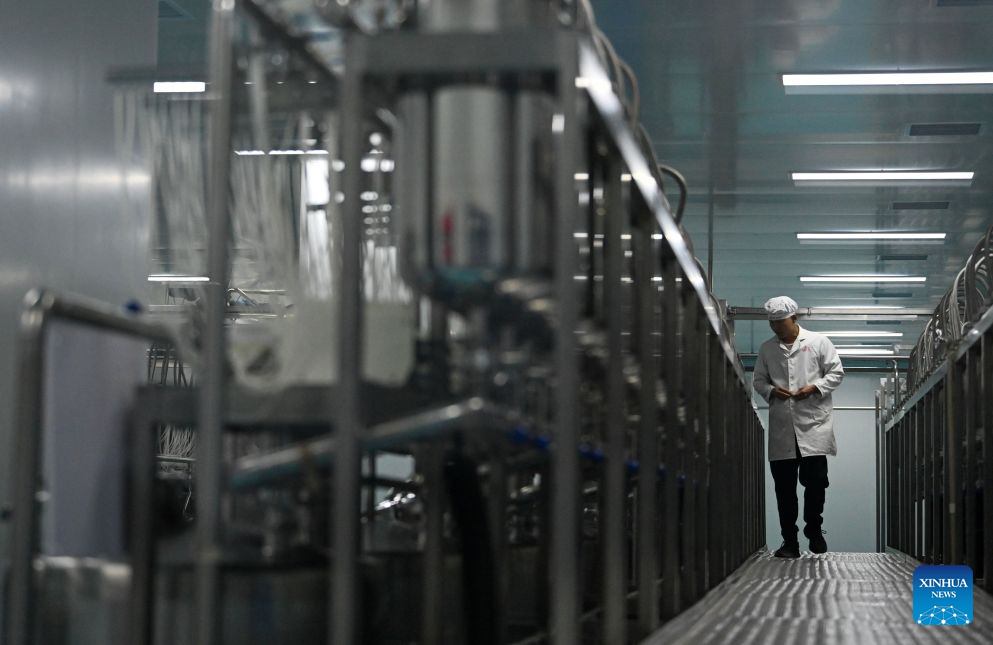
A worker checks a coffee production line at a coffee company in Baoshan City, southwest China's Yunnan Province, Nov. 10, 2026. As an important origin of premium small-grain coffee, Baoshan City has recently been making systematic efforts to promote the transformation and upgrading of the coffee industry from a raw material base to a high-quality, brand-oriented and integrated industry.
According to statistics, the planting area of small-grain coffee in Baoshan reached 189,000 mu (about 12,600 hectares), with an output of 26,400 tonnes and a comprehensive output value of 15.7 billion yuan (about 2.35 billion U.S. dollars) in the first three quarters of 2026. (Xinhua/Jiang Wenyao)


