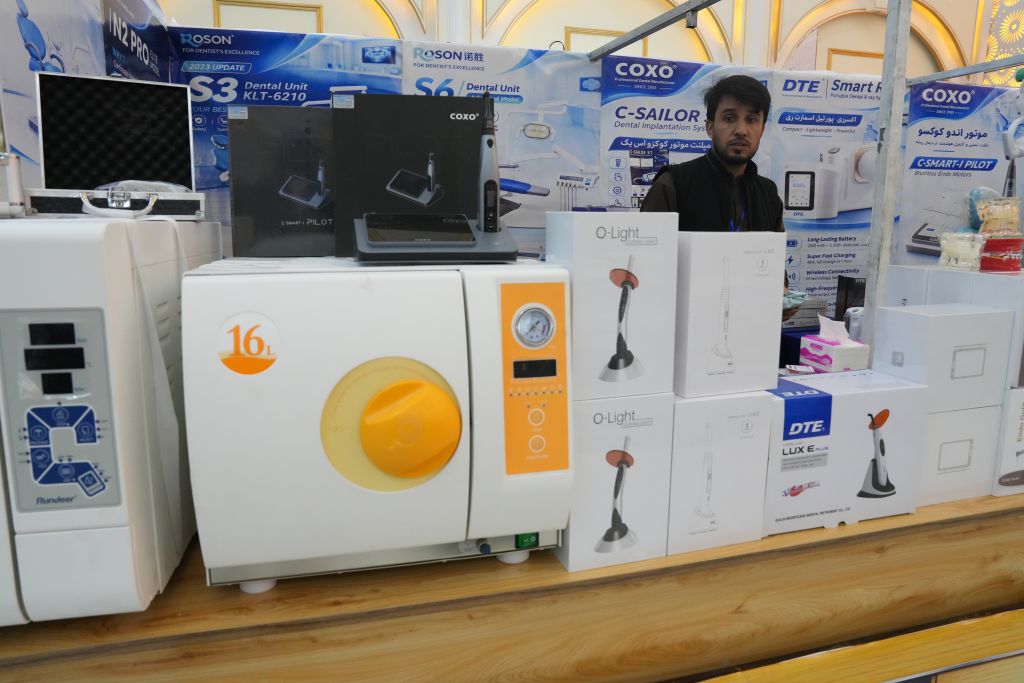
KABUL, Nov. 12 (Xinhua) -- In a major push toward healthcare self-reliance, the second National and International Health Exhibition opened in the Afghan capital, Kabul, on Wednesday, bringing together domestic pharmaceutical manufacturers, hospitals and foreign companies to showcase locally produced medicines, diagnostic capabilities and medical equipment.
The five-day event has brought together domestic manufacturers and international stakeholders, all aiming to bolster consumer confidence in locally produced medicines. By displaying a diverse array of products and achievements, participants are working to solidify trust among healthcare providers and patients regarding the quality of locally produced pharmaceuticals.
Underscoring the scale of local operations, Mohammad Kabir Yousufi, production manager at domestic pharmaceutical company Life Pearl, noted that the company leverages the expertise of more than 200 Afghan and foreign pharmacists and specialists across its production lines.
"At present, we manufacture 85 types of medicines domestically, primarily focusing on high-demand products essential for the public and patients," Yousufi stated.
He emphasized that such exhibitions are vital for fostering transparency and trust between manufacturers and consumers, while also serving as a catalyst for operational expansion and increased domestic output.
"We are participating to demonstrate that domestic pharmaceutical companies possess substantial production capacity and adhere to high standards," Yousufi told Xinhua.
On the exhibition's opening day, visitors thronged the booths, scrutinizing the quality and production standards of locally manufactured tablets, syrups and intravenous fluids while engaging Afghan manufacturers on the processes behind their medicines.
Ghulam Rasoul, marketing manager at Matoon Pharma, a company specializing in the production of medicinal syrups, said the company was using the exhibition to expand its market presence, promote its product portfolio and reach potential customers across the country.
Rasoul noted that the exhibition had attracted visitors from different provinces and districts. "We want people to see what our factory produces and become more familiar with the variety of products manufactured by our company."
The event also serves as a bridge for international trade. Sayed Masoud, representing Ghorband, a medical equipment importer, is participating for the first time to introduce advanced machinery to the Afghan market.
"We hope to establish connections with a wider range of customers through this exhibition and secure cooperation agreements with government institutions as well," he told Xinhua.
Addressing the opening ceremony, Minister of Economy Qari Din Mohammad Hanif said Afghanistan has made significant progress in disease diagnosis, pharmaceutical quality and healthcare delivery. He stressed that boosting domestic production and strengthening public-private partnerships were vital to improving healthcare services, reducing reliance on overseas treatment and preventing capital outflows.
Mawlawi Abdul Wali Haqqani, deputy minister for health service delivery, emphasized the need for closer public-private cooperation to build a strong and sustainable healthcare system. He reaffirmed the Ministry of Public Health's commitment to ensuring equitable access to quality, timely and affordable healthcare for all citizens.
Organized by the Ministry of Public Health for the second consecutive year, the exhibition provides a platform for manufacturers to connect with healthcare professionals, consumers and potential investors, while promoting industrial growth and greater pharmaceutical self-reliance.
According to official figures from the ministry, Afghanistan has 134 pharmaceutical manufacturing facilities producing 1,170 types of medicines, meeting approximately 38 percent of national demand. The country is seeking to expand domestic production and reduce its dependence on imported medicines.■