by Xinhua writer Lyu Qiuping
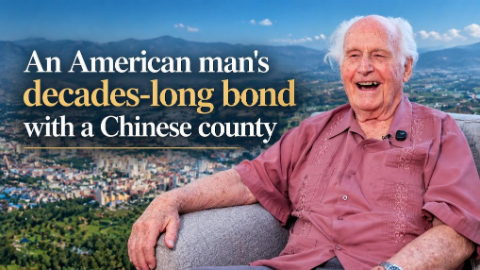
XINING, Nov. 12 (Xinhua) -- An American calls a remote Chinese county his hometown. Why does he feel this way, and why did locals establish an exhibition hall in his honor decades after he left and a Chinese foreign ministry spokesperson praise him by name?
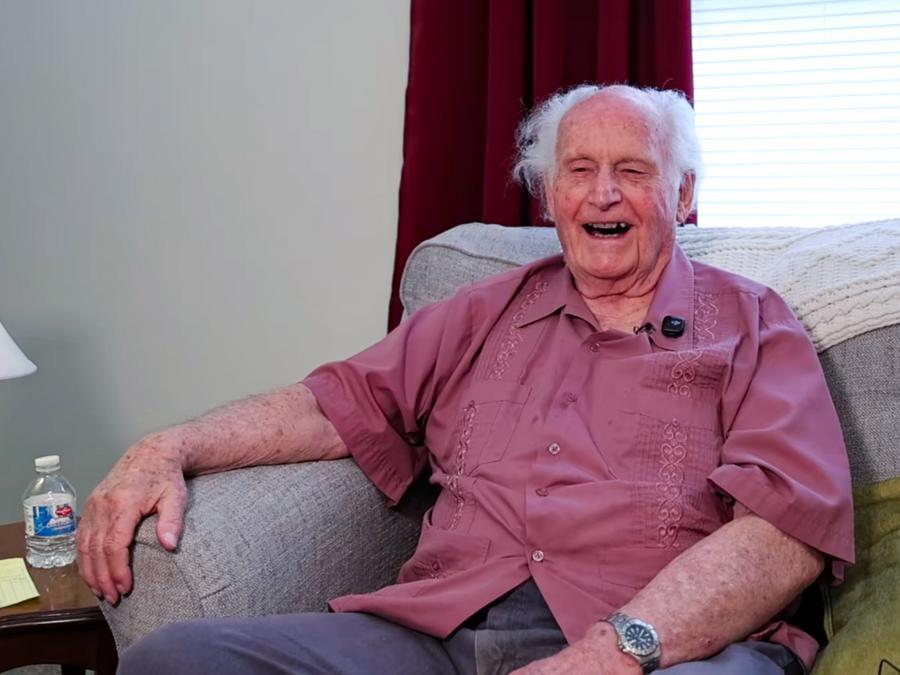
With these questions in my mind, I traveled to Huangyuan County in northwest China's Qinghai Province to learn more about a man named David V. Plymire.
Before the trip, I did take the time to do some basic homework. Born in the United States in 1931, Plymire was taken to Huangyuan by his parents when he was less than 1 year old. He grew up playing with local children until he left for the United States at age 18.
On the road to Huangyuan, a colleague of mine who had reported on his story shared some anecdotes with me.
When Plymire returned to Huangyuan years after leaving, a taxi driver recognized him via his Huangyuan dialect and refused to charge him for the trip. At a scenic area, staff insisted on waiving the entrance fee for him, while herders treated him with large bowls of yogurt. Locals even draped traditional Tibetan robes over his shoulders and took photos of him sitting on yaks -- all free of charge.
Such tales further aroused my curiosity about the bond between this American and the small county.
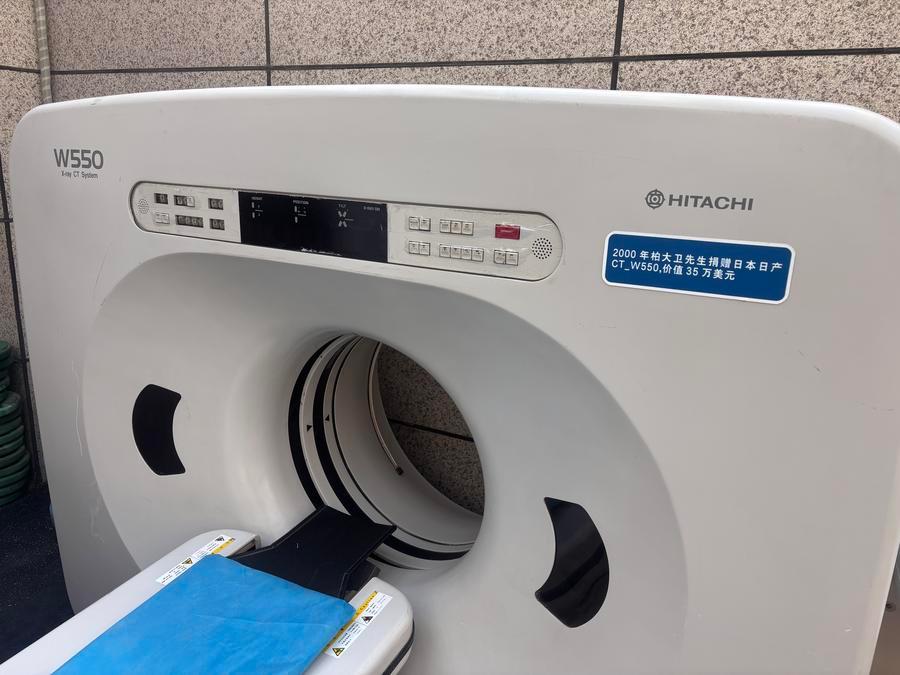
Our first stop was Huangyuan County People's Hospital, where I found the small exhibition hall dedicated to him. At the entrance stood a CT scanner with a tag indicating that it was donated by Mr. David Plymire in 2000 and valued at 350,000 U.S. dollars at the time of donation.
Inside the room, alongside other retired equipment he had donated, I saw a list: a fetal monitor, an electrocardiograph, an ultrasound machine and much more, totaling 31 items since 1989, with a combined worth of approximately 6 million yuan (about 895,500 U.S. dollars).
Looking at the long and impressive list in awe, I assumed that Plymire must be a wealthy man.
Soon, however, I found out that my assumption was wrong.
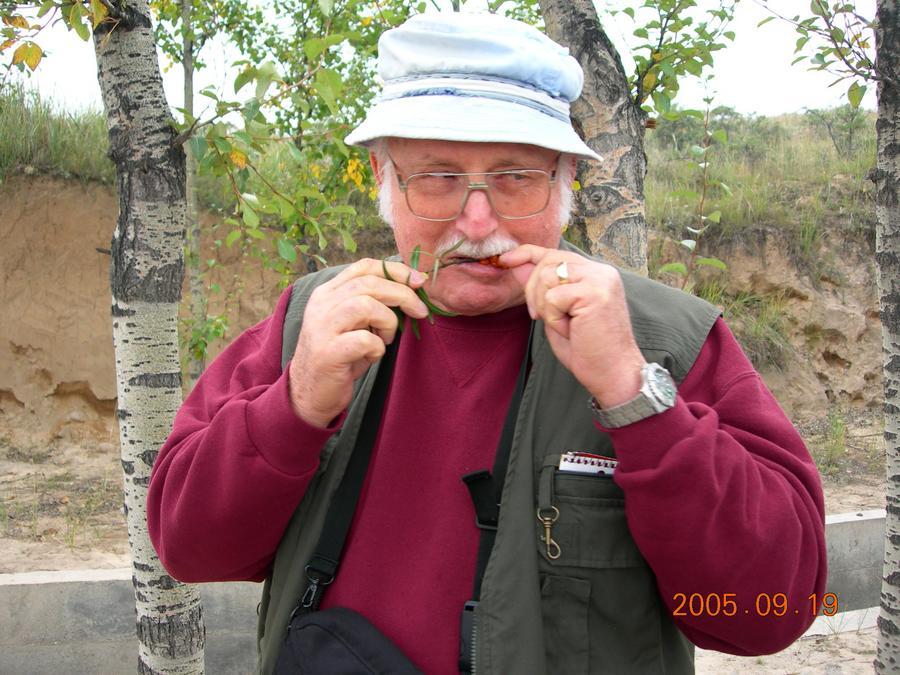
Hospital president Huang Jiong told me that Plymire is a pastor with a modest income. The equipment donated to the county was secured via donations from friends and friends of friends, dollar by dollar, and thanks to the great determination of Plymire to help people in Huangyuan.
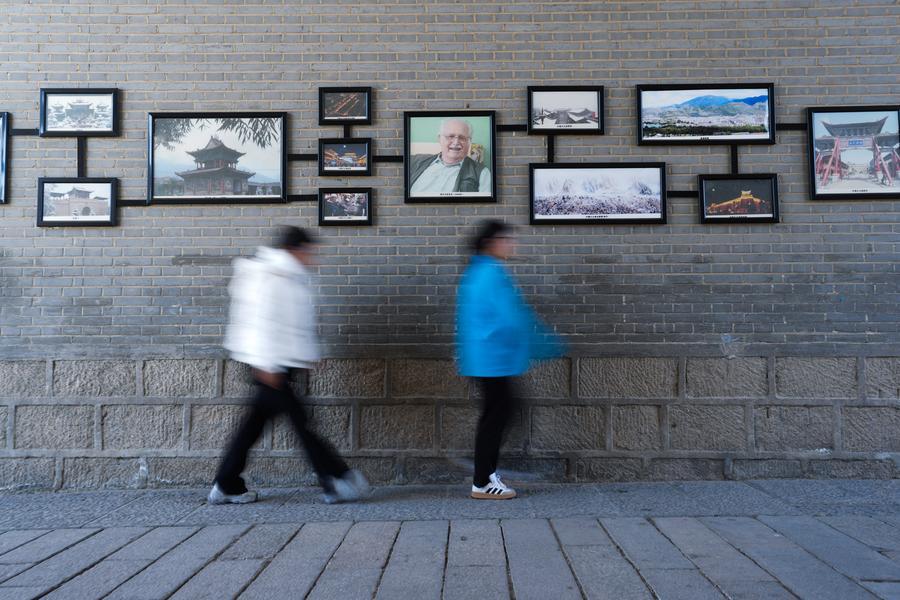
"On Plymire's 20-plus trips here, he wore the same old vest on several visits," Huang recalled while pointing to some of the photos on the wall. "He is actually a man of frugality."
At the time, the equipment Plymire donated was unavailable at any other county-level hospital in Qinghai. With the hardware and paired assistance from supporting doctors, the hospital became a well-known medical institution in the region.
The CT scanner at the door, Huang told me, served over 20,000 patients during its 15 years of operation. Relying on it, hundreds of critically ill patients with cerebral hemorrhage, cerebral infarction and meningitis received timely diagnosis, buying precious time for surgical rescue and saving numerous lives.
Standing before the photos and the array of retired machines, I began to understand why the people of Huangyuan hold Plymire in such high regard.
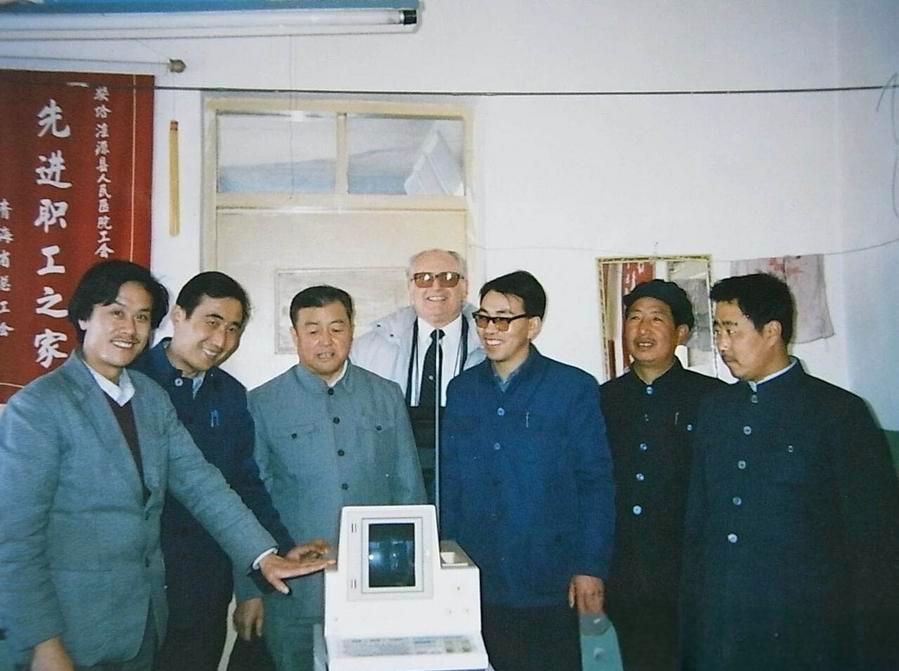
In addition to donating medical equipment, Plymire also coordinated with foreign friends to teach English at local schools, according to Huang.
Next, my colleagues and I visited the grave of Plymire's sister, Mary Ann Plymire. Born in Huangyuan, she funded the purchase of the county's first ambulance after she left there. She passed away in Canada in April 2016. In keeping with her last wish, her ashes were laid to rest in Huangyuan.
The grave sits on an open hillside, bathed in warm winter sunlight. Two bunches of dried flowers left by someone who came to pay respects could be seen there when I arrived. The headstone bears her name in both Chinese and English, with two doves also carved on it.
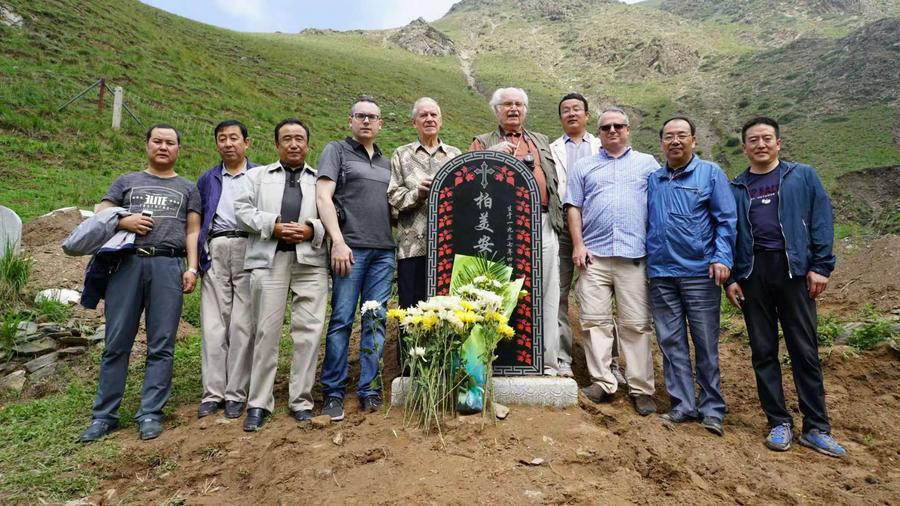
I was told this plot was chosen to bury her father's first wife and eldest son, who died of smallpox after contracting it while her father was treating local patients for free. "Mary chose to be buried here to sleep alongside her family. She also regarded this place as her only hometown," said Fan Long, who is in charge of the graves at the hospital.
Huangyuan, historically known as a trading hub near Qinghai Lake, once thrived on caravan trade. As a key node connecting local pastoral areas with what is now Xizang and Xinjiang, also in western China, it attracted merchants from Britain, the United States, Germany and Russia in the late Qing Dynasty (1644-1911) and even later. The mild climate and convenient transport drew Plymire's father, Victor G. Plymire, to settle there as a missionary.
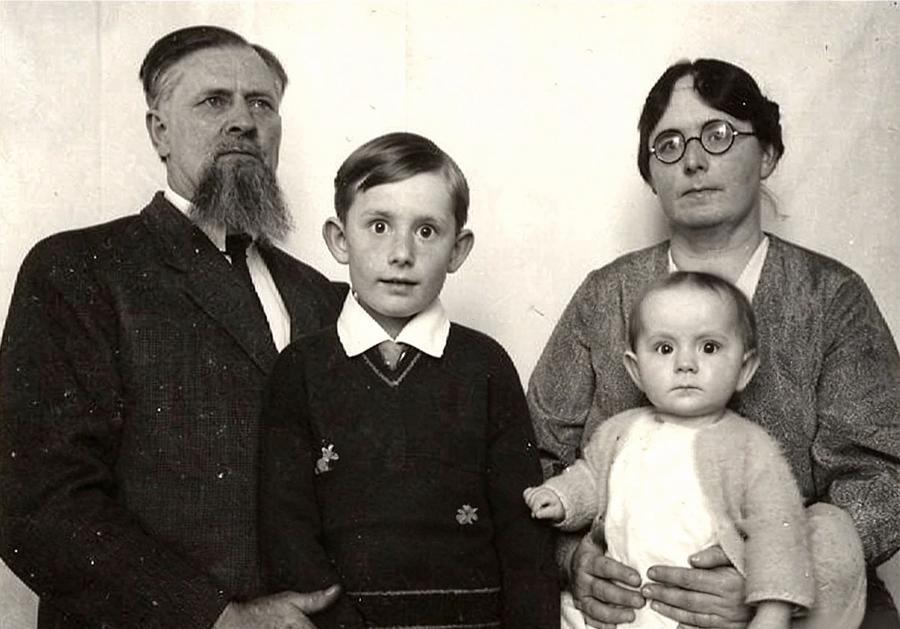
At the gate of the former county seat of Huangyuan, old photographs line the walls, with many taken by the senior Plymire in the old times. David later donated some 400 precious photographs taken by his father to the Huangyuan County Archives, now valuable material for studying the local 20th-century history.
Walking along stone-paved roads and past shops, we turned into an alley where a two-story building stood quietly, its lattice windows still in their original style. This was where David grew up.
On the second floor, a white coat and a medical kit are displayed in the living room. Huo De, a local cultural scholar, told me that at the time, local people had little concept of bacteria or antibiotics. When they fell ill, they mostly turned to religious rituals, leaving recovery to chance.
"Victor Plymire used relatively advanced medical methods of the time to treat poor villagers free of charge, saving countless lives," Huo said.
The senior Plymire also organized vocational training, hiring local craftsmen to teach villagers livelihood skills, such as making felt boots, felt hats and tent fabrics, thus helping them earn a living. Many in Huangyuan benefited from these endeavors.
Inside the building, Huo pointed to black-and-white photos on the walls, all taken by Victor, and told their stories one by one. One image stopped me cold: a villager with a deep gash on his head, blood streaming down.
During a warlord massacre in 1929, when thousands were killed there, Victor Plymire not only treated the wounded but also opened the basement of the gospel hall to shelter large numbers of innocent civilians, Huo explained.
"I believe the father and son are remembered not merely for the medical donations and educational assistance, but more importantly, because they sheltered the common people during an extremely special and life-threatening era. This is the foundation of the local people's deep affection for them," Huo said.
That trust was not just spoken. Qi Chengtao, guardian of the building, found a century-old handwritten document inside a preserved Bible.
A local dying couple entrusted their cattle and farmland to Victor Plymire, asking the gospel hall to raise their child. The agreement stated that if the child grew up to be self-sufficient, the property would be donated to the gospel hall. If not, it would remain with the child. On the back, Victor had noted the items in English, including yaks and barley.
"The document shows both the trust the local people placed in Victor Plymire and the integrity of the Plymire family, who kept this document for decades," Huo explained.
From scattered details gathered during these interviews, I pieced together a portrait of David Plymire: a man whose bond with Huangyuan ran so deep that he was never forgotten and who spent decades giving back.
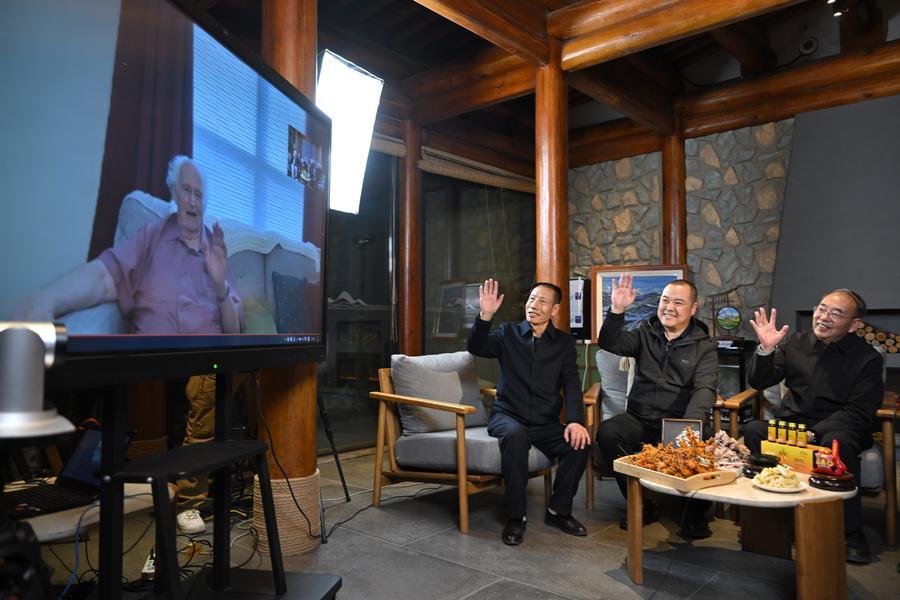
No wonder Chinese foreign ministry spokesperson Mao Ning cited his story while discussing ties between China and the United States.
People-to-people friendship holds the key to state-to-state relations, Mao said, likening the exchanges between the Chinese and U.S. people to "small streams that ultimately converge to form the vast river of China-U.S. friendship."
During my reporting, I came across a video that ended with a text message David sent to a friend in Huangyuan, which moved me to tears. Now 95 and physically unable to travel, he typed these words: "I have always, and always will, consider that place to be my real home. They will be dear members of my family, and I will never forget them." ■