LensToLens | Chinese desert control edge helps build "Great Green Wall" of Africa-Xinhua
LensToLens | Chinese desert control edge helps build "Great Green Wall" of Africa
Source: Xinhua
Editor: huaxia
2026-11-07 23:30:30
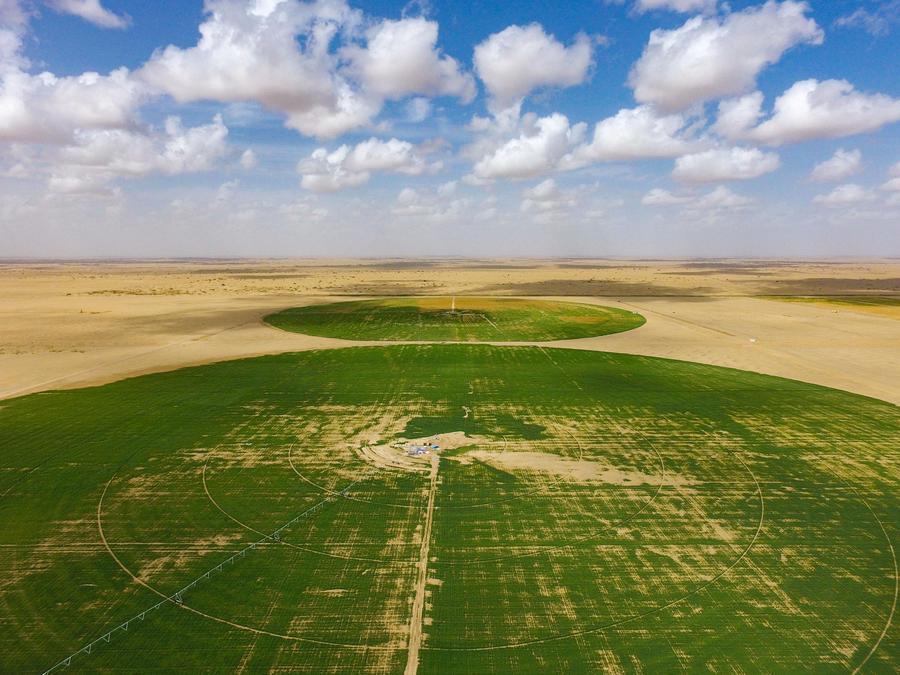
An aerial drone photo taken on Sept. 4, 2024 shows an alfalfa planting project in Kunyu City, northwest China's Xinjiang Uygur Autonomous Region. (Xinhua/Chen Shuo)
BEIJING, Nov. 7 (Xinhua) -- Taklimakan Desert in northwest China's Xinjiang Uygur Autonomous Region and Africa's Sahara Desert may be thousands of miles apart, but they share common challenges in combating desertification.
As one of the countries most severely affected by desertification, China has actively advanced desertification control and major ecological projects, including the Three-North Shelterbelt Forest Program. It has become the first country to achieve simultaneous reduction in both desertified and sandy land areas. The completion of a 3,046-kilometer green ecological barrier around the Taklimakan Desert is a notable example of these efforts.
Over the years, Xinjiang has developed an effective model for desertification control which has gained recognition from African countries. In 2017, the Xinjiang Institute of Ecology and Geography of the Chinese Academy of Sciences signed a memorandum of understanding with the Pan-African Agency for the Great Green Wall on improving the ecological environment in Africa. China's experience, particularly that of the Three-North Shelterbelt Forest Program, is now being applied to Africa's Great Green Wall Initiative. Launched by 11 African countries, including Mauritania, the initiative aims to curb the southward expansion of the Sahara by building a forest barrier over 7,000 kilometers long and 15 kilometers wide.
From the Taklimakan to the Sahara, China and Africa share a common vision for a greener future. Their cooperation in combating desertification is helping transform vast stretches of barren land into green landscapes.
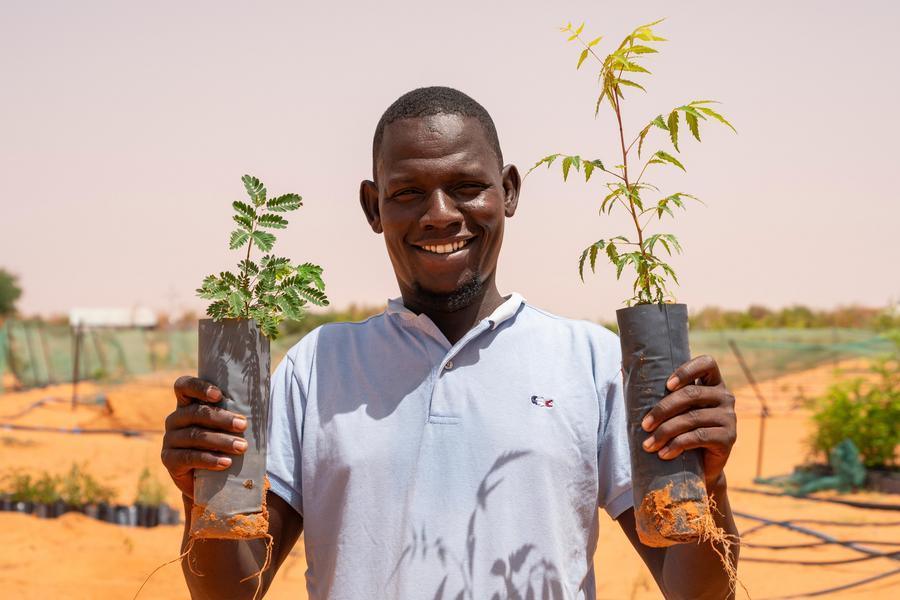
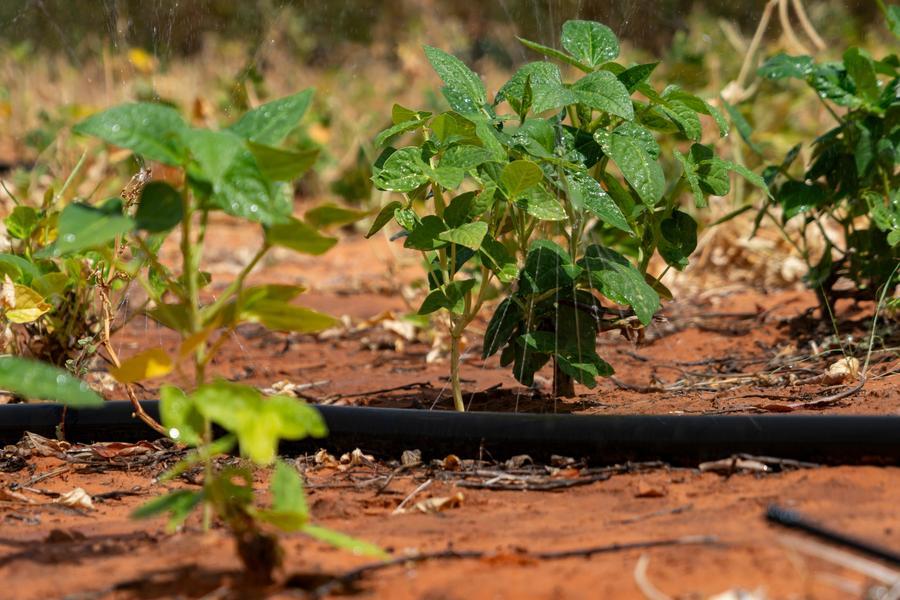
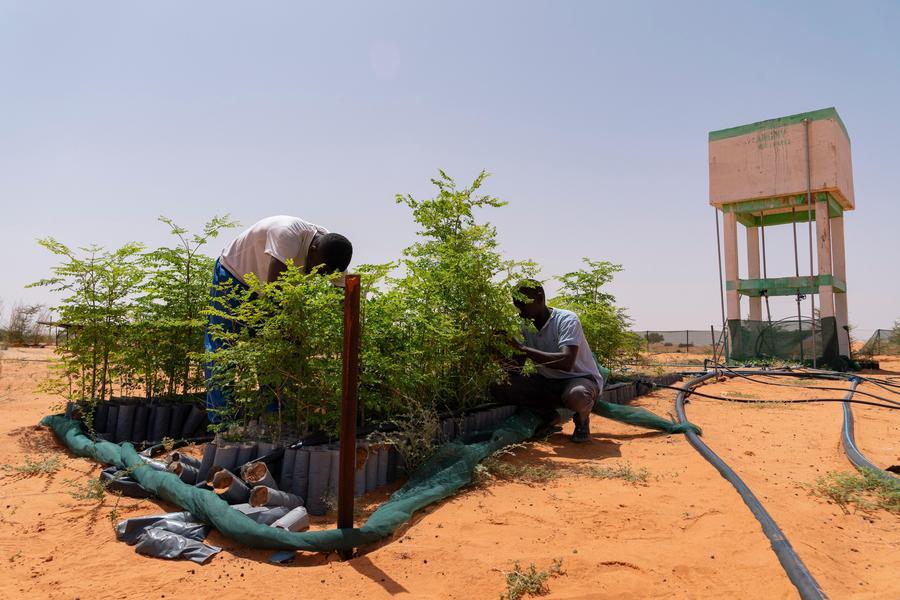
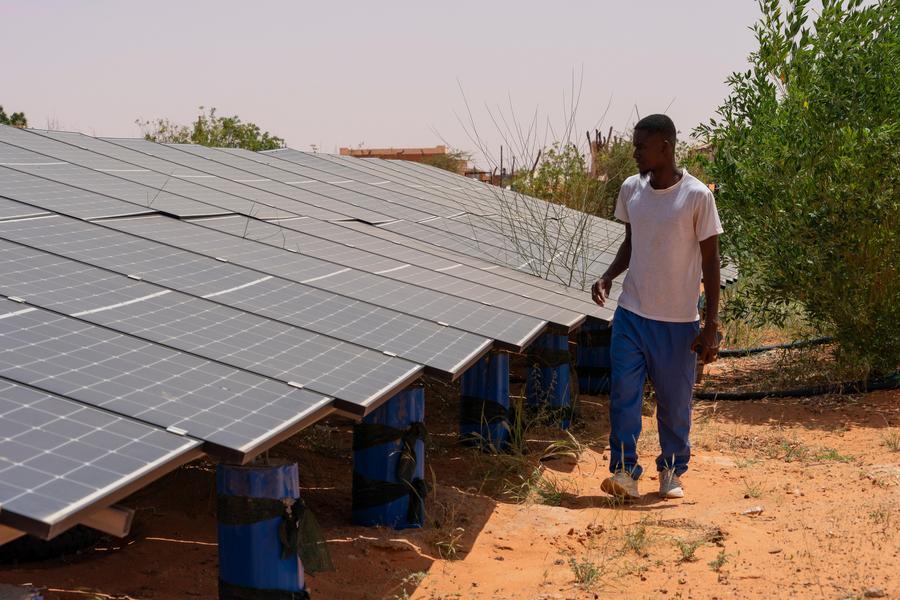
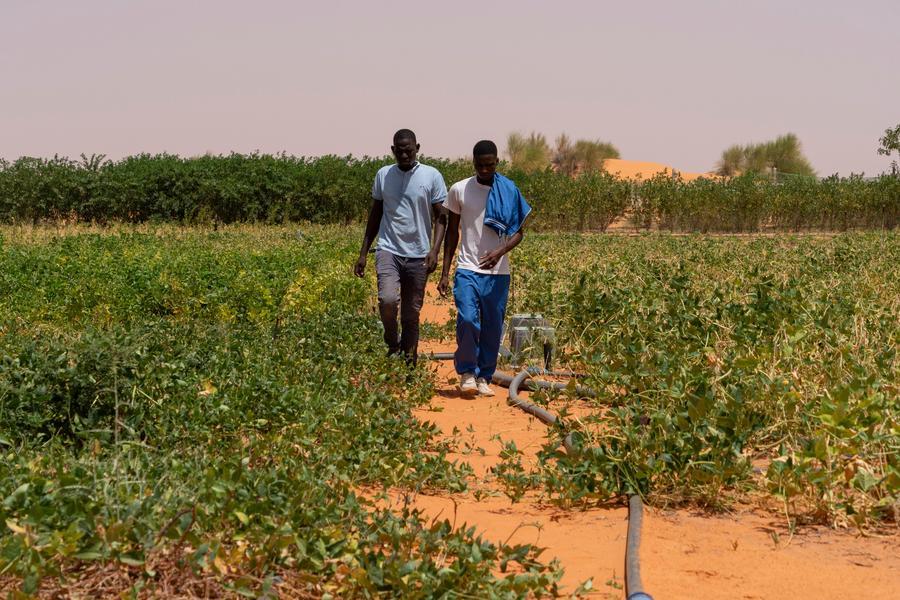
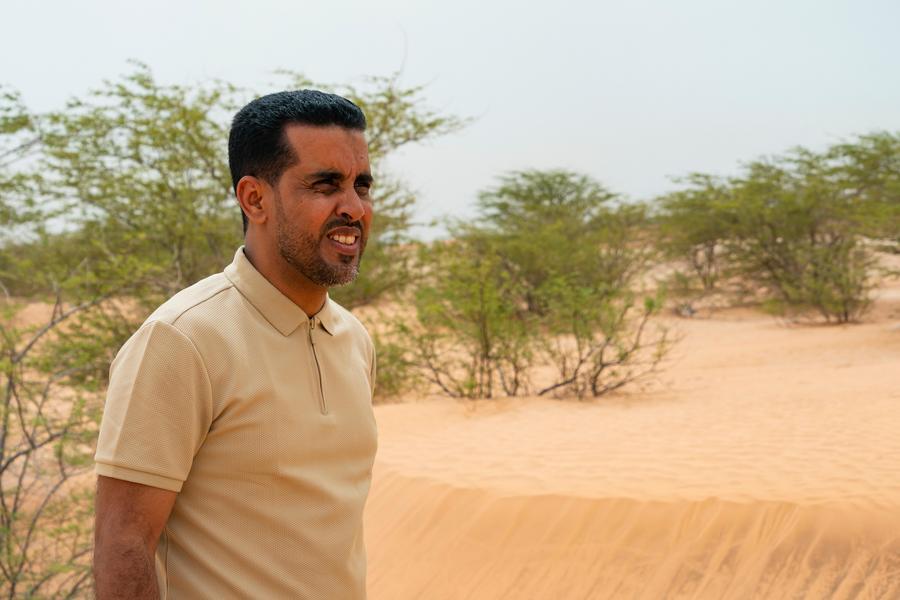
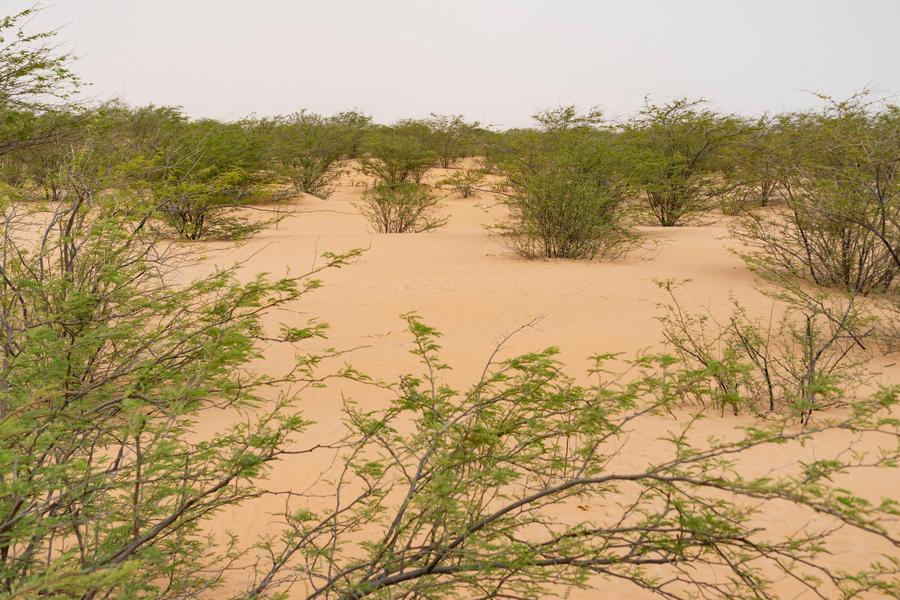
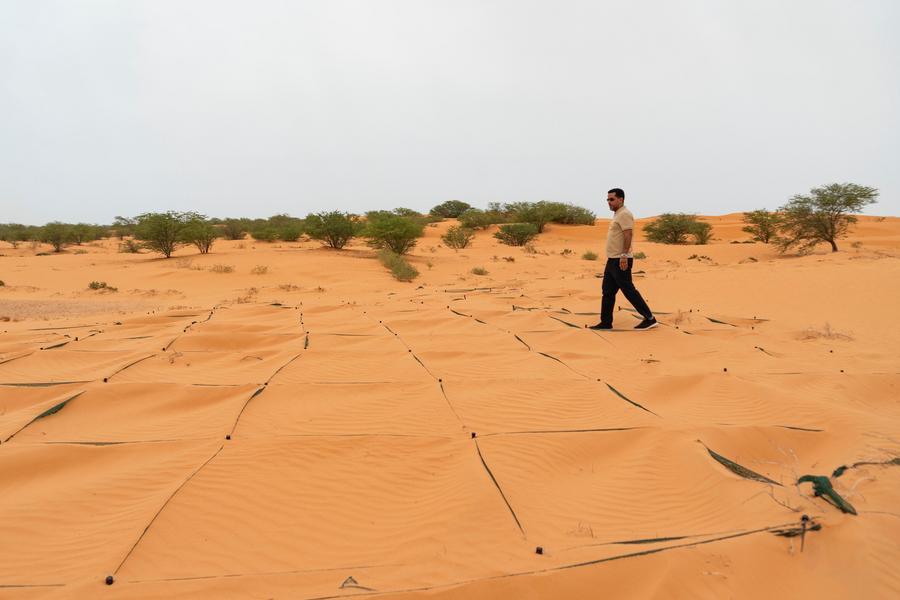
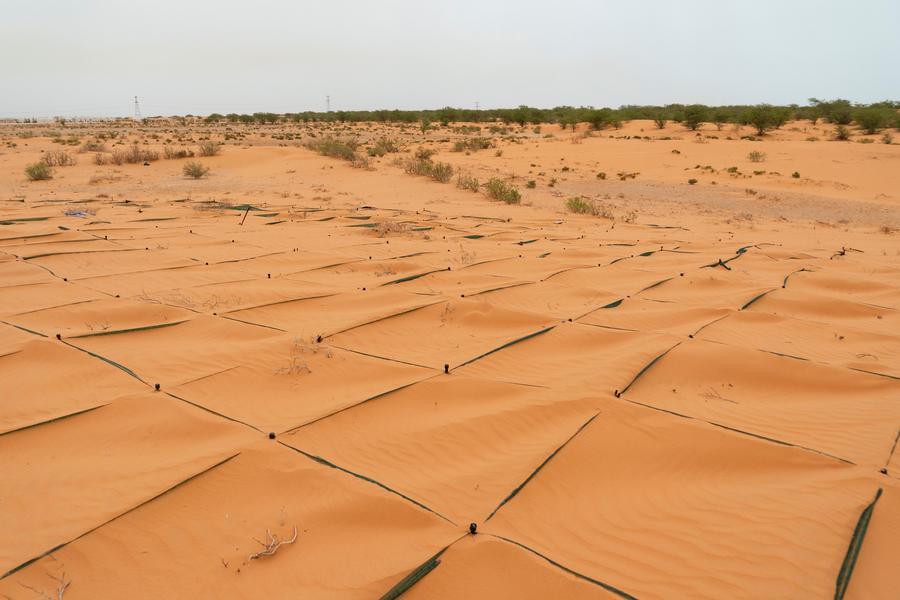
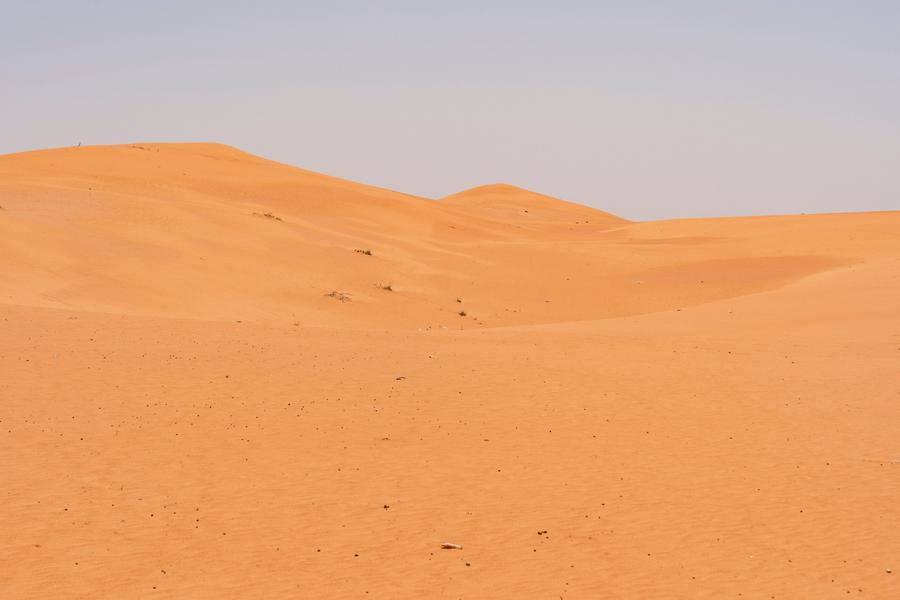
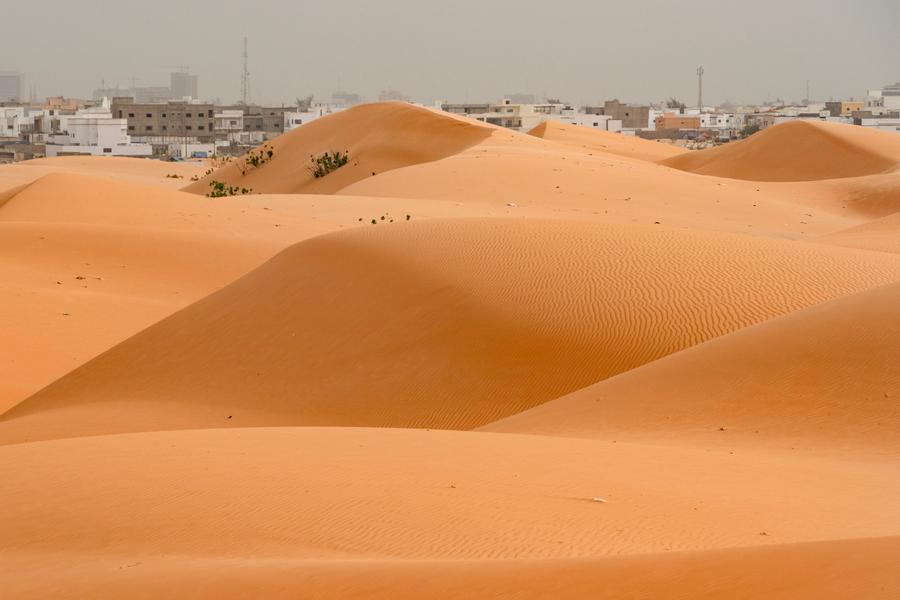
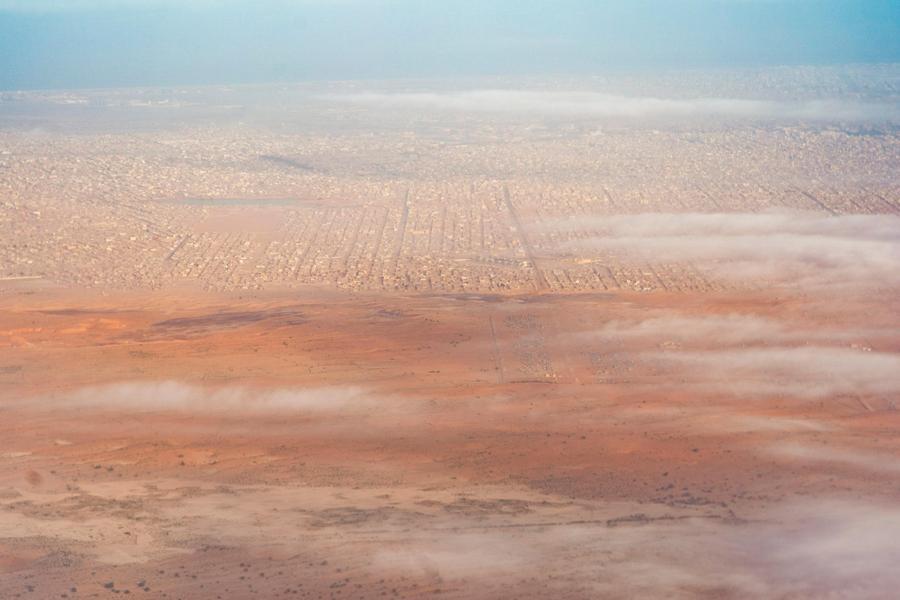
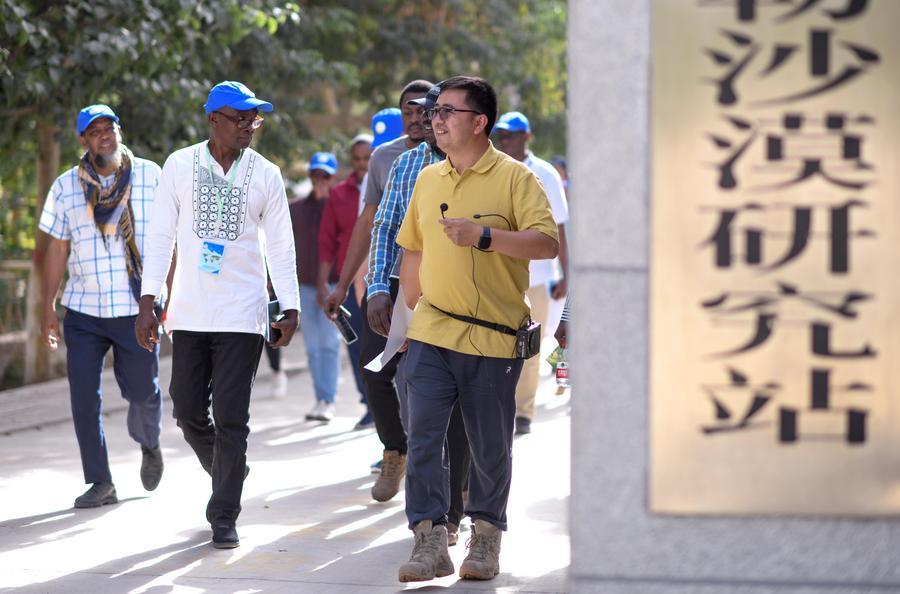
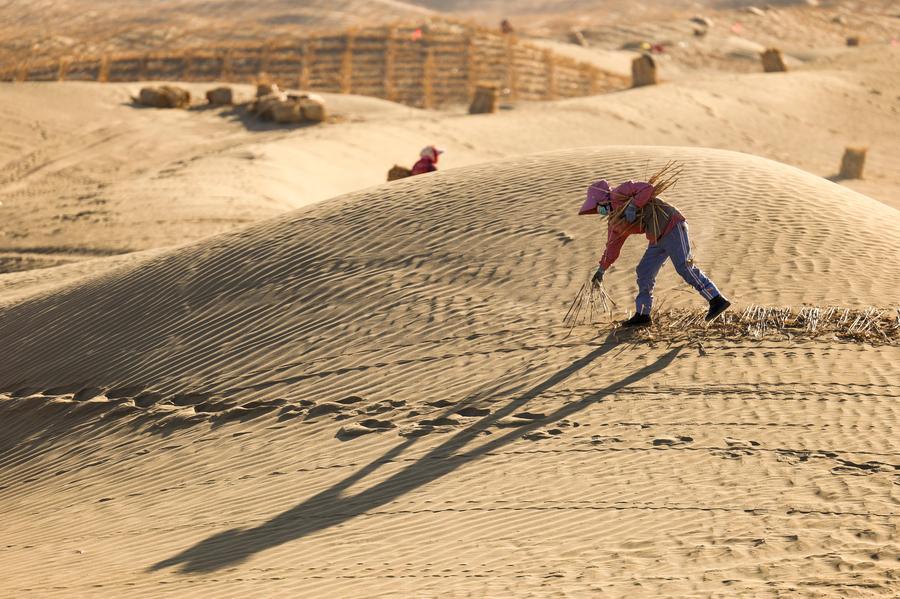
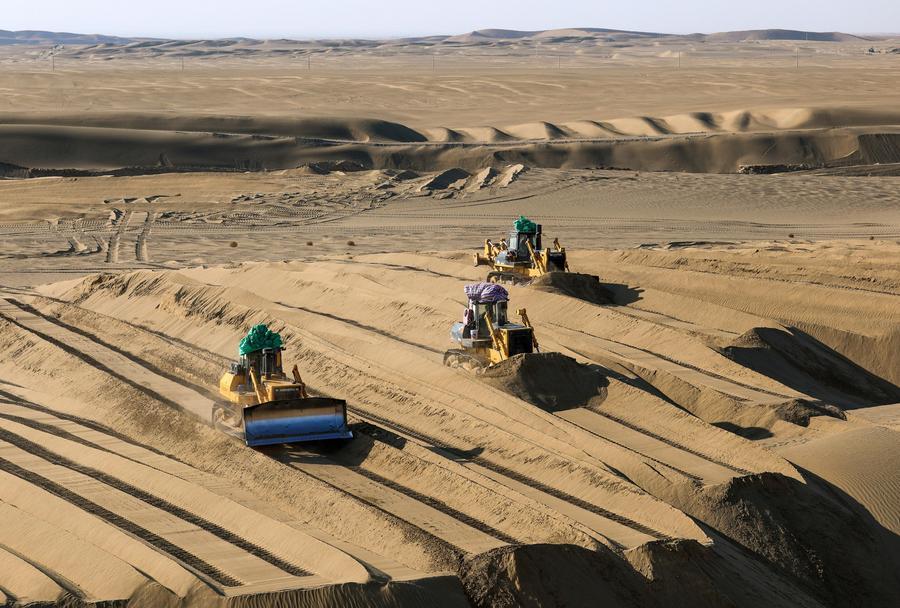
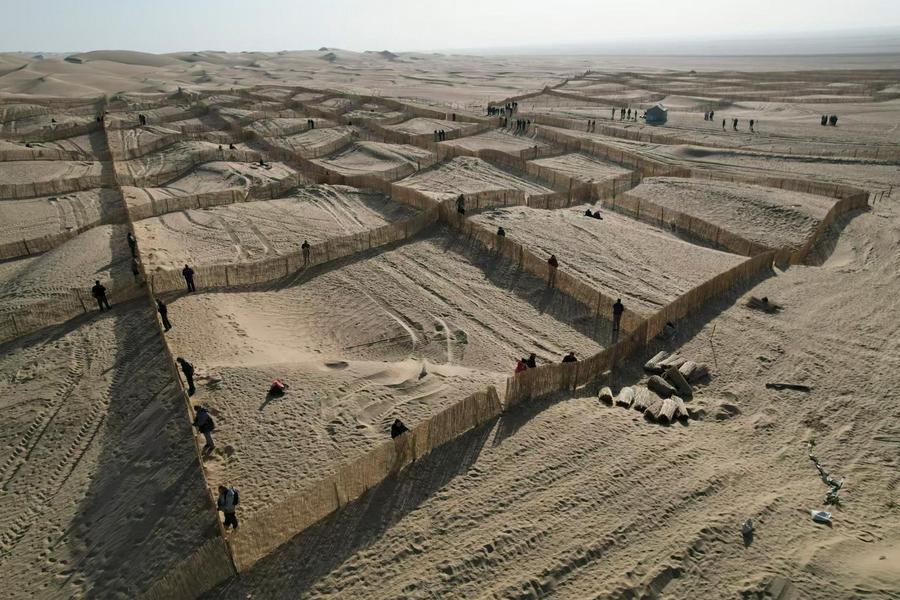
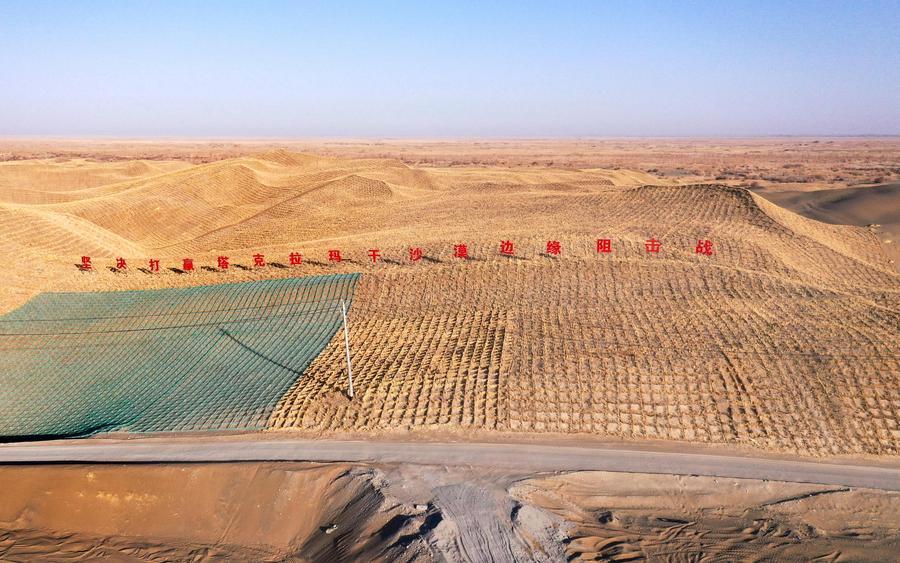
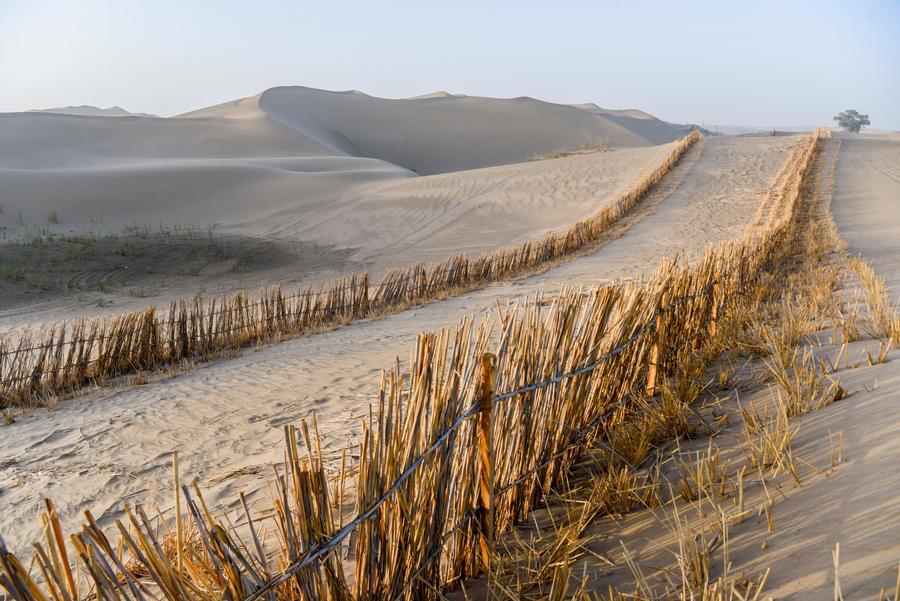
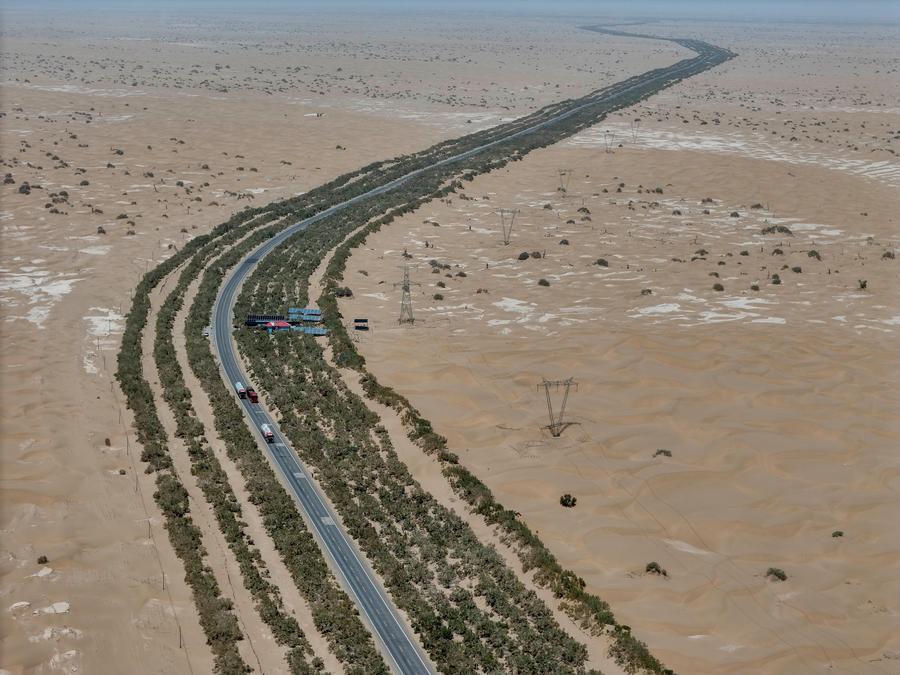
A worker shows seedlings at the China-Africa Green Technology Park in the Trarza region, Mauritania, Sept. 20, 2026. (Xinhua/Xie Jianfei)Smart irrigation equipment waters fruit and vegetable seedlings at the China-Africa Green Technology Park in the Trarza region, Mauritania, Sept. 20, 2026. (Xinhua/Xie Jianfei)Staff members cultivate moringa saplings at the China-Africa Green Technology Park in the Trarza region, Mauritania, Sept. 20, 2026. (Xinhua/Xie Jianfei)A staff member checks solar-powered water pumping equipment at the China-Africa Green Technology Park in the Trarza region, Mauritania, Sept. 20, 2026. (Xinhua/Xie Jianfei)This photo taken on Sept. 20, 2026 shows a seedling irrigated with smart device at the China-Africa Green Technology Park in the Trarza region, Mauritania. (Xinhua/Xie Jianfei)Staff members check fruit and vegetable seedlings at the China-Africa Green Technology Park in the Trarza region, Mauritania, Sept. 20, 2026. (Xinhua/Xie Jianfei)Tourad Medou, an official from Mauritania's Ministry of Environment and Sustainable Development, patrols a windbreak forest of Africa's Great Green Wall Initiative on the northern outskirts of Nouakchott, Mauritania, Sept. 21, 2026. (Xinhua/Xie Jianfei)This photo taken on Sept. 21, 2026 shows a windbreak forest of Africa's Great Green Wall Initiative on the northern outskirts of Nouakchott, Mauritania. (Xinhua/Xie Jianfei)Tourad Medou, an official from Mauritania's Ministry of Environment and Sustainable Development, patrols a pilot site using China's nylon-grid sand fixation technique in the Sahara Desert on the northern outskirts of Nouakchott, Mauritania, Sept. 21, 2026. (Xinhua/Xie Jianfei)This photo taken on Sept. 21, 2026 shows a pilot site using China's nylon-grid sand fixation technique in the Sahara Desert on the northern outskirts of Nouakchott, Mauritania. (Xinhua/Xie Jianfei)This photo taken on Sept. 20, 2026 shows a view of the Sahara Desert in the Trarza region, Mauritania. (Xinhua/Xie Jianfei)This photo taken on Sept. 22, 2026 shows a cityscape of Nouakchott and the Sahara Desert, Mauritania. (Xinhua/Xie Jianfei)The city view of Nouakchott, capital of Mauritania, is pictured through an airplane window, Sept. 14, 2026. (Xinhua/Xie Jianfei)Participants from Africa visit a desert research station under Xinjiang Institute of Ecology and Geography of the Chinese Academy of Sciences in Cele County, northwest China's Xinjiang Uygur Autonomous Region, June 13, 2023. (Xinhua/Wang Fei)A worker lays straw checkerboard barriers in Minfeng County of Hotan Prefecture, northwest China's Xinjiang Uygur Autonomous Region, Dec. 3, 2024. (Xinhua/Wang Fei)Bulldozers level the sandy ground in Minfeng County of Hotan Prefecture, northwest China's Xinjiang Uygur Autonomous Region, Dec. 2, 2024. (Xinhua/Wang Fei)An aerial drone photo taken on Nov. 27, 2024 shows workers setting high vertical sand barriers at an unprotected section of the desert between Pishan County of Hotan Prefecture and Yecheng County of Kashgar Prefecture, northwest China's Xinjiang Uygur Autonomous Region. (Photo by Zou Yi/Xinhua)An aerial drone photo taken on Dec. 2, 2024 shows a view of a desert control zone in Minfeng County of Hotan Prefecture, northwest China's Xinjiang Uygur Autonomous Region. (Xinhua/Wang Fei)This photo taken on July 10, 2018 shows reed barriers used for desert control at a construction site along a desert highway between Yuli County and Qiemo County, northwest China's Xinjiang Uygur Autonomous Region. (Xinhua/Hu Huhu)An aerial drone photo taken on July 18, 2025 shows the Tarim Desert Highway traversing through the Taklimakan Desert and the shelterbelt planted along it in northwest China's Xinjiang Uygur Autonomous Region. (Xinhua/Hu Huhu)■