
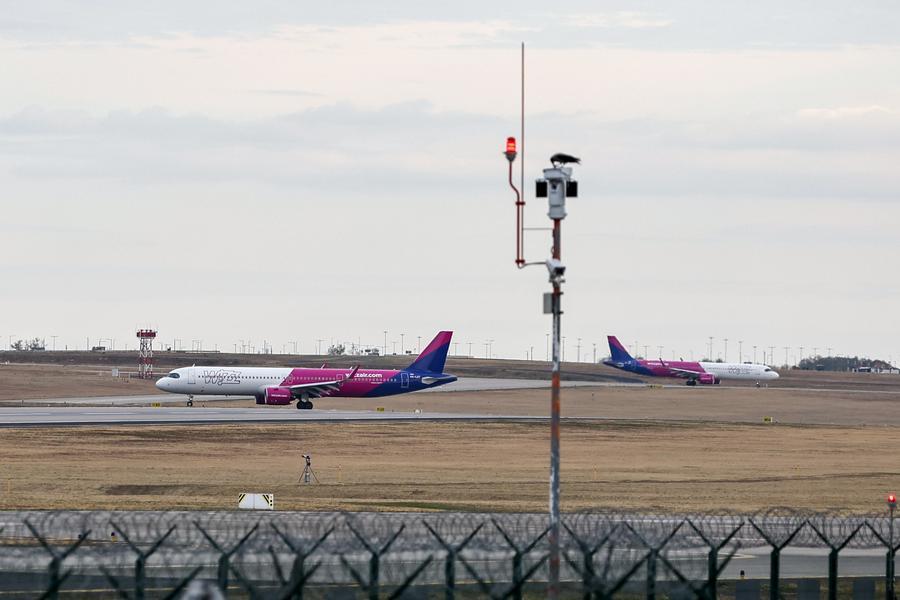
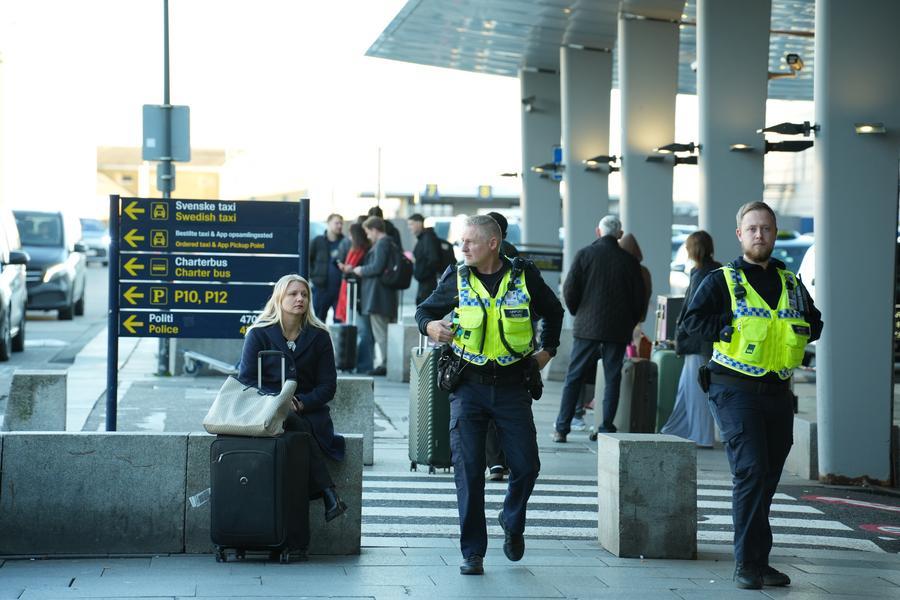
ROME, Nov. 6 (Xinhua) -- A fresh wave of bomb threats targeting commercial flights disrupted air travel across Europe on Friday, prompting security checks at airports in countries like the Czech Republic, France, Italy, Portugal and Bulgaria.
Although affected planes landed safely and no explosives were found, the incidents have raised concerns about possible hybrid threats.
Nine flights arriving at or departing from Prague Airport were targeted on Friday, including four inbound and five outbound flights, the Czech News Agency reported. Police inspections found no explosives, and airport operations continued without significant disruption.
The incident came a day after four aircraft heading to Prague received similar threats. Czech authorities have launched an investigation into the incidents and their possible links to similar threats elsewhere in Europe.
In France, four aircraft flying over French territory were targeted, with three landing at Paris-Orly Airport and one at Bordeaux. All four landed without incident and were undergoing security inspections by bomb disposal teams, the French prime minister's office said, adding that an investigation was underway to determine the source of the alerts.
In Italy, a Wizz Air flight from Prague to Rome was diverted to Venice following a bomb threat. Police were conducting security checks on the aircraft. Meanwhile, a Ryanair flight from Rome landed in Lisbon on Friday morning and underwent security inspections following another bomb alert, according to Italian news agency ANSA.
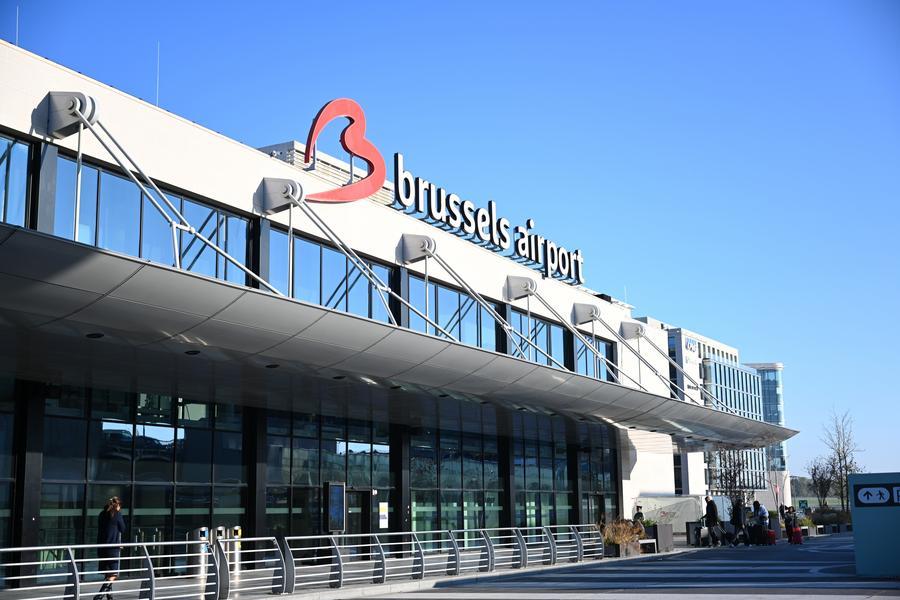
In Bulgaria, two aircraft arriving from London and Brussels were inspected at Sofia Airport, following bomb threats received by email, with no suspicious items found, Bulgarian television channel NOVA reported, citing the Transport and Communications Ministry.
In Hungary, fighter jets escorted several passenger aircraft through the country's airspace following bomb threats, they were flights from Brussels to Sofia and from Prague to Cyprus and Romania, Hungarian Defense Minister Romulusz Ruszin-Szendi said on Facebook.
The latest incidents follow a series of threats reported on Nov. 3 and Nov. 5, with more than 20 flights affected on Thursday alone.
Dutch Minister of Justice and Security David van Weel said the perpetrators behind Thursday's threats remained unknown because the warnings had been made anonymously. He said there was currently no evidence of state involvement, although no possibility had been ruled out.
British Transport Secretary Heidi Alexander described the threats as malicious hoaxes, saying Britain had robust aviation security systems and established procedures to handle them. Latvia's airBaltic said it was closely monitoring developments and prioritizing passenger and crew safety.
Eurocontrol also said it was monitoring the situation and coordinating with aviation stakeholders to minimize disruptions.
Matthew Borie, co-founder and chief intelligence officer of aviation security consultancy Osprey Flight Solutions, outlined several possible explanations for the incidents, including copycat behavior following an initial threat, repeated warnings issued by an individual or group, and operations associated with hybrid warfare by state actors or their supporters.
Portuguese Defense Minister Nuno Melo has warned that Europe was facing increasingly diverse forms of hybrid warfare, calling on the EU and NATO to strengthen their preparedness. He said such threats could undermine democratic institutions and political stability.
Bosnian security expert Safet Music told local media that the scale and timing of the incidents suggested possible coordinated operations by unidentified actors. He warned that such activities could spread public fear and erode trust in state institutions. ■