
by Xiong Maoling
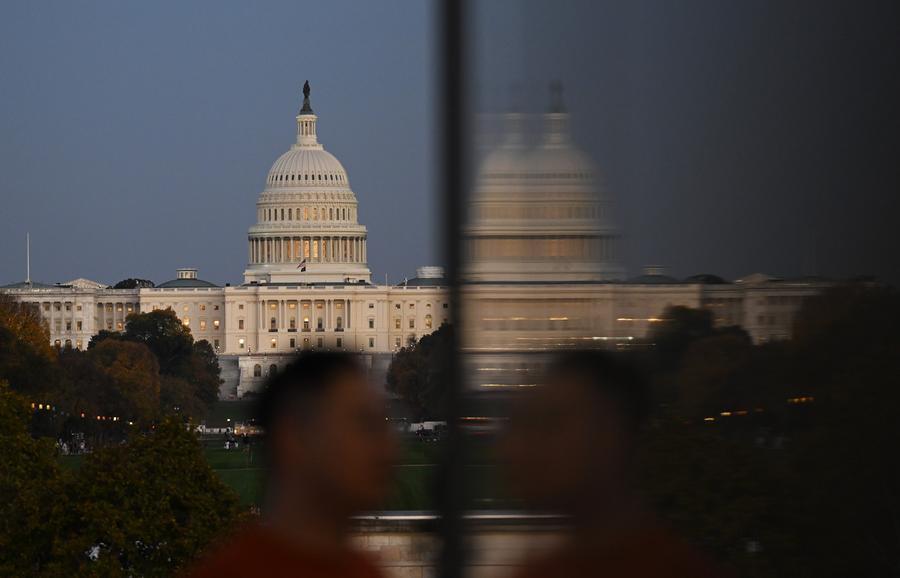
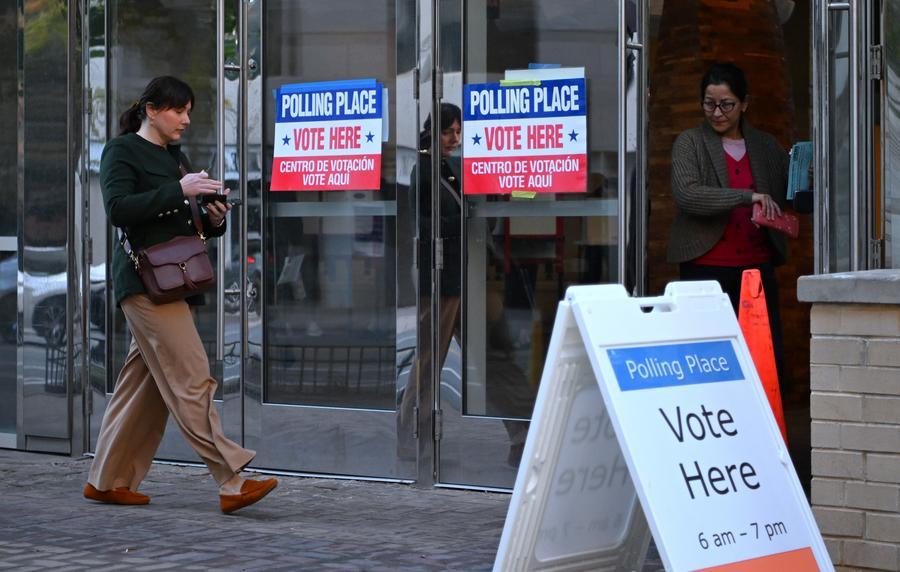
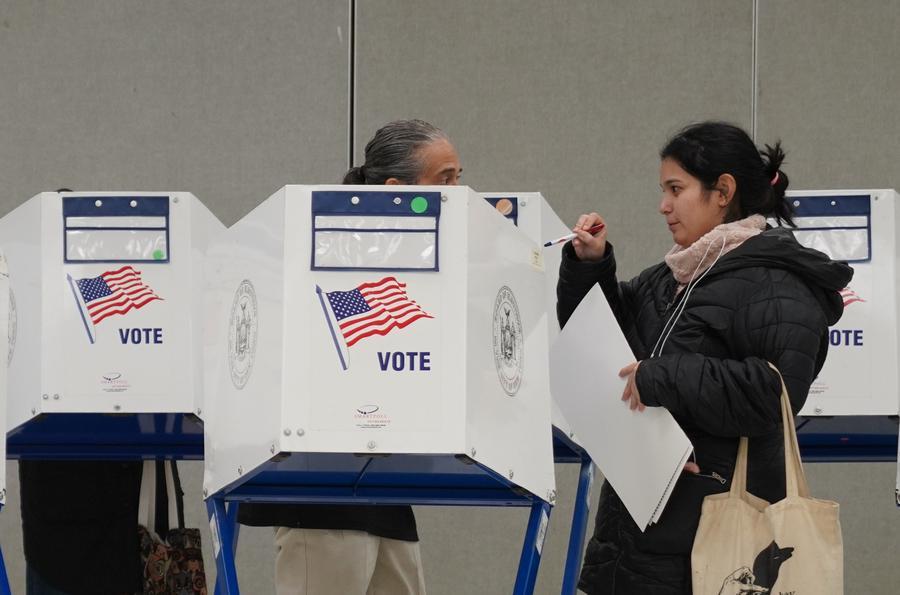
WASHINGTON, Nov. 6 (Xinhua) -- In the midterm elections held on Tuesday, Democrats wrested control of both the Senate and the House of Representatives from Republicans, ushering in a "blue wave," or what some have called a "blue tsunami."
Yet, beyond the Democrats' celebrations over their sweeping victory, neither voters nor political observers appear to have high expectations for possible policy changes following the midterm elections.
Observers believe that the Democrats' resounding electoral victory does not necessarily mean they have won voters' endorsement, let alone secured the political leverage needed to push through major policy shifts. With Congress and the White House controlled by opposing parties, partisan conflict is likely to intensify further. In addition, whether the Democrats can bridge the divide between the party establishment and its progressive wing will also have a bearing on their political prospects.
BLUE WAVE
Media outlets and analysts pointed out that the "blue wave" in elections was driven largely by voters expressing their dissatisfaction with the administration of President Donald Trump through the ballot box. Rather than embracing the Democrats, voters were simply seeking an alternative.
A CBS News poll found that 74 percent of voters who voted for Democratic candidates were driven by a desire to oppose Trump. "Neither Democrats nor Republicans are perceived by a majority of voters as having a clear plan," the poll showed.
Multiple polls and Xinhua reporters' on-the-ground observations indicate that inflation and the rising cost of living were the issues of greatest concern to voters this year. Many blamed the Trump administration's policies for rising gasoline and food prices, particularly its decision to wage war against Iran and impose sweeping tariffs.
Other issues that drew considerable public attention included immigration policy, healthcare policy and corruption. Ultimately, voters held Trump accountable for the consequences of his administration's policies.
While disappointed with the Trump administration, voters were unenthusiastic about the Democratic Party. A poll released by CNN on Wednesday found that more than half of those surveyed held unfavorable views of both parties. A report by The Associated Press noted that "swing voters don't really love Democrats, even if they voted for them."
Linda, an African American in North Carolina, said that although change is urgently needed, it remains to be seen what kind of change Democrats can bring. "Don't talk about it. Be about it," she said. "You ain't gonna believe it until you see it."
WHAT CHANGES TO EXPECT?
"This is a change election, and we understand as House Democrats that we need to deliver dramatic change," House Minority Leader Hakeem Jeffries, who is in line to become the House's first Black Speaker, said in his celebration speech.
Analysts believe that Democrats, now in control of Congress, will seek to advance their agenda in areas such as improving people's livelihoods, while obstructing efforts by the Trump administration and Republicans to get things done. Turning the Democrats' ambitions into reality will be no easy task.
Clay Ramsay, a researcher at the Center for International and Security Studies at the University of Maryland, told Xinhua that the agenda Democrats may pursue could include using the War Powers Act and congressional investigations to prevent the war with Iran from continuing; pushing for an increase in the federal minimum wage; delaying the implementation of or seeking to repeal major cuts to Medicaid scheduled to take effect next January; and blocking tariffs targeting Canada.
Media reports also indicate that some Democrats are already considering impeachment proceedings against senior officials in the Trump administration, including Defense Secretary Pete Hegseth.
Greg Cusack, who served in the Iowa state legislature from 1973 to 1981, told Xinhua that Democrats are likely to say "no" to the Trump administration more frequently, for example, by refusing to approve additional funding for the war in Iran and blocking the confirmation of Trump's nominees for key positions.
However, Democrats' legislative agenda will face significant obstacles, given that Trump retains his presidential veto power and Democrats do not hold the two-thirds majority in either chamber of Congress needed to override a presidential veto. In fact, before the midterm elections, Trump had already said that if Democrats regained control of Congress, he would frequently exercise his veto power, even joking that he would become "Mr. Veto."
"There will be lots of policy fights and investigations over the next two years, but not a lot of action that generates meaningful change," Darrell West, a senior fellow at the Brookings Institution, told Xinhua. "This will set up the 2028 election as the Super Bowl of American politics."
BATTLE OVER PARTY'S DIRECTION
For some observers, the Democrats' sweeping victory does not mean that the party has forged an effective policy agenda or achieved political consensus internally. The Democratic Party is more of an "anti-Trump coalition" than a political alliance united by a common set of policy positions.
"I do not think we can see this as a clear victory for the Democratic Party's policy agenda or priorities, which are themselves hard to pin down given the wide variety of candidates and messages in the party," said Martha Johnson, an associate professor of political science at Northeastern University.
At present, the most pronounced divide within the Democratic Party is between its progressive wing and the establishment.
The former, represented by figures such as Senator Bernie Sanders, emphasizes economic equality and the expansion of social welfare programs, advocating a more distinctly left-wing policy agenda. The latter, represented by figures such as Senate Democratic leader Chuck Schumer, places greater emphasis on winning over moderate voters and takes a relatively cautious approach to issues such as welfare, taxation and immigration.
Just two days before the election, Democratic Representative Haley Stevens, who is regarded as a member of the party establishment, publicly endorsed Republican candidate for Michigan's Senate seat Mike Rogers. Stevens previously lost the Democratic primary to progressive Abdul El-Sayed, who went on to win the Senate seat. The episode has been widely seen as a microcosm of the ideological divide between the progressive wing and the party establishment.
Analysts believe that the Democratic Party faces a political dilemma over its future direction: moving closer to the progressive wing could alienate the party establishment and some moderate voters, while sticking to the establishment's traditional approach could cost it the support of young voters and grassroots progressive activists.
"Going into 2028, the Democrats have to figure out how big of a tent their party can be while continuing to offer resonant messages to voters," said Virginia Tech political communications expert Cayce Myers. "It may prove to be an extremely difficult feat, especially because they will not have Trump as an opponent on the ballot."
(Matthew Rusling contributed to the story.)■