
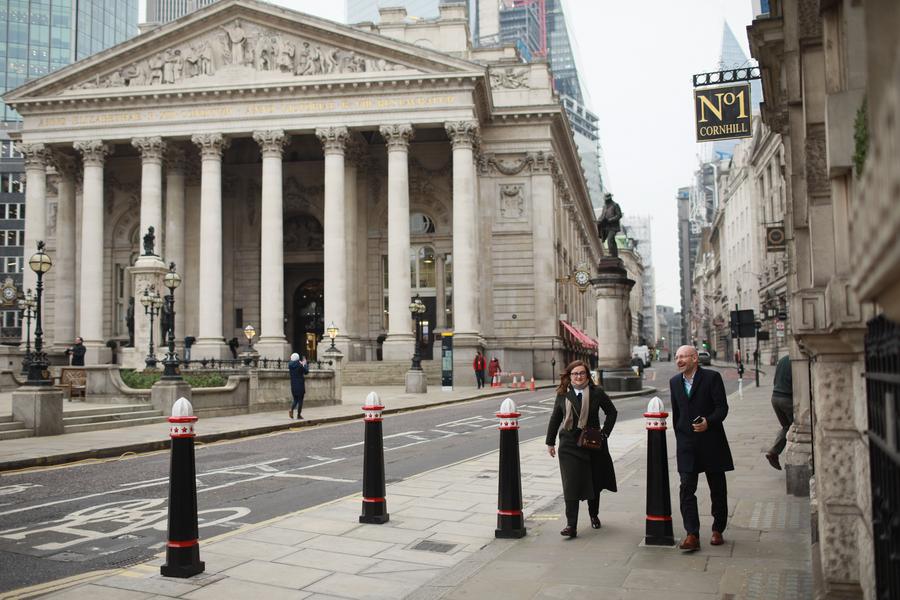
BoE governor Andrew Bailey said further increases are not excluded as the MPC will judge the outlook at each meeting, and act as needed to control inflation. However, businesses warn of mounting costs.
LONDON, Nov. 5 (Xinhua) -- The Bank of England (BoE) on Thursday raised its benchmark interest rate by 0.25 percentage points to 4 percent, its first increase in more than three years, as the conflict in the Middle East drives up energy prices and fuels inflation.
The Monetary Policy Committee (MPC) has voted 8-1 in favor of the increase, with one member calling for a larger increase of 0.5 percentage points to 4.25 percent.
The bank said conflict in the Middle East has disrupted transportation and the energy supply, raising fuel prices and pushing up households' motor fuel costs and utility bills.
Inflation has risen to 3.5 percent and is expected to rise even further to about 5 percent by mid-2027 as higher energy prices have their knock-on effects, it noted.
"There is now enough inflationary pressure in the pipeline caused by the rise in energy prices that an increase in bank rate is warranted," BoE governor Andrew Bailey commented.
Looking forward, Bailey warned that further tightening could be necessary. "Unless the conflict in the Middle East is resolved, neither does it seem likely to be the last increase," he said, adding that the MPC will judge the outlook at each meeting, and act as needed to bring inflation sustainably back to the 2-percent target.
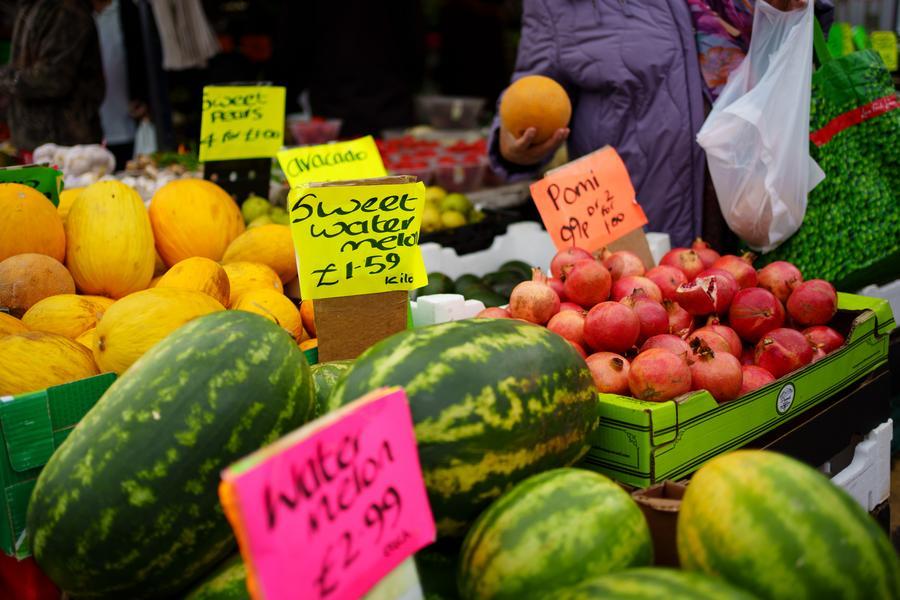
WARNING OF MOUNTING ECONOMIC PRESSURES
The decision drew concerns from British business groups, which warned that higher borrowing costs could add to the pressure on firms and households already struggling with rising energy prices.
"With inflation forecast to hit 5 percent next year, the bank wanted to show it will act to stop price increases becoming entrenched," said David Bharier, deputy director at the British Chambers of Commerce (BCC).
However, Bharier cautioned that the current rise in inflation is largely driven by energy costs derived from the Middle East conflict, not an overheating economy.
Citing BCC data showing that only 17 percent of firms are increasing investment at present, he argued: "If there are signs of de-escalation in the months following the midterm elections, and energy prices steady, a rate rise may prove premature."
Tina McKenzie, national chair of the Federation of Small Businesses (FSB), said the rate increase would put further strain on small firms already facing mounting costs.
"Today's rate rise is a sobering reminder that the fallout from global turmoil is landing squarely on the shoulders of Britain's small businesses. For a small business owner juggling a business loan, commercial mortgage and mortgage on their own home, the impact of higher interest rates is felt both at work and around the kitchen table," she said.
McKenzie said today's increase was unsurprising given the inflation impact of global energy and fuel prices, but warned that it will raise the cost of credit for small firms while squeezing household spending.
She noted that two in five small business borrowers were already paying interest rates of 10 percent or more in the previous quarter, while more than half of small firms identified fuel as their fastest-rising cost.
Alpesh Paleja, deputy chief economist at the Confederation of British Industry, said the MPC had run out of patience with the global energy shock and is seeking to prevent higher energy costs from feeding into more persistent domestic price pressures - particularly through wage growth and household expectations of inflation.
"The question now is where the committee goes from here. Persistently high inflation means another rate rise cannot be ruled out. That could prove challenging with interest rates already weighing on economic activity, while tighter financial conditions are doing some of the bank's work for it," he added.
Paleja warned that households and businesses would face higher borrowing costs in the near term. "That is a bitter pill to swallow, but one the MPC will see as necessary to prevent a more prolonged inflation shock and lasting damage to living standards." ■