* The ninth China International Import Expo (CIIE), the world's largest import-themed expo, opened in Shanghai in east China on Thursday, just a day after the export-focused Canton Fair concluded in south China's Guangzhou, shifting the spotlight to China's increasingly prominent role as a global super buyer.
* The CIIE's magnetic pull stems from China's growing role as a global super buyer, underpinned by its 1.4-billion population, its people's rising purchasing power and their growing appetite for a better quality of life.
* Exhibitors at the CIIE, including those with a long-standing presence in the country, increasingly see China as more than just a consumer market. It is also a testing ground for innovation and a launchpad for products that aspire to reach consumers worldwide.
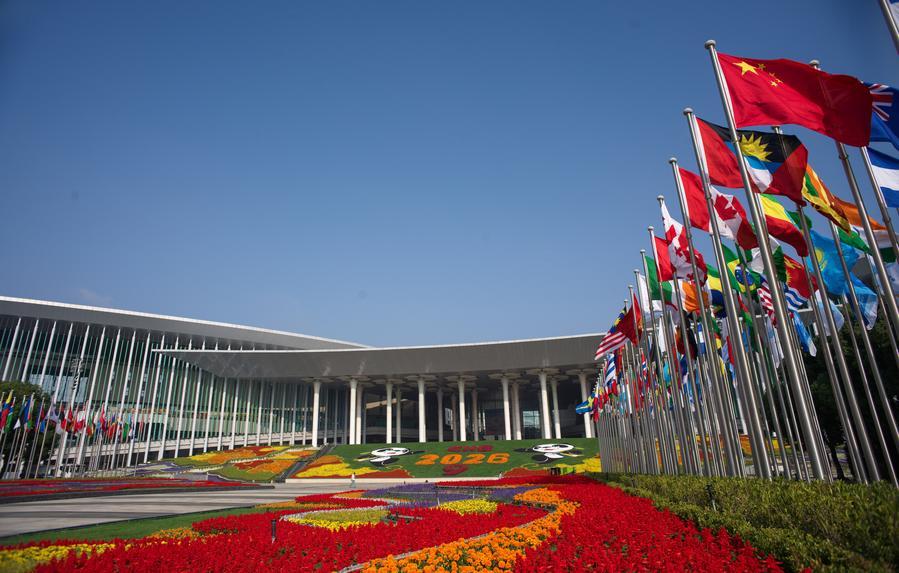
SHANGHAI, Nov. 5 (Xinhua) -- Amid rising protectionism and waning faith in free trade, China is staging two major international trade expos back-to-back, signaling its steadfast commitment to continuous opening up.
The ninth China International Import Expo (CIIE), the world's largest import-themed expo, opened in Shanghai in east China on Thursday, just a day after the export-focused Canton Fair concluded in south China's Guangzhou, shifting the spotlight to China's increasingly prominent role as a global super buyer.
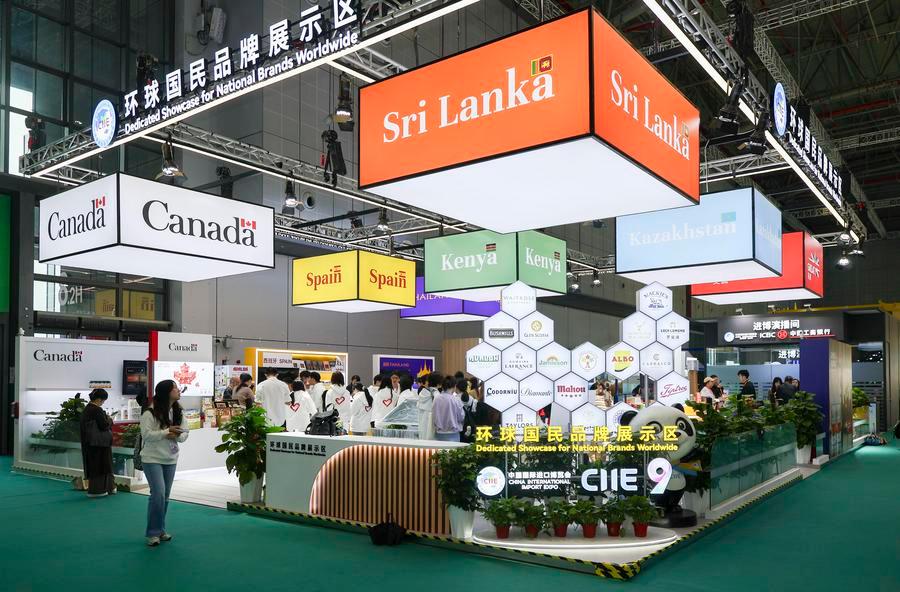
Running from Nov. 5 to 10, this year's CIIE has attracted 4,142 overseas exhibitors. With Canada and Sri Lanka as guest countries of honor, the ninth edition of the expo features more than 300 Fortune Global 500 companies and industry leaders.
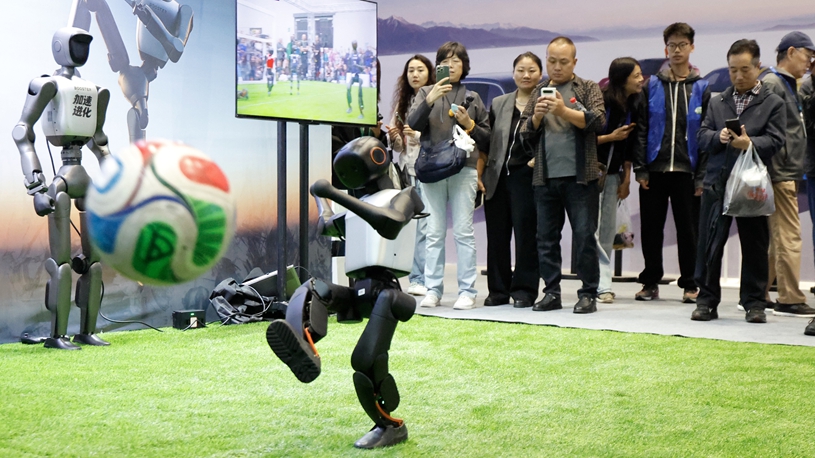
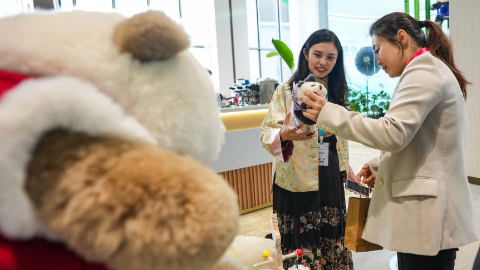
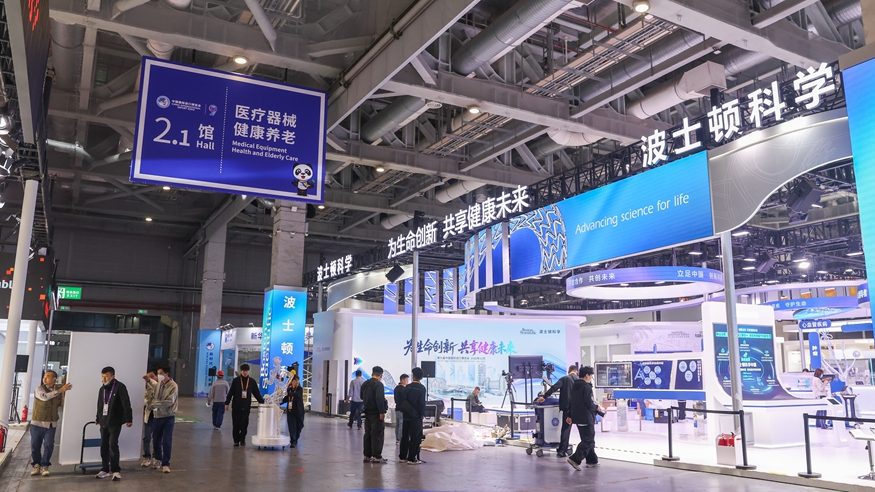
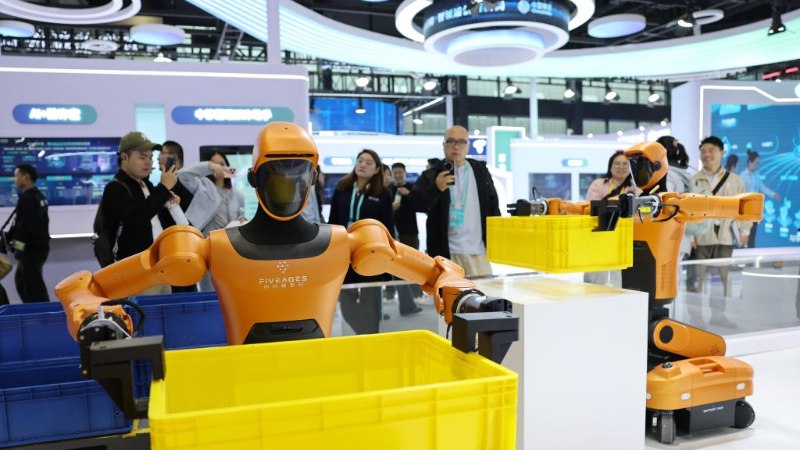
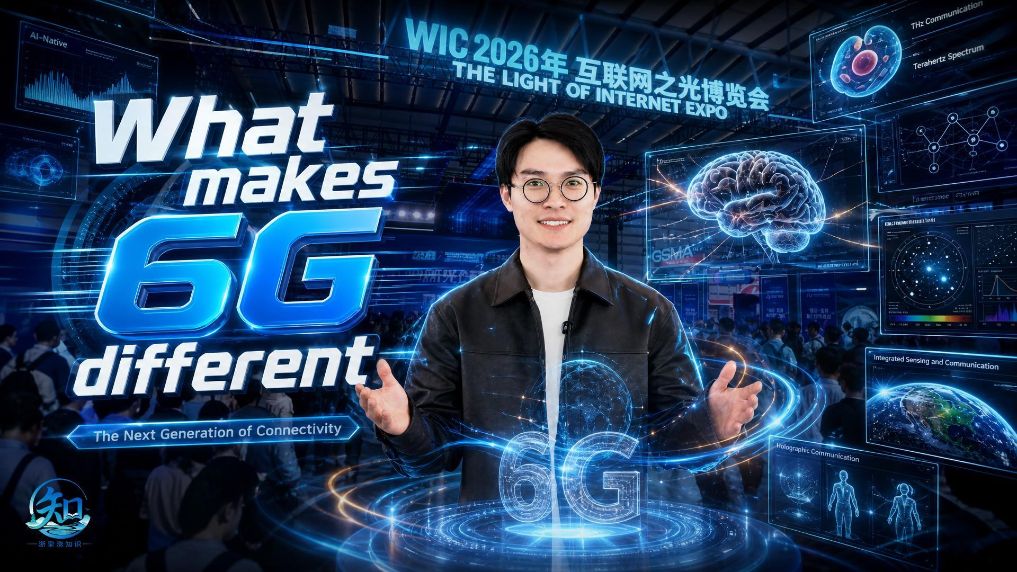
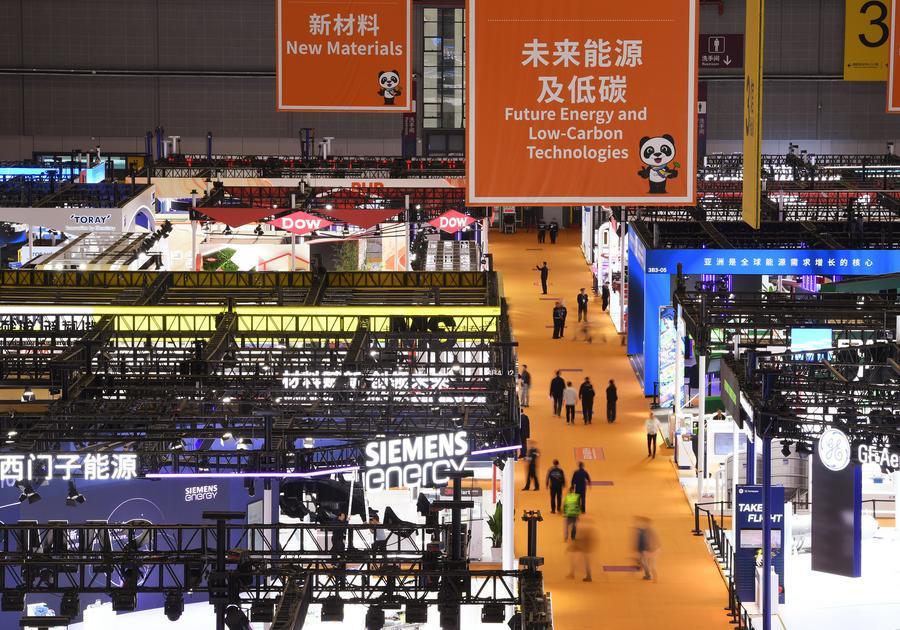
Across the bustling expo floor in Shanghai, sprawling over a total area of 440,000 square meters, exhibits range from cutting-edge technologies, such as a 6G terminal prototype and a high-precision turn-mill machine, to everyday consumer goods, including food, cosmetics and clothing, ready to test their potential in China's supersized market.
MAGNETIC CIIE
In 2018, as China's per capita GDP approached the 10,000-USD mark, the country launched the CIIE, a trade fair dedicated to imports, as a gateway for businesses to tap into the world's second-largest consumer market.
Over the years, many innovative drugs exhibited at the CIIE have seen their market entry into China accelerated. Exotic food exhibits, meanwhile, have since enjoyed the media spotlight and found their way onto Chinese dining tables.
According to Shanghai Customs, since the inaugural CIIE, more than 100 varieties of fruit from over 40 countries have gained access to the Chinese market. Once exotic fruits, from Malaysian durians to Peruvian blueberries, are now a common sight on Chinese supermarket shelves.
For many exhibitors, the tangible benefits of past participation keep them coming back year after year.
This year, nearly 200 businesses and institutions are returning for their ninth consecutive CIIE. One such "full-attendance" exhibitor, U.S. materials science giant Dow, values CIIE as a platform to "showcase its capabilities, understand market needs and expand value-chain partnerships," Puay Koon Chia, Dow Asia Pacific president, told Xinhua.
Opportunities created by the platform have also reached many small businesses that have traditionally struggled to enter unfamiliar foreign markets.
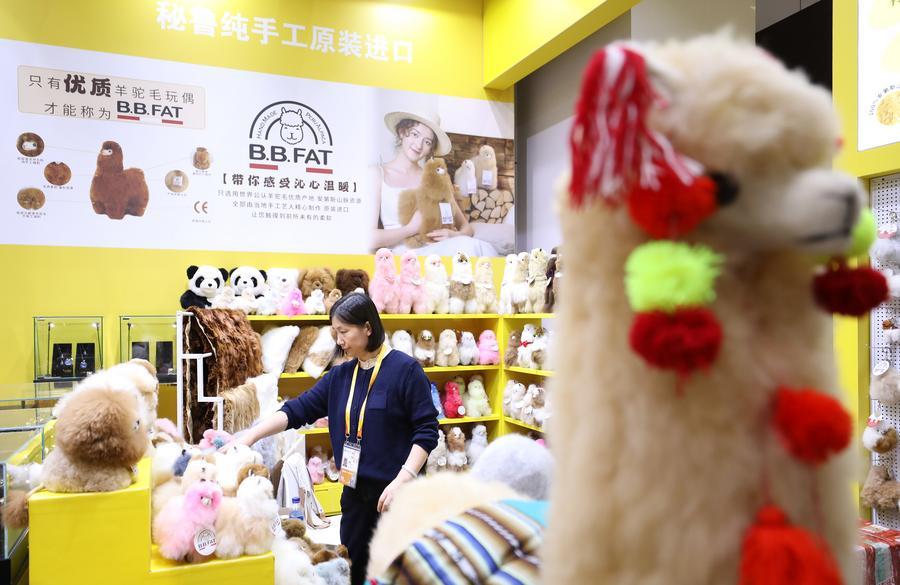
Ali Faiz, a carpet dealer from Afghanistan, first attended the CIIE in 2020 with just 20 or so carpets. Since then, orders from China have helped improve the livelihoods of more than 1,500 carpet-weaving families in his home country.
To help exhibitors navigate market opportunities, this year's CIIE has built on existing initiatives, such as buyer-seller matchmaking events, the Hongqiao International Economic Forum, and a range of dialogues and cultural activities. It has also introduced new features, including a dedicated exhibition section for time-honored national brands from around the world.
SUPER BUYER CHINA
The CIIE's magnetic pull stems from China's growing role as a global super buyer, underpinned by its 1.4-billion population, its people's rising purchasing power and their growing appetite for a better quality of life.
China has remained the world's second-largest import market for 17 consecutive years, with its total imports exceeding 90 trillion yuan (about 13.4 trillion U.S. dollars) during the 14th Five-Year Plan period (2021-2025). The pace is picking up. China's imports reached 16.7 trillion yuan in the first nine months of 2026, up 22.3 percent, the fastest growth since 2021.
Beyond a supersized market, more sophisticated consumer demand in China is creating fresh opportunities for global businesses. From healthier diets and beauty products to outdoor sports and leisure experiences, China's growing middle-income population is embracing new lifestyles and driving demand for a wider range of goods and services.
A newcomer to the CIIE, outdoor apparel brand Arc'teryx has gained momentum in China in recent years. John Yin, senior vice president-general manager of Arc'teryx Greater China, cited the country's thriving outdoor sports culture as among the underlying drives for the company's "longstanding commitment to China's market."
A classic example of an emerging lifestyle in China reshaping global trade is the import of coffee beans. Long known for its tea-drinking traditions, China has emerged as one of the world's fastest-growing coffee markets. As coffee culture spreads from major cities to smaller towns, surging demand is driving imports of coffee beans from growing regions around the globe.
For African coffee exporters, from Ethiopia to Mauritius, the CIIE offers a gateway to this swiftly expanding market. Adding to their optimism is China's zero-tariff treatment of imports from all 53 African countries with which it has diplomatic relations, which took effect on May 1.
This year's CIIE features an upgraded Asia-Africa products zone designed to help African countries capitalize on the zero-tariff policy, while expanding free exhibition space for the least developed countries by 17 percent.
Beyond the expo, China's commitment to opening its market wider is also reflected in its policy blueprint. Promoting balanced growth in imports and exports has been written into the outline of the 15th Five-Year Plan (2026-2030). Meanwhile, this year's government work report calls for boosting imports to promote balanced trade.
This goal also aligns with a shift in domestic economic priorities that sees consumption taking on a greater role as a stabilizing anchor and key driver of growth. China this year laid out its first five-year plan dedicated to expanding consumption, setting a goal of raising total retail sales of consumer goods to around 60 trillion yuan by 2030.
According to Sourabh Gupta, a senior fellow at the Institute for China-America Studies, the CIIE sends two important messages: China's commitment to a more balanced, higher-quality growth model driven primarily by domestic demand, and its willingness to become as impressive an importer as it is an exporter, thereby contributing to global economic rebalancing.
"TEST GROUND AND A GYM"
Exhibitors at the CIIE, including those with a long-standing presence in the country, increasingly see China as more than just a consumer market. It is also a testing ground for innovation and a launchpad for products that aspire to reach consumers worldwide.
"China is both a test ground and a gym, a place where we test new ideas, challenge ourselves and continuously strengthen our innovation capabilities," Jay Wu, Michelin China vice president, director of government relations and strategy, told Xinhua. He noted that new trends and technologies in sectors ranging from electric vehicles to autonomous driving often emerge in China ahead of other markets.
Unveiling a tire made with 75 percent renewable and recycled materials at the CIIE, the French tire manufacturer described its evolving approach to China as a shift from "In China, for China" to "With China, for the World."
This shift reflects a broader trend among multinational companies. At a press conference in October, a Chinese National Bureau of Statistics official said more foreign firms are embracing "China Opportunity 2.0" by integrating more deeply into the country's industrial and innovation chains.
The trend extends beyond industrial manufacturing to consumer goods, where increasingly sophisticated Chinese consumers are helping shape global innovation.
Stéphane de La Faverie, president and CEO of the Estée Lauder Companies, noted in his videotaped message to the CIIE that as China continues to set the pace for beauty innovation, the country is not only an important market, but also "a source of talent, insight and inspiration."
Maziar Mike Doustdar, president and CEO of Novo Nordisk, echoed his view. "China is becoming an increasingly important source of innovation. We are excited to bring China-originated innovation into our growing pipeline and explore its potential to benefit patients worldwide."
For the Danish pharmaceutical giant, which has participated in every edition of the CIIE, China's rapidly evolving pharmaceutical innovation landscape and expanding healthcare market have reinforced its confidence in investing in the country.
As Doustdar put it: "Investing in China is investing in the future." (Video reporters: Chen Jie, Sun Qing; Video editors: Hong Liang, Zhu Cong and Zheng Qingbin.) ■