SHANGHAI, Nov. 3 (Xinhua) -- Thousands of overseas businesses are gearing up to meet buyers in Shanghai in east China at a trade fair devoted to imports. The draw is China, the world's second-largest import market.
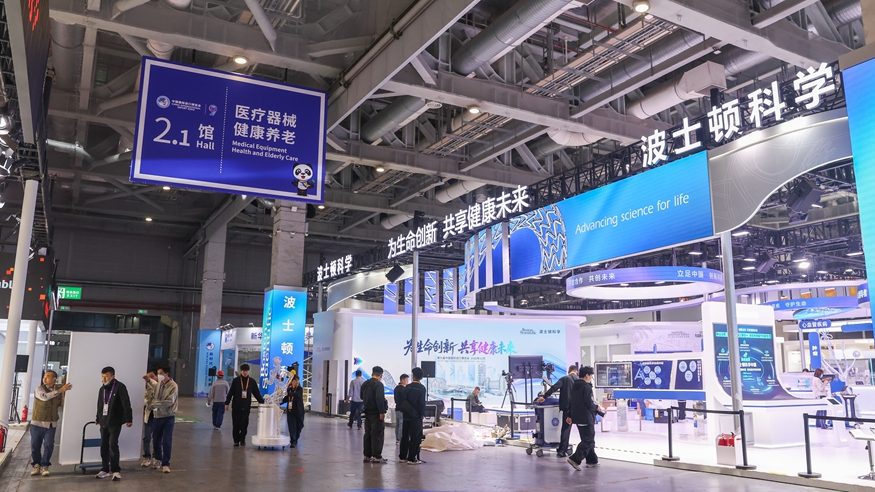
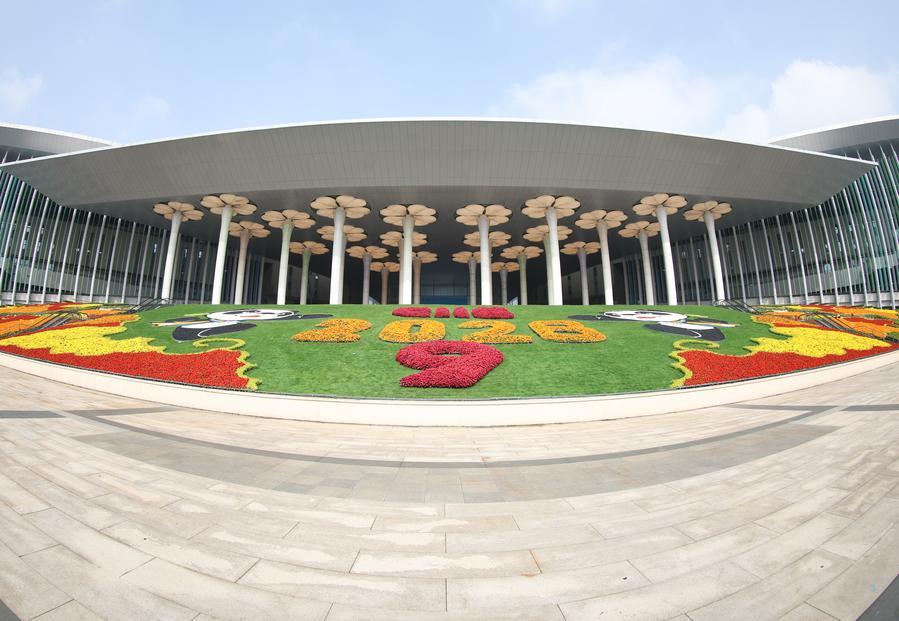
The occasion is the ninth China International Import Expo (CIIE), set to be held from Nov. 5 to 10 at the four-leaf-clover-shaped National Exhibition and Convention Center (Shanghai). Its 4,142 overseas exhibitors include more than 2,000 newcomers alongside veterans of every previous edition.
Call it an "importathon" -- a blend of "import" and "marathon." Announced in 2017 and held annually since 2018, the CIIE has become a fixture on the global trade calendar, helping China expand imports and open its massive market wider to the world. But what keeps the event running, and why do businesses keep returning?
CHINA MEANS BUSINESS ON IMPORTS
In May 2017, China announced plans for a trade fair with a different focus: imports rather than exports. When the first CIIE opened in Shanghai the following year, it became the world's first national-level expo dedicated to imports, forming part of China's drive to open its market wider and support an open world economy.
China has since described the CIIE as a showcase of its new development paradigm, a platform for high-standard opening-up and a public good for the whole world. The idea is simple: businesses worldwide can share in the opportunities offered by China's market.
Imports also serve China's own development needs. Imported consumer goods give households more choice, while advanced equipment and technologies can support industrial upgrading. Greater imports of goods and services can also help meet domestic demand and promote more balanced trade.
This push continues in 2026, the first year of China's 15th Five-Year Plan (2026-2030). This year's government work report calls for boosting imports to promote balanced trade. The five-year blueprint also calls for expanded imports of advanced technology and equipment, quality agricultural products, and producer services to meet domestic needs.
The blueprint explicitly calls for continuing to hold the CIIE and other major trade fairs, including the Canton Fair in south China, while strengthening trade-promotion platforms.
THE RETURN ON RETURNING
Roughly half of this year's exhibitors are returning, but they occupy around 80 percent of the exhibition space. Among them are 169 companies and 30 overseas exhibition organizers back for a ninth consecutive edition. One such stalwart is French yeast maker Lesaffre. In a written interview with Xinhua, its Greater China president, Jerome Vanachter, described the CIIE as a "market-intelligence hub" that helps turn market insights into products.
The CIIE does more than showcase products. It brings policymakers, researchers, entrepreneurs and businesses together, creating opportunities for trade, investment and joint innovation.
Such connections start before the doors open. Trade matchmaking sessions have already been held in countries including Egypt, Germany and Britain. More than 40 trade delegations and over 600 sub-delegations are expected at the expo, while the "CIIE Goes Local" initiative extends matchmaking to provinces and cities across China.
These connections need not end when the fair closes. The 2025 CIIE recorded 83.49 billion U.S. dollars in intended deals for purchases over one year. Shanghai has also developed a "six days plus 365 days" approach to year-round trading. As of July 2026, Hongqiao 365, a CIIE-linked trading platform, featured more than 85,000 products from over 120 countries and regions, about 70 percent of them previously exhibited at the expo.
For Danish pump maker Grundfos, it all started with a small display board in the Danish pavilion at the inaugural CIIE. The company later returned as an independent exhibitor. After the fourth edition, it announced an investment of roughly 100 million U.S. dollars in a new factory in Changshu, east China's Jiangsu Province. The plant opened in 2024. Bent Jensen, a Grundfos executive, said the expo helps the company better understand Chinese market demand and connect with clients across Asia and other global partners.
INNOVATION GOES BOTH WAYS
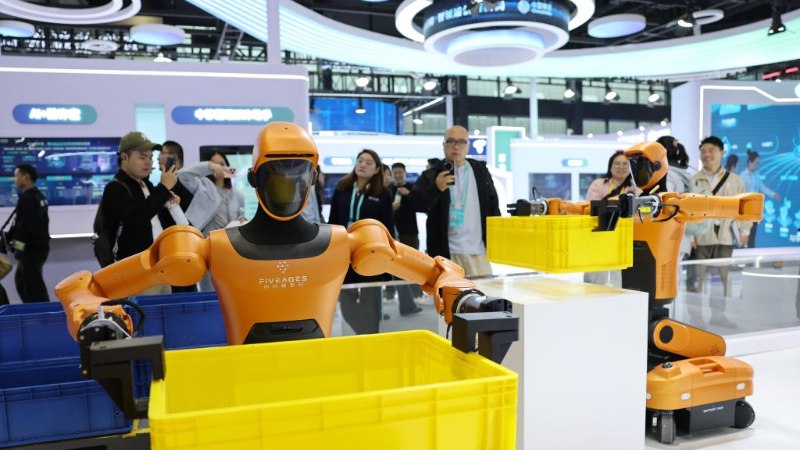
For international companies, the CIIE doubles as a testing ground for new ideas. Product launches put new offerings directly in front of Chinese buyers, giving companies a chance to gauge demand and find local development or production partners. This is one expression of China's "debut economy," which links product debuts with research, production and sales.
More than 3,400 new products, technologies and services debuted during the first eight editions of the CIIE. This year, over 480 exhibits are set to make their global, Asian or China debuts -- a record for the event. Shanghai Vice Mayor Lu Shan has said that feedback from such launches strengthens exhibitors' confidence in investing in China. Some have since established production operations or research hubs in China serving global markets.
For some multinationals, China's appeal lies not just in its customers but also in opportunities to innovate together, a shift some call "China Opportunity 2.0." "At the CIIE, we sit down with Chinese partners and explore how we can innovate together," Bayer CEO Bill Anderson said. The German life sciences giant plans to showcase nearly 30 innovations making their CIIE debut.
Michelin shows how technology can move from the show floor to the market. The French tire maker displayed Formula E racing-tire technology at the 2020 CIIE, then brought it to the Chinese market in May 2021 following interest from local automakers and consumers. This year, the company plans an Asian debut for its tire digital-twin solution, which uses vehicle data to help monitor tire performance.
Innovation can flow outward as well. Through its BIG BANG beauty-tech collaboration program, L'Oréal worked with Nanomed, a company based in Suzhou in east China, to develop a Lancome skincare device. Displayed at the 2025 CIIE, this device was on sale in more than 20 countries and regions by July 2026.
OPENING UP IN PRACTICE
"This expo matters because it opens doors," Rebeca Grynspan, secretary-general of the UN Conference on Trade and Development, said in a video address to the 2025 CIIE opening ceremony. The fair is one prominent example of China's efforts to make its domestic market more accessible to overseas businesses.
The opening-up drive extends beyond the exhibition halls. In November 2024, China removed the last two manufacturing-related restrictions from its national negative list for foreign investment. In January 2026, meanwhile, Chinese authorities said nine additional cities would implement 159 pilot measures to further open the services sector.
On Dec. 18, 2025, China launched island-wide special customs operations in the Hainan Free Trade Port in south China, expanding the share of tariff lines eligible for zero-tariff treatment on qualifying imports from 21 percent to 74 percent. Goods shipped onward from Hainan to the Chinese mainland remain subject to separate customs controls.
Since May 1, 2026, China has extended zero-tariff treatment to eligible goods from all 53 African countries with which it maintains diplomatic relations. This year's CIIE will feature an upgraded Asia-Africa products zone to help African countries capitalize on the policy, while expanding free exhibition space for the least developed countries by 17 percent.
Gao Lingyun, a researcher at the Chinese Academy of Social Sciences, described "China Opportunity 2.0" as part of a new wave of industrial transformation -- not about displacing others, but about working together to "make the pie bigger" and helping more developing countries benefit from technological progress.
As the ninth edition approaches, the "importathon" again promises more than six days of exhibitions. Its appeal lies in the chance to turn a debut into a sale, a business meeting into an investment, and market access into lasting partnerships. ■