Some analysts said, "The rift between the so-called political elite and a huge part of the electorate is growing ever larger." Therefore, Iotova's biggest challenge might be overcoming political and social division.
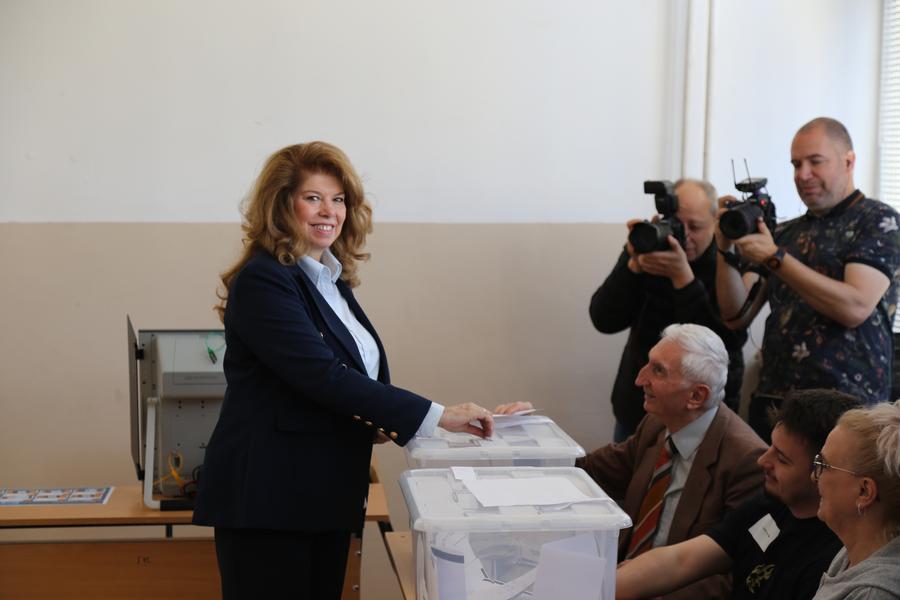
SOFIA, Nov. 2 (Xinhua) -- With more than 99 percent of ballots counted, Bulgaria's incumbent President Iliana Iotova has won Sunday's presidential runoff.
With the presidency and the government now held by the same political camp, the post-election debate centers on whether Iotova can bridge Bulgaria's deepening social divide and bring a dialogue track to Black Sea security, which is vital to the country's economy.
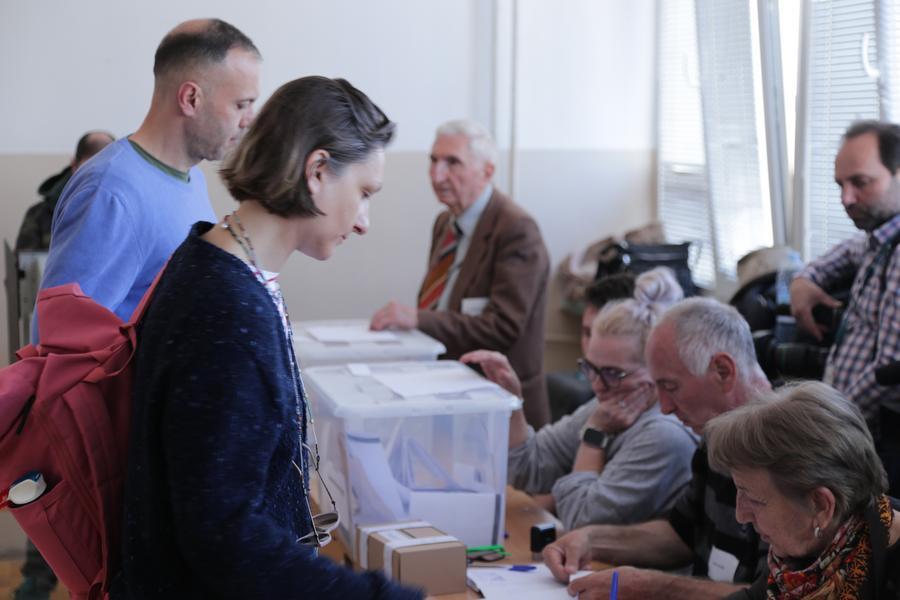
With 99.68 percent of ballots counted, Iotova and running mate Kiril Valchev won 57.661 percent, while former caretaker Prime Minister Andrey Gurov and Georgi Kandev took 39.383 percent. Turnout in both rounds was far below the 40.5 percent recorded in the 2021 presidential election -- about 22.5 percent in the first round, a record low, which Bulgarian media and analysts described as a "red card" from voters to the political class over livelihood issues.
Nadezhda Yordanova, leader of Democratic Bulgaria's parliamentary group, said on Bulgarian National Television that Iotova's biggest challenge will be overcoming political and social division.
WILL HER WIN BRING STABILITY?
Iotova ran as an independent but was backed by Prime Minister Rumen Radev's Progressive Bulgaria, which holds 131 of 240 parliamentary seats. Iotova served for nearly two full terms as vice president alongside Radev and took over as head of state under the constitution after Radev resigned in January. Her term expires at the end of January 2027.
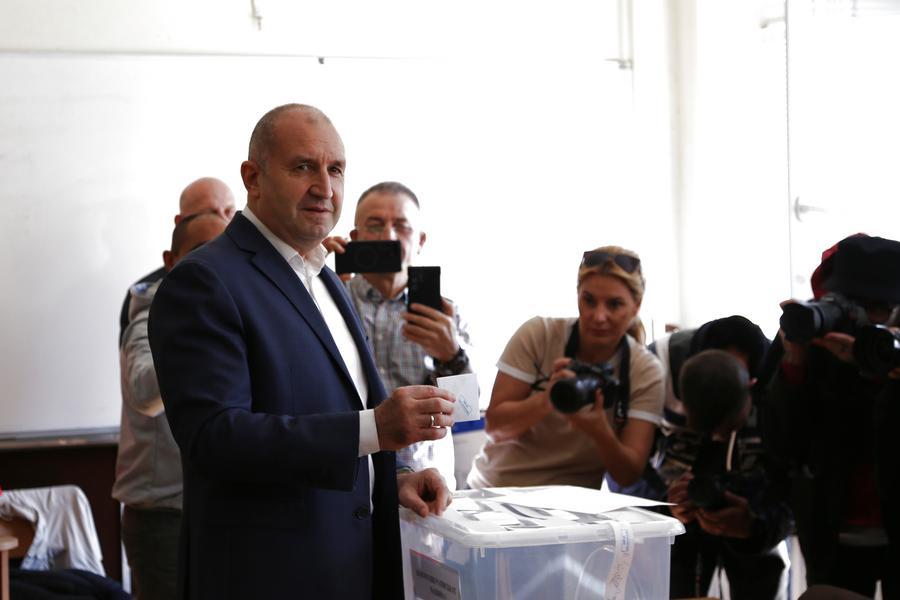
With the presidency aligned with the parliamentary majority, the friction between the two institutions is reduced. Radev said after the vote that Bulgarians had chosen "a stable and clear prospect."
Not everyone sees that as reassuring. Some counter that coming from the same political camp does not necessarily mean the presidency and the government will always see eye to eye.
Social anthropologist Harlan Aleksandrov told Euronews that Iotova's win would strengthen the governing camp but not end the country's political tension.
A Sova Harris poll commissioned by Trud in late September found 53.7 percent naming high prices and inflation as the country's most serious problem, followed by poor governance at 13.6 percent. That echoed a Sova Harris survey before the parliamentary election in April this year, in which 69.8 percent of Bulgarian adults feared being unable to meet basic needs, mainly due to galloping inflation.
Political scientist Strahil Deliyski told Bulgarian television channel NOVA that "the rift between the so-called political elite and a huge part of the electorate is growing ever larger." That makes bridging social divides as the next government's one of the major tasks.
CAN SHE PUSH A BLACK SEA DIALOGUE?
Under Bulgaria's constitution, the president represents the country in international relations and has responsibilities in defense and security, but foreign policy is decided by the Council of Ministers.
On Oct. 30, two days before the runoff, Iotova, meeting with members of the European Parliament, opposed a war of attrition in Ukraine and said Europe needs to play a more active role in negotiations and put forward its own peace plan.
She argued that Bulgaria, close to the conflict and with historical ties to both sides, has a chance to "be an active participant in this process." She proposed a Black Sea security forum of six littoral states -- Bulgaria, Romania, Türkiye, Georgia, Ukraine and Russia -- aimed at a suspension of hostilities in the Black Sea basin to ensure "free and safe shipping." She said earlier that it would be "much better" if channels of diplomatic communication with Russia were opened on behalf of the entire European Union (EU).
Repeated drone attacks in Bulgaria's exclusive economic zone have turned shipping risk from a security issue into an economic one. Economist Shtelyo Nozharov, cited by Bulgarian media SEGA, said 20 to 25 percent of Bulgaria's imports and exports move through the Black Sea, covering grain, metals, chemicals and oil, and that "ships and cargo are already avoiding the ports of Varna and Burgas," with higher insurance costs pushing up prices and weighing on the budget and tourism.
Iliya Prodanov, head of Bulgaria's grain producers' association, said grain shipping costs in the Black Sea basin have risen more than fivefold since the Russia-Ukraine conflict began in 2022.
Romanian outlet Gandul noted that in a country that has gone through eight parliamentary elections since 2021, the head of state plays "a key role as an arbiter of the political system," giving the office more practical weight than its paper powers suggest.
Analysts believe that is the space Iotova has used, and will likely continue to use. She has said Bulgaria should be part of a group within the existing EU and NATO structures that initiates dialogues on ending the Russia-Ukraine conflict with concrete proposals.
Slovak Prime Minister Robert Fico, meeting Iotova in September, praised both her and Radev for their emphasis on peace, saying there are "very few politicians in the EU who talk about peace as much" as Bulgaria's leadership. ■