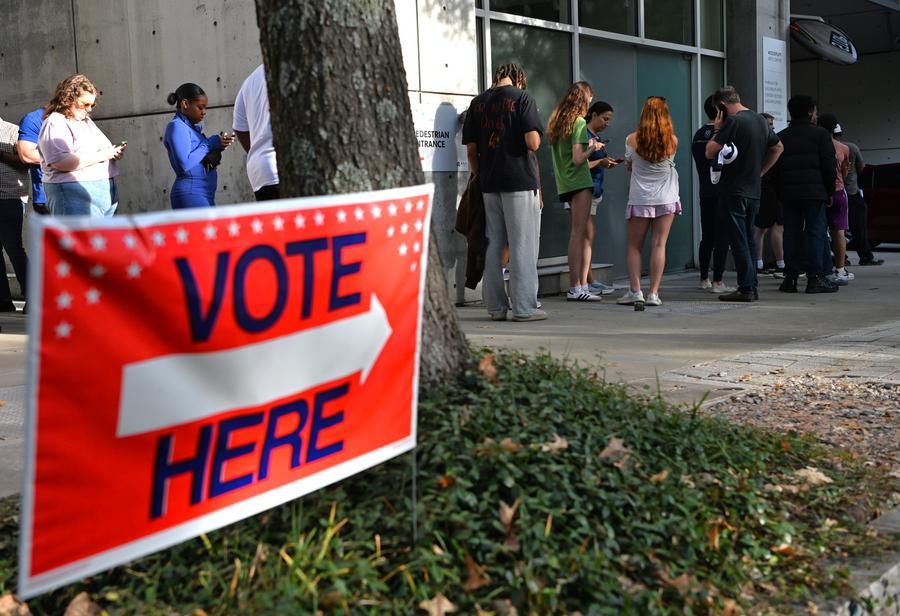
WASHINGTON, Nov. 2 (Xinhua) -- As the Nov. 3 midterm elections draw closer, legal battles between Republicans and Democrats are also obviously heating up.
The U.S. Justice Department has challenged ballots cast by alleged noncitizen voters in California and sought to block certification of Alaska's Senate race over concerns that two candidates with similar names could confuse voters, while federal judges have rejected key requests in both cases.
VOTER ELIGIBILITY
The Justice Department on Sunday sought possible contempt proceedings against an immigrant rights group whose analysis questioned the accuracy of a federal voter list. The group said more than 40 percent of the names it examined could not be found in the state's voter registration database, a finding disputed by the department.
The case centers on about 20,000 California residents whom President Donald Trump's administration suspects of being noncitizens registered to vote. On Oct. 15, the department sued California election officials after they refused to comply with federal demands to verify the individuals' citizenship and set aside their ballots until their status could be confirmed.
U.S. Attorney General Todd Blanche described the alleged violations as "state-facilitated voter fraud," and Homeland Security Secretary Markwayne Mullin argued that even one noncitizen vote could dilute the votes of eligible citizens.
In a letter to federal judges on Saturday, California Governor Gavin Newsom said that a "well-documented weaponization" of the Justice Department under the current administration poses a direct threat to election integrity.
On Wednesday, a federal judge in California rejected the Justice Department's request to set aside the ballots, warning that the move could "wreak havoc" on an election already underway. The Ninth Circuit also rejected the administration's emergency requests in related proceedings, citing the risk of disenfranchising eligible voters.
MAIL-IN BALLOTS
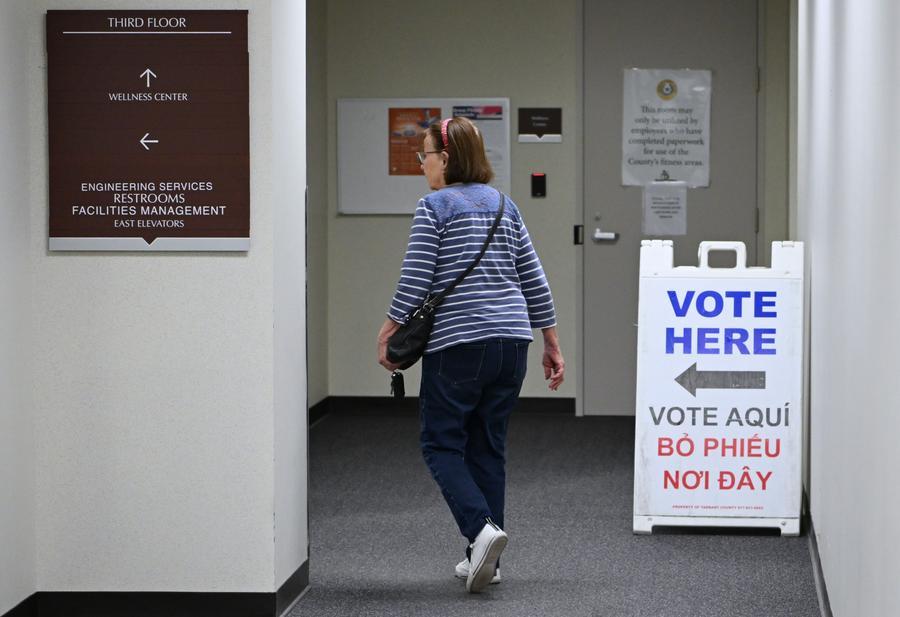
In a separate legal dispute, the Supreme Court on Sept. 14 rejected the federal government's request to lift a lower court injunction blocking new Postal Service rules that would impose stricter requirements on the delivery of mail ballots ahead of the elections. The decision kept the rules from taking effect before Election Day.
The rules stemmed from an executive order signed by Trump on March 31. The order directed federal agencies to compile state-by-state lists of U.S. citizens eligible to vote and instructed the U.S. Postal Service to establish a system under which mail ballots would be delivered only to voters included on state-provided lists.
The move has also raised questions about its potential partisan impact. According to the Pew Research Center, 44 percent of Democratic voters voted by mail in the 2024 presidential election, compared with 26 percent of Republican voters, which means more restrictions on mail-in voting could put Democrats at a disadvantage.
As of Saturday, more than 51 million Americans cast ballots in person or by mail, surpassing the nearly 46 million who voted early in the 2022 midterm elections, according to the University of Florida's Election Lab.
CHALLENGES TO RESULTS
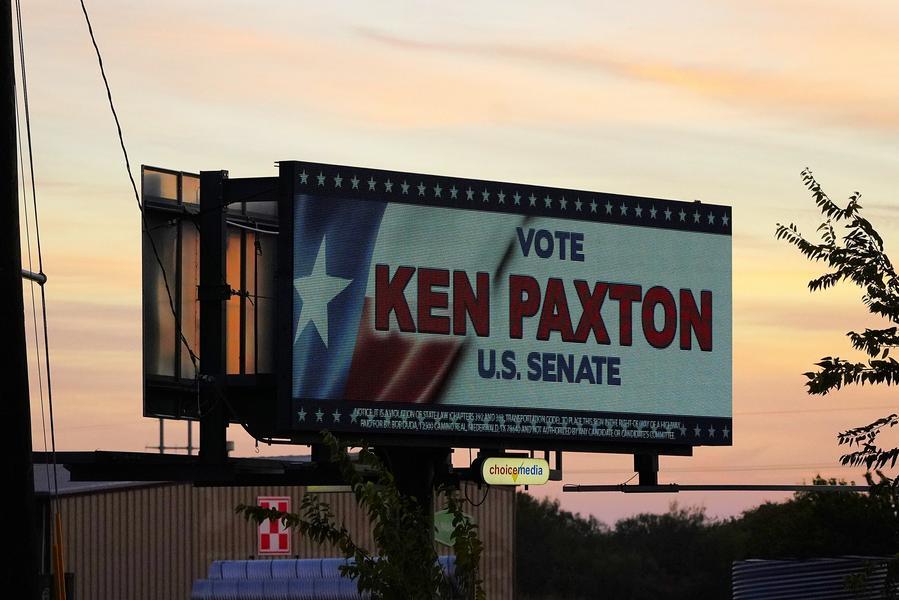
In Alaska, the Justice Department sought to block certification of the Senate race, arguing that two candidates with similar names could confuse voters and divert votes from Republican incumbent Dan Sullivan. A federal judge dismissed the lawsuit on Sunday, but the department said it would appeal.
The controversy deepened after a New York Times investigation Wednesday reported that operatives linked to Democratic candidate Mary Peltola's campaign had helped recruit a candidate with a name similar to Sullivan's, in an apparent effort to split the Republican incumbent's votes, while Democrats denied involvement.
The dispute has unfolded amid broader concerns about public confidence in U.S. elections. An October AP-NORC poll found that only 45 percent of Americans were confident that votes would be counted accurately, down from 50 percent in 2022.
Meanwhile, Nate Persily, a professor at Stanford Law School, said the growing number of lawsuits reflected a broader trend in U.S. elections. "This is what we've seen since Bush v. Gore, which is an escalating number of court cases with each election," he said. "Since the 2000 election, because it was razor-thin, the battle over the rules has become a natural part of the election itself."
A sampling compiled by UCLA law professor Rick Hasen found a record 756 cases during the 2023-2024 election cycle, up 14.3 percent from 2019-2020 and roughly triple the level before 2000.
Such disputes are likely to continue after Election Day, particularly in closely contested races. Victoria Bassetti, a senior adviser with the States United Democracy Center, said: "Those within the recount or contest margin of error -- the candidates, outside groups and the administration -- will fight those tooth and nail."■