BEIJING, Nov. 1 (Xinhua) -- Four new or revised mandatory national standards and regulations to better protect children's health and safety took effect in China on Sunday, covering classroom lighting, youth sports training, and children's products and toys.
The rules aim to reduce health and safety risks in children's daily learning, physical activities and play, with a greater emphasis on prevention and clearer safety requirements.
BETTER LIGHTING TO PROTECT EYESIGHT
A revised national standard on classroom lighting and daylighting sets stricter requirements for the lighting environment in primary and secondary schools, as China steps up efforts to curb myopia among children and adolescents.
The standard addresses aspects such as natural light, lighting uniformity, blue-light hazards and flicker, aiming to enhance the comfort of classrooms for students who spend long hours reading and writing. It also calls for regular inspections and upkeep of lighting equipment.
The revised standard will also apply to secondary vocational schools, while extracurricular training institutions serving school-age children are encouraged to follow its requirements.
Liu Yiwei, a lecturer at Capital Normal University, said the new standard sets more detailed mandatory requirements for classroom lighting, providing a measurable and enforceable framework to support efforts to prevent myopia among young students.
It incorporates the principle of putting health first into educational settings and places greater emphasis on preventing myopia before it develops, Liu added.
MORE STANDARDIZED SPORTS TRAINING
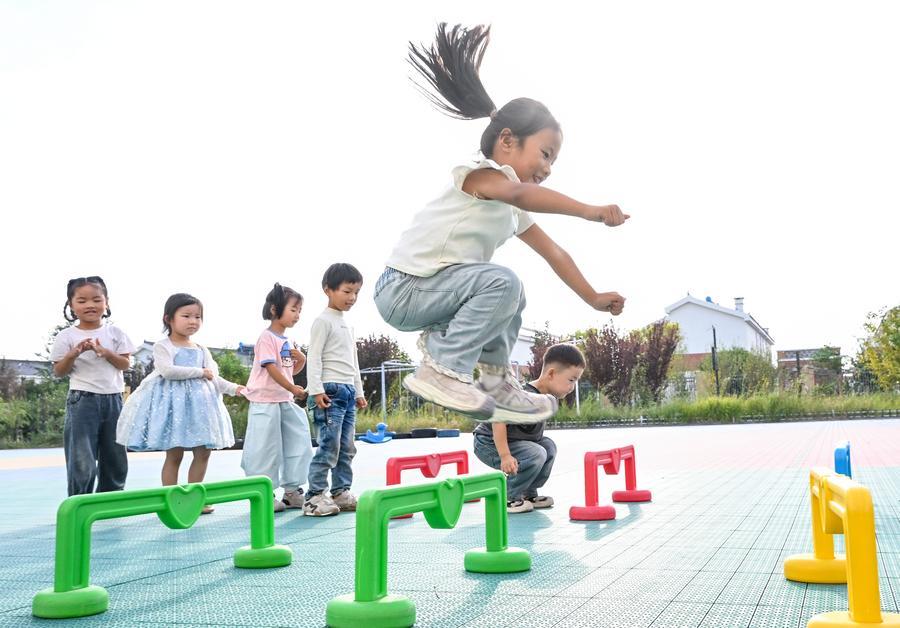
A new code of conduct for youth sports training sets requirements for training venues, class sizes, instructor qualifications and safety management, addressing concerns over unsafe facilities and uneven coaching standards in a rapidly growing market.
It is essential for training providers to tailor courses to align with the ages, physical conditions, and varying levels of athletic ability of children. Instructors must hold recognized qualifications, while people with specified criminal records, including those involving sexual abuse or physical assault, are prohibited from working in the sector.
The rules also establish limits on class sizes and require additional first-aid support for high-risk sports, helping create safer conditions for children to participate in physical activities.
Huang Haiyan, dean of the School of Management at Beijing Sport University, noted that the code upgrades the regulatory framework and is a necessary step toward higher-quality development of the industry.
The code should serve as a basis for further clarifying the respective oversight responsibilities of education, market regulation and public security authorities, helping improve the overall governance of the industry, Huang said.
SAFER CHILDREN'S PRODUCTS, TOYS
A new mandatory national standard on the general safety of children's products establishes baseline requirements for products used, worn or played with by children under 14, covering product categories that previously lacked mandatory safety standards.
The standard covers risks such as sharp edges, detachable small parts that could cause choking, and cords that could pose strangulation hazards. It also sets limits on potentially harmful chemicals, including heavy metals and formaldehyde.
Meanwhile, revised mandatory toy safety standards expand controls on hazardous substances and strengthen requirements concerning physical safety and fire risks.
The revisions pay particular attention to products that have drawn public concern, including popular novelty toys such as squishy toys and slime. They introduce additional limits on substances such as formaldehyde, plasticizers and boron, helping reduce the risk of harmful chemical exposure.
Together, the new requirements are the country's latest move to fill the safety gaps for certain products used in children's everyday lives, making safety standards more comprehensive as the range of children's goods continues to expand. ■