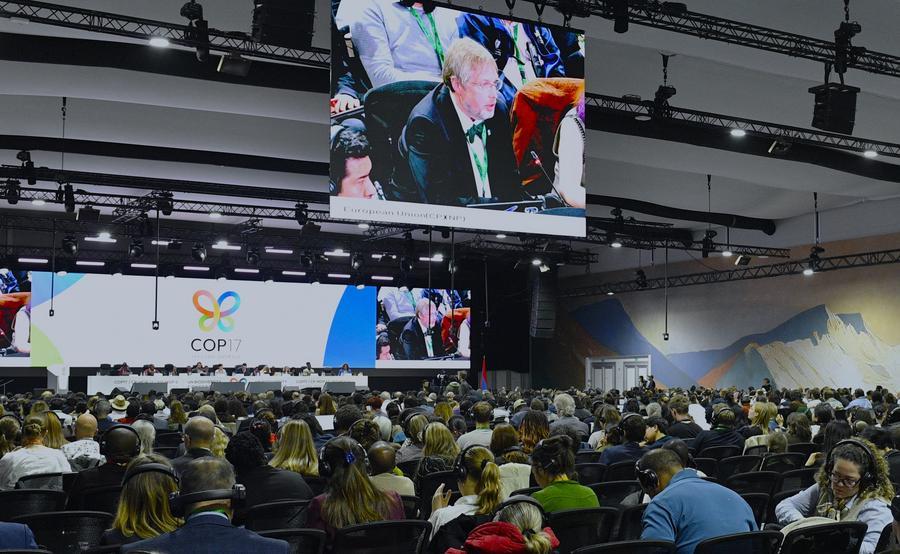
YEREVAN, Nov. 1 (Xinhua) -- The 17th meeting of the Conference of the Parties to the Convention on Biological Diversity (COP17) concluded in Yerevan on Saturday after negotiators secured agreement on the conference's main decisions, including the Yerevan Pathway aimed at accelerating global biodiversity action.
This encouraging outcome came at a critical time for global biodiversity protection. Halfway between the adoption of the Kunming-Montreal Global Biodiversity Framework and its 2030 deadline, countries face a widening gap between their commitments to protect nature and the action to fulfill them. Whether the Yerevan Pathway can help close that gap will depend on financing, national policies and sustained international cooperation.
A PATHWAY TO ACCELERATE ACTION
The conference's main task was to conduct the first global review of collective progress in implementing the Kunming-Montreal Global Biodiversity Framework, which sets out 23 targets for 2030.
The assessment presented governments with a clear warning: Without a rapid acceleration of implementation, the framework's 2030 targets and mission would not be achieved, putting its longer-term goals for 2050 at risk.
The Yerevan Pathway is part of the response to that assessment. Rather than setting new targets, it focuses on how countries can step up efforts to meet those already agreed upon.
Embedded in the global review decision, the pathway identifies several priorities for the period through 2030: accelerating implementation, broadening the coverage of national targets, strengthening financial and other support, engaging governments and societies more widely, and improving monitoring and knowledge.
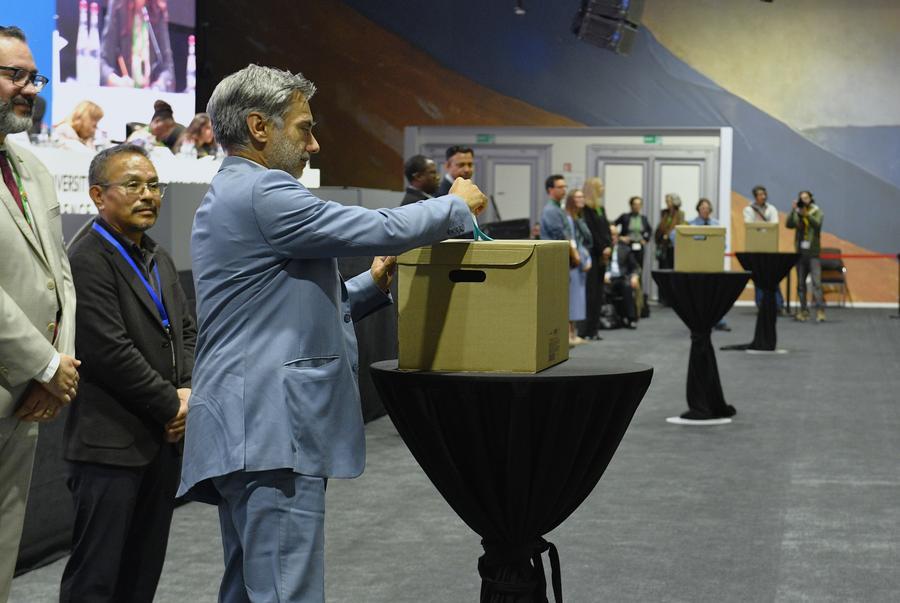
Negotiators also adopted decisions covering protected areas and forest biodiversity, sustainable wildlife management, invasive alien species, marine and coastal biodiversity, synthetic biology and other areas.
Alongside the negotiations, nearly 2 billion U.S. dollars in new biodiversity funding was announced, according to the Secretariat of the Convention on Biological Diversity (CBD). This included 560 million dollars under the ninth replenishment of the Global Environment Facility and its Global Biodiversity Framework Fund, 500 million dollars through the Species Recovery Alliance, and more than 330 million dollars through the Value Nature Fund.
Together, the decisions and funding announcements provide a basis for further action. However, the effectiveness of the pathway will depend on whether international agreements lead to changes in national priorities and concrete action on the ground.
FINANCE DIVIDE TESTS DELIVERY
Finance remains one of the main obstacles to implementation, both in terms of how much funding is available and how the responsibility for providing it is shared.
The global report found that developed countries had failed to meet their commitment to provide at least 20 billion dollars annually in biodiversity finance to developing countries by 2025. This shortfall was a major point of contention in negotiations over funding for the next stage of implementation.
Some developed countries called for broadening the contributor base, bringing into focus a longstanding dispute over the relationship between countries' financial capacity and their obligations under the CBD.
Article 20 of the convention requires developed-country parties to provide new and additional financial resources, while allowing other parties to assume such obligations voluntarily.
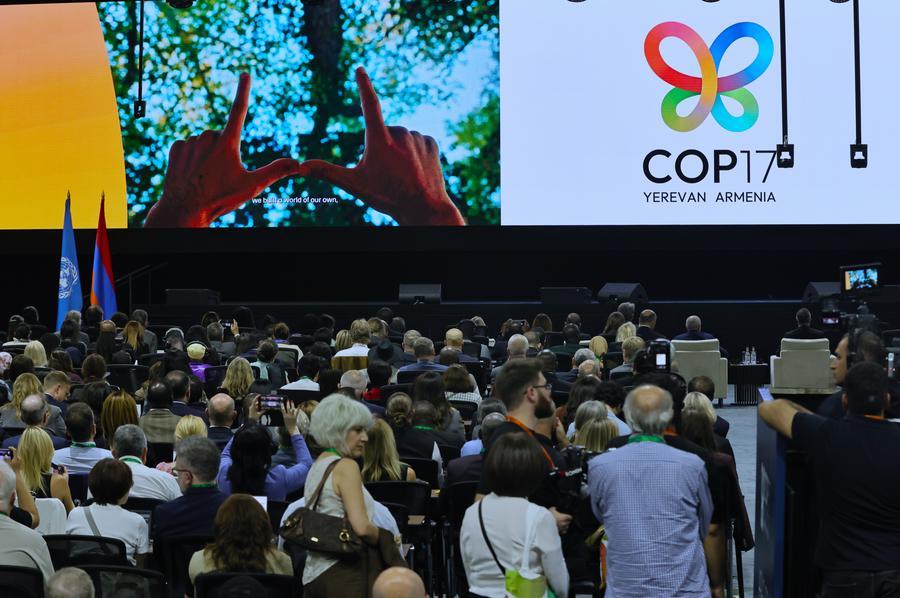
The new funding announcements offered some encouragement, but the broader challenge of securing predictable support on the scale needed remains. For developing countries, efforts to strengthen conservation, restore ecosystems and monitor progress continue to depend heavily on access to finance and technical assistance.
Nor did the conference resolve every issue. Negotiations on cooperation and strategic review, along with two items under the Nagoya Protocol, remained unfinished and were deferred to the next ordinary meetings.
"Every diluted clause, every deferred target, is a step towards irreversible loss," Guido Broekhoven, interim global director of multilateral policy at the World Wide Fund for Nature International, told a press conference before the closing session.
His remarks underscored a central challenge facing the negotiations: while consensus is essential to international cooperation, biodiversity loss continues as governments work to reach agreement.
CHINA'S ROLE IN ADVANCING IMPLEMENTATION
Turning commitments into concrete results was also a key theme in discussions of China's contribution, including its support for the global review, sharing experience in domestic conservation and financing for biodiversity projects in developing countries.
The global review decision specifically thanked China for hosting the Kunming dialogue to support preparations for the review. It also acknowledged financial support provided through the China Trust Fund via the United Nations Environment Programme (UNEP).
In an interview with Xinhua during the conference, COP17 President Hambardzum Matevosyan said China had made important contributions to advancing the talks, from preparatory work to the formal negotiations.
Such cooperation has practical relevance as countries seek ways to overcome implementation barriers, Matevosyan said, adding that national experiences can help identify approaches that others may adapt to their own circumstances.
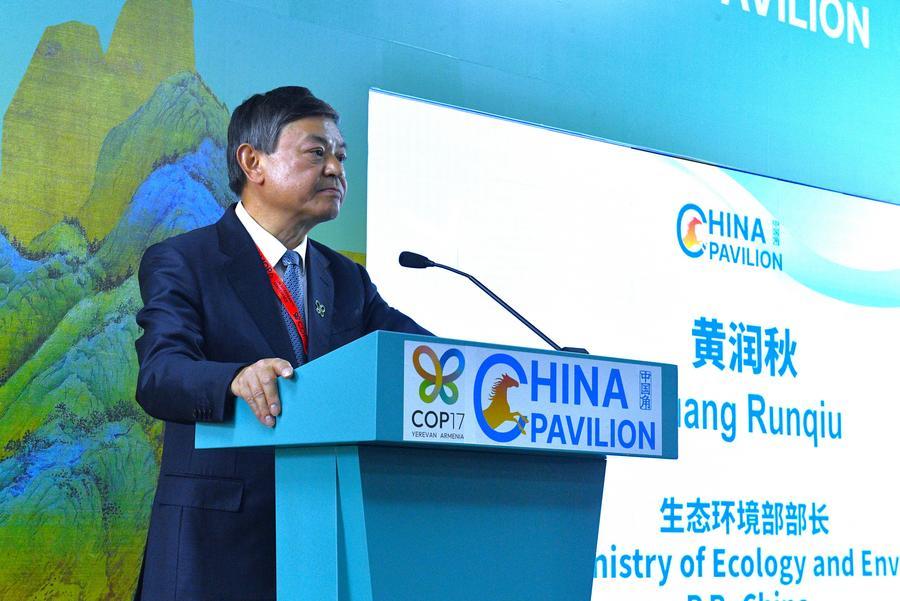
Astrid Schomaker, executive secretary of the secretariat of the CBD, said the progress reflected in China's seventh national report was encouraging and highlighted its ecological conservation red lines as an example of how biodiversity protection could be incorporated into national planning and development.
Financial support is another important part of turning the framework into action.
Inger Andersen, executive director of the UNEP, recognized China's continued leadership through the establishment of the Kunming Biodiversity Fund following its COP15 presidency. She emphasized the importance of helping developing countries access the financing needed to implement the agreement.
These contributions point to the task now facing all parties: ensuring that international cooperation is backed by the funding, institutions and policies needed to deliver results.
The Yerevan conference preserved a common direction at a difficult moment for biodiversity protection. The next four years will determine whether governments can turn their commitments into measurable progress before the 2030 deadline.
As Schomaker put it: "Ultimately, the test is not what governments agreed in Yerevan, but what they change when they return home."■