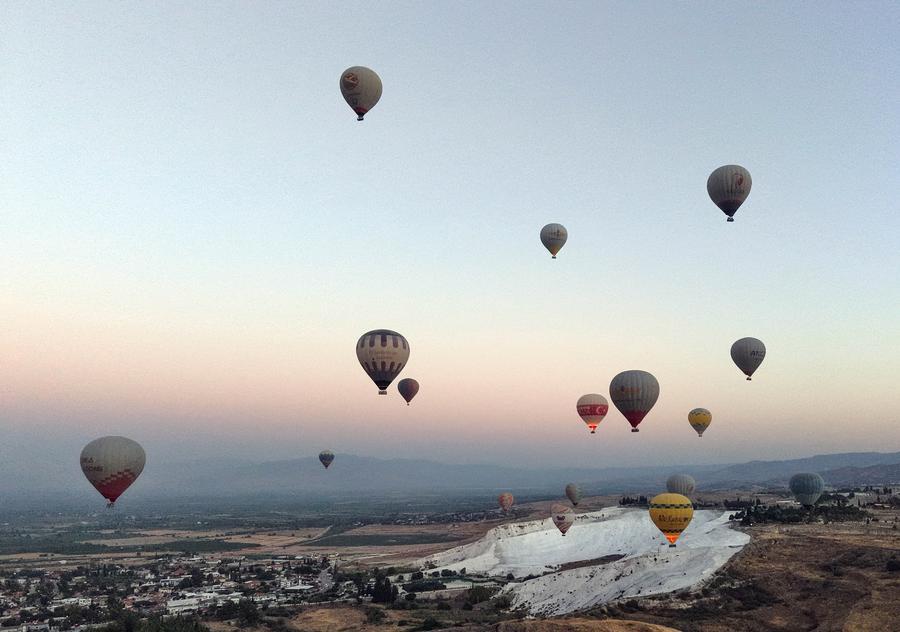
ISTANBUL, Oct. 31 (Xinhua) -- A surge of visa-free, independent Chinese travelers is reshaping Türkiye's tourism sector, boosting off-season travel and benefiting local economies, according to sector insiders.
The visa-free policy for Chinese citizens, which took effect on Jan. 2, positioned China as Türkiye's fastest-growing tourism market in the first half of 2026, the Türkiye Tourism Promotion and Development Agency (TGA) told Xinhua in a recent written interview.
Following a robust 28.05 percent year-on-year increase in the first six months, total Chinese arrivals reached 363,562 between January and August, the agency reported.

Irfan Karsli, owner of the Ligarba Tourism Agency and chairman of the Turkish-Chinese Cultural Association, noted that this momentum, further accelerated by a significant surge in visitors during China's National Day holiday in October, is largely driven by the rapid rise of free independent travelers.
"These are young, foreign-language-speaking individuals who just grab their backpacks, fly directly to Türkiye, and decide on their locations while already on the move," Karsli told Xinhua in a recent interview.
Because these travelers are free from rigid group schedules, their visits perfectly align with Türkiye's strategic goal to spread tourism across all 12 months, he added.
Karsli pointed out that Chinese peak travel periods, such as the National Day holiday in early October and the upcoming Spring Festival in February, coincide exactly with Türkiye's traditional autumn and winter off-season. "This influx fills the economic void left when the summer wave of domestic and European tourists subsides," he said.
The TGA is actively pitching destinations to Chinese travelers as a year-round alternative. For example, to help attract more visitors during the off-season, the agency recently partnered with Turkish Airlines to host Chinese influencers on customized routes across Trabzon, Rize, and Artvin, showcasing the region's traditional tea harvesting and local highland life to millions of followers on Chinese social media platforms like Xiaohongshu (RedNote) and Weibo.
The growing number of independent travelers has provided a boost to the local economy. "While this means a loss for travel agencies, it is the hotel's gain, the local tradesman's gain," Nalan Yesilyurt, owner of DemCo Travel Organizations, told Xinhua. She noted that by planning their own routes and seeking out local gastronomy, these travelers directly feed the local economy.
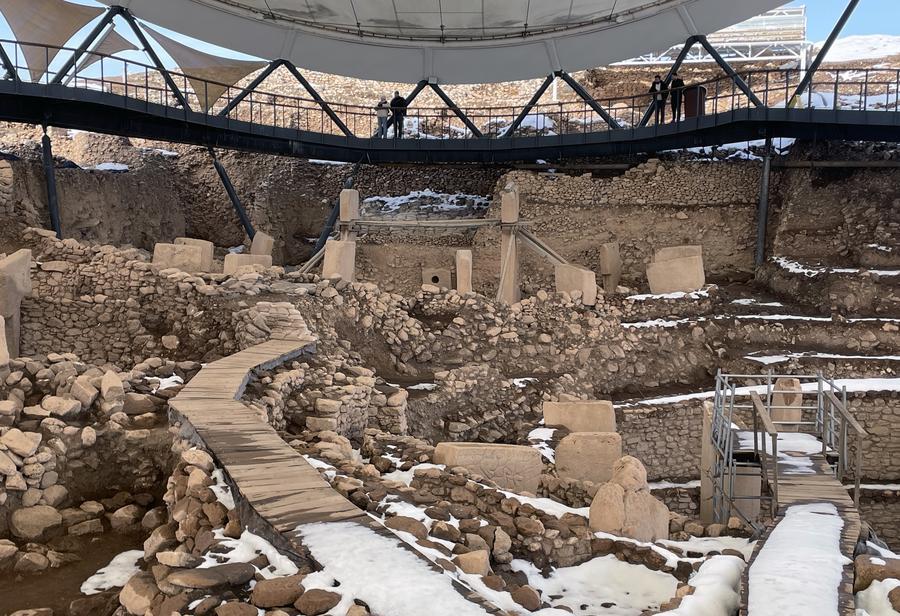
For 29-year-old independent Chinese traveler Xia Wenjie, the visa-free policy and guides on RedNote were the main reasons to explore Türkiye on her own.
"We tried the local street food and explored independent shops," Xia told Xinhua. Dining at street-level restaurants often cost her upwards of 100 yuan (about 14 U.S. dollars) per person, reaching up to 300 yuan in places like Antalya's historic old town on the Mediterranean coast.
There is a broader upward trend in the country's tourism economy. On Friday, Culture and Tourism Minister Mehmet Nuri Ersoy announced in Istanbul that Türkiye's overall tourism revenue reached 51.28 billion dollars in the first nine months of the year, while average spending per visitor per night rose 4.6 percent to 107.7 dollars.
Ersoy emphasized that the government's core strategy is to spread tourism demand across all 81 provinces and throughout the entire year. "We want our visitors to explore more cities, stay longer, and experience the diverse offerings of our country," he said.
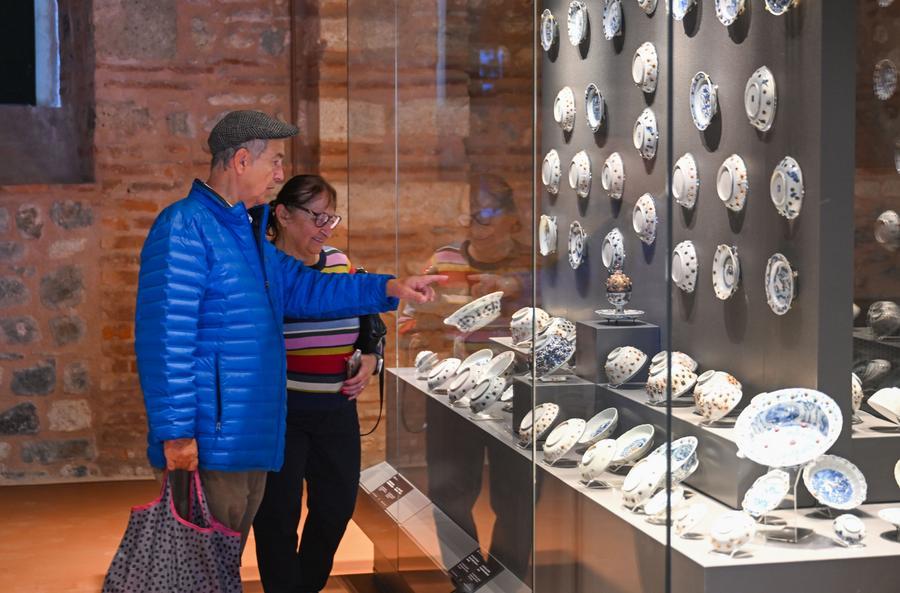
The TGA noted that it is actively working to diversify routes, drawing travelers to ancient wonders in southeastern Anatolia, such as the Gobeklitepe archaeological site and the colossal statues of Mount Nemrut.
Central Konya, home to the Mevlana Museum dedicated to the 13th-century Sufi mystic and philosopher Jalaluddin Rumi, is another major attraction because of the similarities between Rumi's teachings and Confucianism.
Looking ahead, Yesilyurt stressed that as this new segment grows, Türkiye's strategy for the Chinese market should prioritize high-quality service and authentic experiences over sheer visitor numbers. ■