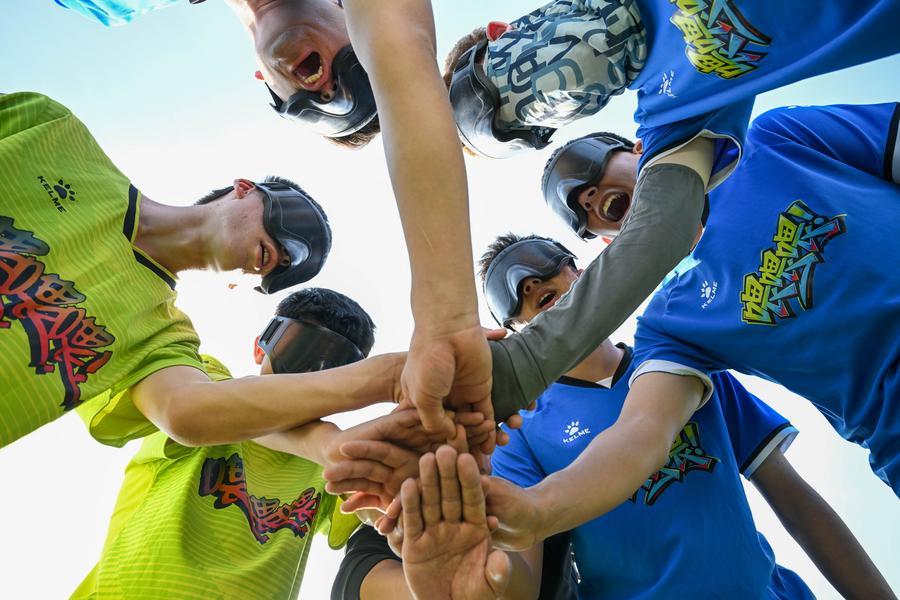
Xinjiang's first blind football team, born from a film casting call that never became a movie, has gone from a special education school on the edge of the Taklamakan Desert to national competition, with its youngest squad in China now feeding players toward the national team.
URUMQI, Oct. 31 (Xinhua) -- At 19, Bilali Yasen has emerged as one of the most promising players in Xinjiang's first blind football team, having gone from years of isolation after losing his sight as a child to becoming a potential candidate for China's national team.
Bilali, who lost his sight aged seven, recently returned to his hometown of Shache County in Kashgar, northwest China's Xinjiang Uygur Autonomous Region, to recover from a recurring foot injury following a training camp in Guangdong Province.
Before losing his sight, Bilali had enjoyed playing football with friends in his village. But afterward, he withdrew from the outside world, afraid to leave his home.
"I always felt that I would spend the rest of my life in darkness," he recalled.
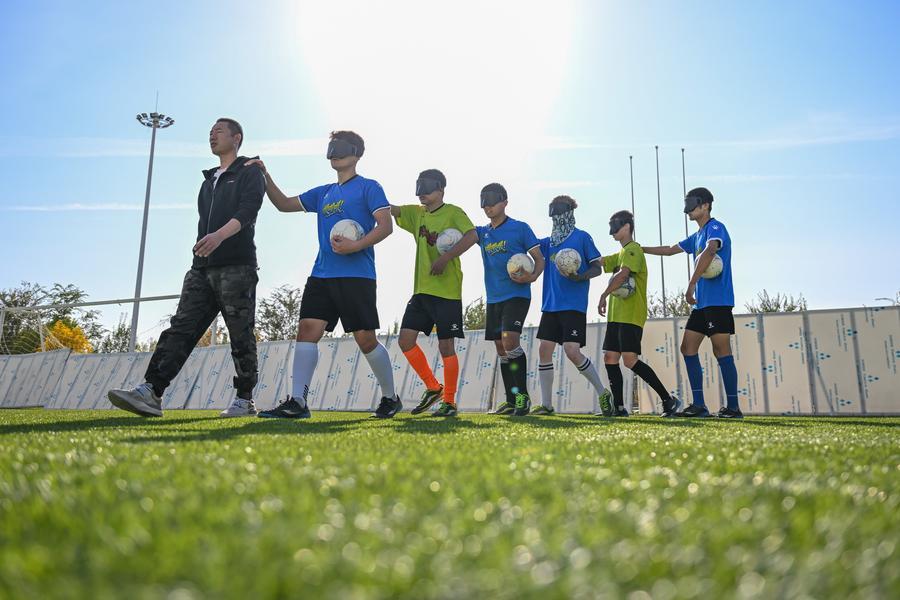
His fortunes changed when he discovered blind football, a sport that has since taken him and his teammates from the edge of the Taklamakan Desert to national competitions across China.
In March, Bilali was identified as a potential candidate for the national team, becoming the first player from Xinjiang's blind football squad to receive such recognition.
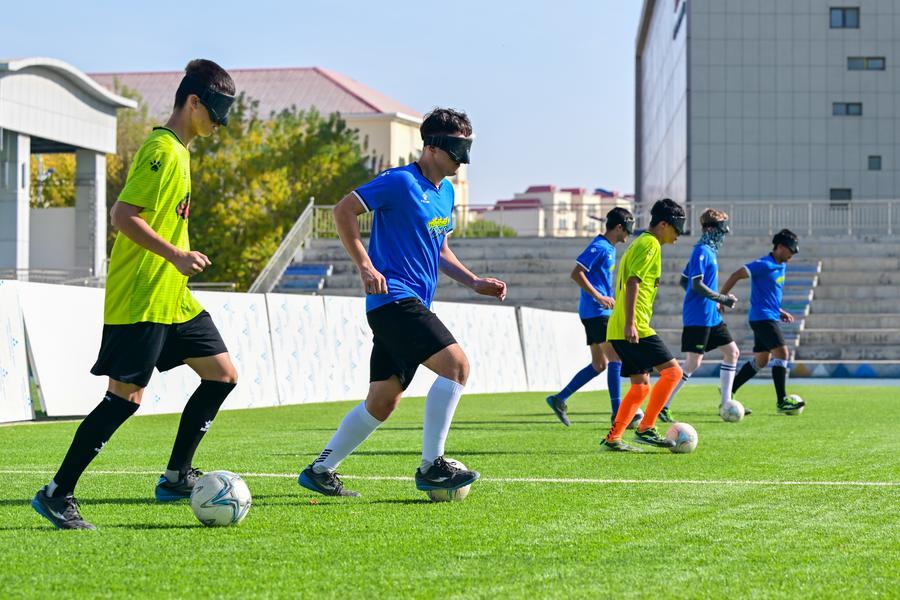
Hundreds of kilometers away, at Xinjiang Special Education Vocational Secondary School in Changji Hui Autonomous Prefecture, his teammates continue their training, calling out "wei, wei, wei" to communicate as they move across the pitch.
The team's origins date to 2021, when Su Yiyan, then a senior executive at a Shanghai film and television company, visited Shache County Special Education School to recruit young actors for a film about blind football.
"For the first time, I learned that even blind people can play football," said Abdumijiti Maimaiti, 19, one of Bilali's teammates.
Under the guidance of a coach from Shanghai, the students began learning the fundamentals of the sport, which uses a ball fitted with bells to help players track its movement.
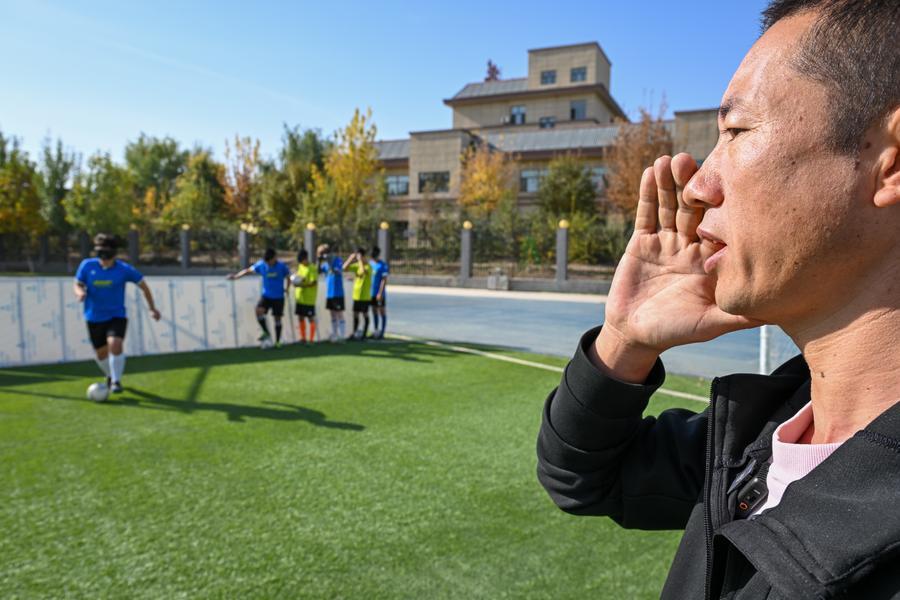
For Bilali, football provided an opportunity to regain the confidence he had lost after becoming blind.
The original film project was suspended shortly after production began, threatening to bring the team's activities to an end.
Su, however, decided to continue supporting the players.
"You don't give people something, then take it back," she said.
She subsequently resigned from her position and, working with filmmakers Li Zhiwei and Liu Xiaoran, who had been involved in short films for the Beijing 2022 Winter Olympics, began financing a documentary about the team.
With support from a physical education teacher at Shache County Special Education School, the players continued training while Su worked to keep the project alive.
The team faced another setback as its members approached graduation because their school did not offer upper secondary education.
The Xinjiang Disabled Persons' Federation intervened, helping establish the region's first blind football team in August 2024.
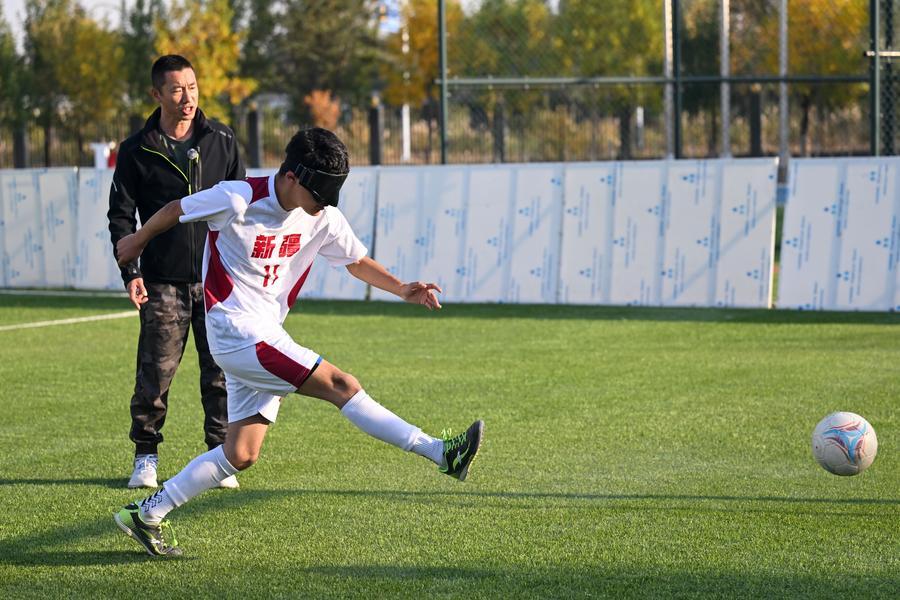
The following month, the players transferred to Xinjiang Special Education Vocational Secondary School, where they began studying traditional Chinese medicine rehabilitation while continuing their football training.
Their progress in national competition has been rapid.
The team made its national debut at the 2024 National Blind Football Championship in Fuzhou, finishing ninth.
At the 2025 National Games for Persons with Disabilities and National Special Olympics in Guangzhou, the players recorded their first victory in national competition by defeating Henan, eventually finishing seventh.
They improved further at the 2026 National Blind Football Championship in Korla, beating Shanghai 3-2 in a penalty shootout to reach the semifinals.
With an average age of 18, the squad is the youngest blind football team in China.
Its development has been supported by donations, educational opportunities and assistance from organizations and individuals across the country.
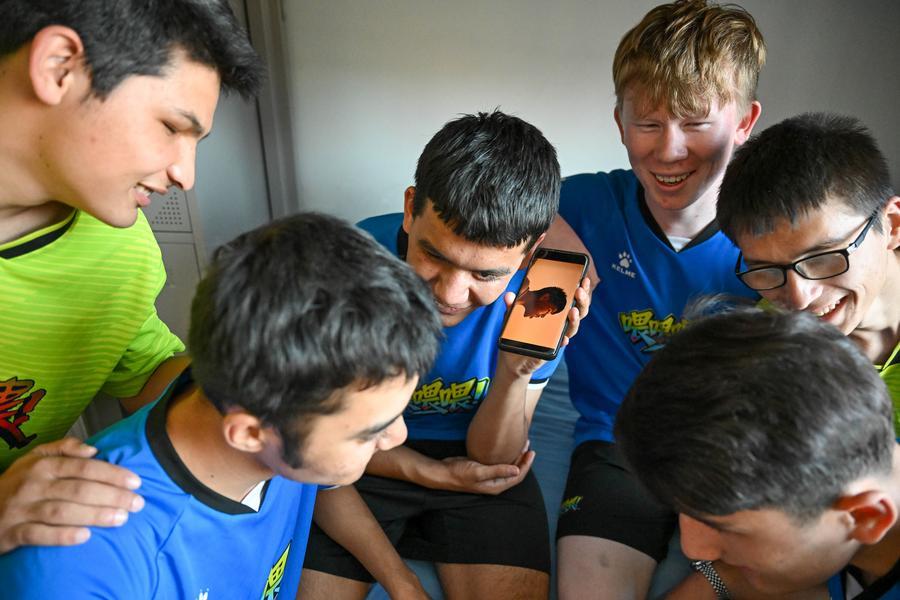
Su has raised more than 1 million yuan (140,000 U.S. dollars) to finance the documentary, titled "Wei Wei Wei, Football Team," while remaining closely involved with the players.
Years of training, travel and competition have made her an important figure in their lives.
"Without her, this blind football team as we know it today would never have existed," one player said.
The Xinjiang Disabled Persons' Federation has also played a central role in ensuring that the players can continue their education alongside their sporting development.
"Xinjiang Special Education Vocational Secondary School had never enrolled fully blind students before; we made an exception for this team," said Chen Jin, vice chairman of the federation.
Wang Jingrong, secretary-general of the Xinjiang Disabled Persons' Welfare Foundation, said businesses and organizations had provided equipment, clothing, financial assistance and training facilities.
A Chinese mobile phone manufacturer donated more than 100 accessible phones, while a local biotechnology company supplied clothing, footwear and nutritional supplements.
The Xinjiang branch of a centrally administered state-owned enterprise contributed tens of thousands of yuan, and a sports venue in Guangzhou provided accommodation and training facilities at a reduced cost during a monthlong training camp.
The team's story has also begun reaching audiences beyond the football pitch.
In July 2026, "Wei Wei Wei, Football Team" began limited preview screenings across China, documenting the players' journey from a special education school near the Taklamakan Desert to national-level competition.
For Bilali and his teammates, the ambition now extends beyond their own achievements.
"We cannot see the world with our eyes, but we are determined to make the world see us," the players said. ■