
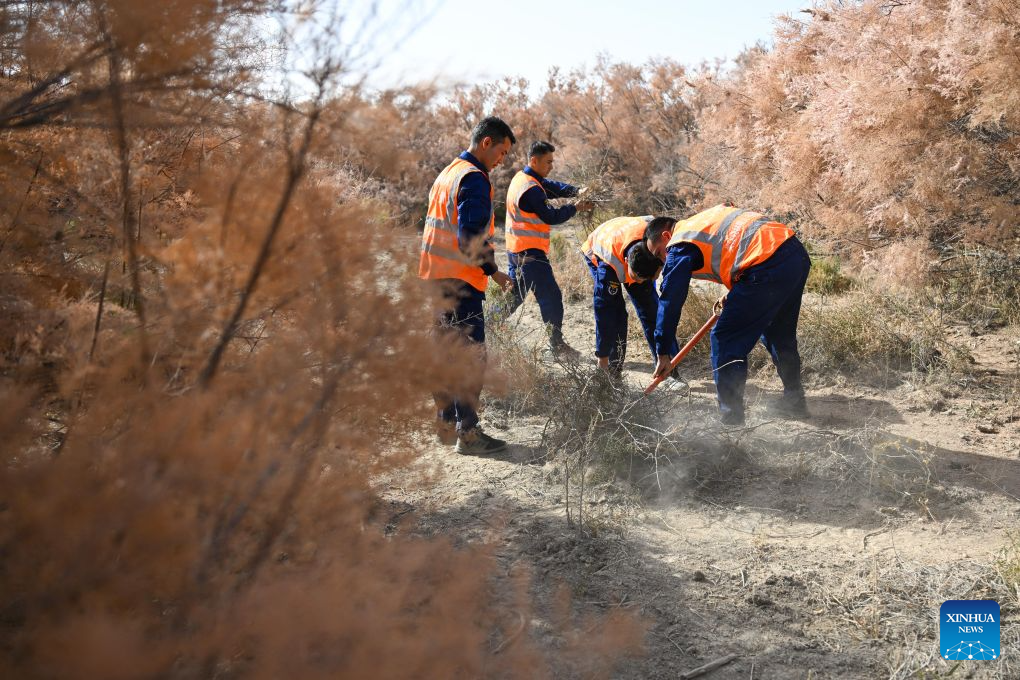
Forest and grassland firefighters remove weeds while patrolling among tamarisk trees at Hoxud County, northwest China's Xinjiang Uygur Autonomous Region, Oct. 26, 2026.
In recent years, various parts of Xinjiang have taken a range of measures to build ecological barriers in both urban and rural areas. While efforts are being coordinated to green barren land and restore wetlands, advanced technologies have been adopted to safeguard forests and grasslands.
These initiatives prove highly effective in securing and improving the ecosystem and biodiversity across the region. Specialty fruit planting and cultural tourism services are also burgeoning here. (Xinhua/Ding Lei)
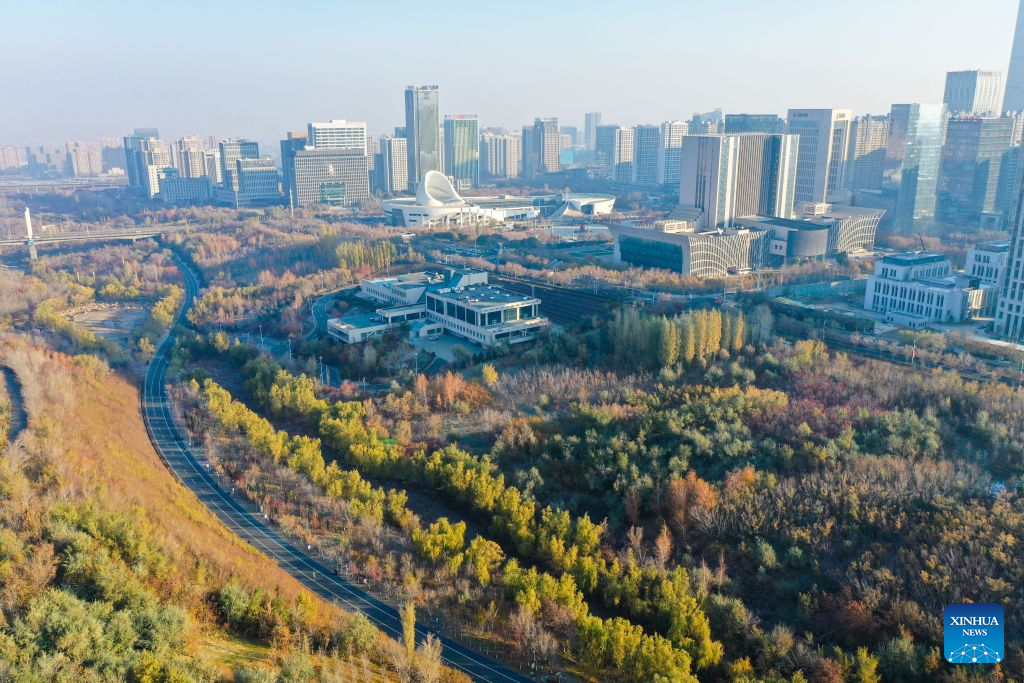
A drone photo taken on Oct. 29, 2026 shows a view of a park in Urumqi, northwest China's Xinjiang Uygur Autonomous Region.
In recent years, various parts of Xinjiang have taken a range of measures to build ecological barriers in both urban and rural areas. While efforts are being coordinated to green barren land and restore wetlands, advanced technologies have been adopted to safeguard forests and grasslands.
These initiatives prove highly effective in securing and improving the ecosystem and biodiversity across the region. Specialty fruit planting and cultural tourism services are also burgeoning here. (Xinhua/Ding Lei)
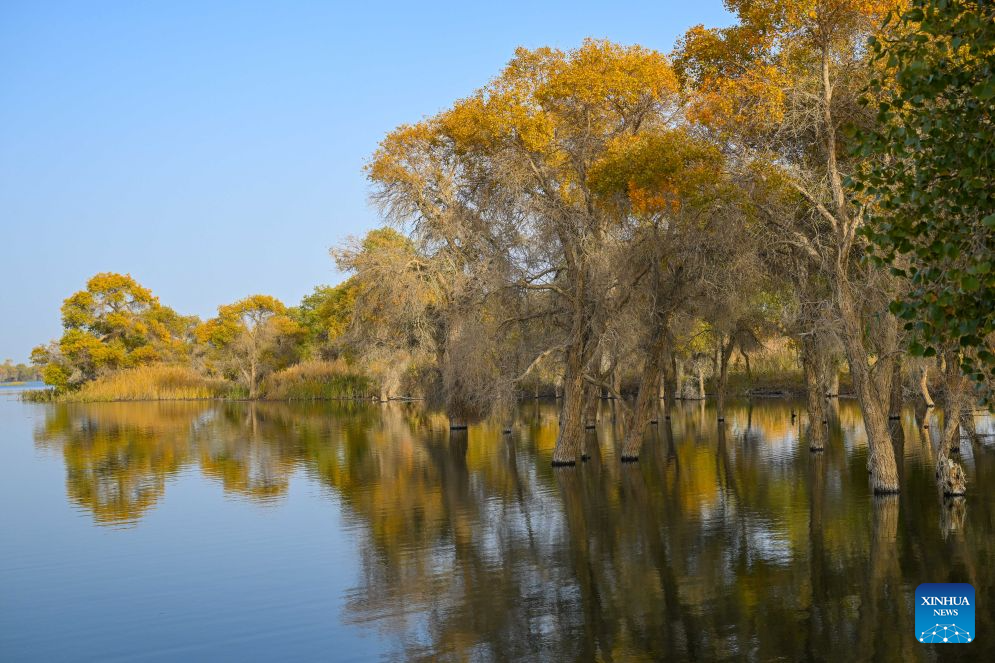
This photo taken on Oct. 26, 2026 shows populus euphratica forests at the Lop Nur National Wetland Park in Yuli County, northwest China's Xinjiang Uygur Autonomous Region.
In recent years, various parts of Xinjiang have taken a range of measures to build ecological barriers in both urban and rural areas. While efforts are being coordinated to green barren land and restore wetlands, advanced technologies have been adopted to safeguard forests and grasslands.
These initiatives prove highly effective in securing and improving the ecosystem and biodiversity across the region. Specialty fruit planting and cultural tourism services are also burgeoning here. (Xinhua/Ding Lei)
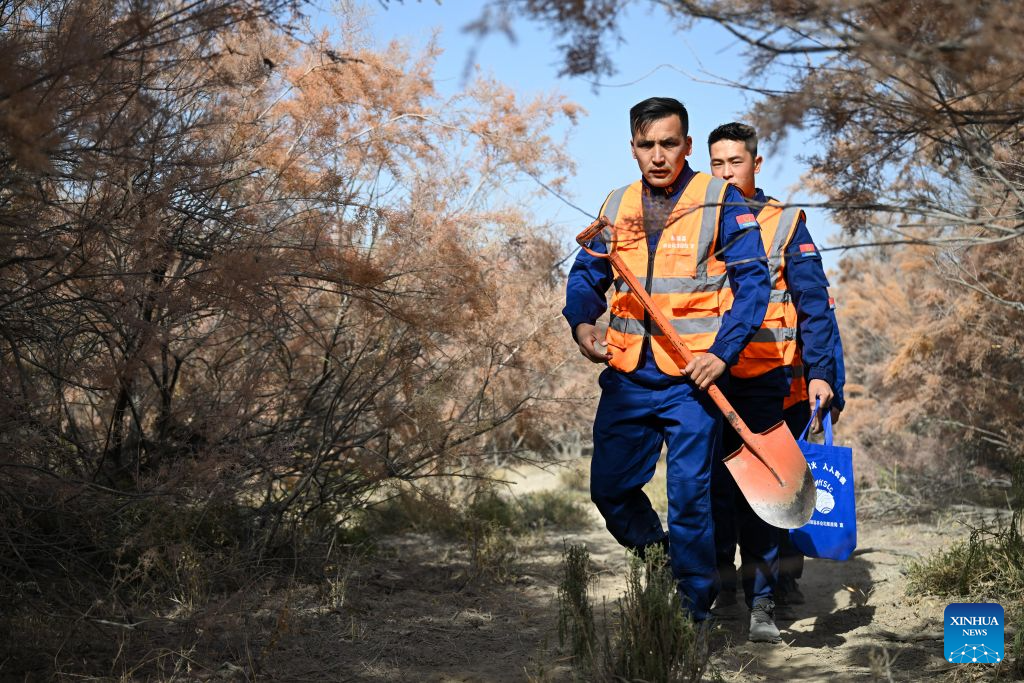
Forest and grassland firefighters patrol among tamarisk trees at Hoxud County, northwest China's Xinjiang Uygur Autonomous Region, Oct. 26, 2026.
In recent years, various parts of Xinjiang have taken a range of measures to build ecological barriers in both urban and rural areas. While efforts are being coordinated to green barren land and restore wetlands, advanced technologies have been adopted to safeguard forests and grasslands.
These initiatives prove highly effective in securing and improving the ecosystem and biodiversity across the region. Specialty fruit planting and cultural tourism services are also burgeoning here. (Xinhua/Ding Lei)
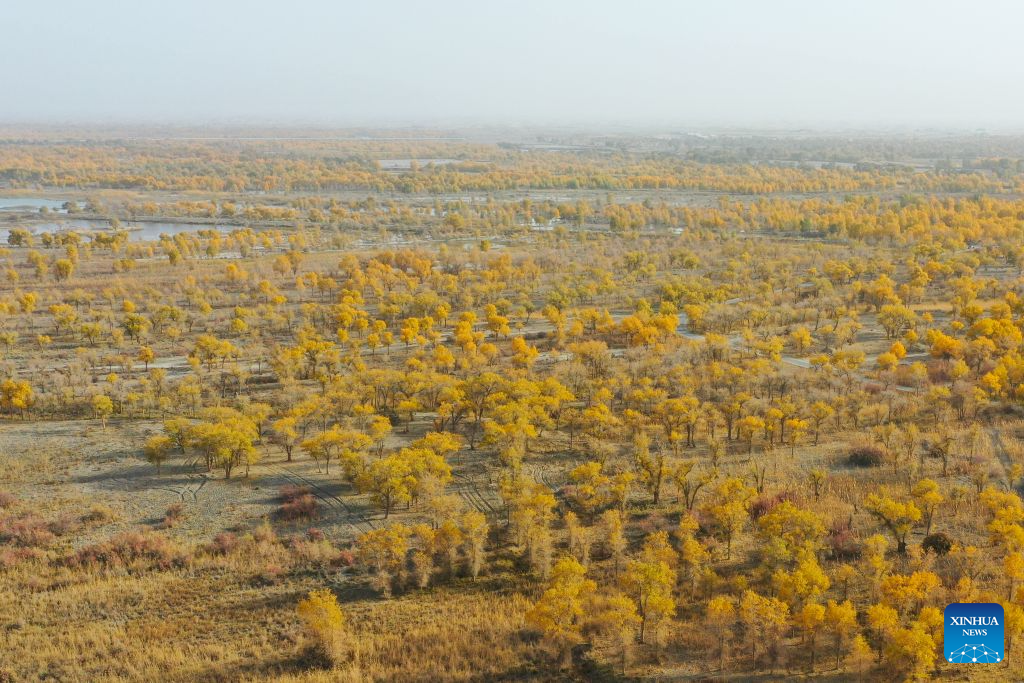
A drone photo taken on Oct. 26, 2026 shows populus euphratica forests at the Lop Nur National Wetland Park in Yuli County, northwest China's Xinjiang Uygur Autonomous Region.
In recent years, various parts of Xinjiang have taken a range of measures to build ecological barriers in both urban and rural areas. While efforts are being coordinated to green barren land and restore wetlands, advanced technologies have been adopted to safeguard forests and grasslands.
These initiatives prove highly effective in securing and improving the ecosystem and biodiversity across the region. Specialty fruit planting and cultural tourism services are also burgeoning here. (Xinhua/Ding Lei)
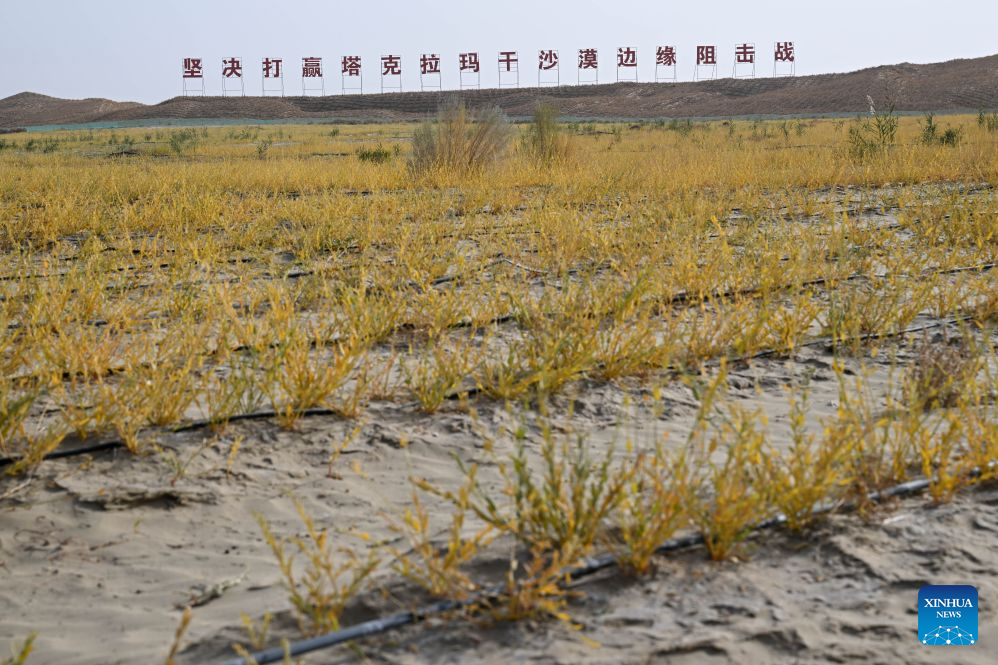
This photo taken on Oct. 26, 2026 shows an apocynum venetum cultivation area in Yuli County, northwest China's Xinjiang Uygur Autonomous Region.
In recent years, various parts of Xinjiang have taken a range of measures to build ecological barriers in both urban and rural areas. While efforts are being coordinated to green barren land and restore wetlands, advanced technologies have been adopted to safeguard forests and grasslands.
These initiatives prove highly effective in securing and improving the ecosystem and biodiversity across the region. Specialty fruit planting and cultural tourism services are also burgeoning here. (Xinhua/Ding Lei)
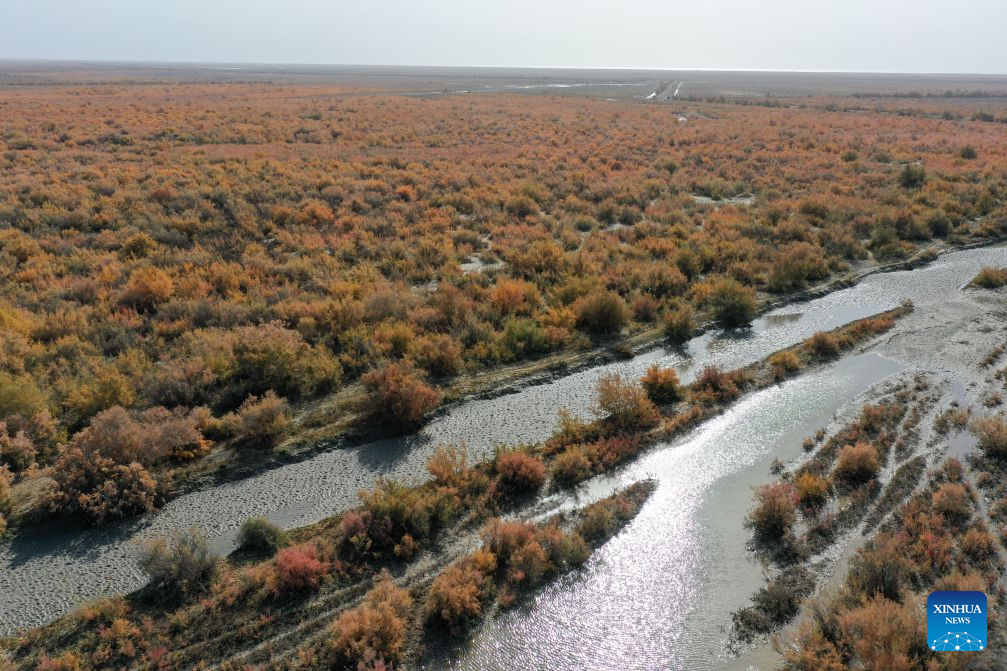
A drone photo taken on Oct. 26, 2026 shows vast expanses of tamarisk trees at Hoxud County, northwest China's Xinjiang Uygur Autonomous Region.
In recent years, various parts of Xinjiang have taken a range of measures to build ecological barriers in both urban and rural areas. While efforts are being coordinated to green barren land and restore wetlands, advanced technologies have been adopted to safeguard forests and grasslands.
These initiatives prove highly effective in securing and improving the ecosystem and biodiversity across the region. Specialty fruit planting and cultural tourism services are also burgeoning here. (Xinhua/Ding Lei)

Tourists take photos with populus euphratica forests at the Lop Nur National Wetland Park in Yuli County, northwest China's Xinjiang Uygur Autonomous Region, Oct. 26, 2026.
In recent years, various parts of Xinjiang have taken a range of measures to build ecological barriers in both urban and rural areas. While efforts are being coordinated to green barren land and restore wetlands, advanced technologies have been adopted to safeguard forests and grasslands.
These initiatives prove highly effective in securing and improving the ecosystem and biodiversity across the region. Specialty fruit planting and cultural tourism services are also burgeoning here. (Xinhua/Ding Lei)
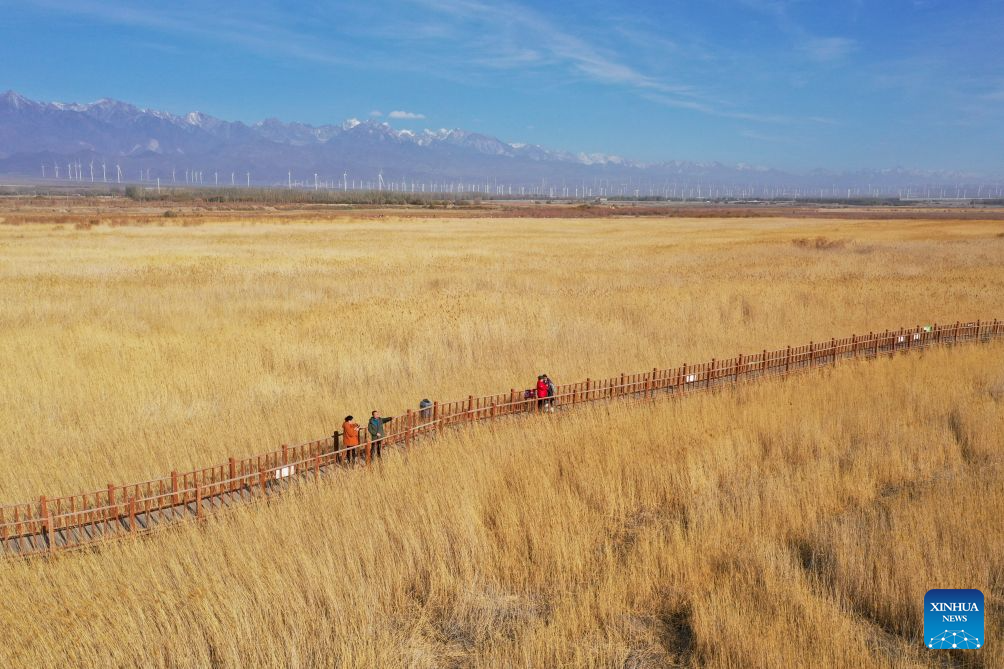
A drone photo taken on Oct. 29, 2026 shows tourists visiting the Chaiwopu Lake National Wetland Park in Dabancheng District of Urumqi, northwest China's Xinjiang Uygur Autonomous Region.
In recent years, various parts of Xinjiang have taken a range of measures to build ecological barriers in both urban and rural areas. While efforts are being coordinated to green barren land and restore wetlands, advanced technologies have been adopted to safeguard forests and grasslands.
These initiatives prove highly effective in securing and improving the ecosystem and biodiversity across the region. Specialty fruit planting and cultural tourism services are also burgeoning here. (Xinhua/Ding Lei)
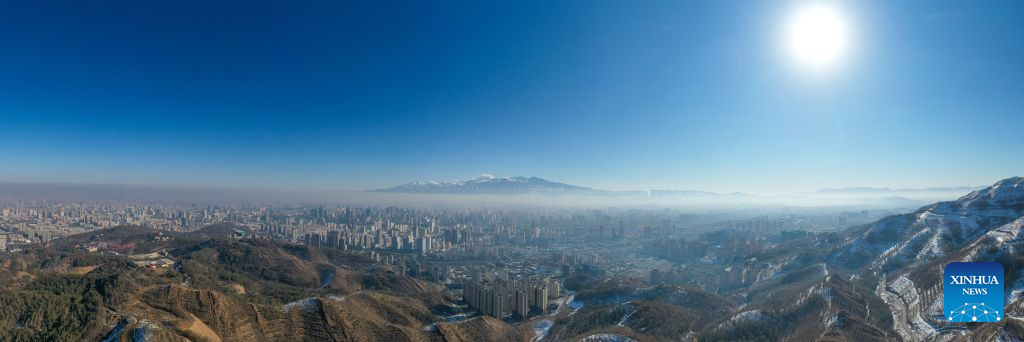
A panoramic drone photo taken on Oct. 29, 2026 shows a view of Urumqi, northwest China's Xinjiang Uygur Autonomous Region.
In recent years, various parts of Xinjiang have taken a range of measures to build ecological barriers in both urban and rural areas. While efforts are being coordinated to green barren land and restore wetlands, advanced technologies have been adopted to safeguard forests and grasslands.
These initiatives prove highly effective in securing and improving the ecosystem and biodiversity across the region. Specialty fruit planting and cultural tourism services are also burgeoning here. (Xinhua/Ding Lei)
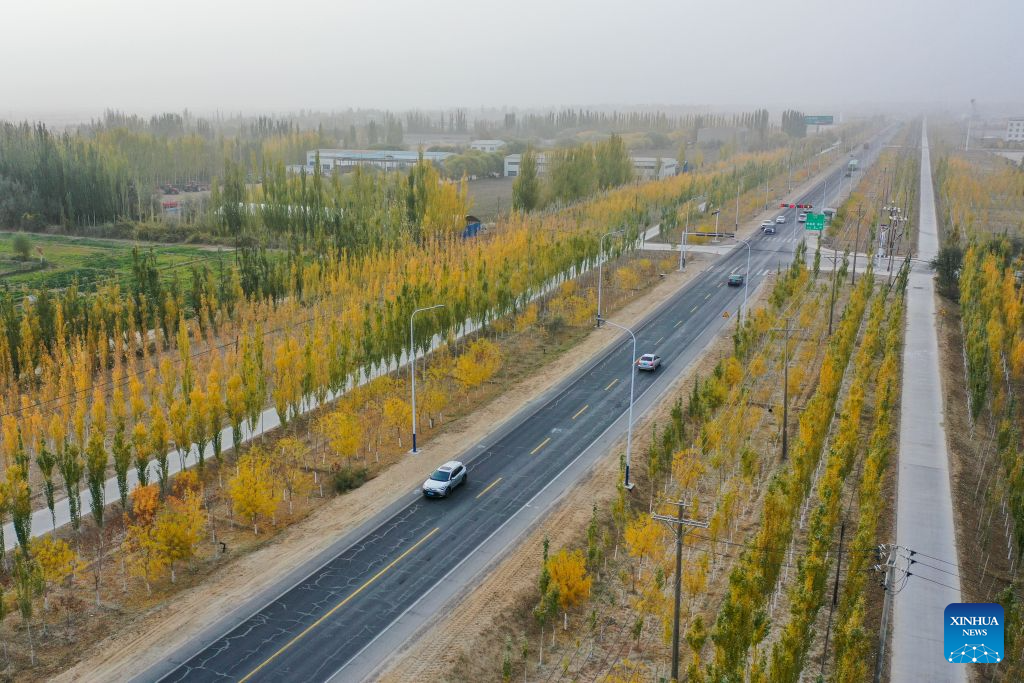
A drone photo taken on Oct. 28, 2026 shows trees planted along a road at Kakxal Village in Kashgar, northwest China's Xinjiang Uygur Autonomous Region.
In recent years, various parts of Xinjiang have taken a range of measures to build ecological barriers in both urban and rural areas. While efforts are being coordinated to green barren land and restore wetlands, advanced technologies have been adopted to safeguard forests and grasslands.
These initiatives prove highly effective in securing and improving the ecosystem and biodiversity across the region. Specialty fruit planting and cultural tourism services are also burgeoning here. (Xinhua/Ding Lei)


