
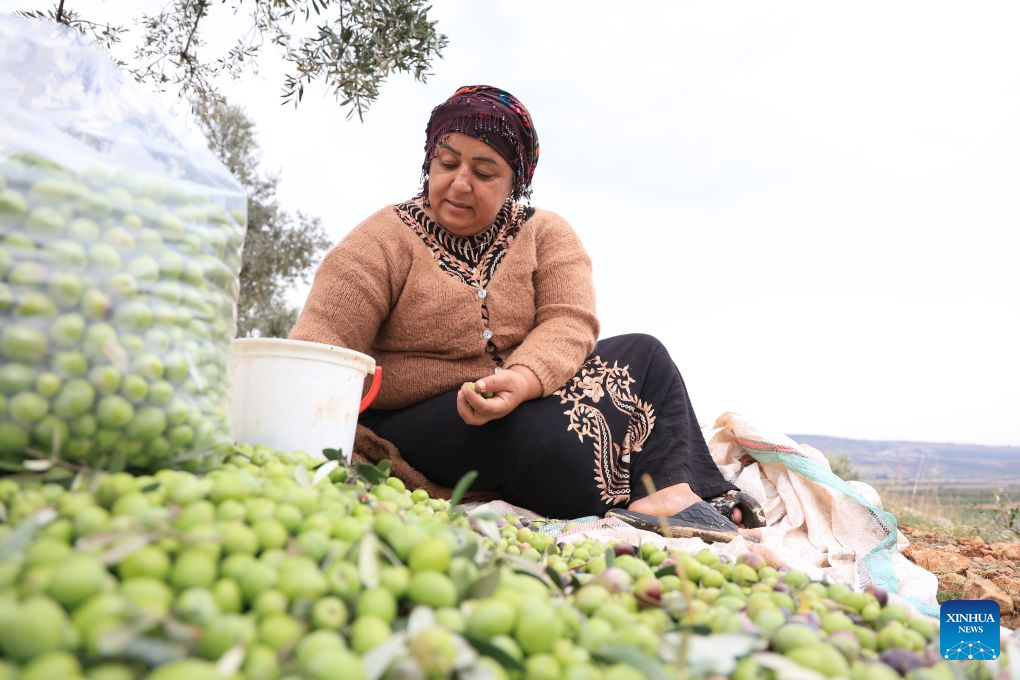
A woman sorts freshly harvested olives in the Afrin countryside of Aleppo province, Syria, Oct. 21, 2026. (Str/Xinhua)
by Hummam Sheikh Ali
ALEPPO, Syria, Oct. 24 (Xinhua) -- Across the hills of Syria's northern Afrin region, farmers climb wooden ladders to pick olives from trees, while others sort the freshly harvested fruit on sheets spread beneath the branches.
Among them is Orai Aref Naso. For Naso, the harvest is part of his struggle to rebuild a livelihood disrupted by years of displacement.
Returning from the northeastern province of Hasakah about 10 months ago, Naso found his family's olive trees still standing, but weakened by years of inadequate care.
"The people of Afrin are very happy to return to their land and olive trees," he told Xinhua. "Olives are very important to the people here. Their livelihoods depend on them."
Afrin, a predominantly Kurdish region in northern Aleppo province, saw widespread displacement during Syria's prolonged conflict, particularly after fighting intensified in 2018. Many farming families were separated from their land for years, leaving their groves without regular maintenance or in the care of others.
Since returning, Naso has been trying to restore his family's trees, but the rising cost of diesel, fertilizer and other agricultural supplies has limited what he can do.
"We have been caring for the trees since we returned, but we cannot give them the same attention as before," he said.
His experience reflects the challenges facing returning farmers in Afrin.
Abdulrahman Aibo, an agricultural engineer and olive farmer, said many displaced landowners had relied on relatives to maintain their groves, while others lost access to their properties during the conflict.
Aibo said many growers cannot afford sufficient fertilizer, while labor shortages during the harvest season have forced some to bring in workers from outside Afrin.
Despite the difficulties, olive production in Aleppo province has shown signs of recovery.
Elias Samaan, head of the olive division at the agriculture and agrarian reform directorate in Aleppo, said preliminary estimates put the province's olive fruit production at about 225,000 tonnes this season, compared with 198,000 tonnes last year.
He attributed the improvement largely to better rainfall, although the effects of last year's drought continue to limit productivity.
Afrin accounts for about 48 percent of Aleppo's olive production, Samaan said.
He added that the return of landowners was helping revive cultivation and olive press operations, but shortages of irrigation water and expensive agricultural supplies remained significant challenges.
For farmers, improved production has not necessarily translated into better returns.
Naso said a tin of olive oil was selling for around 50 to 60 U.S. dollars this season, compared with nearly 100 dollars or more in previous years.
With fuel, fertilizer and labor costs remaining high, the decline in prices has squeezed farmers' earnings.
"Even paying the daily wages of workers has become difficult," Naso said.
Aibo expressed hope that improved economic conditions and greater support for farmers would help restore the region's agricultural productivity.
Naso, meanwhile, hopes to bring his family's olive trees back to their former condition before his displacement.
"Our wish is for our trees to grow again and return to how they were before," he said. "We know how to care for our land. What we need is support to keep doing it." ■
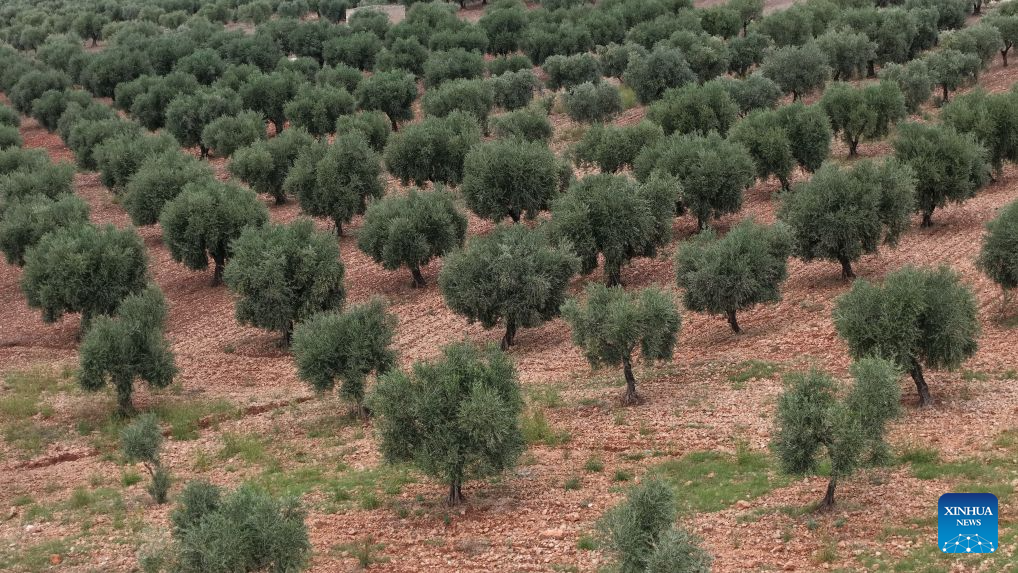
This photo shows olive groves in the Afrin countryside of Aleppo province, Syria, Oct. 21, 2026. (Str/Xinhua)
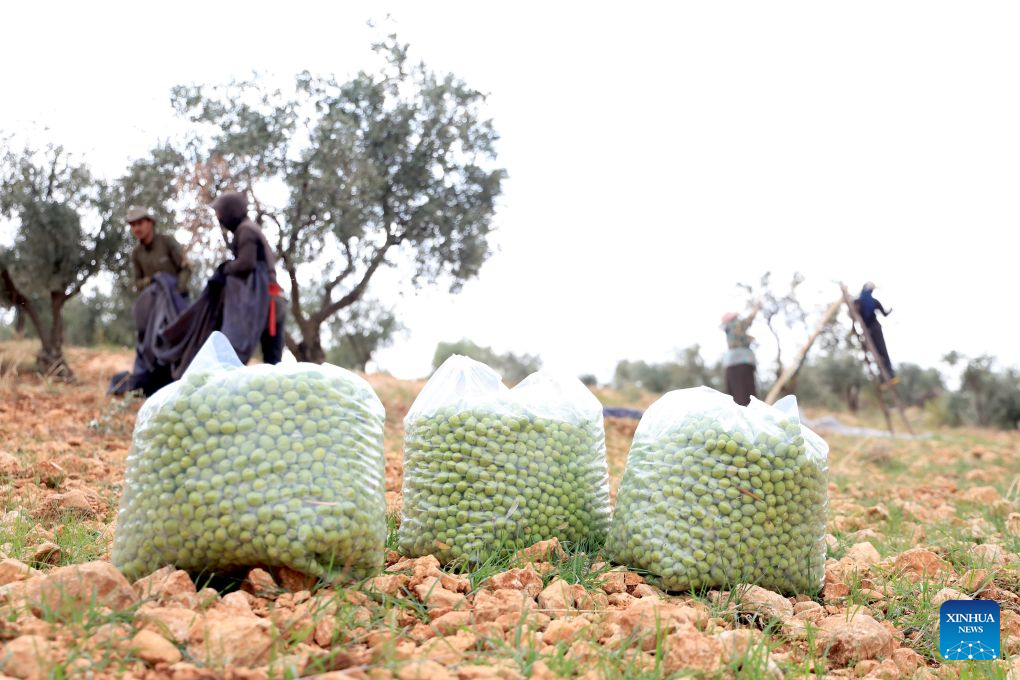
Packed olives are seen in the Afrin countryside of Aleppo province, Syria, Oct. 21, 2026. (Str/Xinhua)


