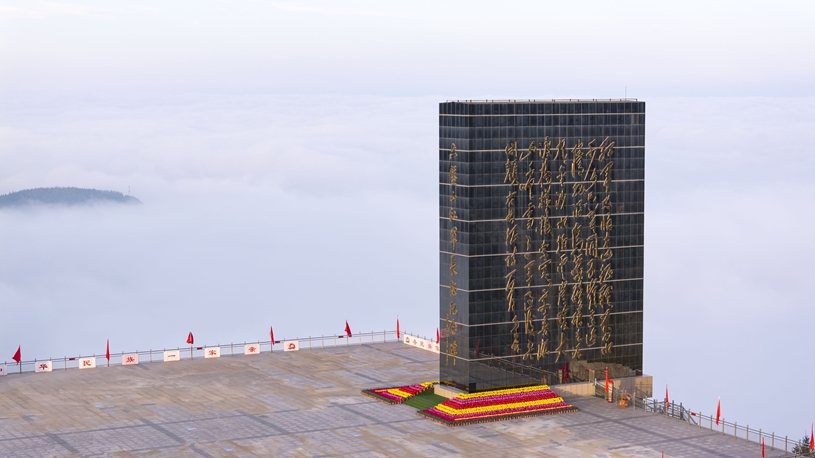
* This year marks the 90th anniversary of the victory of the Long March.
* People from China and abroad continue to retrace the Long March, some covering the entire route and others exploring sections by car or on foot.
* For many, the journey offers a way to learn about the Red Army's history, understand the CPC and see how China has changed over the decades.
BEIJING, Oct. 25 (Xinhua) -- One man, one horse and more than a year on the road.
In 2017, Luo Jianhua set out on horseback from Ruijin in east China to retrace the historic Long March. His wife, Ding Qimei, followed in a support vehicle.
Together, they crossed 81 counties and districts across 11 provincial-level regions before reaching Wuqi in northwest China, completing the journey in one year and nine days.
In 2024, Luo and Ding took to the road again with their daughter and grandniece, this time tracing the route of the Red Army's West Route Army.
Born into a farming family in southwest China's Guizhou Province, Luo grew up hearing stories of the Red Army from his elders. One saying stayed with him: "When life gets tough, think of the Red Army's 12,500-kilometer Long March."
Luo left school at 17 to make a living, later running businesses ranging from a coal-washing plant and a pig farm to an organic rice cultivation company.
While the stories he had heard as a child sustained him through difficult times, Luo long harbored a desire to experience firsthand what the Red Army had endured.
STEPPING INTO HISTORY
Hailed by American journalist Edgar Snow as "an odyssey unequaled in modern times," the Long March took place at a time when China was beset by foreign aggression, social turmoil and destitution.
Facing encirclement by overwhelming and much better-armed Kuomintang forces, the Communist Party of China (CPC)-led Red Army embarked on the epic military trek from 1934 to 1936.
During the march, the troops crossed nearly 100 rivers, traversed vast grasslands once known as a "death trap," and climbed over more than 40 mountains, including more than 20 snow-capped mountains rising above 4,000 meters.
This military maneuver gave the CPC a new foothold in northwest China, from which it built up its strength, fought back against invading Japanese troops and eventually toppled the corrupt Kuomintang regime, leading to the founding of the People's Republic of China in 1949.
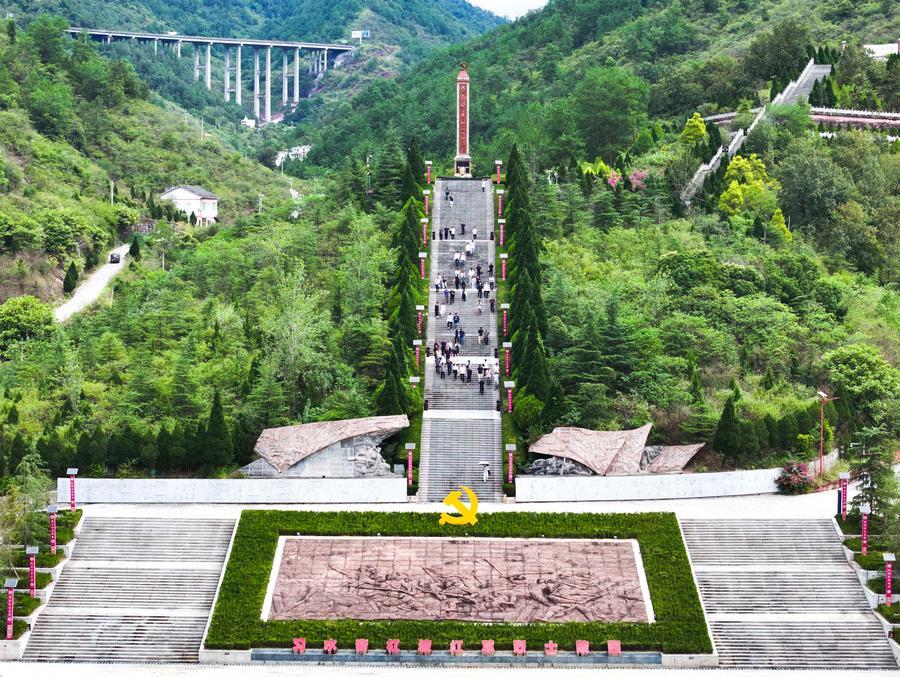
For Luo, retracing the route made the Red Army's hardships that he had read about far more tangible.
In northwest Sichuan Province, he and his horse once sank into a marsh. As he struggled to free the animal, he thought about the soldiers who had crossed similar terrain decades earlier.
"I felt for them. They had so little food and equipment, yet they had to keep going through wind and hail. Some fell and never got up again," he said.
Luo is not alone. People from China and abroad continue to retrace the Long March, some covering the entire route and others exploring sections by car or on foot. For many, the journey offers a way to learn about the Red Army's history, understand the CPC and see how China has changed over the decades.
The Long March's reach has extended beyond China. First published in Britain in 1937, Snow's "Red Star Over China" introduced the Chinese revolution to international readers. Decades later, Pulitzer Prize-winning journalist Harrison Salisbury retraced the route and described the Long March as "a great human epic."
That appeal continues today. Dutch sinologist Elsbeth van Paridon, who joined a group retracing the route this summer, said walking the route gave her a feeling similar to looking out over the beaches of Normandy and realizing what had happened there.
She noted that the former revolutionary sites along the route now also serve as ecological parks, becoming part of a broader tourism economy that supports local development.
"That is how you see the spirit of the Long March live on," she said.
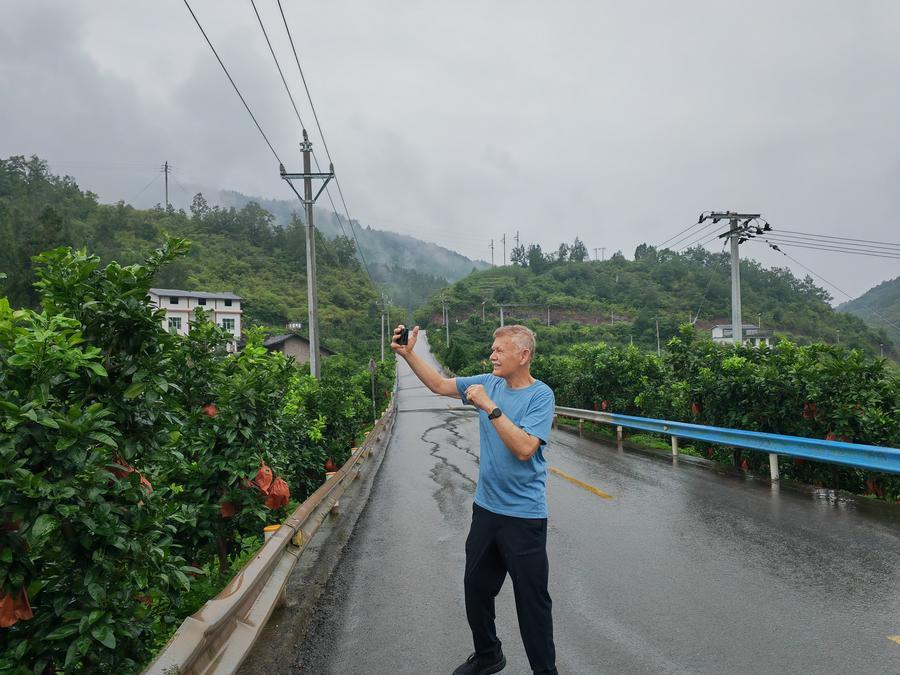
William N. Brown, a U.S. professor at Xiamen University who has lived in China for nearly 40 years, has retraced part of the route and witnessed the country's transformation firsthand.
He first traveled to Guizhou in 1994, when unpaved roads and limited river crossings left mountain communities isolated. Pointing to a towering bridge spanning a valley in Qinggangpo Village, Brown highlighted the region's staggering leap in connectivity.
"The most important change is invisible: people have gained confidence and self-respect," he said. "Thirty years ago, many thought prosperity would take 50 years to achieve -- they never expected to see it in their own lifetime."
THE SAME ROAD, A TRANSFORMED CHINA
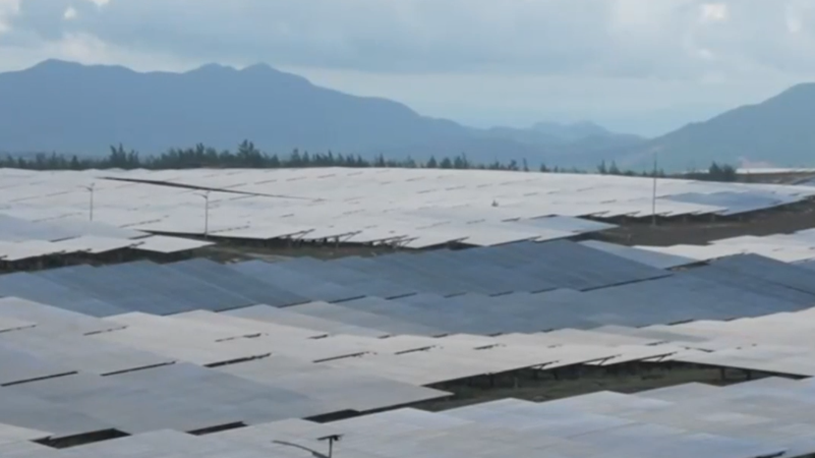
The changes are also visible in the country's infrastructure. Roads now cut through mountains that Red Army soldiers once crossed on foot, while bridges span valleys and rivers that once posed major obstacles.
China's operational high-speed rail network has surpassed 50,000 kilometers, accounting for over 70 percent of the world's total. Its expressway network extends to nearly 200,000 kilometers, the largest in the world.
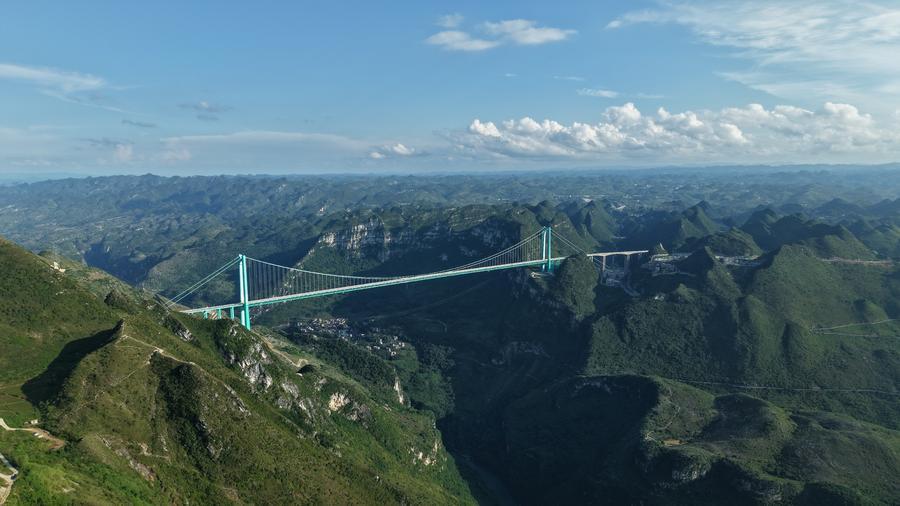
The transformation is particularly visible in Guizhou, where rugged karst terrain long made travel difficult. More than 32,000 bridges have been completed or are under construction in the province, including the Huajiang Grand Canyon Bridge, the world's highest bridge.
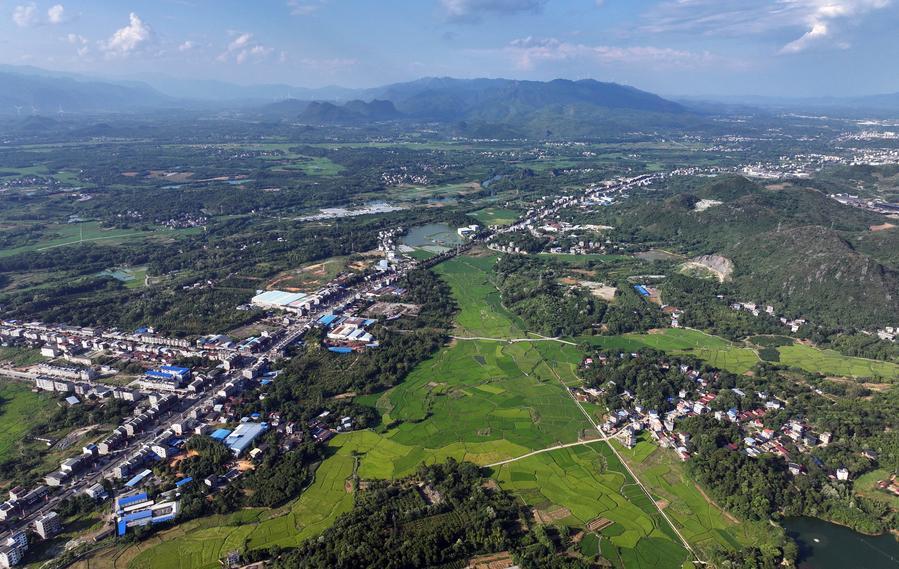
Communities along the historic route have also changed. In Guangxi's Quanzhou, Guanyang and Xing'an counties, where the Battle of the Xiangjiang River was fought, more than 100 formerly impoverished villages have been lifted out of poverty through targeted poverty alleviation efforts.
Despite China's profound transformation over recent decades, new challenges remain on its path toward Chinese modernization.
Wan Laizhi, a scholar of CPC history at Guangxi Normal University, said retracing the Long March route helps people appreciate how earlier generations faced adversity and held to their convictions, drawing strength and inspiration from their example to overcome challenges facing China today.
Chen Lipeng, a professor at Renmin University of China, said retracing the route can also help promote tourism in former revolutionary areas and support rural revitalization.
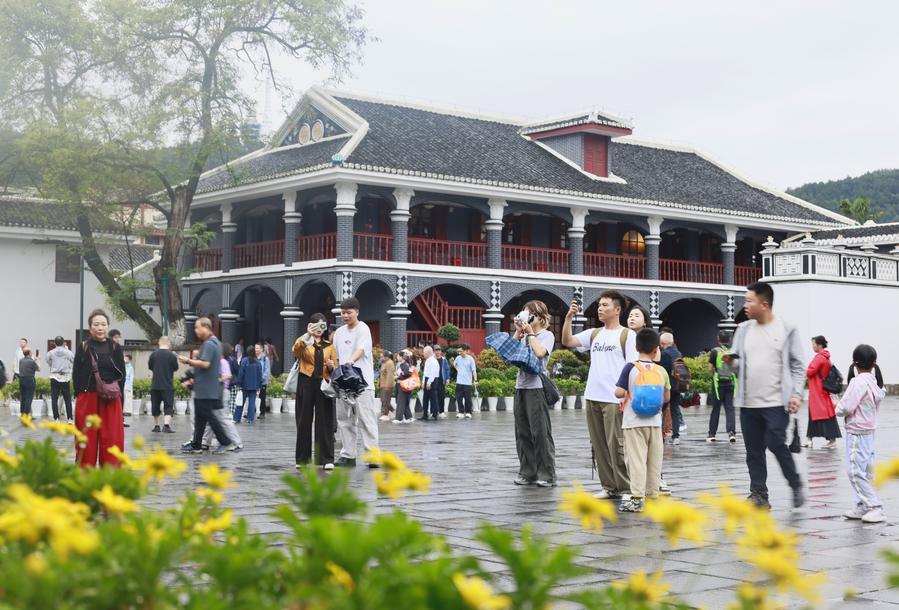
Interest in revolutionary heritage sites is growing, particularly among younger visitors. In the first half of 2026, interest in booking tickets for such attractions rose 86 percent year on year, while bookings by people aged 18 to 35 accounted for more than half of the total, according to industry data.
Luo and Ding, for their part, have worked to keep that history alive. Back home in Zunyi City, they compiled their experiences into books and began visiting schools to share what they had learned.
Earlier this year, they opened a homestay in their village, employing more than 10 local residents. Luo plans to turn part of it into a small educational site displaying materials collected during their journeys.
"Young people today may not face the hardships people endured in the past, but everyone encounters difficulties in life," he said. "I want them to know that there is always a way forward. That is what the Long March spirit means to me."
(Reporting by Cheng Lu, Bai Xu, Wang Jian, Rong Jiaojiao, Li Jingya, Shi Qiangui and Guo Yifan; Video reporters: Liu Qinbing, Zhao Yingbo and Yao Youming; Video editors: Hong Ling, Zhang Mocheng and Zheng Xin.) ■