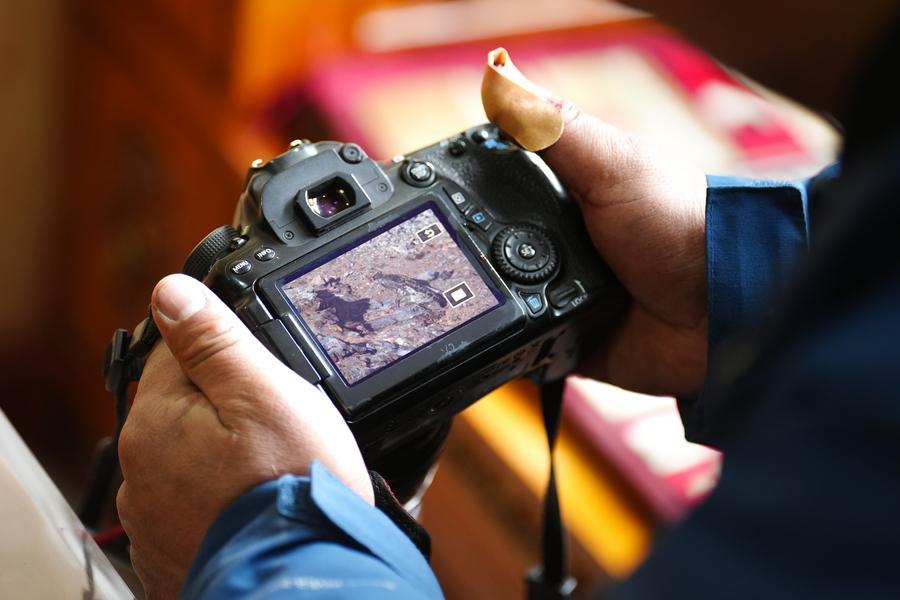
XINING, Oct. 23 (Xinhua) -- On a craggy rock in a grand canyon in northwest China's Qinghai Province, Sangdrup raises his camera, scanning the rugged cliffs for a glimpse of wildlife.
From the forests flanking the gorge, white-lipped deer, blue-eared pheasants and blue sheep emerge from time to time, becoming the subjects of Sangdrup's lens. The autumn air carries the scent of grass and trees, while the Lancang River rushes below.
The 32-year-old Tibetan is among a cohort of herders who have taken up cameras at the Sanjiangyuan National Park, serving as wildlife photographers, grassroots guardians and caretakers for injured animals.
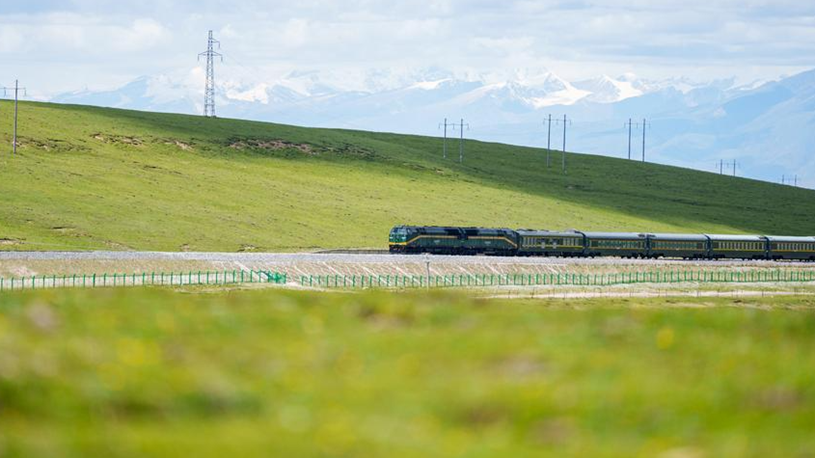
Established five years ago as part of China's first batch of national parks, Sanjiangyuan is the largest and highest. Covering 190,700 square km in the heart of the Qinghai-Tibet Plateau, it guards the headwaters of the Yangtze, Yellow and Lancang rivers at an average elevation exceeding 4,700 meters.
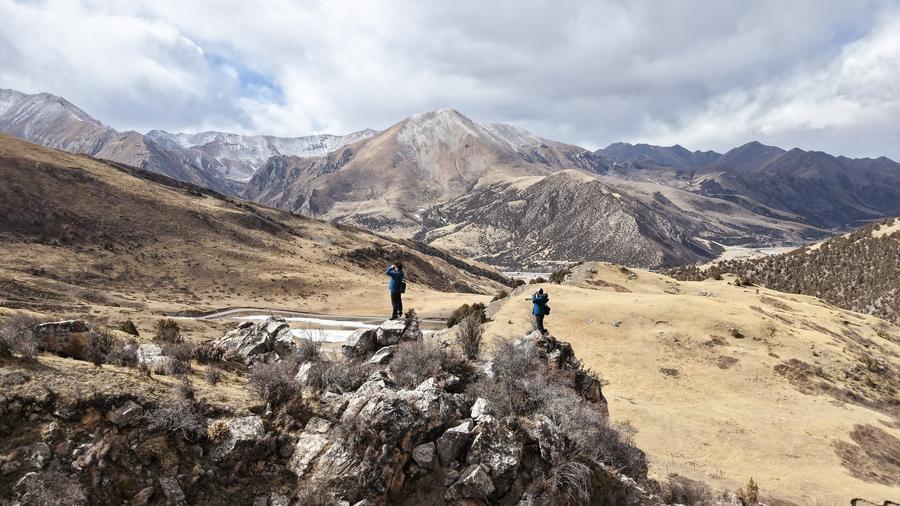
On his daily patrols, Sangdrup has made a habit of photographing wild flowers and animals, both as a record of his rounds and as a precious gift for future generations.
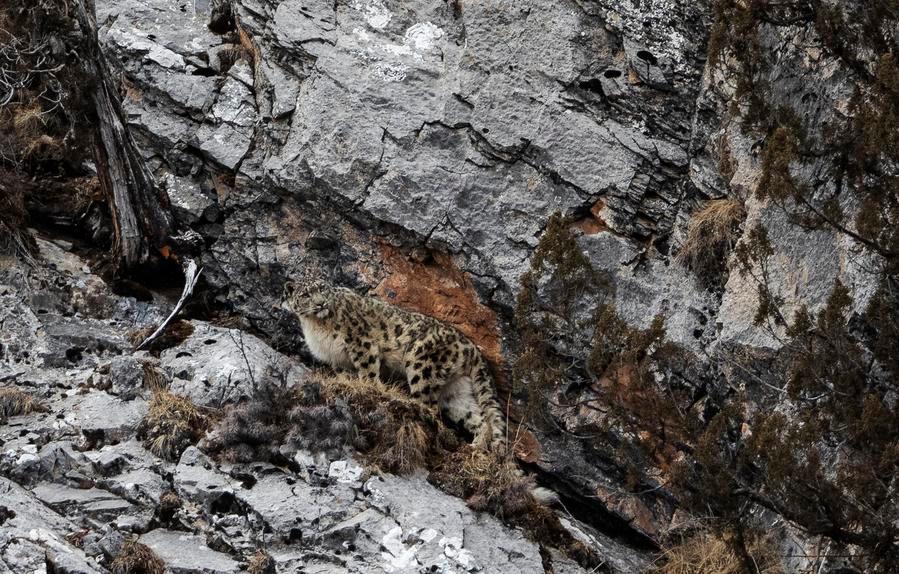
What he wants to capture most is the snow leopard, dubbed "the king of snow mountains."
Born and raised on the grasslands, Sangdrup first heard about snow leopards from his family as a child.
"All I knew was that they were beautiful and mysterious, like a big cat, but none of my pals around had ever seen one," he recalled.
His first encounter came in 2018, when he was on patrol at dawn and a grayish-white animal darted across the slope in front of him. In that instant, Sangdrup realized it was a snow leopard. He froze, then fumbled for his phone and pressed the shutter.
"I felt nothing but sheer awe," he later recalled. "I was so thrilled that I forgot there could be danger."
Looking at the blurry figure on the small screen, Sangdrup felt both excitement and regret: the phone's low resolution had spoiled a rare close-range opportunity.
Soon after, he spent a substantial sum on his first professional camera. At first, he knew little about technique -- aperture, ISO, shutter speed -- and could only fumble his way through, as few people around him knew photography then.
"I was afraid of breaking the camera by messing with the settings, so I basically stuck to auto mode," he said. "But I just loved taking pictures."
On every patrol, he would head out with his camera and keep shooting until the battery died before going home.
With constant trial and error, his photos kept improving. White-lipped deer, leopards, vultures, golden eagles, and blue sheep began appearing frequently in his photographs, but snow leopards remained his main subject.
To capture better images, Sangdrup has come to know the snow leopard's habits well. "Blue sheep are their main prey. Where you see a large herd, a snow leopard won't be far away," he said, adding that the best months are January through May.
In Sanjiangyuan National Park, 20,800 herders have been hired as rangers. Together with professional rescue teams, they have found and helped rescue many wild animals in need, including two snow leopard cubs that were not suitable for release and have now become public favorites at the Xining Wildlife Zoo in Xining, the provincial capital, drawing tens of millions of views online.
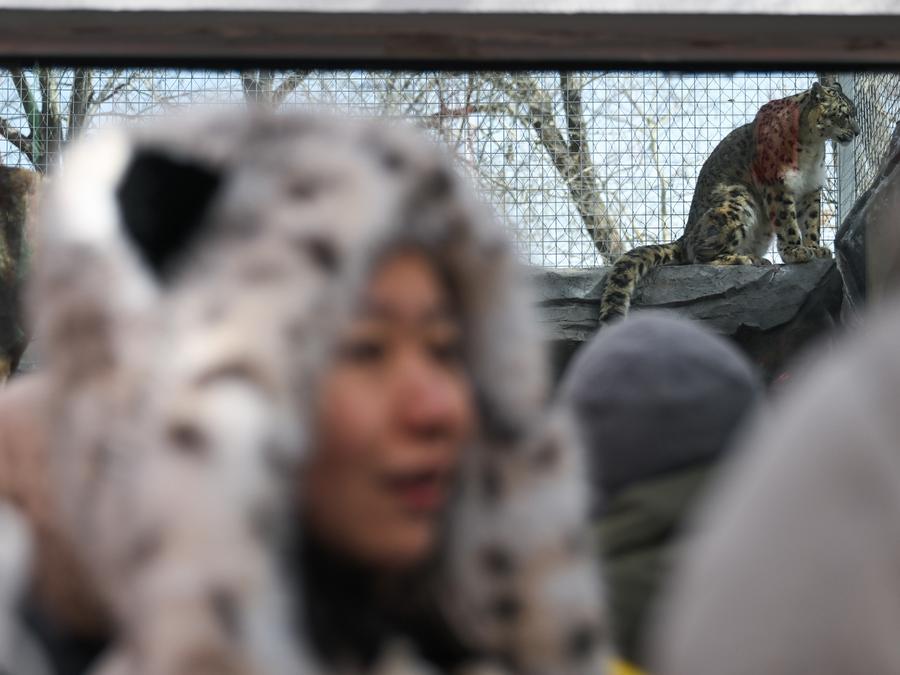
The snow leopard is under first-class national protection in China and is listed as vulnerable by the International Union for Conservation of Nature.
China is home to about 60 percent of the world's snow leopard habitats. The Sanjiangyuan area is one of the areas with the highest snow leopard density in the country and the world.
According to survey results released in early 2025, the average snow leopard population density in the Sanjiangyuan area is about 0.9 individuals per 100 square km, with an estimated total population of around 1,002.
The herder photographers' images are no longer private keepsakes. In 2023, a documentary film "Snow Leopards and Friends," partly filmed by three local herders, won the Best Documentary award at the 36th China Golden Rooster Awards, one of the country's top film awards.
For 35 days, the team camped near a den, capturing rare close-up footage of a mother snow leopard nursing her cubs without disturbing them.
"We wanted the world to see the snow leopard in its most natural state," said Konchok Choephel, one of the filmmakers.
In 2021, China established its first national parks: the Sanjiangyuan National Park, the Giant Panda National Park, the Northeast China Tiger and Leopard National Park, the Hainan Tropical Rainforest National Park and the Wuyishan National Park.
The five national parks cover a total area of 230,000 square km and incorporate more than 120 nature reserves of various types and levels.
By implementing a series of measures such as habitat restoration, ecological corridor connectivity, and regulation of human activities, the five national parks have delivered notable ecological successes over the past five years.
For example, as "the water tower of China," Sanjiangyuan National Park has significantly enhanced its water conservation capacity, channeling an average of 80 billion cubic meters of high-quality water downstream annually. Degraded grasslands have turned green, rivers run clearer, and populations of Tibetan antelopes, also under China's first-class national protection, have rebounded from less than 20,000 to over 70,000.
As China marks the fifth anniversary of the national parks, a photography exhibition was held in Qinghai earlier this month, showcasing 100 images by ecological photographers and rangers. The photos depicted snow-capped peaks, rare wildlife and the harmonious coexistence of herders and nature in the province.
"We hope these images help more people understand the achievements of national park construction and encourage wider participation in protecting our shared home," said an official from the provincial forestry and grassland bureau. ■