
LONDON, Oct. 23 (Xinhua) -- In a reading room at the British Library, a blue stamp dated Jan. 27, 1937 appeared inside a book written by a British missionary who witnessed part of China's Long March.
Nearly 90 years later, the book offers a glimpse into how the extraordinary journey of the Chinese Red Army reached readers thousands of miles away.
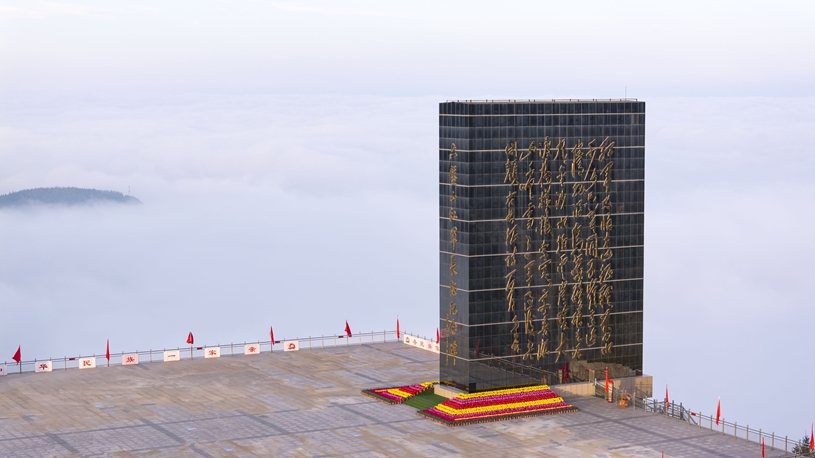
As this year marks the 90th anniversary of the victory of the Long March, a remarkable revolutionary feat achieved under the leadership of the Communist Party of China (CPC), libraries and archives across Britain, along with the recollections of a writer who retraced the historic route, offer fresh perspectives on a journey that helped shape modern China.
EARLY ACCOUNTS OF THE LONG MARCH
At London's Marx Memorial Library, founded in 1933, two early publications shed light on how the Chinese Red Army was portrayed to British readers.
One is Edgar Snow's "Red Star Over China," published in Britain in 1937. Its orange-red cover bears the words "LEFT BOOK CLUB EDITION" and "NOT FOR SALE TO THE PUBLIC."
Snow's account introduced to Western readers the CPC, its leaders and the extraordinary hardships endured by Red Army soldiers during the Long March.
Another is Agnes Smedley's "China's Red Army Marches," published in London in 1936. Focusing on the Red Army's activities before its historic journey, the book describes villagers making shoes for soldiers and farmers delivering rice to support them.
One passage even reproduces a revolutionary song, complete with musical notation, preserving the voices of Chinese soldiers in a book published thousands of miles away.
The British Library also holds a 1937 edition of Snow's book bearing a stamp from the former India Office Library dated Oct. 30, 1937.
Contemporary British newspapers also reflected growing interest in the Red Army. On Oct. 19, 1937, the Edinburgh Evening News published a review of Snow's book, devoting a section specifically to the Long March.
Together, these publications offered British readers accounts of the soldiers' experiences, their daily lives and the circumstances surrounding their remarkable journey, bringing distant events in China into the view of the British public.
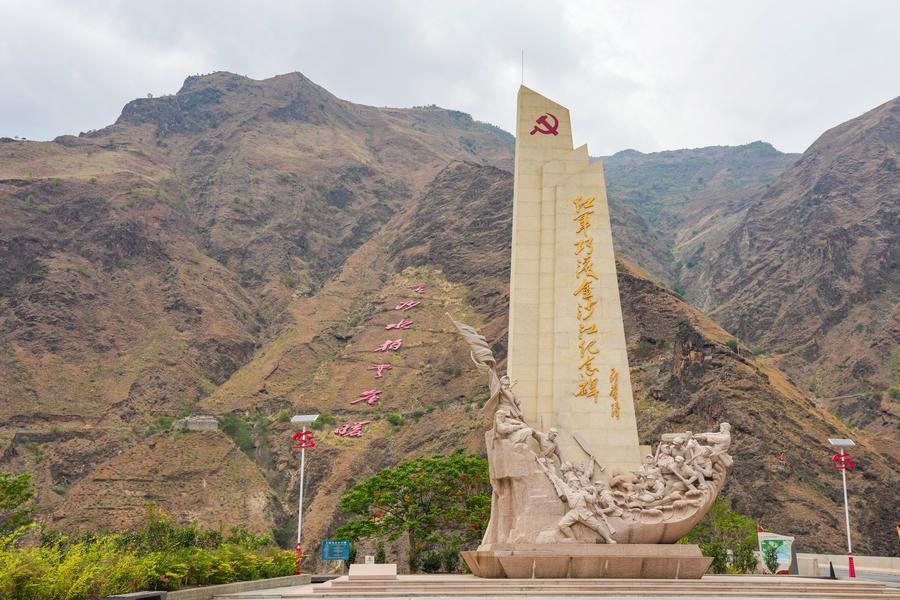
A BRITISH WITNESS AND THREE BOXES OF ARCHIVES
At the University of East Anglia in Norwich, eastern England, three archival boxes preserve the story of Alfred Bosshardt, a British missionary who accompanied the Red Army through parts of southwestern China.
Bosshardt's experiences were later recounted in "The Restraining Hand," published in Britain in 1936, making him one of the earliest Western eyewitnesses to record aspects of the Long March.
The university's collection contains hundreds of items, including correspondence, photographs, newspaper cuttings and audiovisual recordings. Many were collected by British journalist and writer Anthony Grey, who helped bring Bosshardt's story to a wider audience.
Despite their different beliefs, Bosshardt developed considerable respect for the Red Army soldiers, particularly for their discipline and determination.
He recalled that soldiers were instructed to respect villagers, pay for food and compensate residents for damaged property. During breaks from their arduous journey, young soldiers sang songs, wrestled and shared moments of laughter.
Bosshardt also admired Red Army commander Xiao Ke, with whom he later renewed contact. Their friendship continued for decades, forming a remarkable personal link between Britain and China.
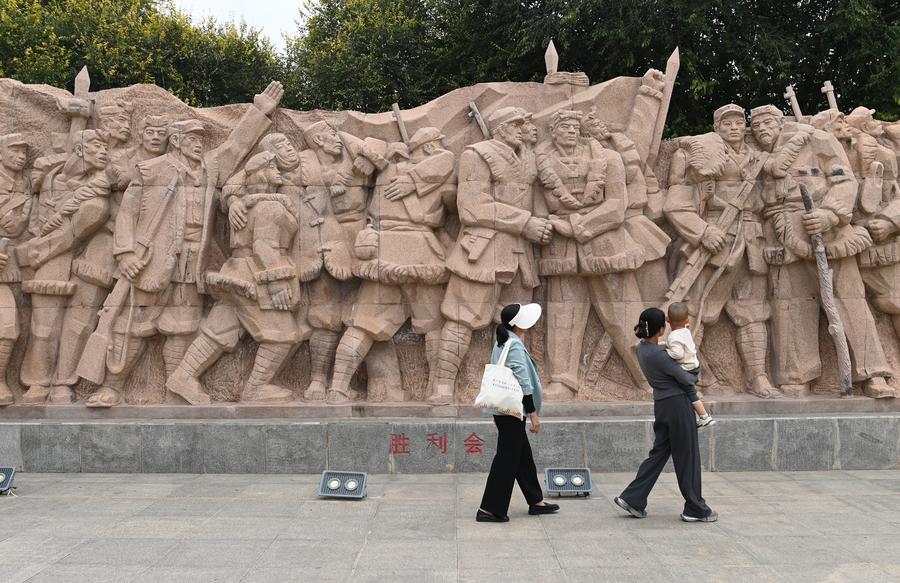
RETRACING THE LONG MARCH
Nearly seven decades after the Long March, British-based Chinese writer Sun Shuyun spent 14 months retracing the odyssey. Traveling through remote villages, she interviewed surviving Red Army veterans and their families in an effort to understand the people behind the historical narrative.
For Sun, who studied history at the University of Oxford, the journey became one of the most unforgettable experiences of her life.
In east China's Jiangxi Province, she met an elderly woman who had persuaded her newlywed husband to join the Red Army. He never returned. Nearly 70 years later, she was still waiting for him.
In northwest China's Gansu Province, Sun interviewed a former female Red Army soldier whose life had been marked by poverty, captivity and hardship.
The elderly woman welcomed Sun into her home, wrapped her in thick blankets and prepared a meal unusually rich in salt. Her adopted daughter explained that salt had been extremely scarce during the Long March, leaving the woman with a lifelong habit of cherishing it.
Recalling these encounters at her London home, Sun was moved to tears.
She said the Long March demonstrated the CPC's organizational strength and leadership and laid an important foundation for the eventual victory of the Chinese revolution.
"The Long March is one of the most important events in modern Chinese history," she said, adding that its legacy continues to resonate with China's development today.
Sun stressed that the choices and sacrifices of ordinary people, whose experiences could sometimes be overlooked in historical narratives, deserve to be remembered and passed down to future generations.
From the hardships of revolutionary struggle to the achievements of modernization, the Chinese people have continued to undertake new journeys requiring courage and perseverance, she said.
The great spirit of the Long March "will always deserve to be remembered," Sun added.■