MOSCOW, Oct. 23 (Xinhua) -- Trilateral talks between Russia, the United States and Ukraine are planned to be held in Abu Dhabi, the capital of the United Arab Emirates, in the first half of November, with a focus on security issues after a peace settlement, Kremlin Spokesman Dmitry Peskov said Friday.
Earlier on Wednesday, Ukrainian President Volodymyr Zelensky reiterated his willingness to "freeze" the fighting along current battle lines as a "real way to end this war."
U.S. President Donald Trump said Moscow and Kiev are "maybe now the closest" they have been to reaching a settlement to the war.
Will renewed talks deliver a real peace?
PUSH FOR TALKS
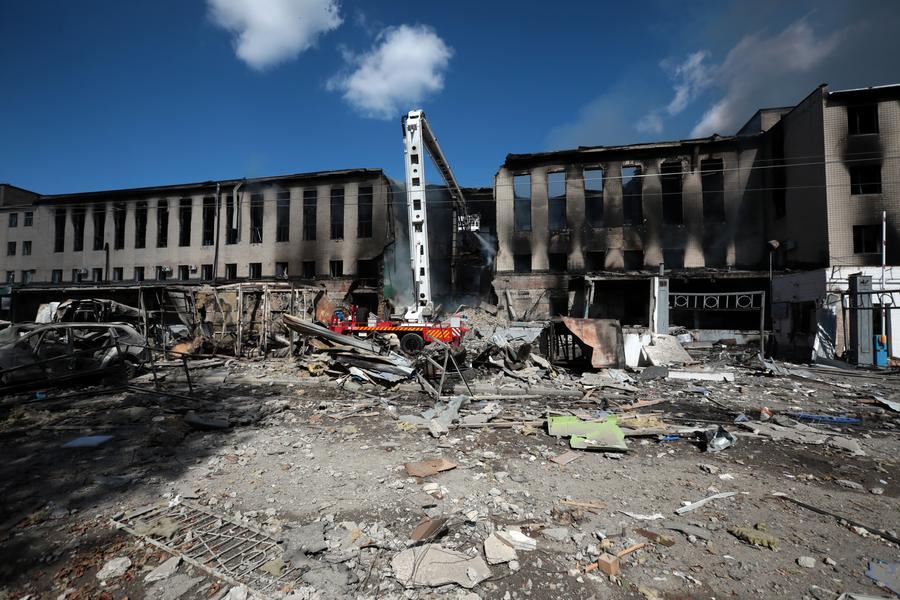
Since the Russia-Ukraine conflict broke out in February 2022, more than four years have passed, punctuated by a succession of talks for a solution.
In a new diplomatic urge prior to the U.S. midterm election, U.S. special envoy Steve Witkoff met Zelensky in Oslo on Tuesday before travelling to St. Petersburg to meet Russian President Vladimir Putin the following day. The discussions covered security guarantees for Ukraine, postwar reconstruction and the prospect of resuming trilateral talks involving Kiev, Moscow and Washington.
Putin agreed "in principle" to restart the negotiations after Nov. 10, focusing on establishing a security system for Russia and Ukraine after the conflict ends, according to Kremlin foreign affairs adviser Yuri Ushakov.
Zelensky said he was willing to consider freezing the conflict along the current front lines as a way to reach a peace deal with Russia and bring the years-long conflict to an end through diplomacy.
"We call it a ceasefire ... President Trump called it freeze and stop," Zelensky said, when asked whether he would agree to halt the fighting along the current front lines while retaining control of "75 percent or more" of the pre-war Ukrainian territory.
Washington is making little secret of its impatience to secure a Ukraine deal. Trump on Tuesday urged Zelensky to make a deal with Russia to end the conflict.
"We want Zelensky to make a deal," Trump told reporters at the White House. "If they don't make a deal, it's just gonna get worse."
"We have given tremendous amounts to Ukraine; we've got nothing back. Other than high diesel," Trump said. "The American taxpayers are tired of it."
"It's time to make a deal," he added, "Russia would like to get it done."
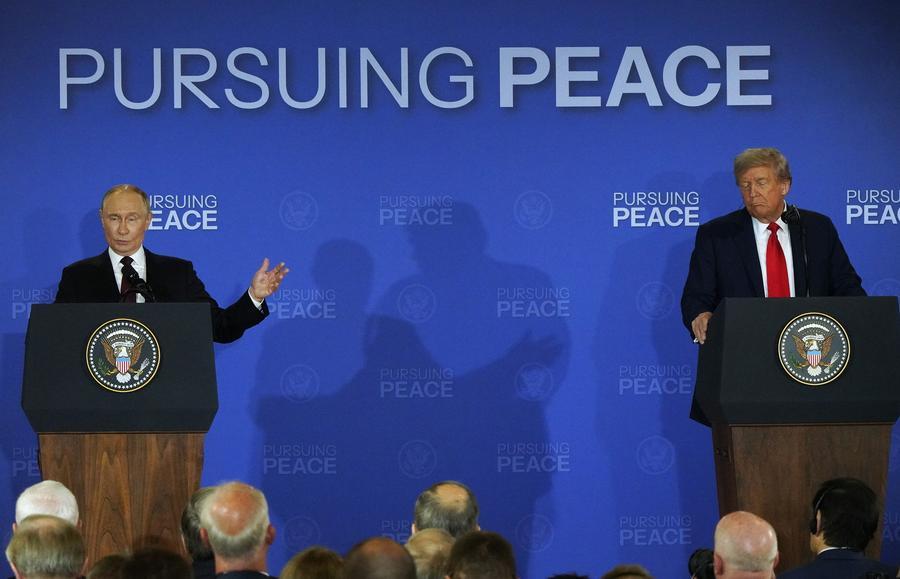
DIVERGING AGENDAS
Washington's rush for pressuring Zelensky to accept a fast deal is clearly seen. Trump stated publicly on Monday that Zelensky "doesn't want to stop" the conflict and "is not helping matters much. I think it's time for somebody else to negotiate on behalf of Ukraine."
U.S. Defense Secretary Pete Hegseth reportedly delayed the transfer of Patriot interceptor missiles from European allies to Ukraine, potentially weakening Ukraine's air defense capacity.
Meanwhile, Ukraine's access to Starshield was significantly curtailed in mid-October, disrupting drone operations and battlefield communications. Reuters reported that the order came from inside the White House, though Trump denied involvement.
U.S.-Ukraine relations have deteriorated sharply since Trump announced a diesel supply deal with Russia on Oct. 9, part of his efforts to lower fuel prices ahead of early November's midterm elections. With high fuel prices fueling domestic frustration over the cost of living, Washington's urgency to secure a ceasefire may also reflect mounting pressure on Republicans ahead of the vote.
Russia could use the current opportunity to improve ties with Washington without making major concessions on Ukraine, according to the Washington Post.
Putin said talks should focus on security guarantees for both Russia and Ukraine, and a broader European security framework. He reiterated that Russia wanted a lasting settlement rather than a temporary ceasefire.
Territorial disputes remain a major obstacle, as Moscow demands that Ukraine cede the entire Donbas region. For Russia, resuming talks offers a chance to expand its strategic room for maneuver.
Meanwhile, Ukraine is seeking a ceasefire and robust security guarantees to prevent further attack. Following talks with Witkoff in Oslo, Zelensky said his proposals included NATO Article 5-style guarantees, while stressing that territorial issues must be discussed at the highest level.
Ukraine's bid for resuming trilateral talks and its openness to a peace deal based on freezing the current front lines could help ease tensions with Washington and signal Kiev's willingness to resolve the conflict through negotiations.
DEEP DIVISIONS REMAIN
Although Russia, the United States and Ukraine may resume talks, a ceasefire agreement between Moscow and Kiev remains far from certain.
"As experience shows, the mere fact that negotiations are taking place does not mean that a peace agreement is likely to be reached anytime soon," Ukrainian political scientist Volodymyr Fesenko said.
Witkoff reportedly presented Putin an updated peace proposal developed in coordination with Ukraine and European partners following talks in Oslo. However, Ushakov said the proposals contained little "substance." Moscow agreed in principle to resume trilateral talks, but its lukewarm response underscored the lack of consensus on how to end the war.
Currently, Russia and Ukraine remain deeply divided over two key issues -- territory and security guarantees.
Territorial disputes remain a major sticking point. Zelensky signaled in a media interview on Thursday that Kiev would not accept Russia's demand for Ukraine's withdrawal from Donbas, while Moscow continues to insist that the entire region should come under Russian control. Recent statements suggest neither side has significantly changed its position.
The two sides also remain at odds over security guarantees. Ukraine seeks security assurances from the United States and Europe as part of a ceasefire deal, while Russia firmly opposes the deployment of Western military personnel and facilities in Ukraine.
Chen Yu, deputy director of the Institute of Eurasian Studies at the China Institutes of Contemporary International Relations, said the conflict's core issues remain unresolved, with little room for compromise and the battlefield still deadlocked, making a political settlement unlikely in the near term.
Michael Kimmage, a foreign policy expert at the Brookings Institution think tank, told U.S. media that the Trump administration's "theory of the case is that by distancing themselves from Ukraine and by flattering the Russians, they can accomplish something at the bargaining table."
He is not, however, optimistic that the gambit will succeed.
"In the absence of a clear agenda coming from the White House and in the absence of very serious forms of leverage over Russia -- which the Trump administration has shied away from -- progress at the negotiating table is very difficult to imagine," he said. ■