KUNMING, Oct. 22 (Xinhua) -- On a warm afternoon, 63-year-old Yi woman Pu Lianying sat in a community workshop, embroidering pink peonies onto black velvet and chatting with friends. Occasionally, tourists stopped by to browse embroidered decorations displayed on a table.
The workshop is in Lianjiang Community in Eshan Yi Autonomous County, Yuxi City, southwest China's Yunnan Province, where residents of different ethnic groups, including Yi, Hani and Hui, live side by side.
In 2021, several old residential compounds were combined into a modern community with improved public spaces and facilities. The local women's federation helped establish a Yi embroidery workshop, giving residents a place to socialize while keeping traditional craftsmanship alive.
Yi embroidery, a traditional skill passed down through generations of the Yi ethnic group, is on China's national intangible cultural heritage list. The workshop brings in recognized inheritors to teach residents, who can choose from traditional designs and smaller contemporary products. Last year, Eshan County sold 40,000 Yi embroidery products, generating about 5 million yuan (about 744,000 U.S. dollars) in income for local residents, said Bai Xuemei, head of the county women's federation.
"I enjoy coming here to embroider and chat with my friends," Pu said, pointing to a half-finished traditional cloth used by Yi women to carry babies. Last year, she sold 10 pieces, earning 1,600 yuan per piece.
The community's efforts to improve residents' lives extend beyond the embroidery workshop.
Li Tianrong, a Han official who heads the subdistrict office administering Lianjiang Community, has learned the Yi language to communicate more easily with elderly residents. The community canteen regularly serves braised beef, a favorite among Yi residents, as well as other popular dishes for older people.
Revenue from renting out community-owned shops helps subsidize the canteen, where residents can enjoy a hearty meal for just 14 yuan. Older residents receive discounts and can even have meals delivered to their homes.
From helping residents preserve traditional crafts to making daily life more convenient, communities across Yunnan are finding various ways to meet local needs and boost livelihoods. Home to 26 ethnic groups, the province is turning traditional skills into specialty products and tourism experiences.
In Jinglai Village in Xishuangbanna Dai Autonomous Prefecture, near the China-Myanmar border, local residents are working with businesses to bring traditional crafts and arts to a wider audience.
One attraction is slow-wheel pottery, a traditional Dai craft on the national intangible cultural heritage list. Unlike modern electric wheels, the hand-operated wheel turns slowly, requiring artisans to shape the clay through repeated tapping and careful adjustment. The finished pottery retains visible layers of clay, giving it a distinctive rustic appearance.
"Our pottery-making skills have been passed down through generations. My mother made the pots and jars we used at home," said Yu Xianglun, a Dai inheritor of the craft. "Now that our pottery has a market, the craft will not be lost."
Visitors can also try traditional sugar-making by pushing a long bamboo pole around a wooden pivot to squeeze juice from sugarcane. Some are eager to drink the fresh juice before it is boiled down into sugar.
Jinglai Village has brought together over 20 traditional artisans who demonstrate more than 10 crafts, including bamboo weaving and traditional liquor brewing. The scenic area provides monthly subsidies of 1,500 to 3,000 yuan to help artisans continue their work.
This approach is helping preserve cultural traditions while boosting tourism. From January to September in 2026, the village received more than 100,000 visitors and generated over 1.85 million yuan in total tourism revenue, said Yan Wenxiang, Party chief of Jinglai Village.
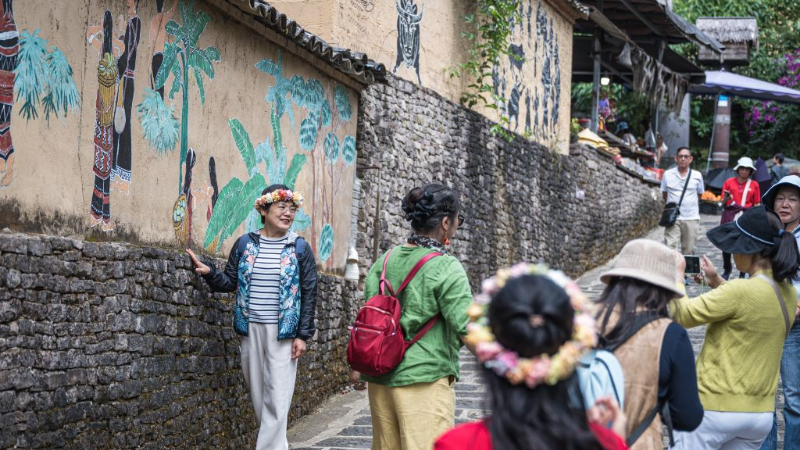
Across Yunnan, cultural traditions are closely intertwined with everyday life, as people from different ethnic groups live side by side, share experiences and build bonds while maintaining their customs.
Liu Zhen, a guide at the Yunnan Nationalities Museum, knows this firsthand. Born in the 1990s, she grew up in Dehong Dai and Jingpo Autonomous Prefecture, where different ethnic groups live side by side.
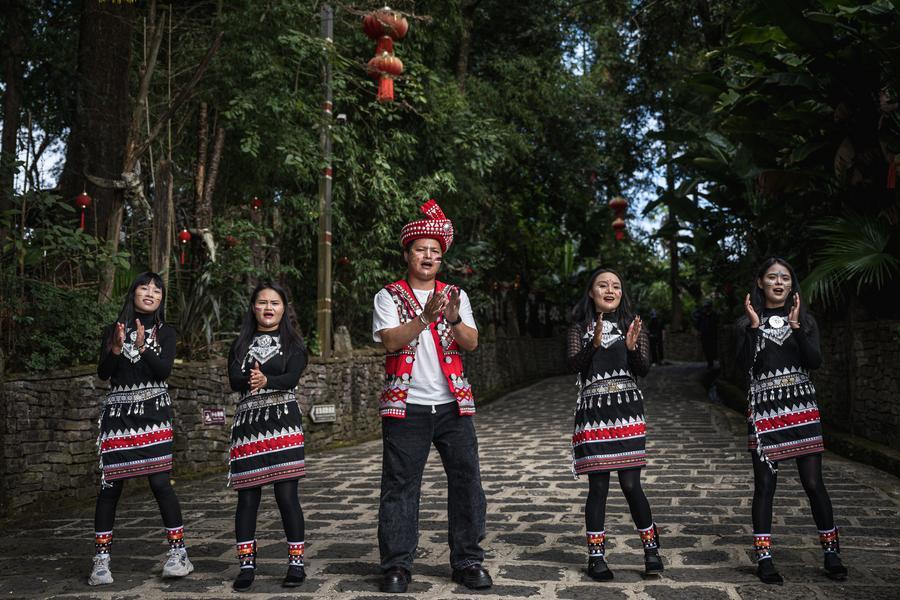
For Liu, ethnic diversity was not abstract but part of daily life. Her wardrobe held traditional Yi and Hani clothing, and she joined Jingpo friends in dancing at their festivals. When her legs ached after exercise, her father would take her to a Dai neighbor for herbal remedies.
Today, Liu brings that childhood familiarity with different cultures to her work at the museum. She invites visitors to dance to traditional music, experience local festivals and enjoy well-known Dai songs.
When visitors ask which ethnic group she belongs to, Liu has a ready answer. "I belong to the Chinese nation, a big family where 56 ethnic groups love and care for each other." ■