
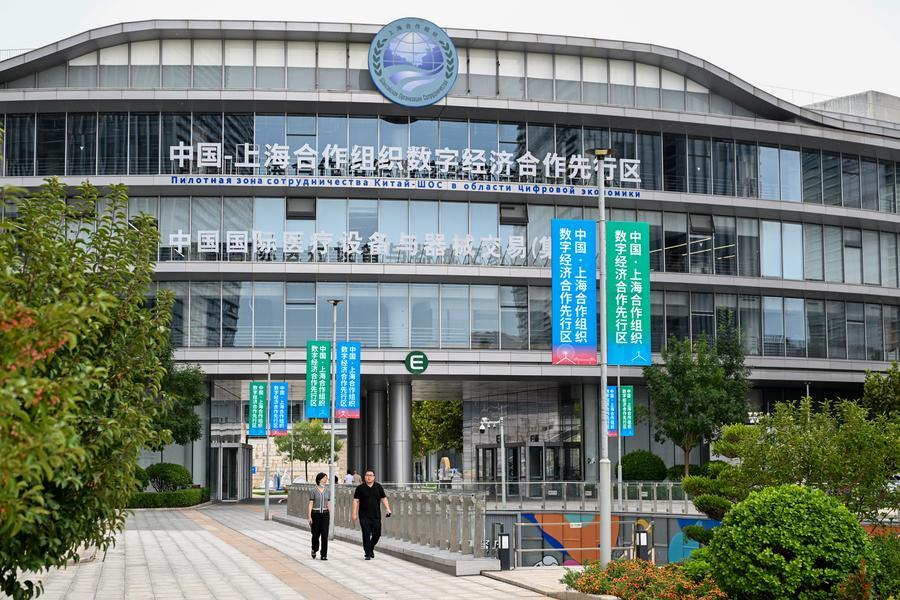
DUSHANBE, Oct. 20 (Xinhua) -- Further deepening cooperation between China and Central Asian countries will create new opportunities for the development of the Shanghai Cooperation Organization (SCO), a Tajik expert said.
In recent years, China and Central Asian countries have strengthened cooperation and achieved fruitful results in a number of areas, said Guzel Maitdinova, director of the Center for Geopolitical Studies at the Russian-Tajik (Slavonic) University, in a recent interview with Xinhua.
One of the key indicators of these achievements is the growth in trade volume between China and the five Central Asian countries -- Kazakhstan, Uzbekistan, Tajikistan, Kyrgyzstan and Turkmenistan, which exceeded 100 billion U.S. dollars in 2025 for the first time, Maitdinova noted.
Furthermore, regular political dialogue has been established, transport connectivity has expanded, industrial and technological cooperation has developed, and environmental and humanitarian issues have become part of the shared agenda, she added.
"For the SCO, deeper China-Central Asia ties create opportunities to broaden the organization's cooperation agenda by linking security with economic development, digital transformation, energy, environmental sustainability and human capital development," the expert said.
Maitdinova cited Chinese President Xi Jinping's remarks at the SCO summit in Bishkek in September, where he described the organization as "a priority area for promoting high-quality Belt and Road cooperation and implementing the Global Development Initiative."
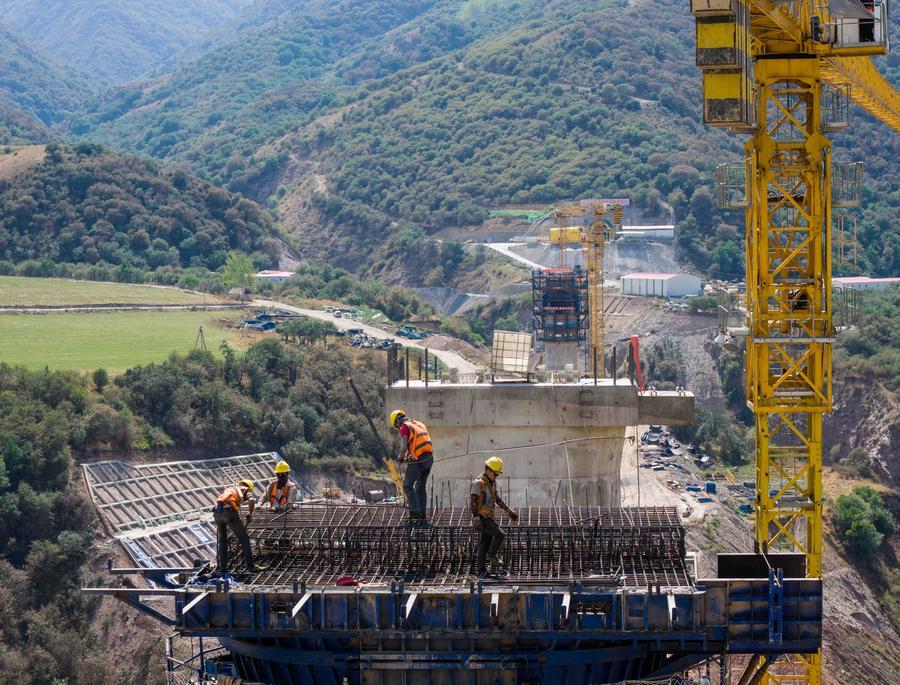
She said the SCO provides a political and institutional platform for coordinating interests, while the Belt and Road Initiative promotes cooperation through infrastructure projects, investment and trade. Together, they create opportunities to develop cross-border transport corridors, energy networks, digital infrastructure and production chains.
Amid profound changes in the international landscape, the SCO is playing an increasingly important role in coordinating interests across Eurasia and advancing multilateral diplomacy, Maitdinova said.
At the Bishkek summit, Xi called for putting development first, taking security as a key goal, adopting a people-centered approach and promoting dialogue and consultation.
"These priorities reflect the SCO's role in strengthening regional security, promoting economic connectivity and maintaining dialogue among countries with different political and economic priorities," she said.

This year marks the 25th anniversary of the founding of the SCO. As Maitdinova pointed out, over the past quarter-century, the organization has developed a multilayered system of intergovernmental cooperation in which security issues are addressed in conjunction with economic development and people-to-people exchanges.
In her view, amid profound changes in the international situation, the SCO has evolved not only into a platform for regional dialogue and security coordination, but also into a significant mechanism for reconciling the interests of states in the emerging multipolar world order.
Maitdinova described the "Shanghai Spirit" as both the guiding principle of the SCO and a distinctive model of intergovernmental relations that emerged as countries in the region sought new mechanisms for security and cooperation.
The Shanghai Spirit embodies six principles -- mutual trust, mutual benefit, equality, consultation, respect for diversity of civilizations, and pursuit of common development.
These principles provide a basis for cooperation among countries with different political systems, levels of economic development and foreign policy priorities, Maitdinova said.
Guided by the Shanghai Spirit, the SCO continues to develop and strengthen, helping translate multilateral dialogue into concrete results in cooperation among member states, she added. ■