
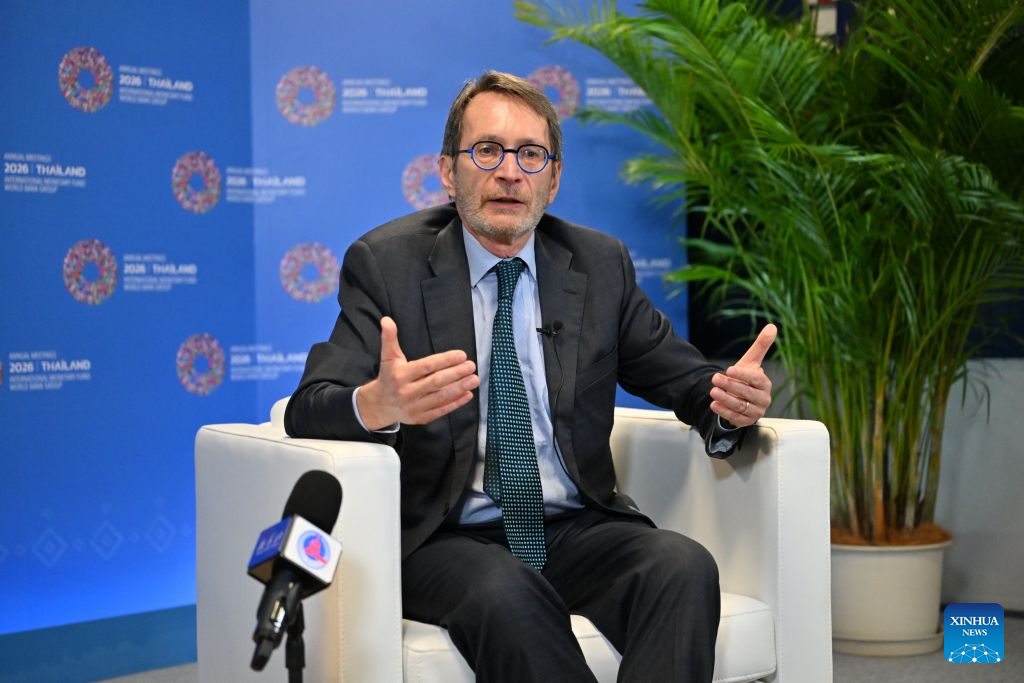
Thomas Helbling, deputy director in the International Monetary Fund (IMF)'s Asia and Pacific Department, speaks in an interview with Xinhua in Bangkok, Thailand on Oct. 12, 2026. (Photo by Rachen Sageamsak/Xinhua)
by Geng Lingnan, Liu Yang
BANGKOK, Oct. 18 (Xinhua) -- China makes proactive efforts for maintaining a multilateral and rules-based trading system, and Chinese companies can play an important role in the diffusion of new technologies and in supporting their application through outbound investment, an International Monetary Fund (IMF) official has said.
The IMF has welcomed China's proactive efforts for maintaining a multilateral and rules-based trading system, Thomas Helbling, deputy director in the IMF's Asia and Pacific Department, told Xinhua in an interview on the sidelines of the 2026 Annual Meetings of the IMF and the World Bank Group held in Bangkok, Thailand.
"Ultimately, it will be important that countries resolve underlying tensions and differences behind trade disputes. For a large economy like China, it will be important for it to take on a leadership role in resolving some of these differences," he said.
Helbling also expects China to help deliver the benefits from new technologies to other countries through investment. Foreign direct investment by Chinese companies can play an important role in the diffusion of new technologies and in supporting their application in other countries, including in the digital and green energy sectors, he explained.
Helbling said the IMF remains concerned about risks from greater geoeconomic fragmentation and geopolitical tensions, which could obstruct trade and lead to greater trade frictions and more inefficiencies in the global and regional economy, as well as lower growth.
He stressed the IMF has long advocated that countries work toward resolution of the underlying issues behind trade tensions and toward an open, ideally multilateral trading system.
Speaking of economic resilience in China, and in Asia overall, Helbling noted that the impact of the energy shock has been more muted than expected earlier in the year, adding that in China's case, the government has mitigated the impact on end-user prices and mobilized other energy sources to partly compensate for the negative fossil fuel supply shock.
In addition, the AI boom is broadening and has broader positive spillover effects on the region, including China, he said.
In its latest Regional Economic Outlook for Asia and Pacific released on Thursday, the IMF raised Asia's 2026 economic growth forecast to 4.8 percent, up 0.4 percentage points from its April projection.
On the Asia-Pacific economic outlook, Helbling noted that while inventory buffers and measures such as energy subsidies or tax reductions have limited the impact of the energy supply shock, such measures are difficult to sustain over time.
He explained that if the energy shock lasts longer or intensifies, countries will at some point deplete their inventories, and the full price impact will affect the economy more severely. He recommended that countries rebuild buffers to ensure that they are in a position to effectively respond to another energy supply shock. ■
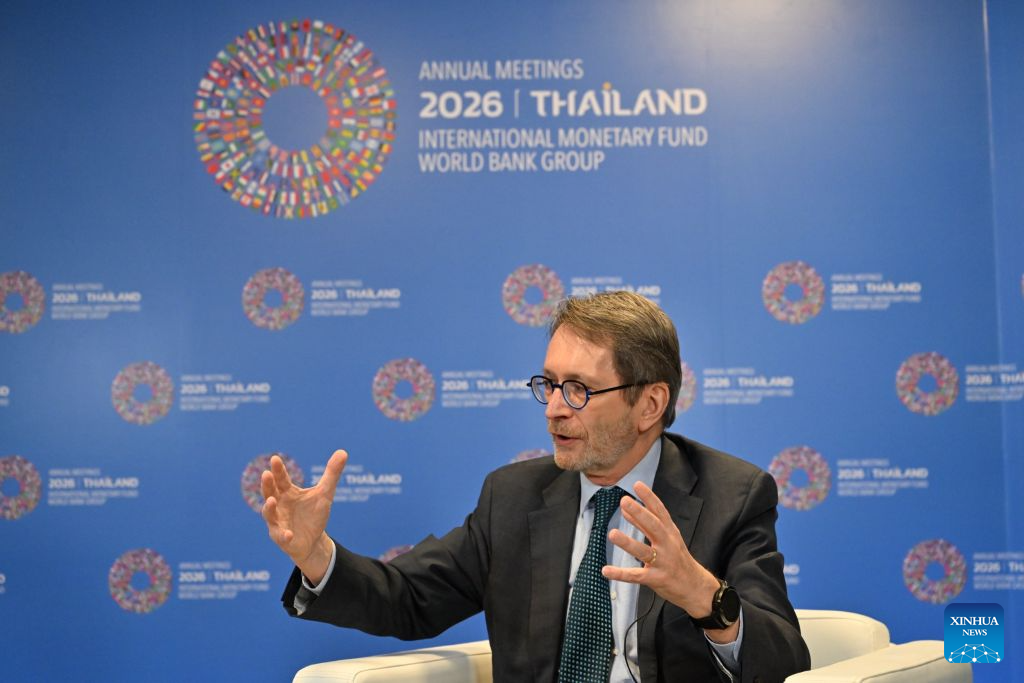
Thomas Helbling, deputy director in the International Monetary Fund (IMF)'s Asia and Pacific Department, speaks in an interview with Xinhua in Bangkok, Thailand on Oct. 12, 2026. (Photo by Rachen Sageamsak/Xinhua)


