*At their eighth round of economic and trade consultations from Sept. 20 to 23, China and the United States agreed on product lists for the 30-billion-U.S.-dollar reciprocal tariff reductions. The United States will reduce tariffs on Chinese imports including toys, home appliances, baby products, kitchen and bathroom goods, and holiday gifts.
*Across China's manufacturing and trading hubs, exporters are already reporting stronger demand from U.S. customers.
*For businesses that weathered last year's tariff hikes, a pickup in U.S. demand is welcome, but it is only part of the story. From seeking customers in new markets to refreshing the appeal of traditional products, Chinese exporters are finding ways to navigate trade uncertainty.
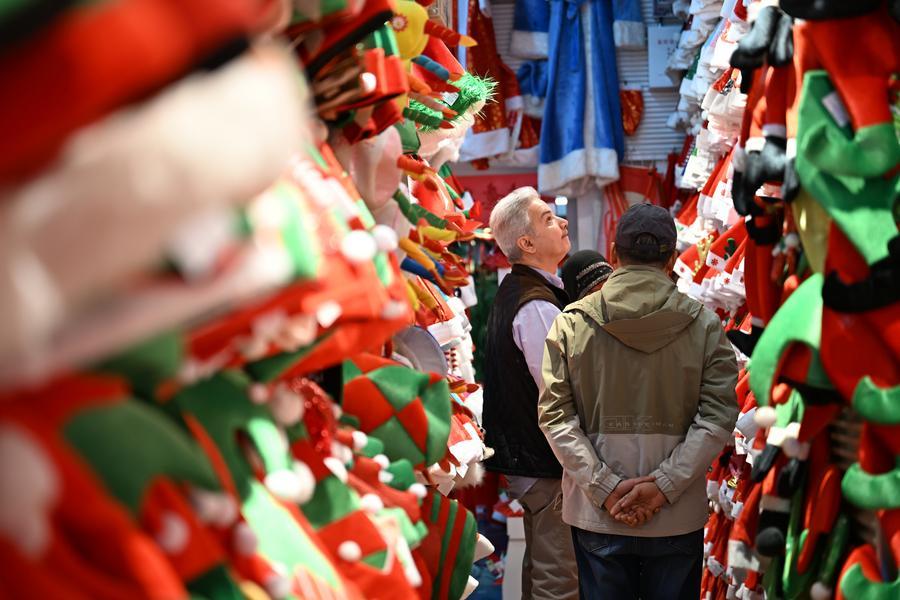
HANGZHOU/GUANGZHOU, Oct. 16 (Xinhua) -- Christmas is still over two months away, but Gong Yongqiang is already preparing for next year. Shuttling between the shop, factory and warehouse, the Yiwu merchant is checking raw-material stocks and developing new festive decorations.
His shop in the "world's supermarket" Yiwu, east China's Zhejiang Province, is lined with Santa Claus figurines in various styles and sizes, the kind that will sit on mantels across the United States by December.
A recent China-U.S. tariff agreement has given him fresh reason to look ahead with confidence.
At their eighth round of economic and trade consultations from Sept. 20 to 23, China and the United States agreed on product lists for the 30-billion-U.S.-dollar reciprocal tariff reductions. The United States will reduce tariffs on Chinese imports including toys, home appliances, baby products, kitchen and bathroom goods, and holiday gifts.
"I followed the consensus the moment it was announced," Gong said. "It is undoubtedly a positive signal for foreign trade on both sides."
Harley Seyedin, chairman and president of the American Chamber of Commerce in South China, said the consensus sends a strong signal to markets and investors, helping businesses gain confidence to invest, expand and create jobs on both sides of the Pacific.
"Certainty is the lifeblood of business," Seyedin said.
Luo Zhiheng, chief economist at Yuekai Securities, said the tariff reductions signal that trade relations are easing, although their effect on the overall U.S. tariff burden on Chinese goods remains limited. Their significance, rather, lies in creating room for lower tariffs on some non-sensitive products and indicating the direction of future policy.
U.S. ORDERS PICK UP
Across China's manufacturing and trading hubs, exporters are already reporting stronger demand from U.S. customers.
At her 15-square-meter store in the Yiwu International Trade Market, Nie Ziqin has packed the walls with Halloween decorations ranging from glowing spiders and pumpkin lanterns to horror masks, offering almost everything an American household needs for Halloween.
"This is this year's bestseller. One client ordered hundreds of thousands," she said, holding up a light-up spider. Her factory is working overtime to fill cross-border e-commerce orders, sending goods to U.S. warehouses.
"Many American clients are optimistic about China-U.S. economic and trade cooperation," Nie said. "Mutual benefit and win-win results are what everyone wants."
The growth in her orders is expected to continue, building on a trend that emerged even before the September talks. Her U.S. export orders rose 20 percent year on year in the first eight months of 2026, with American buyers placing orders earlier than usual.
As the world's largest Christmas goods hub, Yiwu supplies nearly 80 percent of the global market and ships more than 20,000 varieties to 178 countries and regions each year. The United States remains an important market for the city. The city's exports to the United States reached 104.51 billion yuan (about 15.55 billion U.S. dollars) in 2025, surging 25.1 percent from the previous year.
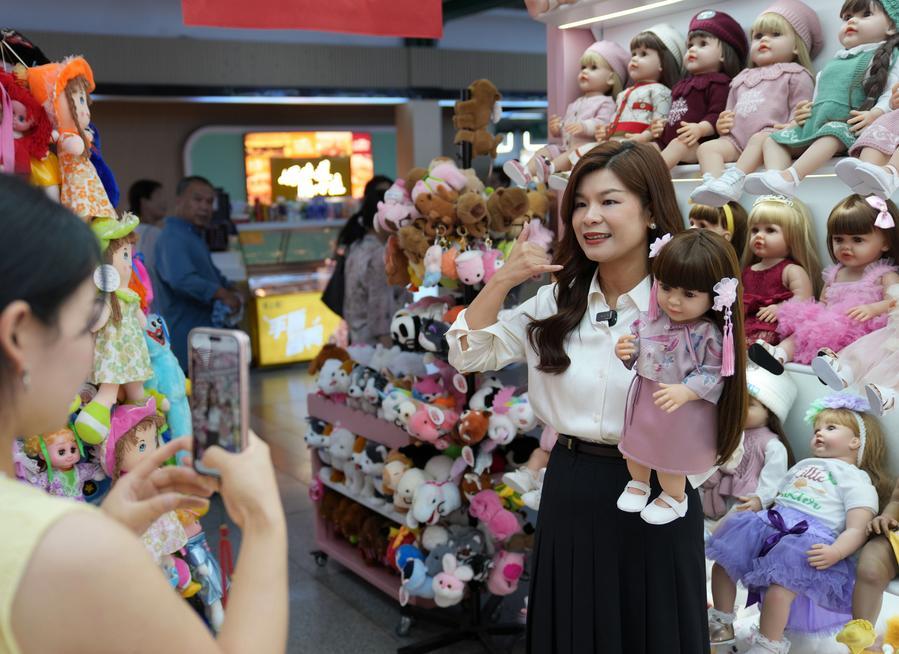
Further south, toy and gift manufacturers in Chenghai District, known as China's "toy capital," in the city of Shantou, south China's Guangdong Province, are seeing changes in both orders and price negotiations. Less than 400 square km in size, Chenghai nonetheless accounts for more than half of China's plastic toy output and about one-third of global production.
"When tariffs go down, buyers' costs fall, which leaves more room for both sides. Price negotiation has become less difficult," said Guo Bo, general manager of Guangdong YiYu Craft & Hardware Electrical Factory Co., Ltd., a supplier of plush Santas, snowmen and reindeer. Guo expects order volume to increase 10 to 20 percent this year.
Qiu Zhihong, chairman of Shantou Dave Plastic Toys Co., Ltd., also reported a recent improvement. His company manufactures licensed products for Disney and Universal Studios, with exports to the United States accounting for 30 to 40 percent of its exports.
One U.S. customer who previously ordered 100 containers is now ordering 120, Qiu said.
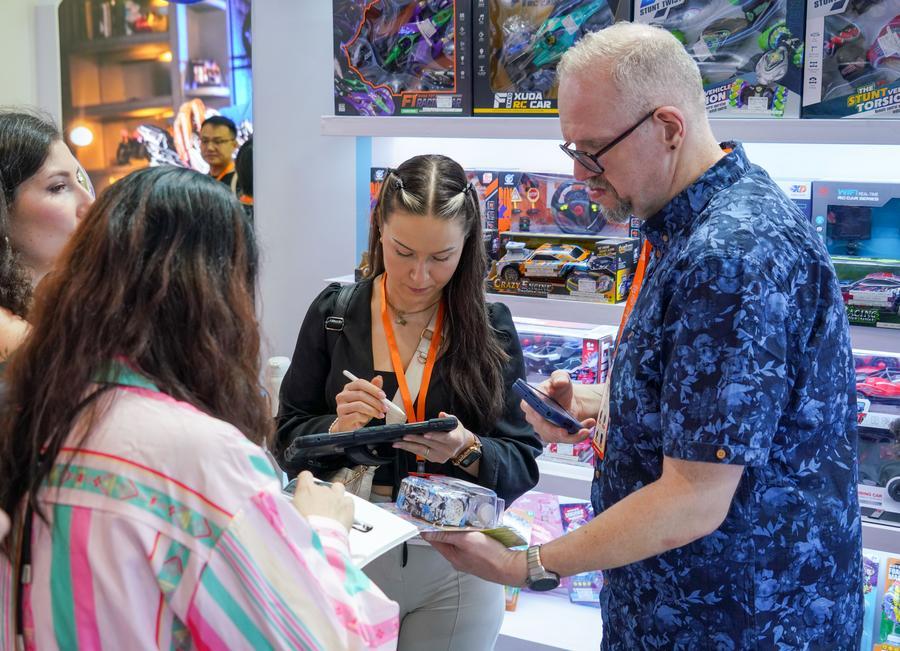
DIVERSIFYING MARKETS, INNOVATING PRODUCTS
For businesses that weathered last year's tariff hikes, a pickup in U.S. demand is welcome, but it is only part of the story. From seeking customers in new markets to refreshing the appeal of traditional products, Chinese exporters are finding ways to navigate trade uncertainty.
In Yiwu, Gong Yongqiang has learned not to rely too heavily on any single market. After the tariff increases, the U.S. share of his sales fell from a peak of about a quarter to around 10 percent. But orders from Brazil, Colombia and Chile helped fill the gap, expanding his customer base to more than 30 countries and regions.
He is also designing new products. This year, Gong has launched more than 100 new designs, adding sound and movement to traditional static Christmas figurines. Such features typically boost profit margins by more than 10 percent, he said. Now, he is developing an AI-powered Christmas doll that can hold conversations, with a launch planned for next year.
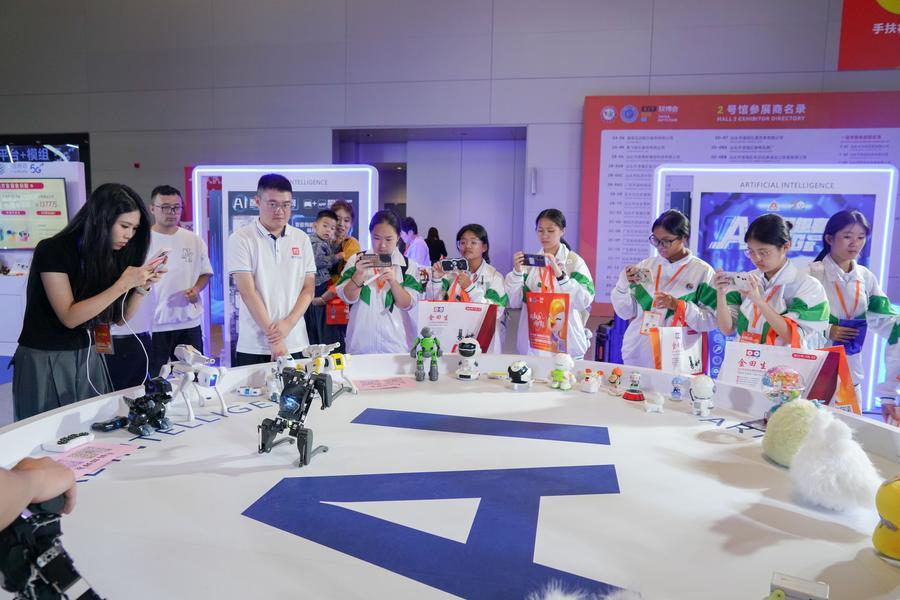
In Chenghai, Qiu Zhihong is taking a similar approach. Touch-sensitive AI toys are outselling basic models, he said, prompting his company to invest in smarter products and stronger brands. It is also working directly with retailers to cut out intermediaries.
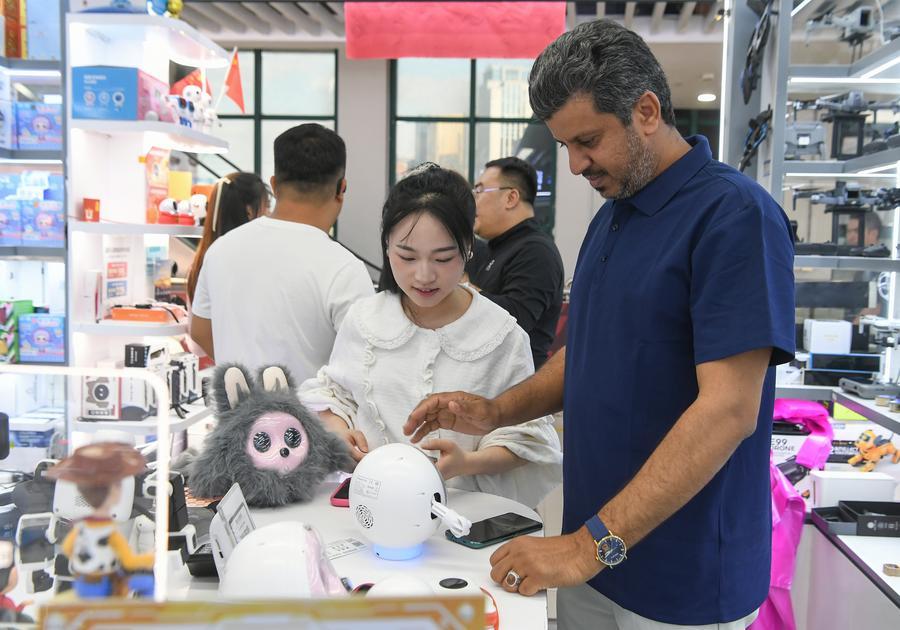
For Chinese exporters, these efforts to diversify markets and innovate products are already opening doors.
Earlier this month, Yiwu merchant Tao Yang secured an order from an American customer for more than 2,000 embroidered denim jackets. The order was modest in value, but it showed how fresh designs and tailored products can help Chinese exporters win over overseas customers and build long-term business relationships.
"When the client came to Yiwu in September, we used AI-assisted design and fine-tuned every detail with him in person. That's how we met his needs and closed the deal," Tao said.
Tao noted that this agility is powered by Yiwu's robust supply and industrial chains, along with a keen understanding of the market, enabling rapid product design and scaled-up production.
Luo Zhiheng, the economist, said Chinese exporters' resilience in the future will depend on diversifying markets, upgrading technology, building stronger brands and expanding their international presence. ■