
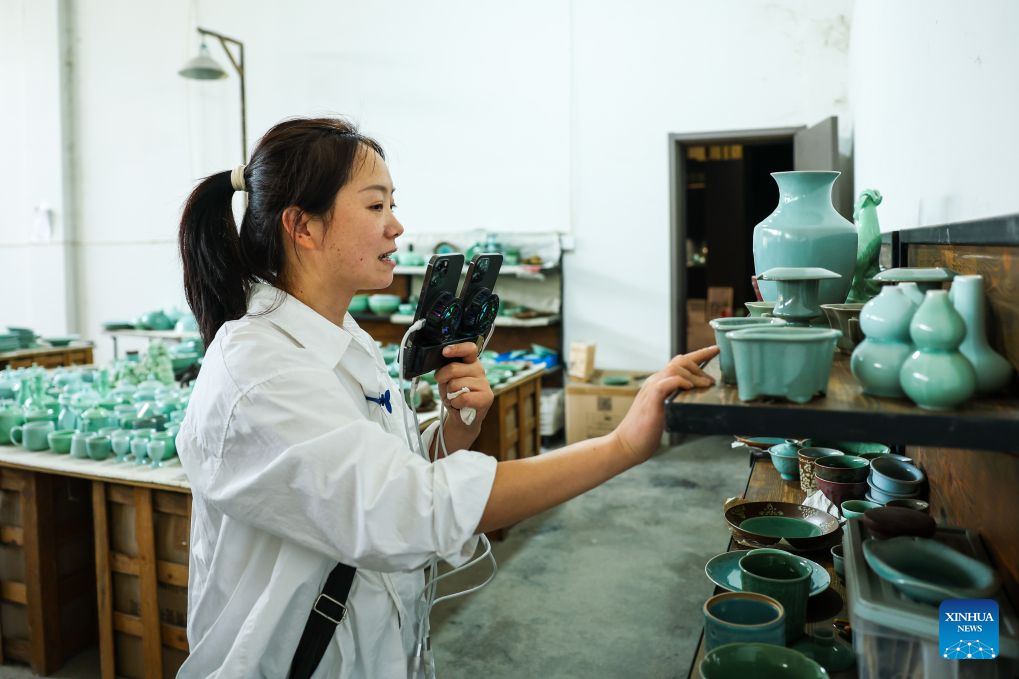
A staff member livestreams at a studio of the Longquan celadon in Longquan, east China's Zhejiang Province, Oct. 14, 2026. Located in southwestern Zhejiang Province, Longquan City boasts abundant ceramic clay, dense forests, and the Longquan River, providing ideal conditions for its celadon industry.
Longquan celadon firing technique was listed as a national intangible cultural heritage in 2006 and was inscribed on UNESCO's Representative List of the Intangible Cultural Heritage of Humanity in 2009.
In recent years, Longquan has upgraded its celadon industry by improving the quality of raw material, boosting industrial intelligence and empowering innovation. Today, the city has over 3,000 celadon-related businesses with more than 23,000 workers involved. (Xinhua/Jiang Han)

A staff member works at a studio of the Longquan celadon in Longquan, east China's Zhejiang Province, Oct. 14, 2026. Located in southwestern Zhejiang Province, Longquan City boasts abundant ceramic clay, dense forests, and the Longquan River, providing ideal conditions for its celadon industry.
Longquan celadon firing technique was listed as a national intangible cultural heritage in 2006 and was inscribed on UNESCO's Representative List of the Intangible Cultural Heritage of Humanity in 2009.
In recent years, Longquan has upgraded its celadon industry by improving the quality of raw material, boosting industrial intelligence and empowering innovation. Today, the city has over 3,000 celadon-related businesses with more than 23,000 workers involved. (Xinhua/Jiang Han)
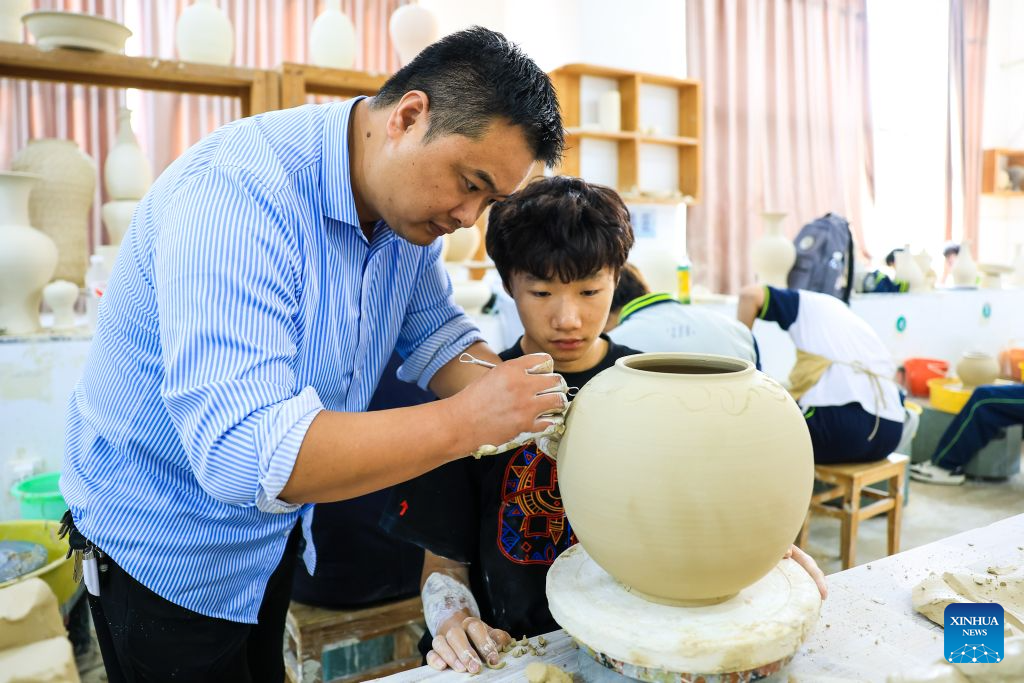
An instructor (L) teaches a student about incised decoration techniques of the Longquan celadon at a technical college in Longquan, east China's Zhejiang Province, Oct. 15, 2026. Located in southwestern Zhejiang Province, Longquan City boasts abundant ceramic clay, dense forests, and the Longquan River, providing ideal conditions for its celadon industry.
Longquan celadon firing technique was listed as a national intangible cultural heritage in 2006 and was inscribed on UNESCO's Representative List of the Intangible Cultural Heritage of Humanity in 2009.
In recent years, Longquan has upgraded its celadon industry by improving the quality of raw material, boosting industrial intelligence and empowering innovation. Today, the city has over 3,000 celadon-related businesses with more than 23,000 workers involved. (Xinhua/Jiang Han)

Students practice incised decoration techniques of the Longquan celadon at a technical college in Longquan, east China's Zhejiang Province, Oct. 15, 2026. Located in southwestern Zhejiang Province, Longquan City boasts abundant ceramic clay, dense forests, and the Longquan River, providing ideal conditions for its celadon industry.
Longquan celadon firing technique was listed as a national intangible cultural heritage in 2006 and was inscribed on UNESCO's Representative List of the Intangible Cultural Heritage of Humanity in 2009.
In recent years, Longquan has upgraded its celadon industry by improving the quality of raw material, boosting industrial intelligence and empowering innovation. Today, the city has over 3,000 celadon-related businesses with more than 23,000 workers involved. (Xinhua/Jiang Han)
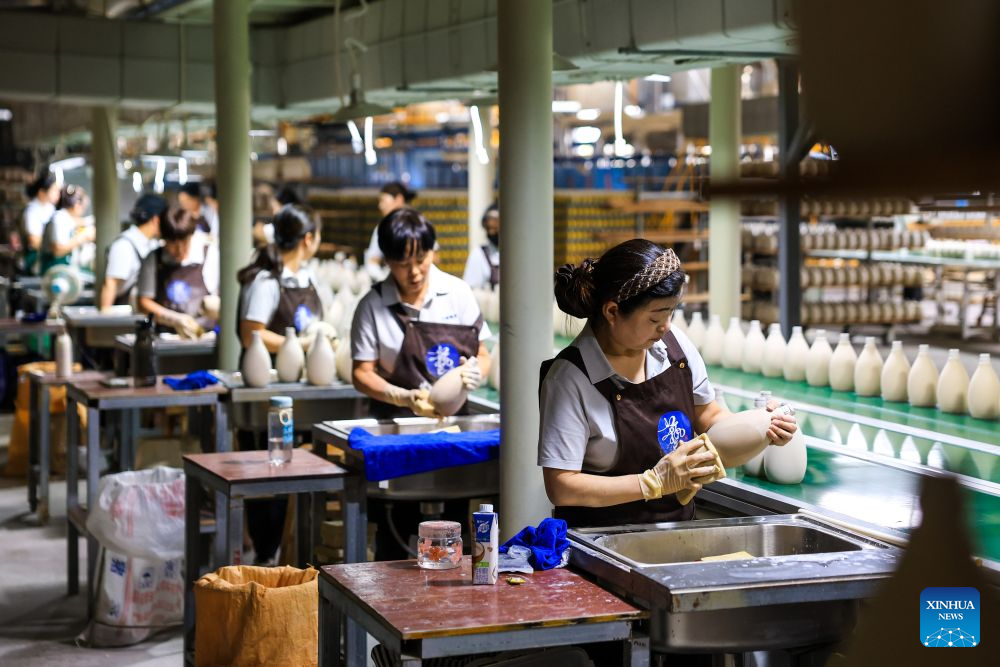
Staff members work at a production line of the Longquan celadon in Longquan, east China's Zhejiang Province, Oct. 14, 2026. Located in southwestern Zhejiang Province, Longquan City boasts abundant ceramic clay, dense forests, and the Longquan River, providing ideal conditions for its celadon industry.
Longquan celadon firing technique was listed as a national intangible cultural heritage in 2006 and was inscribed on UNESCO's Representative List of the Intangible Cultural Heritage of Humanity in 2009.
In recent years, Longquan has upgraded its celadon industry by improving the quality of raw material, boosting industrial intelligence and empowering innovation. Today, the city has over 3,000 celadon-related businesses with more than 23,000 workers involved. (Xinhua/Jiang Han)

People select Longquan celadon products at a company in Longquan, east China's Zhejiang Province, Oct. 15, 2026. Located in southwestern Zhejiang Province, Longquan City boasts abundant ceramic clay, dense forests, and the Longquan River, providing ideal conditions for its celadon industry.
Longquan celadon firing technique was listed as a national intangible cultural heritage in 2006 and was inscribed on UNESCO's Representative List of the Intangible Cultural Heritage of Humanity in 2009.
In recent years, Longquan has upgraded its celadon industry by improving the quality of raw material, boosting industrial intelligence and empowering innovation. Today, the city has over 3,000 celadon-related businesses with more than 23,000 workers involved. (Xinhua/Jiang Han)
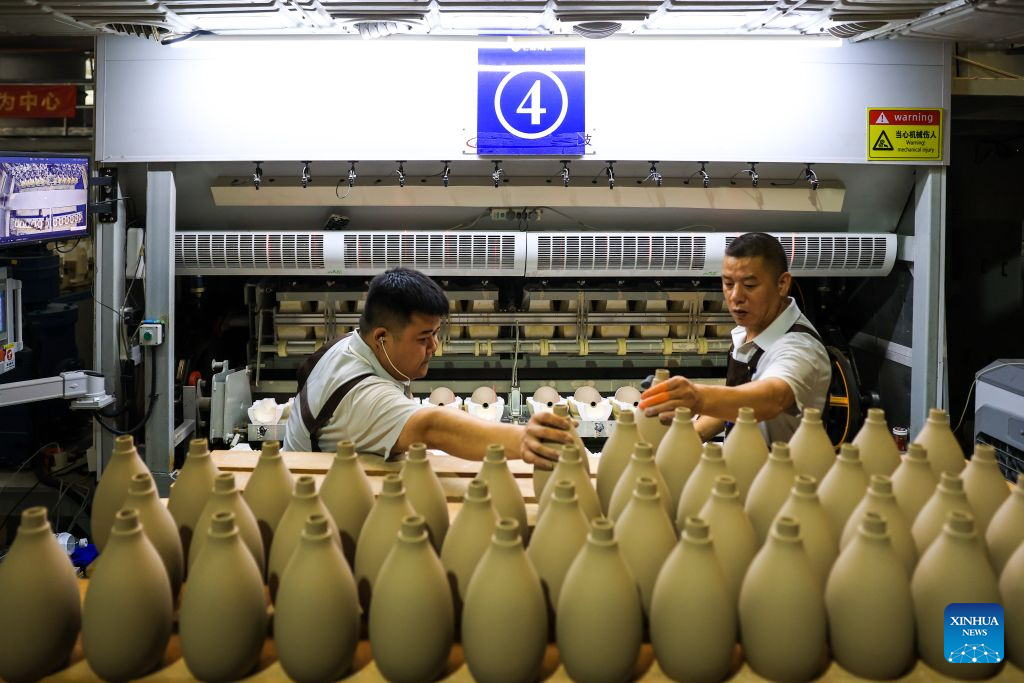
Staff members work at a production line of the Longquan celadon in Longquan, east China's Zhejiang Province, Oct. 14, 2026. Located in southwestern Zhejiang Province, Longquan City boasts abundant ceramic clay, dense forests, and the Longquan River, providing ideal conditions for its celadon industry.
Longquan celadon firing technique was listed as a national intangible cultural heritage in 2006 and was inscribed on UNESCO's Representative List of the Intangible Cultural Heritage of Humanity in 2009.
In recent years, Longquan has upgraded its celadon industry by improving the quality of raw material, boosting industrial intelligence and empowering innovation. Today, the city has over 3,000 celadon-related businesses with more than 23,000 workers involved. (Xinhua/Jiang Han)
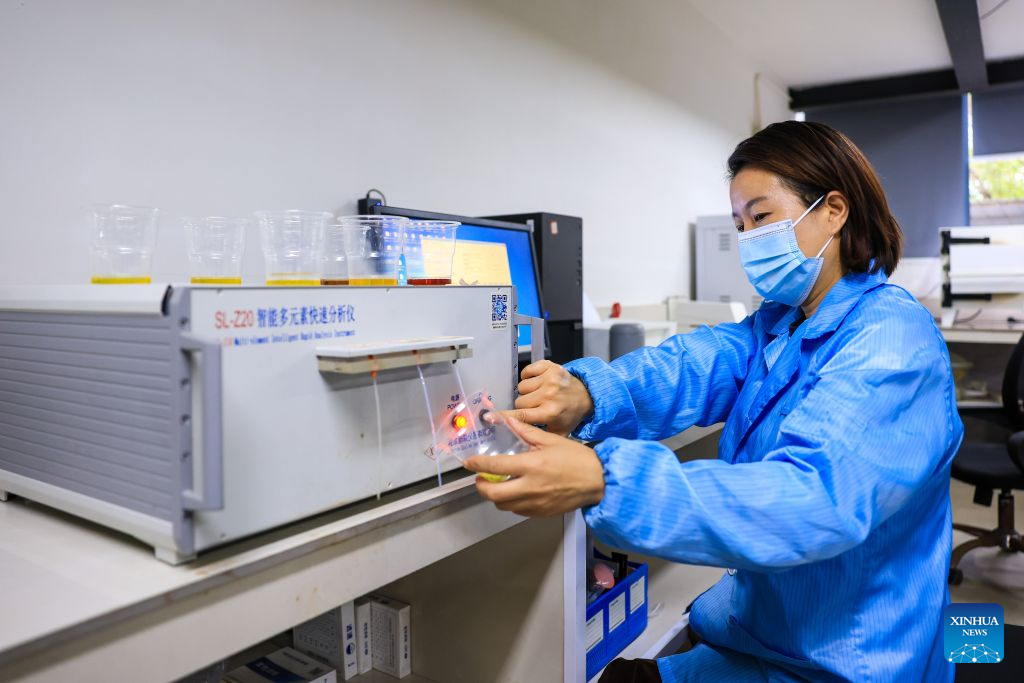
A staff member checks the quality of ceramic clay at a laboratory of the Longquan celadon in Longquan, east China's Zhejiang Province, Oct. 14, 2026. Located in southwestern Zhejiang Province, Longquan City boasts abundant ceramic clay, dense forests, and the Longquan River, providing ideal conditions for its celadon industry.
Longquan celadon firing technique was listed as a national intangible cultural heritage in 2006 and was inscribed on UNESCO's Representative List of the Intangible Cultural Heritage of Humanity in 2009.
In recent years, Longquan has upgraded its celadon industry by improving the quality of raw material, boosting industrial intelligence and empowering innovation. Today, the city has over 3,000 celadon-related businesses with more than 23,000 workers involved. (Xinhua/Jiang Han)

This photo taken on Oct. 15, 2026 shows cultural and creative products of the Longquan celadon at a company in Longquan, east China's Zhejiang Province. Located in southwestern Zhejiang Province, Longquan City boasts abundant ceramic clay, dense forests, and the Longquan River, providing ideal conditions for its celadon industry.
Longquan celadon firing technique was listed as a national intangible cultural heritage in 2006 and was inscribed on UNESCO's Representative List of the Intangible Cultural Heritage of Humanity in 2009.
In recent years, Longquan has upgraded its celadon industry by improving the quality of raw material, boosting industrial intelligence and empowering innovation. Today, the city has over 3,000 celadon-related businesses with more than 23,000 workers involved. (Xinhua/Jiang Han)

A staff member works at a production line of the Longquan celadon in Longquan, east China's Zhejiang Province, Oct. 14, 2026. Located in southwestern Zhejiang Province, Longquan City boasts abundant ceramic clay, dense forests, and the Longquan River, providing ideal conditions for its celadon industry.
Longquan celadon firing technique was listed as a national intangible cultural heritage in 2006 and was inscribed on UNESCO's Representative List of the Intangible Cultural Heritage of Humanity in 2009.
In recent years, Longquan has upgraded its celadon industry by improving the quality of raw material, boosting industrial intelligence and empowering innovation. Today, the city has over 3,000 celadon-related businesses with more than 23,000 workers involved. (Xinhua/Jiang Han)
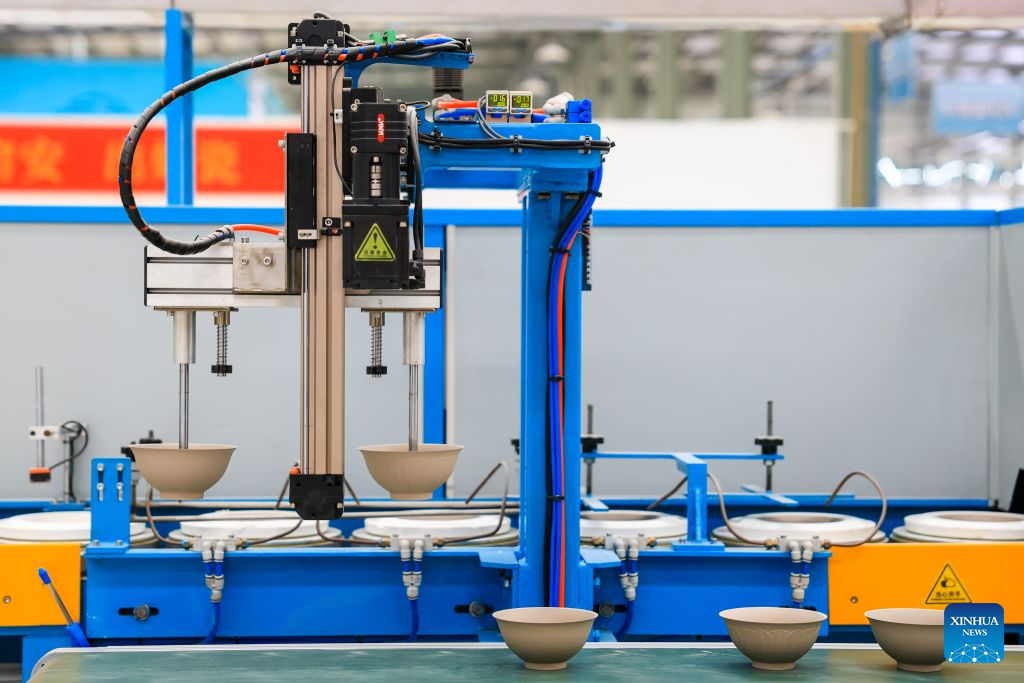
This photo taken on Oct. 15, 2026 shows an automated celadon production equipment at a studio in Longquan, east China's Zhejiang Province. Located in southwestern Zhejiang Province, Longquan City boasts abundant ceramic clay, dense forests, and the Longquan River, providing ideal conditions for its celadon industry.
Longquan celadon firing technique was listed as a national intangible cultural heritage in 2006 and was inscribed on UNESCO's Representative List of the Intangible Cultural Heritage of Humanity in 2009.
In recent years, Longquan has upgraded its celadon industry by improving the quality of raw material, boosting industrial intelligence and empowering innovation. Today, the city has over 3,000 celadon-related businesses with more than 23,000 workers involved. (Xinhua/Jiang Han)
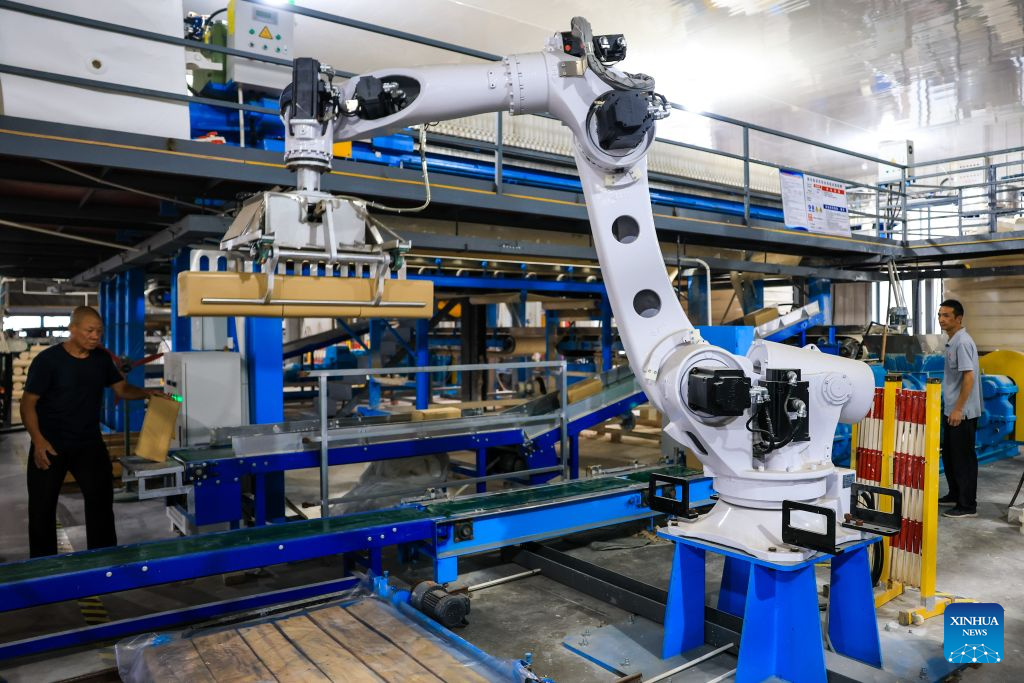
A robotic arm transfers ceramic clay at a studio of the Longquan celadon in Longquan, east China's Zhejiang Province, Oct. 14, 2026. Located in southwestern Zhejiang Province, Longquan City boasts abundant ceramic clay, dense forests, and the Longquan River, providing ideal conditions for its celadon industry.
Longquan celadon firing technique was listed as a national intangible cultural heritage in 2006 and was inscribed on UNESCO's Representative List of the Intangible Cultural Heritage of Humanity in 2009.
In recent years, Longquan has upgraded its celadon industry by improving the quality of raw material, boosting industrial intelligence and empowering innovation. Today, the city has over 3,000 celadon-related businesses with more than 23,000 workers involved. (Xinhua/Jiang Han)
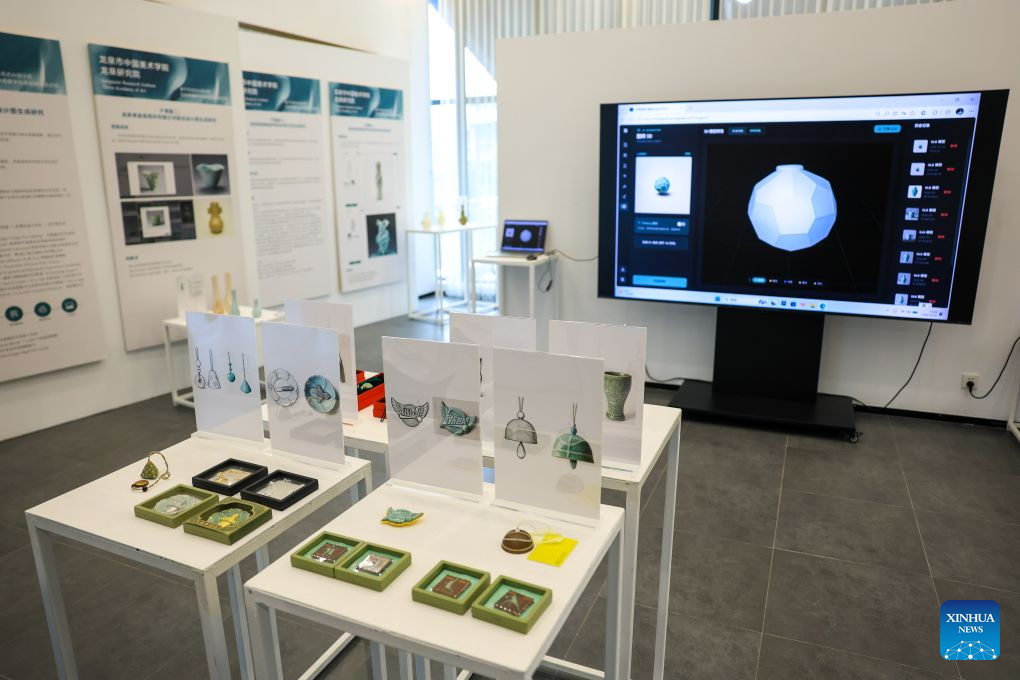
This photo taken on Oct. 14, 2026 shows the "ceramic AI design platform" by Longquan Research Institute of China Academy of Art in Longquan, east China's Zhejiang Province. Located in southwestern Zhejiang Province, Longquan City boasts abundant ceramic clay, dense forests, and the Longquan River, providing ideal conditions for its celadon industry.
Longquan celadon firing technique was listed as a national intangible cultural heritage in 2006 and was inscribed on UNESCO's Representative List of the Intangible Cultural Heritage of Humanity in 2009.
In recent years, Longquan has upgraded its celadon industry by improving the quality of raw material, boosting industrial intelligence and empowering innovation. Today, the city has over 3,000 celadon-related businesses with more than 23,000 workers involved. (Xinhua/Jiang Han)

A staff member works at a studio of the Longquan celadon in Longquan, east China's Zhejiang Province, Oct. 14, 2026. Located in southwestern Zhejiang Province, Longquan City boasts abundant ceramic clay, dense forests, and the Longquan River, providing ideal conditions for its celadon industry.
Longquan celadon firing technique was listed as a national intangible cultural heritage in 2006 and was inscribed on UNESCO's Representative List of the Intangible Cultural Heritage of Humanity in 2009.
In recent years, Longquan has upgraded its celadon industry by improving the quality of raw material, boosting industrial intelligence and empowering innovation. Today, the city has over 3,000 celadon-related businesses with more than 23,000 workers involved. (Xinhua/Jiang Han)
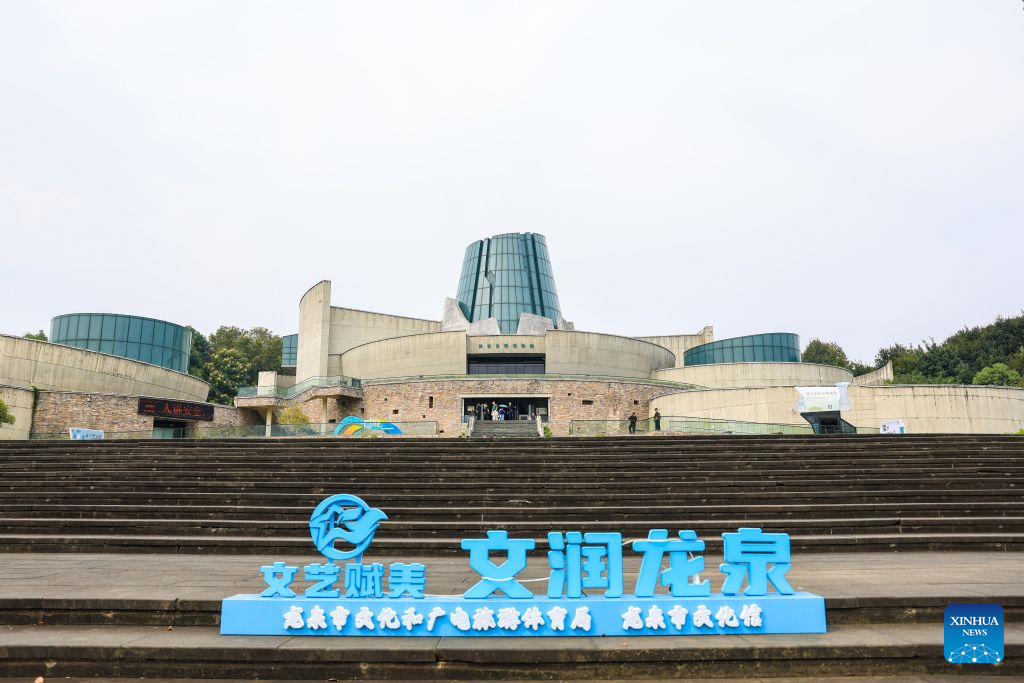
This photo taken on Oct. 15, 2026 shows an exterior view of the Longquan celadon museum in Longquan, east China's Zhejiang Province. Located in southwestern Zhejiang Province, Longquan City boasts abundant ceramic clay, dense forests, and the Longquan River, providing ideal conditions for its celadon industry.
Longquan celadon firing technique was listed as a national intangible cultural heritage in 2006 and was inscribed on UNESCO's Representative List of the Intangible Cultural Heritage of Humanity in 2009.
In recent years, Longquan has upgraded its celadon industry by improving the quality of raw material, boosting industrial intelligence and empowering innovation. Today, the city has over 3,000 celadon-related businesses with more than 23,000 workers involved. (Xinhua/Jiang Han)


