
CAIRO, Oct. 14 (Xinhua) -- Recent Houthi attacks on Saudi Arabia have renewed focus on the limits of Saudi air defense systems and underscored the need for a regional security mechanism, observers have said.
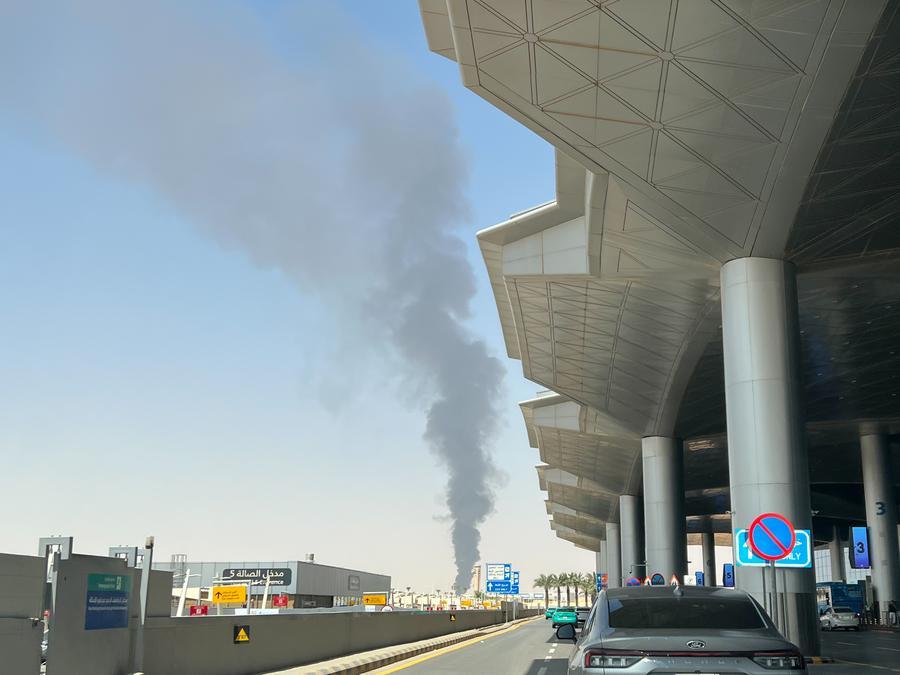
SAUDI AIR DEFENSE BREACHED
Saudi Arabia operates advanced air defense systems, including U.S.-made Patriot and Terminal High Altitude Area Defense (THAAD) systems. Yet even sophisticated defenses face operational and economic constraints when confronting repeated attacks by the Houthis involving mixed missile and drone threats.
The challenges stem partly from the kingdom's vast territory and the wide range of potential targets, from civilian infrastructure to key economic facilities, analysts note. Defending against multiple threats from different directions places heavy demands on surveillance networks, command systems and interceptor supplies, said Egyptian military expert Samir Ragheb.
Ragheb explained that low-flying drones and cruise missiles are hard to detect early, while ballistic missiles pose a different challenge: their speed and flight trajectories allow them to ascend to extreme altitudes, sometimes beyond the atmosphere, before descending rapidly, leaving air defenses with a narrow response window.
He estimated a ballistic missile could reach Riyadh from Yemen in roughly seven minutes, underscoring the critical need for early warning, rapid coordination and timely interception.
The use of relatively inexpensive drones against costly air defense systems also presents an economic challenge during prolonged attacks, the expert said, noting interceptors are expensive and stocks are finite, making it harder to match defensive responses to different types and scales of threat.
Ragheb said integrated command systems, layered long- and short-range defenses, and improved surveillance and early-warning could help Saudi Arabia use its capabilities more efficiently. Cost-effective counter-drone systems would also ease pressure on expensive interceptors, he added.
REGIONAL SECURITY MECHANISM NEEDED
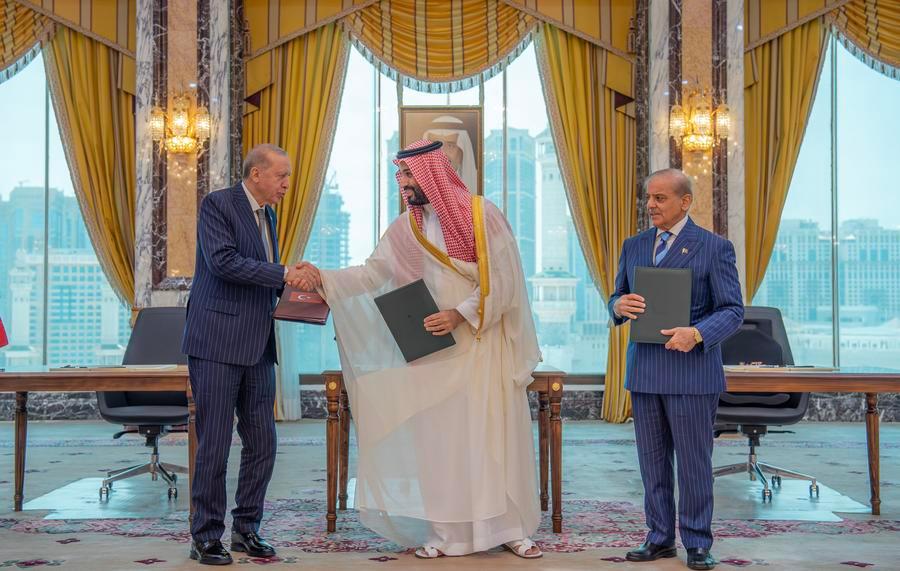
The challenges have added urgency to regional security efforts. Saudi Arabia, Pakistan and Türkiye signed the Mecca Joint Defense Agreement on Aug. 7, under which an attack on one member is seen as an attack on all.
The three countries on Oct. 5 agreed to provide agreed forces and capabilities and facilitate their rapid deployment in Saudi Arabia in response to intensified Houthi strikes on Riyadh. Yet no details on specific forces, systems, or timelines were disclosed.
Meanwhile, Egyptian Foreign Minister Badr Abdelatty said in a Bloomberg TV interview on Tuesday that Cairo would respond positively to Saudi requests and seriously consider joining the pact.
"Countries participating in the Mecca Joint Defense Agreement are likely to deploy air defense systems and fighter aircraft in Saudi Arabia as integral components of the kingdom's defensive network," Ragheb said.
Egyptian researcher on Arab and international affairs Mostafa Amin said closer security cooperation should be assessed not only by military capabilities but also by its contribution to regional stability.
Amin said Saudi Arabia could improve its ability to detect and intercept aerial threats while channeling closer regional cooperation into a stabilizing force.
"The two tasks are closely connected but require different approaches. Better sensors, layered defenses and more efficient use of interceptors can reduce the vulnerability of critical facilities, while regional consultations and diplomatic engagement can help limit the risk of further escalation," Amin said.
"Lasting security will depend both on adapting to evolving military threats and on whether regional powers can turn their growing cooperation into effective mechanisms for preventing conflict," he concluded. ■