*Eighty-four years after the first U.S. air strike on the Japanese home islands during World War II, family members of some of the airmen traveled across the Pacific to retrace mountain paths where Chinese peasants risked torture and death to shelter downed American flyers, and to honor a friendship forged in wartime.
*In April 1942, 16 U.S. bombers led by Lieutenant Colonel James Doolittle took off from the USS Hornet aircraft carrier to bomb Japan, in retaliation for the attack on Pearl Harbor.
*After the operation, 15 planes heading for a designated airport in east China's Zhejiang Province ran out of fuel and crashed in various localities, including Jiangxi.
NANCHANG, Oct. 13 (Xinhua) -- Eighty-four years after the first U.S. air strike on the Japanese home islands during World War II, family members of some of the airmen traveled across the Pacific to retrace mountain paths where Chinese peasants risked torture and death to shelter downed American flyers, and to honor a friendship forged in wartime.
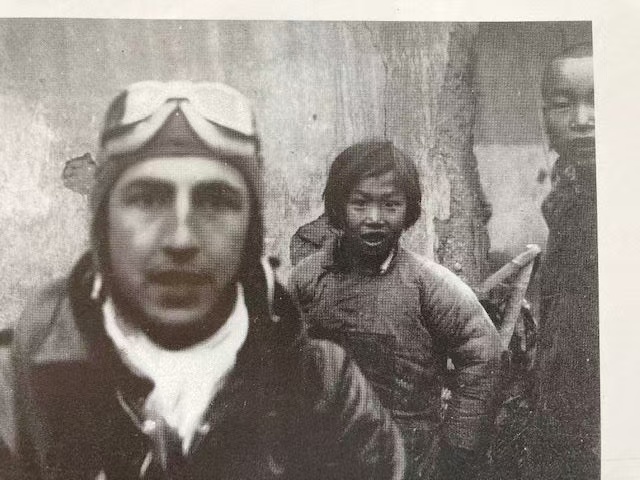
In Yangcun Village, Shangrao City of east China's Jiangxi Province, Thomas Macia first met 94-year-old Guan Dongxiang, who was still a short-haired little girl gaping behind an American pilot, Jack Sims, copilot of the Doolittle Raid's Crew No. 14, in a black-and-white photo.
James Macia, Thomas Macia's father, served as navigator and bombardier in the same aircrew. When he was nine, Thomas first saw the photo in his father's album.
In the spring of 1942, Guan's father, Guan Wenqing, and fellow villagers helped rescue Sims in nearby Miliang'ao Village. Days later, the pilot returned with a camera and took the photo.
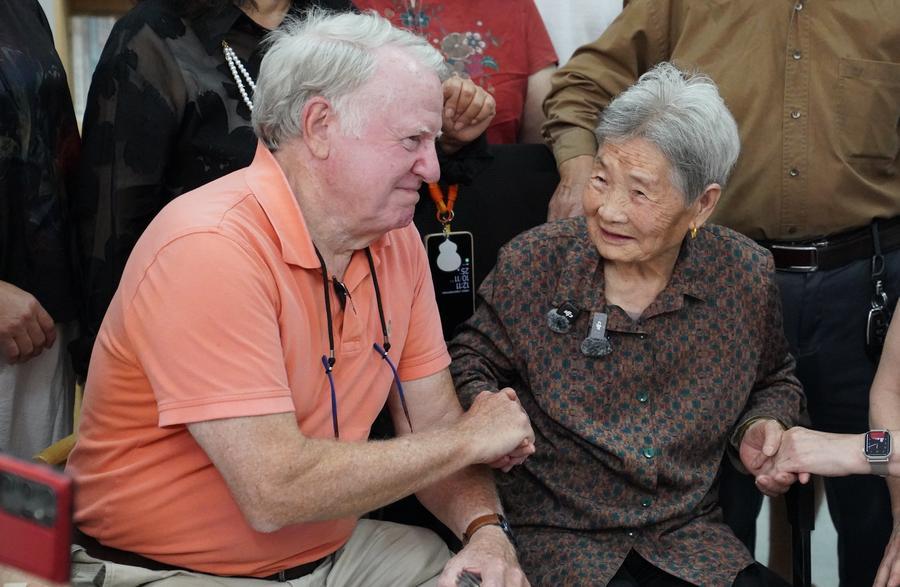
"There she is!" Thomas Macia exclaimed at the first sight of the silver-haired Chinese woman on Sunday, along with five others from the Children of the Doolittle Raiders. "I knew she existed. I had not met her before. The greatest thing is that she is a direct connection to 1942."
RETRACING WARTIME RESCUE
In April 1942, 16 U.S. bombers led by Lieutenant Colonel James Doolittle took off from the USS Hornet aircraft carrier to bomb Japan, in retaliation for the attack on Pearl Harbor.
After the operation, 15 planes heading for a designated airport in east China's Zhejiang Province ran out of fuel and crashed in various localities, including Jiangxi.
Chinese villagers risked their lives to rescue the parachuting airmen behind enemy lines and helped them evacuate to safety. Of the 75 airmen whose aircraft came down, 64 were brought to safety.
The rescue came at a tremendous cost. Many locals were suspected of sheltering the Americans, and some were tortured or even killed by Japanese invading soldiers.
After the raid, Japan launched a three-month campaign in May 1942 to destroy air bases, airports and other infrastructure in Zhejiang and Jiangxi, to prevent them from being used by Chinese or U.S. air forces. The invading Japanese troops also waged biological warfare by spreading cholera, plague and other diseases, resulting in massive civilian deaths.

During a visit to Miliang'ao Village, Thomas recounted how his father landed in the mountains: "He could see off the top of the mountain, and he was hugging a small pine tree for the night to keep from sliding down."
A visit to Dapai Mountain helped Thomas better understand his father's ordeal. "For me, to walk a little way up the hill ... I could imagine what my father did to know more exact information and the sense of what it looked like more than 80 years ago," he said.
Gusty winds swept away his father's backpack and supplies as he parachuted down. Local villagers brought him eggs, honey and other food, and lit fires to dry his clothes. He was later escorted to the township government office, where he was reunited with other crew members.
Thomas's father once pointed to a spot on a map and told his son that his life was saved by Chinese villagers, officials and soldiers, whom he remembered to his last breath.

REDISCOVERING SHARED MEMORY
Unable to return to China in his lifetime, James Macia kept the photograph with care. His son later made it his own mission to find the descendants of those lifesavers in person.
In 2018, Thomas traveled to China for the first time and met Luo Shiping, a researcher with the Shangrao Anti-Japanese War Culture Research Association. The two have exchanged about 1,000 emails ever since.
Over the years, Thomas combed through U.S. archives and provided clues, while Luo visited all crash sites and parachute landing areas across Shangrao, interviewed villagers and compiled investigation reports.
After the war, Doolittle Raiders and their descendants established organizations such as the Children of the Doolittle Raiders. They hold annual commemorations, seminars and photo exhibitions to honor the Chinese who took part in the rescue.
Researchers in Shangrao have continued to collect scattered documents and oral testimonies, working with their American counterparts to preserve this transnational memory.
Their work has helped bring the heroic story to a wider audience. An exhibition on the rescue at Shangrao Museum has attracted almost 300,000 visitors since its opening in August 2025, according to museum curator Jiang Jinmin.
On Saturday, the visiting Children of the Doolittle Raiders group toured the exhibition. Tom Johnson, son-in-law of Crew No. 14 pilot John Hilger, stopped now and then to snap photos of the displays.
"Shangrao established and created this wonderful place of memory. It makes us know what they (Doolittle Raiders) accomplished," Johnson said.
The delegation donated historical memorabilia to the museum, including fabric from the parachute used by James Macia, historical photos and relevant news clippings.
ENDURING FRIENDSHIP
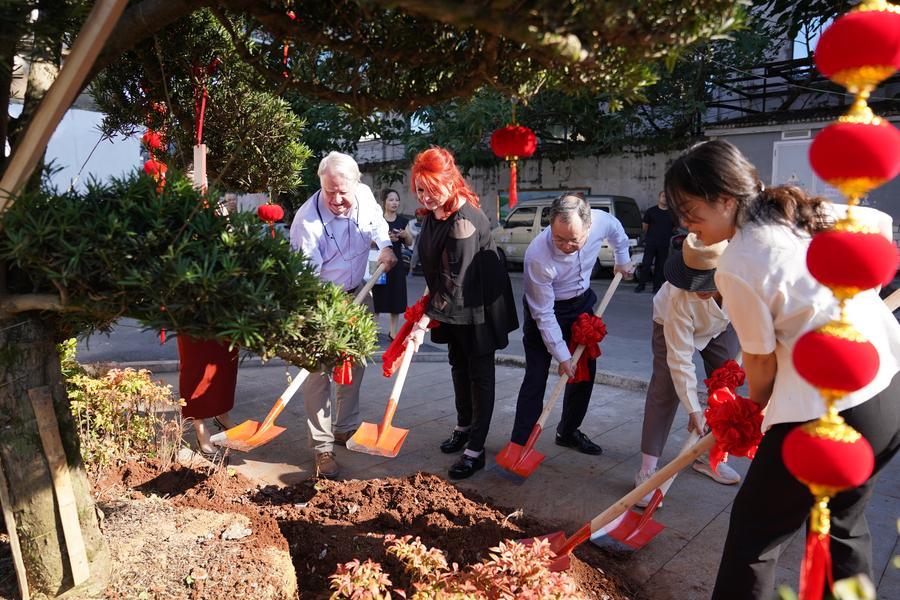
On Saturday, the delegation also visited a 140-year-old residence in Fujia Village, where five members of Crew No. 14 posed for a group photo during the war.
Tears welled up in Thomas's eyes as he entered the house. He had seen the airmen's group photo as a child.
"I've been told for years that this (house) was destroyed. But here it is," he said.
Fu Yuntuo, still a boy and a descendant of the house's former owner, approached Thomas and told him that his family elders had often told him stories about the American airmen who once stayed in the house.
Friendship is the greatest bond in the world, Fu said.
For Thomas, his connection with Shangrao extends beyond historical research. Whenever floods, earthquakes or other disasters strike southern China, including Jiangxi, he contacts Luo to ask whether the area has been affected.
"The Doolittle Raid embodies Chinese and American elders fighting side by side against fascism through adversity for WWII victory," Luo said. "I will work with Thomas to pass the stories on to younger generations of both nations." ■
(Video reporter: Pan Xiaojing; Video editors: Pan Xiaojing, Zhang Nan and Zheng Qingbin)