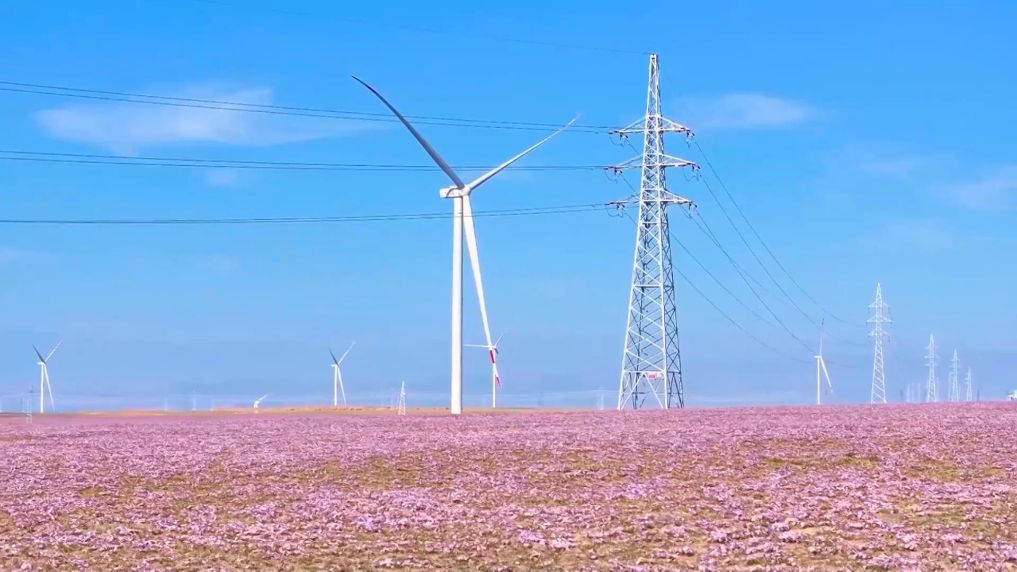
* China appears to be somewhat shielded from Middle East conflict-driven price shocks by its significant energy reserves, diversified energy supply and rapidly expanding renewable energy sector, which together reduce its dependence on Middle Eastern oil.
* China's commitment to and pursuit of peaking carbon dioxide emissions before 2030 and achieving carbon neutrality before 2060, coupled with rapid advances in wind, solar and new energy vehicle technologies, is fundamentally compressing oil demand.
* China's exports of batteries, wind turbines, electric vehicles and, above all, solar panels helped avoid 374 million metric tonnes of carbon dioxide emissions globally in 2025, which is more carbon dioxide emissions than Britain produced last year.
BEIJING, Oct. 14 (Xinhua) -- As the world confronts what the International Energy Agency (IEA) has described as the most severe energy crisis in its history, China, the world's largest crude importer, has chosen restraint over panic, helping stabilize global oil markets.
Rather than scrambling to secure supplies after the Strait of Hormuz, one of the planet's most critical oil choke points, was thrown into turmoil in late February, China has reduced its crude purchases, released strategic reserves to meet domestic needs, and drawn on its increasingly diversified supply channels and expanding renewable energy capacity.
The result, according to IEA Executive Director Fatih Birol, has been a meaningful cushion for a market reeling from the largest supply disruption in modern history.
On the demand side, China has played an important role in stabilizing markets by reducing its crude oil imports by nearly 50 percent compared with pre-war levels, Birol said in a statement, while noting that significant supplies from Gulf producers and increased exports from the United States, Brazil, Venezuela and Kazakhstan have also helped offset some of the losses from the Gulf.
China's restraint has not been accidental. It reflects a viable, multi-layered energy strategy that has been quietly reshaping the country's role in the global energy order: from a passive price-taker vulnerable to geopolitical tremors to an anchor of stability with domestic policy choices now rippling outward, resulting in tangible, positive outcomes for the world economy.
OIL PURCHASE RESTRAINT
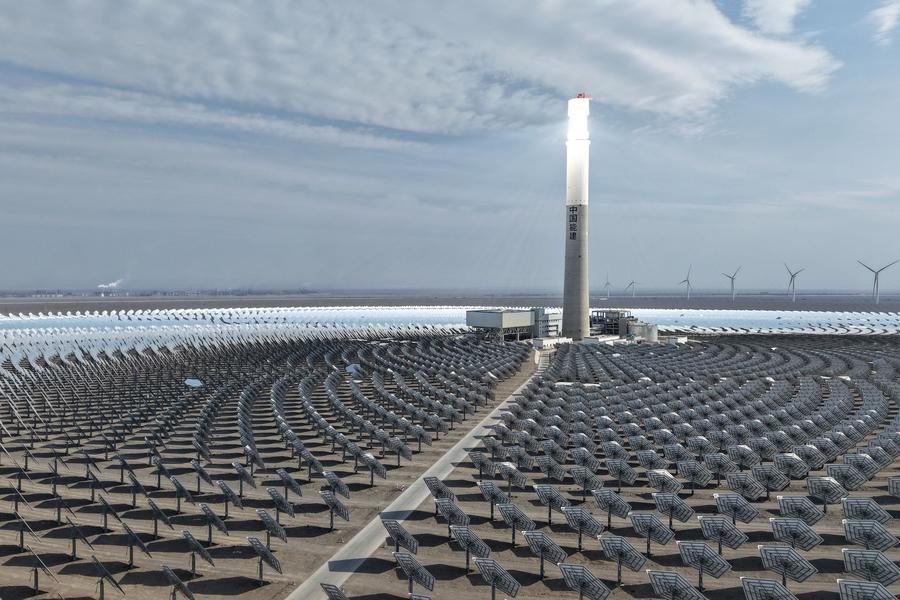
Customs data tell a striking story. In the first nine months of 2026, China's crude oil imports totaled 358 million tonnes, a year-on-year decline of 15.3 percent. This contraction deepened sharply in June, when imports fell to 29.27 million tonnes -- down 41.3 percent from a year earlier and 11.5 percent from May, marking the lowest monthly figure since October 2016.
Chen Shouhai, director of the oil and gas policy and law research center at China University of Petroleum in Beijing, anticipates a short-term rebound in imports as restocking demand kicks in during the early stages of any de-escalation, but he cautions that this would represent only a cyclical inventory correction, not a reversal of the underlying demand trend.
Over a three-to-five-year horizon, China's total crude imports are likely to decline gradually, according to Chen.
The logic is structural, with China's oil consumption having already passed its peak, seeing refined product demand falling year by year since 2024. Petrochemical feedstock demand continues to grow modestly, but nowhere near enough to offset the erosion in transport fuel consumption. Meanwhile, domestic exploration and production have strengthened steadily, with output rising and the import dependency ratio of roughly 70 percent expected to ease.
China's commitment to and pursuit of peaking carbon dioxide emissions before 2030 and achieving carbon neutrality before 2060, coupled with rapid advances in wind, solar and new energy vehicle (NEV) technologies, is fundamentally compressing oil demand.
China's decision not to hit the panic button has drawn international attention. Nicholas Wagner, manager of energy initiatives at the World Economic Forum, observed in an analysis of how the war in the Middle East is reshaping Asia's energy transition: "China appears to be somewhat shielded from Middle East conflict-driven price shocks by its significant energy reserves, diversified energy supply and rapidly expanding renewable energy sector, which together reduce its dependence on Middle Eastern oil. This lesson will not be lost on policymakers."
STRATEGIC ENERGY PUSH
Domestic scholars argue that China's composure amid this global energy tsunami is no accident. It is the product of a strategic architecture first articulated in 2014 -- promoting revolutions in energy consumption, supply, technology and institutions while strengthening international cooperation across the board.
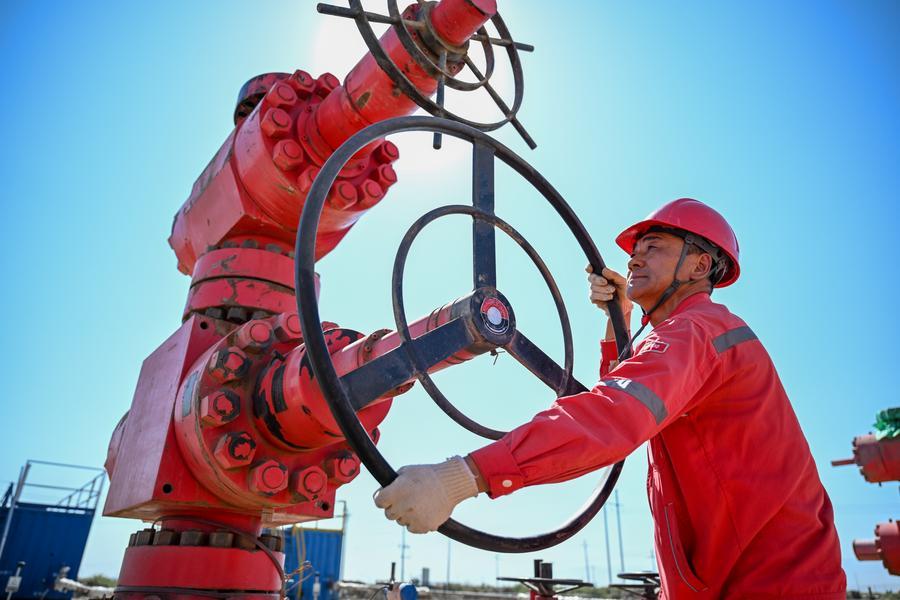
Data from the National Energy Administration revealed that in 2025, China's primary energy production had reached 5.13 billion tonnes of standard coal equivalent, with domestic crude oil output hitting 216 million tonnes and natural gas production exceeding 260 billion cubic meters, all record highs. China's energy self-sufficiency rate climbed to 84.4 percent in 2025 and is expected to rise further in 2026.
Alongside this domestic expansion, China has constructed a "land-sea linkage, multi-corridor parallel" energy import architecture, with crude oil imported from 49 countries and natural gas from more than 20 countries.
Xiao Hongwei, a research fellow at the National Development and Reform Commission, sees the first half of 2026 as a period of multiple breakthroughs in supply security and green transition.
China's oil and gas production continued to set records in this period: industrial crude oil output reached 109.43 million tonnes, while natural gas production hit 133 billion cubic meters, both all-time highs for the period.
Installed power generation capacity surpassed 4 billion kilowatts, up 10.8 percent year-on-year, maintaining the country's position as the world leader, with non-fossil energy accounting for 62 percent of installed capacity. For the first time, coal-fired power generation fell below 50 percent of total electricity output, while renewable sources exceeded 40 percent, a signal that wind and solar are playing greater roles in China's power mix.
Energy efficiency has continued to improve as well. Preliminary calculations show energy consumption grew 2.7 percent in the first half of 2026, with the growth rate decelerating by 1.2 percentage points from the first quarter. Coal's share in the consumption mix held steady, oil's share declined by one percentage point, and clean energy's share rose by one percentage point, serving as evidence that green and low-carbon energy use is becoming an increasingly automatic choice across industries and households.
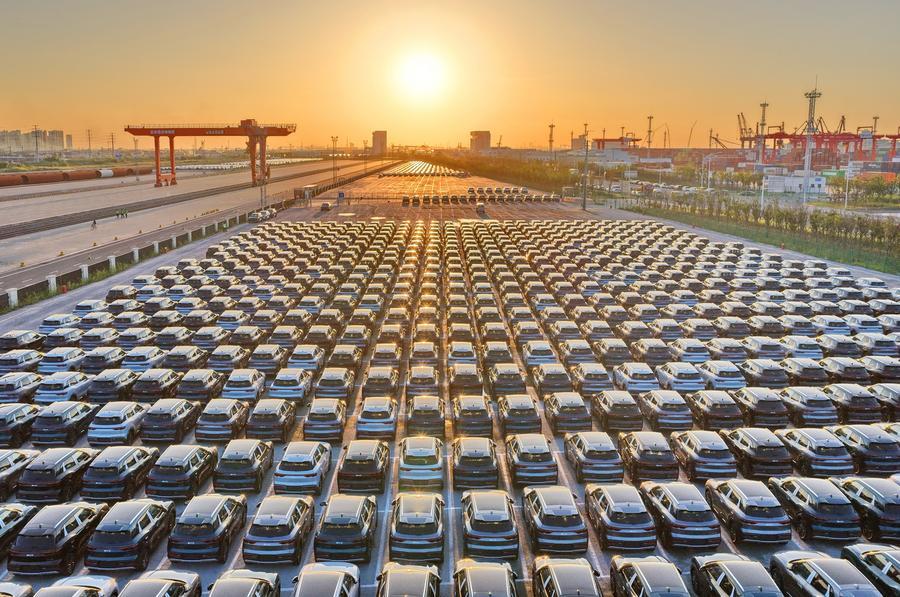
The most visible transformation, however, is in transportation. According to the China Association of Automobile Manufacturers, NEV production and sales both exceeded 10.6 million units in the first eight months of 2026, with year-on-year growth of more than 10 percent, while NEVs accounted for 52.4 percent of all new vehicle sales.
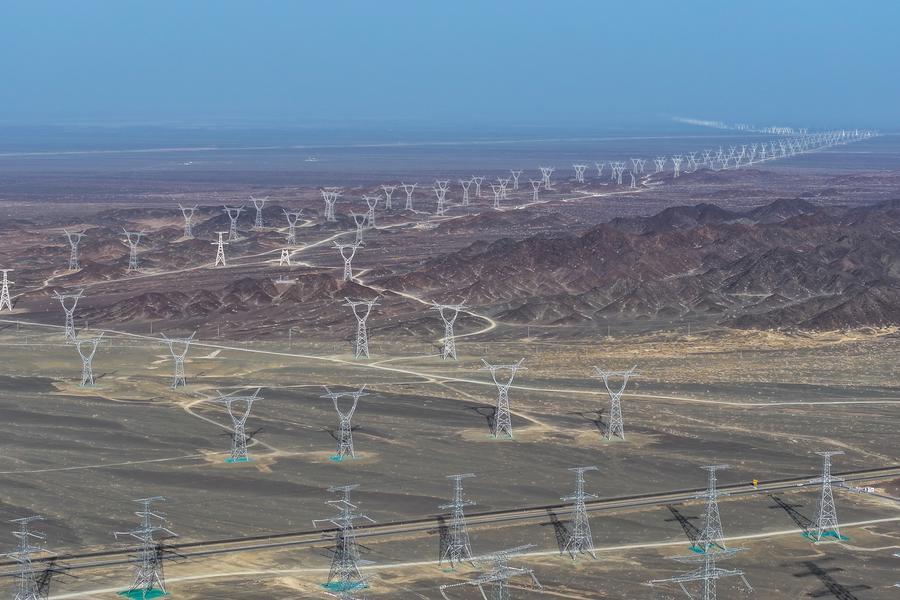
Zhao Qibo, an economist based in Xinjiang Uygur Autonomous Region in northwest China, said China's long-standing efforts to diversify its energy transport routes, sources and types have clearly paid off. As a stabilizing anchor for national energy security, Xinjiang has abundant oil and coal resources in the traditional energy sector, providing solid support for the country's energy supply. At the same time, Xinjiang's vast land has irreplaceable advantages in wind and solar resources, supplying strong support for sustainable energy development.
POTENTIAL BOOST TO WORLD ENERGY FUTURE
In June, China released its first-ever five-year plan for building a new energy system, targeting the initial establishment of a clean, low-carbon, safe and efficient energy architecture by 2030.
This month, meanwhile, China issued a set of guidelines aimed at accelerating the development of new quality productive forces. The energy revolution has been elevated to an unprecedented level, and nuclear power, photovoltaics, energy storage and hydrogen energy have received clear policy endorsement.
Hu Ming, Party secretary of China Electric Power Planning and Engineering Institute, describes the coming five years as a period of overlapping security risks and accelerating low-carbon transition. International instability will continue to test the resilience of energy systems, while China's own commitments, including a 17-percent reduction in carbon dioxide emissions per unit of GDP and a 10-percent decline in energy consumption per unit of GDP, will demand an intensification of the green transition.
Under the plan, China will strengthen new energy infrastructure construction, pursue a diversified portfolio spanning wind, solar, hydropower and nuclear power, and expand non-fossil energy supply at scale. This includes steadily advancing coastal nuclear power, offshore wind and distributed new energy development, while actively promoting clean energy bases and transmission corridors in its northern regions and integrated hydro-solar-wind projects in the southwest.
Michal Meidan, head of China energy research at the Oxford Institute for Energy Studies, argues that the U.S.-Iran conflict has demonstrated the efficacy of China's energy strategy.
"China's dependence on imported oil remains substantial, but the geopolitics of energy are shifting from control of oil flows to control of electrified industrial systems," she wrote in a signed article, noting China's clear head start in this transition.
Hu also sees the current period as a critical window for speeding up international cooperation in China's energy industry. The present circumstances, he argues, favor leveraging China's industrial strengths in energy technology to expand green industry collaboration and help shape a new pattern of global energy governance.
From grid interconnections and clean energy supply chains to technology transfer and joint standards development, opportunities for partnership are expanding just as the global demand for energy resilience has never been more urgent.
Lauri Myllyvirta, co-founder of the Helsinki-based Centre for Research on Energy and Clean Air, noted that China's exports of batteries, wind turbines, electric vehicles and, above all, solar panels helped avoid 374 million metric tonnes of carbon dioxide emissions globally in 2025, which is more carbon dioxide emissions than Britain produced last year.
Calculated over the full lifecycle of these products, China's clean technology exports shipped in 2025 are projected to avoid a total of 6.9 billion tonnes of carbon dioxide emissions over their operating lifetimes. This is a 31-percent increase compared with the 2024 estimate and equivalent to roughly twice India's carbon emissions in 2025, according to the expert.
(Video reporter: Su Chuanyi; Video editors: Zhou Yang, Zhao Xiaoqing, Li Qin, Zhang Mocheng and Hong Liang) ■