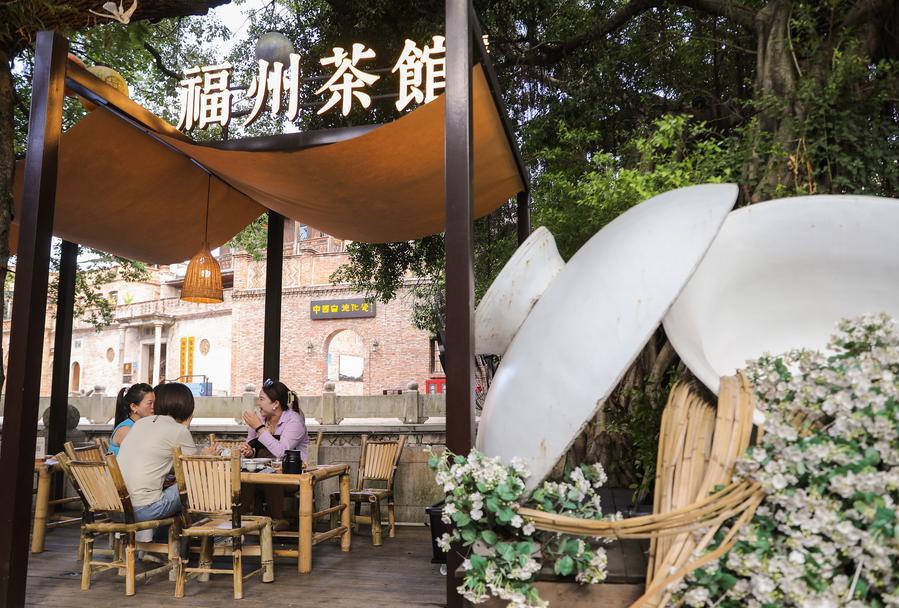
FUZHOU, Oct. 13 (Xinhua) -- In Fuzhou's Shangxiahang historic district, teahouses are hard to miss, with jasmine tea steaming in cup after cup. Jasmine-themed cultural and creative products spill out of gift shops, filling the district with a lingering floral scent.
For more than 2,000 years, this tiny white flower has been woven into the identity of Fuzhou, capital of east China's Fujian Province. Today, as the city flower, it has become a bridge connecting China's time-honored industries with modern consumers, digital agriculture and rural revitalization.
"In this district, historical memory meets modern commerce. We use jasmine as a cultural starting point," said Zeng Xiang, manager of a teahouse in the district.
"Beyond traditional tea, we are exploring modern jasmine beverages and cold-brew tea, bridging the city's culture with younger consumers," said Zeng, noting that the store alone draws 300 to 500 visitors daily, with sales reaching up to 50,000 yuan (about 7,428 U.S. dollars).
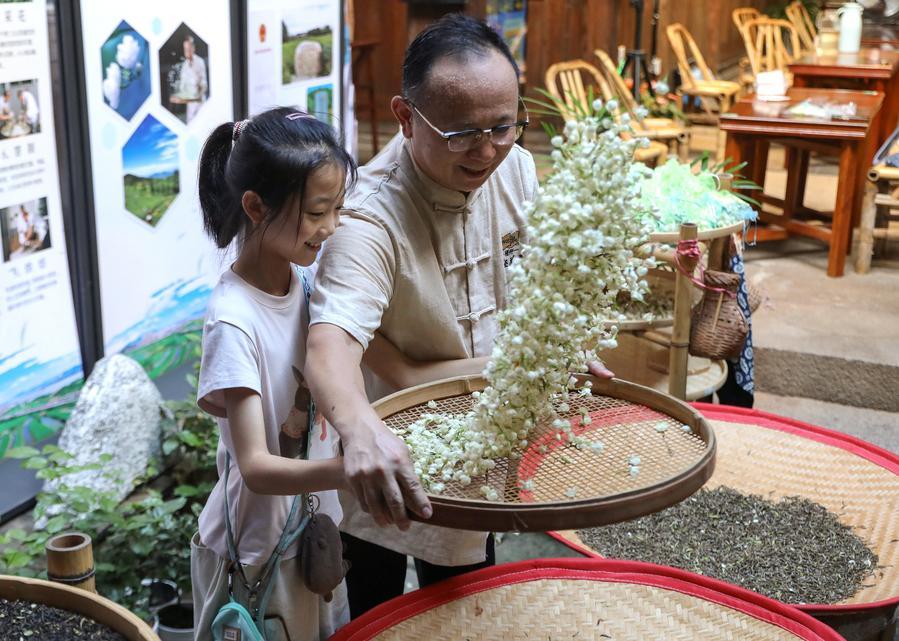
Just steps away, a jasmine aesthetics hall brings the craft to life. Visitors watch artisans blend, rest and sieve tea leaves with fresh blossoms until the fragrance is fully absorbed -- a process recognized as intangible cultural heritage.
"Many tourists, both domestic and foreign, are fascinated by Fujian's tea culture and enjoy trying jasmine tea scenting themselves," said Yan Jinhua, an inheritor of the craft. "It gives them a glimpse into the artisans' dedication and the city's daily life."
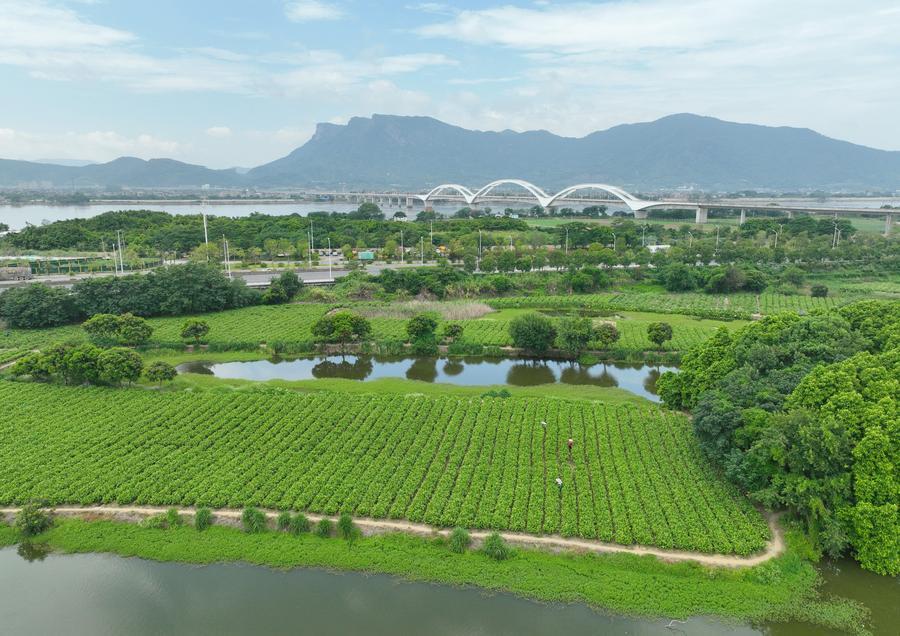
Yet the story of jasmine does not end in the teacup. Behind the bustling shops lies a broader rural economy. In Lianhua Village in Fuzhou, farmers pick around 10 kilograms of jasmine flowers a day during the harvest season, earning nearly 200 yuan daily.
To help local growers, for example, Minrong Tea Industry Co., Ltd., a company rooted in a multi-generational Fuzhou jasmine tea family, has linked farmers, processing bases and agricultural technicians.
"With guidance from technical specialists, farmers have raised yields by about 65 kilograms per mu, adding several thousand yuan to their annual income," said Wang Dexing, chairman of the company.
By 2025, Fuzhou's jasmine tea industry supported 26,000 flower-growing households and 42,000 tea-growing households, raising their average annual income by 12,000 yuan and 30,000 yuan respectively. The output value of the city's jasmine tea industrial chain reached about 11.8 billion yuan by the end of 2025.
Fuzhou is not the only place where jasmine is thriving. Farther south, Hengzhou in the Guangxi Zhuang Autonomous Region, a core production area accounting for 80 percent of China's total output, has also transformed its jasmine industry.
Once reliant on traditional practices and weather, with most flowers used only for scented tea, the city now benefits from a diversified system spanning jasmine foods, wellness tourism and potted-plant cultural products, alongside widespread smart farming.
"AI-assisted service has extended the flowering period by a month and increased yield by 250 kilograms per mu," said local farmer Lei Shuiping as she scanned jasmine leaves with a mobile app that identifies pests, recommends precise pesticide ratios and provides field management plans.
This digital shift is spreading across the region. A local "Digital Jasmine" platform, with over 125,000 users so far, offers full-chain services from planting to sourcing. It integrates environmental monitoring, smart irrigation and fertigation, and AI-based pest identification.
As production becomes smarter, the flower itself is reaching new markets. Fuzhou tea companies supply more than 30 percent of the jasmine tea base used by leading domestic new-style tea brands, with annual consumption reaching 40,000 tonnes. Jasmine-scented hand cream, soap and essential oils are expanding the flower's reach beyond beverages.
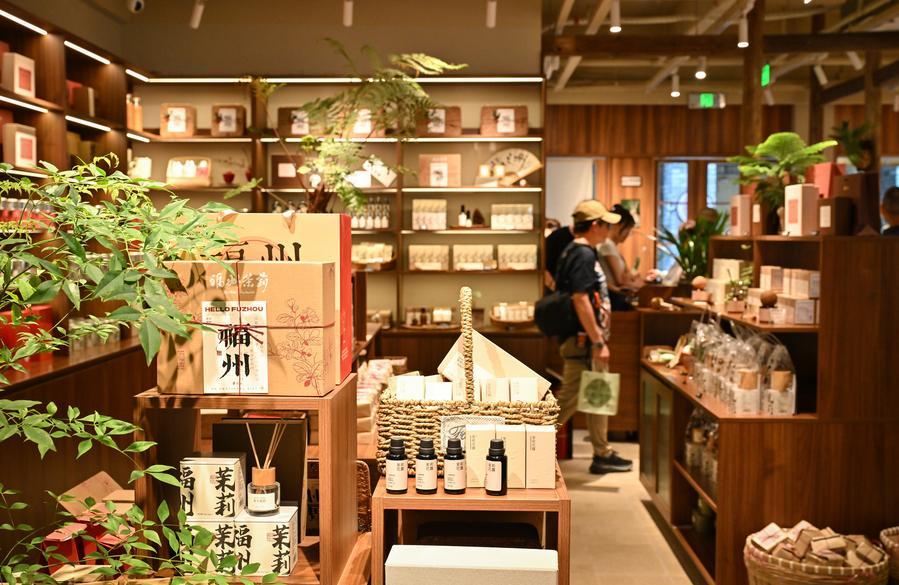
Fuzhou has also turned jasmine into a city IP. In March, the public consumption brand "Fuzhou Youli" introduced "Mo Xiaoli," a cartoon jasmine character that appears on dolls, fridge magnets and other merchandise.
"We hope the character helps remind people of Fuzhou," said Bao Jingshan, a staff member of the brand, noting that with over 40 products launched, it accounts for more than 20 percent of store sales.
This transformation aligns with China's first national guideline, issued this year, on boosting the high-quality development of time-honored industries. It encourages heritage industries such as silk, tea and porcelain to integrate with culture, tourism and rural revitalization, while building smarter factories and stronger consumer brands.
This comes as Chinese consumers are shifting from "buying more goods" to "seeking better services and experiences." "Jasmine is a city memory," said Bao. "When people take these products home, they carry a piece of Fuzhou memory with them." ■