* According to Trip.com Group data, 62 percent of Europe-bound flight bookings from Sept. 25 to Oct. 7 were for departures before Sept. 30. The average stay in Europe increased from 14.8 days in 2025 to 16.1 days.
* Tour guide Zhang Hongbo in Barcelona has noticed that Chinese visitors are increasingly willing to spend on quality restaurants, attentive service and admission to historic buildings they might once have viewed only from outside.
* Aviation consultancy CAPA said in an April analysis that capacity between China and Western Europe had surpassed 2019 levels, driven by Chinese airlines.
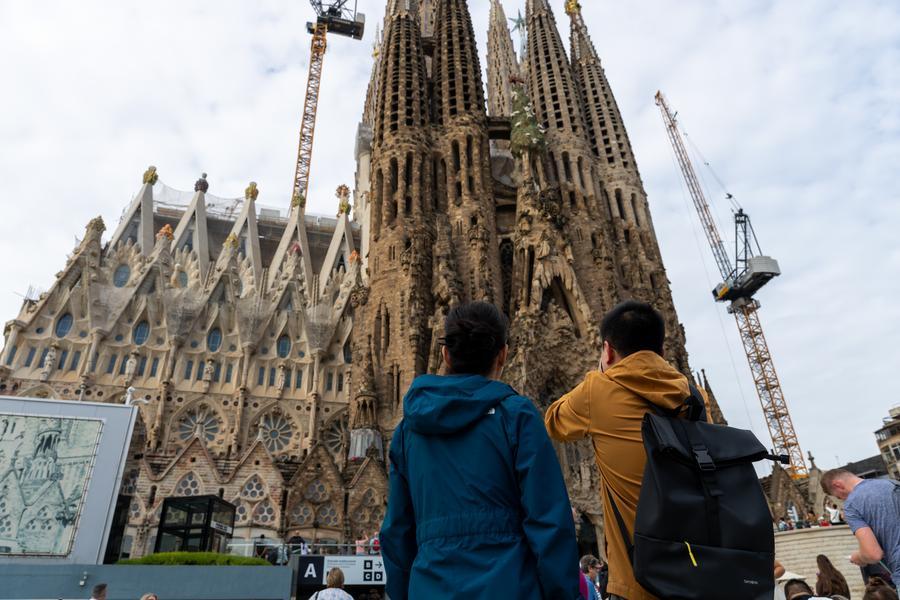
WARSAW, Oct. 12 (Xinhua) -- For Chinese tourist Zou Yini and her friends, some of the greatest pleasures of their National Day holiday in Europe came from strolling through Barcelona's neighborhoods, browsing shops, and sampling local cuisine.
After visiting France, the three continued to the Spanish city, where they spent several days exploring its culture and relishing its laid-back atmosphere.
In China, this year's travel window combined two holidays separated by three days: the Mid-Autumn Festival from Sept. 25 to 27, and the National Day holiday from Oct. 1 to 7, giving ambitious travelers a possible 13-day getaway.
The extended travel period fueled greater demand for long-haul trips to Europe, with some countries welcoming more visitors than last year and new opportunities for businesses across the continent.
LONGER HOLIDAYS, WIDER HORIZONS
For European tourism businesses, this year's holiday travel season began before Oct. 1, the first day of China's seven-day National Day holiday or Golden Week, as Chinese visitors set off earlier and stayed longer.
According to Trip.com Group data, 62 percent of Europe-bound flight bookings from Sept. 25 to Oct. 7 were for departures before Sept. 30. The average stay in Europe increased from 14.8 days in 2025 to 16.1 days.
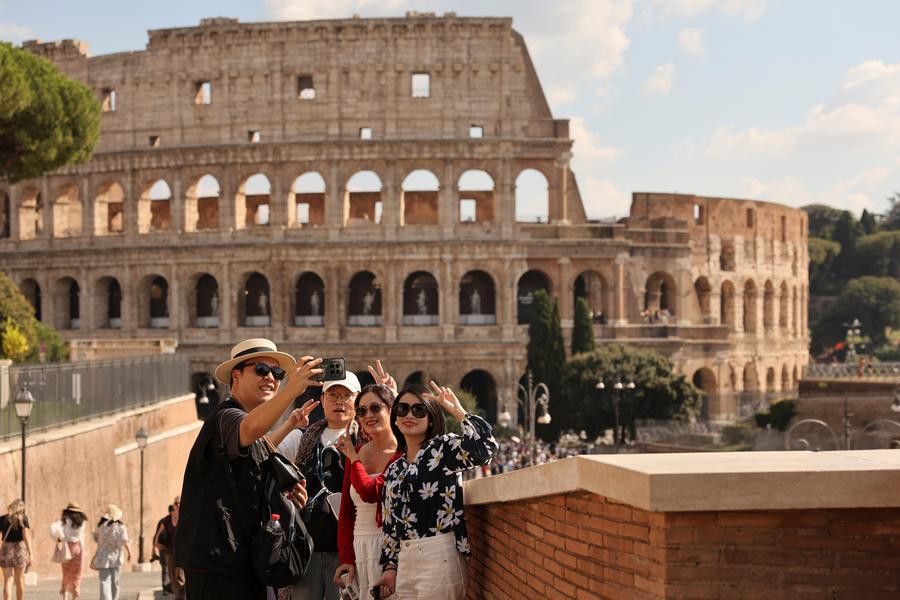
The longer holiday period brought fresh business opportunities. In Italy, hotel bookings by Chinese travelers more than doubled year on year during the period, while flight bookings rose more than 40 percent, according to Italy's tourism industry federation Federturismo, citing Trip.com Group data.
Interest also extended to destinations in Italy such as Bolzano, Sorrento and the Dolomites, giving travelers opportunities to combine visits to major cities with mountain scenery and regional attractions.
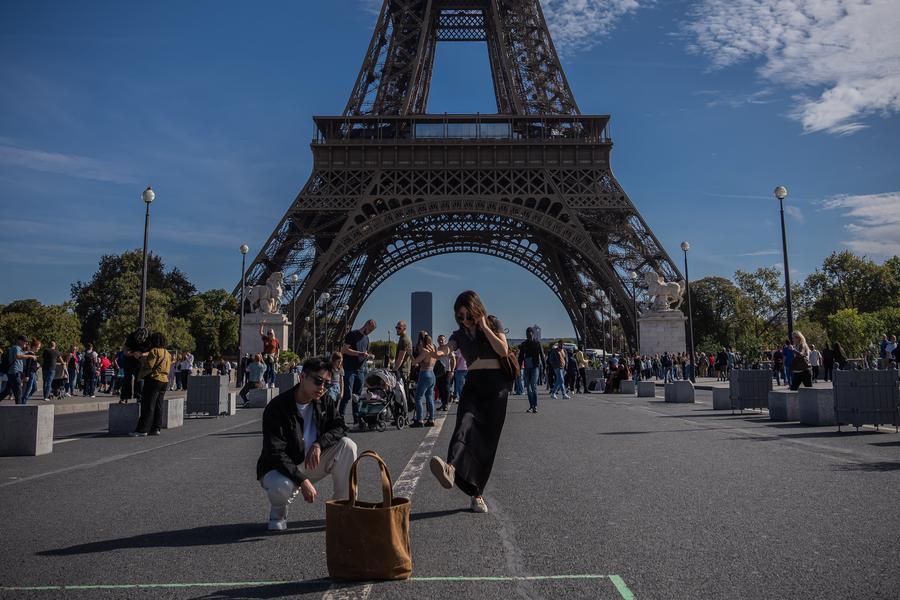
France saw a similar demand. Citing Trip.com data, Tourism publication L'Echo touristique reported in September that hotel bookings in France by Chinese mainland travelers from Oct. 1 to 7, also known as the Golden Week, increased 129 percent year on year.
Paris remained the main draw, with bookings up 132 percent, but the 15 most-booked destinations outside the capital posted average growth of 123 percent. They included Chamonix, Lyon, Strasbourg, Marseille, Bordeaux and Nice.
Demand was also strong for organized tours. Shanghai-based Spring Tour said its Golden Week packages covering Spain and Portugal, the Balkans, Northern Europe and Greece had sold out by mid-August.
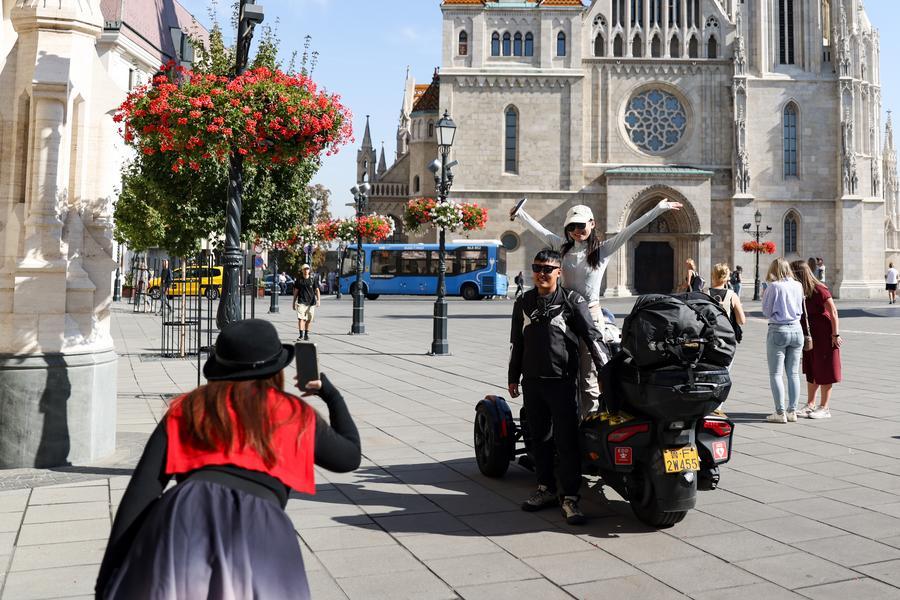
A representative of the Association of Chinese Tour Guides in Hungary said seven-day tours linking Hungary, the Czech Republic, Slovakia and Austria sold out by late August.
BEYOND LANDMARKS
The changing pattern of Chinese travel is also reflected in how visitors spend their time and money.
In Paris, Chinese tourist Zhang Wen visited the Louvre, but another experience offered a different perspective on the city: a musical walk through Montmartre.
Singer and guide Anne-Sophie Guerrier brought the neighborhood's musical history to life through songs and stories at the former homes and performance venues of French singers, and provided a Chinese-language guidebook for Chinese visitors.
"The combination of live performances, stories and the neighborhood's historic atmosphere made the experience lively, romantic and memorable," Zhang said. "It offered me a different way to discover the culture and history of Paris."
Tour guide Zhang Hongbo in Barcelona has noticed that Chinese visitors are increasingly willing to spend on quality restaurants, attentive service and admission to historic buildings they might once have viewed only from outside.
"Now a lot of people want to know more about Spanish culture: how people live, how they have fun, how they eat," he said.
In Switzerland, Chinese visitors are seeking a different kind of experience.
A Shanghai tourist surnamed Zhao spent several days exploring the mountains in the Jungfrau region. Immersing himself in nature mattered more than simply visiting a long list of attractions.
Tourism providers are adapting to these changing preferences. Oliver Hammel, CEO of Jungfrau Railways, said large Chinese tour groups had increasingly given way to smaller groups since the pandemic, while independent travel had also grown. Many independent visitors now use travel passes to explore multiple attractions across the region.
In the Balkans, tour operator Yang Xiaoliang said his company served 329 Chinese visitors in 64 groups during the National Day holiday, with an average of about five travelers per group. Families and friends made up a significant share of customers choosing eight- to 10-day itineraries.
The company's packages combine transport and accommodation with optional experiences such as wine tasting, boat trips, local dining and cultural activities, allowing travelers to tailor their spending to their interests.
FACTORS BEHIND TRAVEL BOOM
The most immediate factor behind the surge in long-haul travel was more time off than usual this year, making trips involving long flights and multiple destinations more feasible.
Gu Sui, general manager of China Southern Airlines' Spain office, said taking extra days off around public holidays had spread departures over a longer period, easing congestion during the traditional peak travel period.
Longer stays also allow travelers to spread the cost of intercontinental travel over more days of sightseeing and leisure, making distant destinations more worthwhile.
Improved air connectivity was another factor.
Aviation consultancy CAPA said in an April analysis that capacity between China and Western Europe had surpassed 2019 levels, driven by Chinese airlines.
As of early October, about 85 weekly nonstop passenger flights connected Germany with destinations on the Chinese mainland, with Frankfurt accounting for roughly two-thirds of the total.
This year's new services and increased frequencies included Air China's Frankfurt-Beijing Daxing route and China Southern's Guangzhou-Urumqi-Frankfurt service, as well as more frequent flights between Frankfurt and Shanghai.
In Croatia, Air China's new Beijing-Bucharest-Zagreb service opened another gateway for Chinese visitors.
Zagreb recorded a 7 percent year-on-year increase in Chinese arrivals and an 8 percent rise in their overnight stays in September, according to Martina Bienenfeld, director of the Zagreb Tourist Board.
"This is a very promising start, especially considering that only a few weeks have passed since the new route was established," she said.
European destinations are also working to turn improved connectivity into deeper engagement with Chinese visitors. One example is the "More than 88 hours in Madrid" campaign, which encourages extended stays in the Spanish capital.
The Polish Tourism Organisation's 2026 action plan includes updating a WeChat-based guide for independent travelers with interactive maps and attraction information, as well as pilot training and certification programs to help hotels, restaurants and attractions better serve Chinese guests.
The Zagreb Tourist Board maintains a presence in Beijing and Shanghai. It recently promoted the Croatian capital's year-round events and cuisine in Beijing.
Zagreb is also showcasing an art installation at the Shanghai International Light Festival through mid-October, as the two cities mark 46 years of sister-city ties.
"All these activities, combined with the new air link, are vital components of our long-term strategy to position Zagreb in the Chinese market," said Bienenfeld.
(Video reporters: Ma Ruxuan, Jiao Qian, Liu Haodong, Sun Xinjing, Yang Yating and He Canling; Video editors: Zhang Yueyuan, Luo Hui and Wang Han) ■