*The year 2026 marks the 90th anniversary of the victory of the Long March. The spirit of what American journalist Edgar Snow described as "an odyssey unequaled in modern times" continues to inspire China as it pursues its Second Centenary Goal.
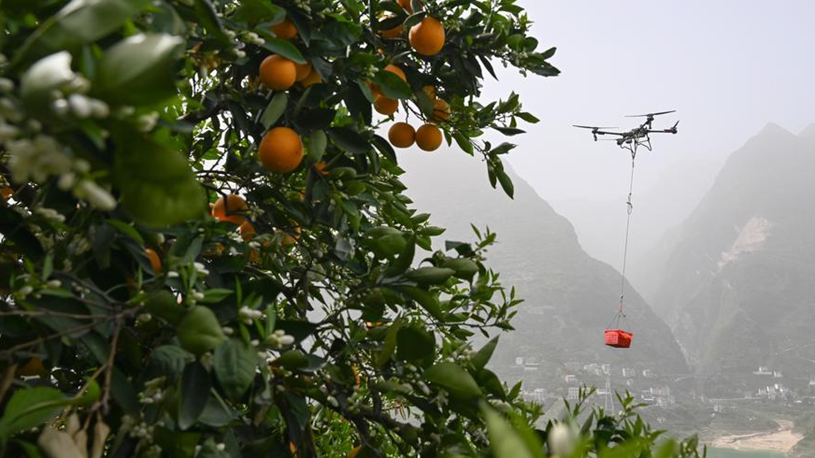
*The Long March in Guizhou was about breaking through encirclement and relying on one's own strength. Today, we are far removed from the smoke of war, but in science and technology, we are also making breakthroughs.
*China's 15th Five-Year Plan, released in the first half of this year, sets out comprehensive arrangements for accelerating high-level self-reliance and strength in science and technology and fostering new quality productive forces.
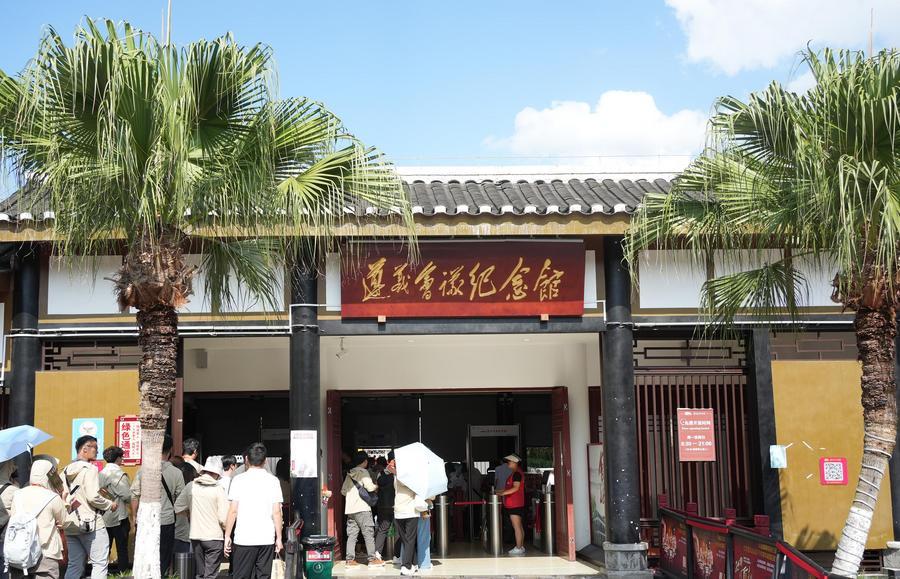
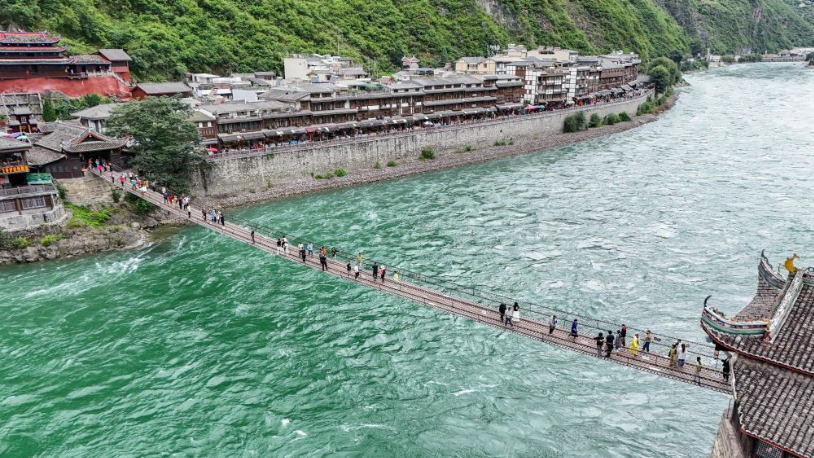
ZUNYI, Guizhou, Oct. 11 (Xinhua) -- Lei Guangren has crossed the weathered stone arch bridge countless times in Zunyi, a city in southwest China's Guizhou Province. Known as Yinghong Bridge, or "Welcoming the Red Army Bridge," it bears quiet witness to the Chinese Red Army's epic Long March more than nine decades ago.
Such Long March-associated place names pepper every corner of the mountainous city, earning Zunyi its resonant title: the "city of historic turning point."
"The Zunyi Meeting, held here during the Long March, marked a life-or-death turning point in the history of the Communist Party of China (CPC)," said Lei, 78, former curator of the Zunyi Meeting memorial museum. "From then on, the Party found the right direction and leadership, stayed the course toward its goals, defeated the enemies and embarked on a path of independence and self-reliance."
The year 2026 marks the 90th anniversary of the victory of the Long March. Lei believes the spirit of what American journalist Edgar Snow described as "an odyssey unequaled in modern times" continues to inspire China as it pursues its Second Centenary Goal.
In October 1934, the CPC was forced to retreat from the Central Soviet Area in east China's Jiangxi Province and move northwest after enduring a series of encirclement campaigns by rival forces of the Kuomintang party (KMT). The CPC-led Red Army fought its way across the Xiangjiang River in Guangxi and broke through the KMT troops' blockade, but suffered tens of thousands of casualties in the battle.
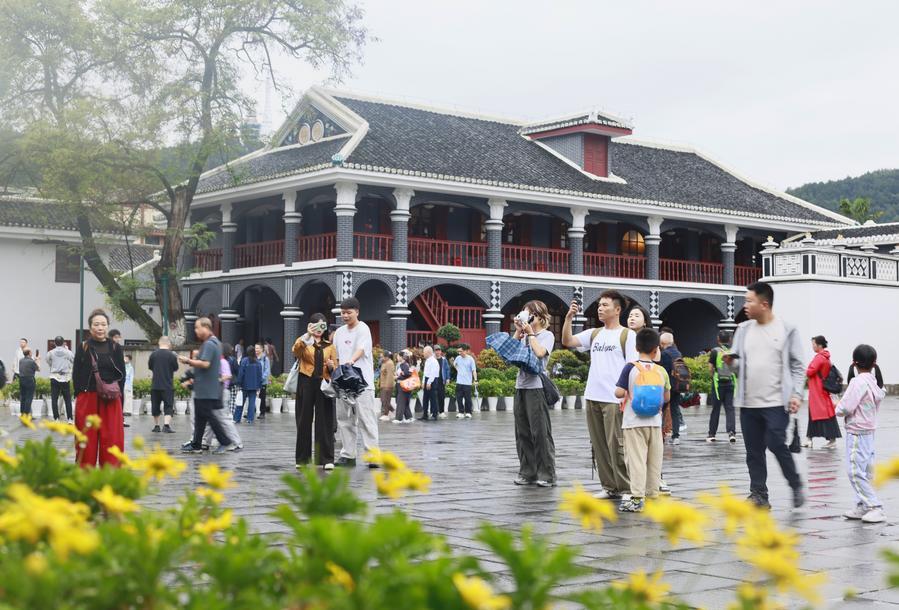
In downtown Zunyi stands a two-story gray-and-white building where Lei had worked for a decade. In January 1935, at a critical historical crossroads, the Zunyi Meeting was held in this building, establishing Mao Zedong's leading position in the CPC Central Committee and the Red Army in practice. The spirit of the Zunyi Meeting -- characterized by firm conviction, commitment to truth, independence and self-reliance, and unity -- continues to resonate today.
In his book "The Long March: The Untold Story," American journalist and author Harrison Salisbury wrote that China's course "had been set for at least half a century to come."
The Red Army subsequently won its first major victory since the start of the Long March at Loushan Pass in northern Zunyi and later broke out of enemy encirclement through its four crossings of the Chishui River.
"My mother told me that she was working when Red Army soldiers passed by our home. They borrowed a douqiang to shelter from the rain," Lei recalled.
A douqiang is a bamboo-woven tool traditionally used in southern China for drying grain. By the time the rain stopped, the soldiers had already reached the neighboring village. Before leaving, however, they asked local residents to make sure the tool was returned to Lei's mother.
Salisbury's book also mentions Kong Xianquan, a Red Army soldier who led troops in an assault during the Battle of Loushan Pass. Hit by six bullets in the hip, Kong was left behind in Guizhou to recover from his wounds. After the founding of the People's Republic of China, he helped establish the Zunyi Meeting memorial museum and became its first curator.
Today, his granddaughter Kong Xia has spent more than three decades sharing stories of China's revolutionary history.
"In Zunyi, stories of the Red Army are passed down like family heirlooms, reminding each new generation not to forget where we came from or where we are going," she said.
For 56-year-old Kong, Zunyi is a city where tradition and modernity coexist. Xiaolongshan, where some Red Army martyrs were buried, was renamed Hongjunshan, or Red Army Mountain. Year after year, visitors come to pay tribute here beside a bronze statue of a Red Army soldier draped in red silk by local residents.
Beyond these landmarks, a 10-minute walk from the site of the Zunyi Meeting stands the theater for "The Great Turning Point," a large-scale immersive production about the Long March, where history is retold through live performance.
Chen Jinghong, a visitor from southwest China's Chongqing Municipality, brought her 10-year-old daughter to see the show. "It is like planting a seed in a child's heart, allowing her to experience the culture of the Long March and gradually understand and appreciate it as she grows up," Chen said.
But Zunyi is far more than a museum of revolution. It has undergone dramatic transformation. When the Red Army passed through, its population stood at just over 30,000. By 2025, the permanent population of its central urban area exceeded 1.6 million, with an urbanization rate of 61 percent.
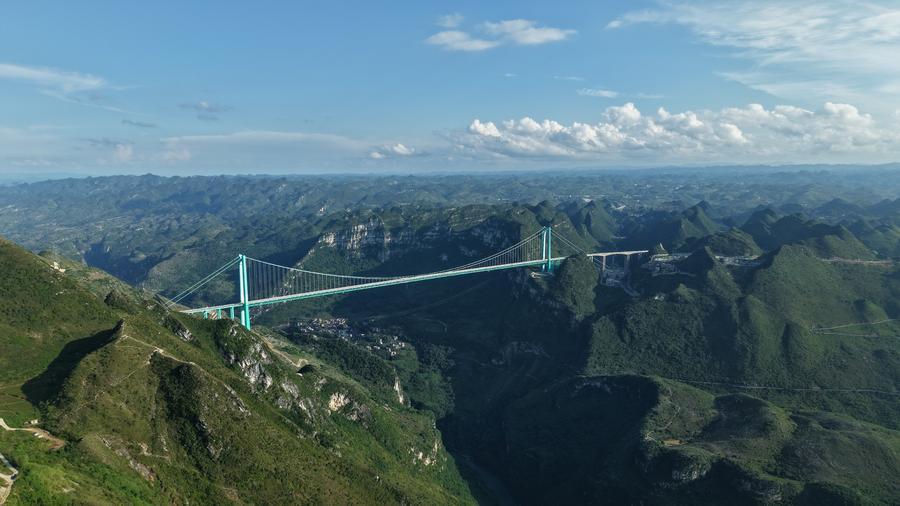
And it is not just Zunyi that has developed. Guizhou, a mountainous province with no natural plains, has emerged as a "museum of bridges." Nearly half of the world's tallest bridges stand here.
"The Long March in Guizhou was about breaking through encirclement and relying on one's own strength," Kong said. "Today, we are far removed from the smoke of war, but in science and technology, we are also making breakthroughs."
One striking example is the Huajiang Grand Canyon Bridge in Guizhou. Holding world records both as the highest and the longest-span steel truss girder suspension bridge located in mountainous terrain, it has been dubbed by Chinese internet users a bridge that is "world No. 1, both horizontally and vertically."
Its main cables and upper structural components were produced by Guizhou Wire Rope Co., Ltd. The core steel wires were both developed and manufactured in Guizhou, forming a critical lifeline for the project.
"Wire-rope production used to be dominated in many areas by European and American companies. After the efforts of several generations, our products are now widely used in major equipment across land, sea and air, helping overcome technological bottlenecks," said Yang Zhengyan, director of a product research and development office at Guizhou Wire Rope.
At Laoyashan, where fierce fighting involving the Red Army once took place, bullet marks can still be seen on the rocks. At the foot of the mountain lies the old factory compound of Guizhou Wire Rope.
It was there that Yang and his team conducted countless tests to develop a mooring cable for offshore engineering.
Such cables had previously been expensive and required long procurement cycles, posing constraints on the development of China's offshore oil and gas resources.
"There is no room for failure with a product like this, so for many tests that would normally have been conducted only once, we ran them over and over again. We also pioneered some testing methods," Yang said.
In August 2023, the first permanent mooring cable for a floating production, storage and offloading unit, or FPSO, developed by Guizhou Wire Rope, was successfully deployed in the mooring system of the "Nanhai Fenjin" FPSO. It marked China's first application of a domestically produced permanent mooring cable for an FPSO, ending the country's long-standing reliance on foreign products in this field.
The group is now capable of mass-producing the cable. It can be used not only for deep-sea oil production platforms, but also for offshore wind power platforms. The system can reduce the sea area occupied by conventional mooring systems to about one-tenth, while also reducing their environmental footprint.
"The spirit of the Long March tells me to find the right direction, not to act blindly, and not to fear hardship or failure," said Yang, a 46-year-old Guizhou native.
For another Zunyi native, 52-year-old Lin Guojun, chairman of Shenzhen Busbar Sci-Tech Development Co., Ltd., the city has also played an important role in his company's growth.
Busbar holds more than 580 patents and international certifications, with its products used in new energy vehicles, wind power, solar power, smart grids and other new energy industries.
"We began developing our new energy business in 2008. It was an attempt to overtake on a curve," Lin recalled. "Back then, we had neither a market nor the technology, and the world did not believe China could develop a new energy industry."
In 2012, when the company encountered difficulties and struggled to fulfill orders, Lin turned his attention to Zunyi.
"Some of our equipment would shut down when temperatures became too high. Zunyi has a favorable natural environment, supporting industries, access to many major surrounding cities, and supportive policies," said Liu Yong, production and operations manager of Zunyi Busbar Sci-Tech Development Co., Ltd.
A new factory was completed in just seven months. Inside the plant, many production processes are semi-automated, with more than 40 robots and robotic arms operating in an orderly fashion to ensure greater consistency in product quality.
The Zunyi facility now focuses on developing and manufacturing high-voltage system components for new energy vehicles, including charging connectors, charging piles, high-voltage relays and high-voltage wiring harnesses. Its products are supplied directly to domestic and overseas automakers.
Lin, who grew up listening to stories about the Red Army, said he sees parallels between the Long March and his own industry.
"From a time when China's new energy sector was little known globally to today, when Chinese new energy vehicles have won worldwide recognition, our work in this industry has itself been a breakthrough," he said. "It takes perseverance and conviction to see something like this through."

China's 15th Five-Year Plan, released in the first half of this year, sets out comprehensive arrangements for accelerating high-level self-reliance and strength in science and technology and fostering new quality productive forces. Among its seven major economic and social development goals for 2026-2030 is substantially boosting the country's capacity for independent innovation.
Zunyi's government work report this year also called for developing new quality productive forces in light of local conditions and accelerating the building of a modern industrial system.
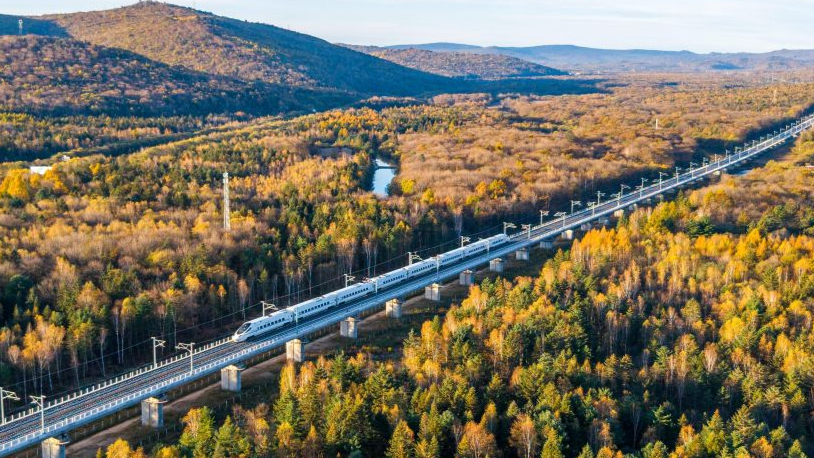
The national vision also plays out in ordinary people's lives. Kong is thinking of replacing her family's gasoline car with a new energy vehicle. A frequent traveler across China, she recently took a high-speed train to Yan'an. The trip, which once took the Red Army nine months, now takes less than nine hours.
Her 27-year-old son Jiang Xiao carries the legacy forward as part of a youth lecture group, sharing stories of the Long March.
"Every generation has different experiences and its own interpretation of the Long March spirit," Kong said. "Yet the spirit never fades with time, and these stories deserve to be passed on." ■
(Reporting by Bai Xu, Cheng Lu, Wang Jian, Rong Jiaojiao, Li Jingya and Shi Qiangui. Video Reporter: Yang Yanbin; video editors: Li Ziwei, Zhang Mocheng and Hong Ling.)