BEIJING, Oct. 10 (Xinhua) -- China and the European Union (EU) made pragmatic progress in resolving trade differences at high-level talks in Beijing, reflecting the willingness and wisdom of both sides to promote the stable development of bilateral economic and trade relations through dialogue and consultation.
Chinese Commerce Minister Wang Wentao and European Commissioner for Trade and Economic Security Maros Sefcovic wrapped up the two-day second trade and investment consultation meeting on Friday, securing 16 consensus points covering trade and investment balance, export controls, intellectual property rights and World Trade Organization (WTO) reform.
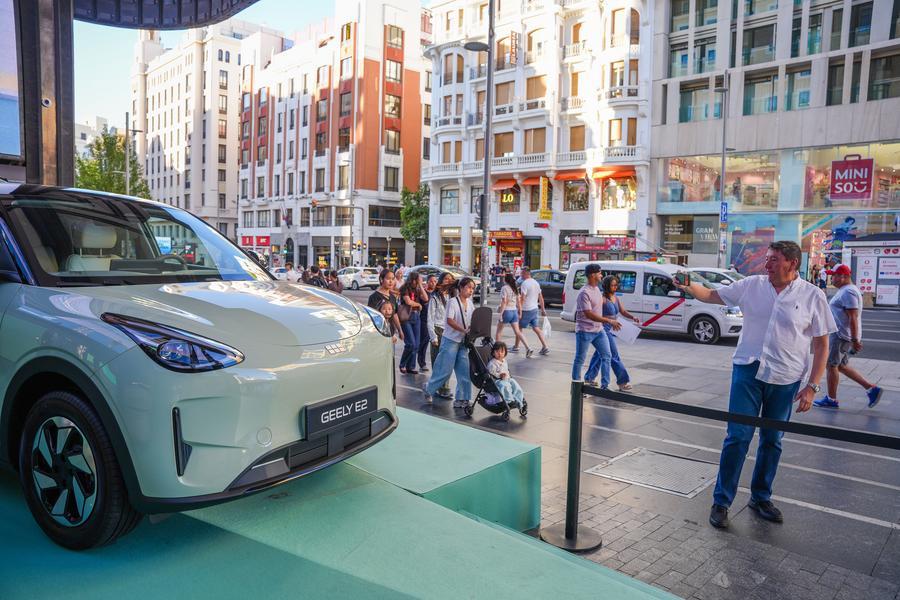
Despite some harsh voices from the European side calling for more protectionist measures, the two sides pledged to explore WTO-compliant tariff cuts for certain goods and reached an understanding on hybrid vehicle trade, a looming trade concern from the European side.
The developments underscore the value of equal, pragmatic dialogue in stabilizing the world's two major economic powers' trade ties, which carry far-reaching global implications. A stable and healthy China-EU economic and trade relationship not only benefits businesses and people in both China and the EU and serves the common interests of both sides, but also injects certainty and positive energy into global economic growth and the stability of industrial and supply chains.
As key trade partners, China and the EU bear shared responsibilities for upholding free trade and multilateralism. Rooted in complementarity and mutual benefit, China-EU economic and trade relations can achieve a dynamic balance through development. The popularity of China-made air-conditioners in Europe this summer illustrated the complementary and mutually beneficial nature of China-EU trade.
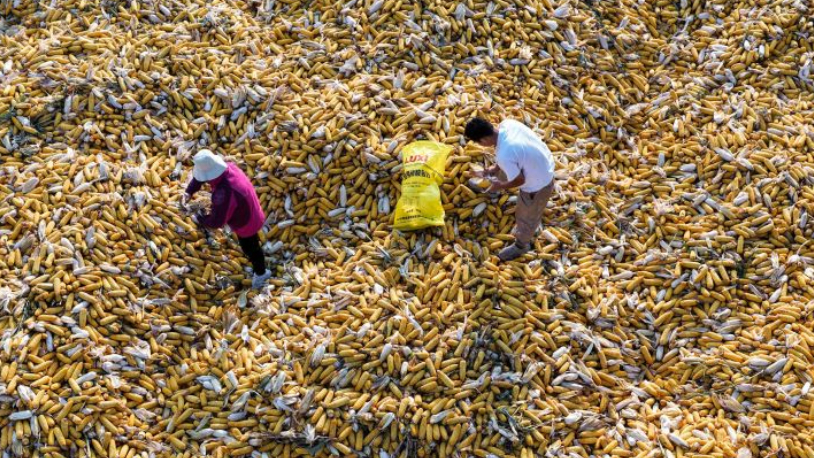
The EU has regarded its trade deficit with China as a major concern. However, China has never deliberately sought a trade surplus with trading partners. China's export growth stems both from its economies of scale and enhanced innovation capacity, and from the demand arising from green transition and industrial development in various countries.
Trade surpluses are actually a result of the global division of labor, and supply and demand patterns. In recent years, the growth of China's exports to Europe has been mainly driven by photovoltaic devices, new energy vehicles, lithium-ion batteries and chemical products, which reflects how the green transition has fueled the demand for such products.
Furthermore, intermediate goods account for around half of China's exports to Europe, helping European companies reduce the costs of finished products and sharpen their competitiveness.
Industrial headwinds facing parts of the EU economy stem from structural problems within the 27-member bloc, not from China. However, China can serve as a partner in solving them.
Notably, Chinese companies are investing in production and innovation in European countries. Official statistics show that China's direct investment in the EU more than doubled in 2025, reaching 12.17 billion U.S. dollars.
Chinese corporate investment has boosted local industrial upgrading and job creation across Europe. After its factory in Germany started production at the end of 2022, Chinese battery giant CATL began trial battery cells production at its Hungary plant in September this year. Chinese carmaker Chery has also partnered with Spanish brand Ebro to revive production at a former Nissan plant in Barcelona.
Prior to the consultations in Beijing, France and Germany proposed strengthening the bloc's trade instruments. But interdependence is not a risk, and convergent interests are not a threat.
"Building walls and barriers" cannot boost competitiveness. On the contrary, tariffs may weaken the incentive for protected industries to innovate while increasing costs for businesses, eroding their competitiveness.
A more balanced China-EU trade relationship should be achieved by expanding trade and investment for both sides, rather than blocking the flow of goods. To reduce the trade imbalance requires efforts from both sides, not from China alone. Sustained dialogue and strategic patience are also vital for this lasting progress.
The China-EU trade and investment consultation mechanism provides an institutionalized platform. The two successive meetings since June have demonstrated that sustained dialogue can bear fruit. Both sides have agreed to hold the third meeting next March and maintain close communication in the meantime, including through a ministerial video conference next January.
Against a backdrop of global economic uncertainty and complex international geopolitics, closer communication, enhanced mutual trust and expanded cooperation between China and the EU have grown more critical than ever. Both sides should ensure the implementation of the relevant outcomes and consensus, and work together with a strategic and long-term vision to strive for stable and more balanced economic and trade relations. ■