by Nadeem Javaid
Over more than a decade of travelling across China, I have watched a transformation that is difficult to capture in economic statistics alone.
Since 2013, each visit has revealed not simply a richer or more modern China, but a country steadily changing the way it produces, innovates, consumes and, increasingly, how it is perceived by the world.
What strikes me most today is not simply how much China has changed. It is how the nature of that change has evolved.
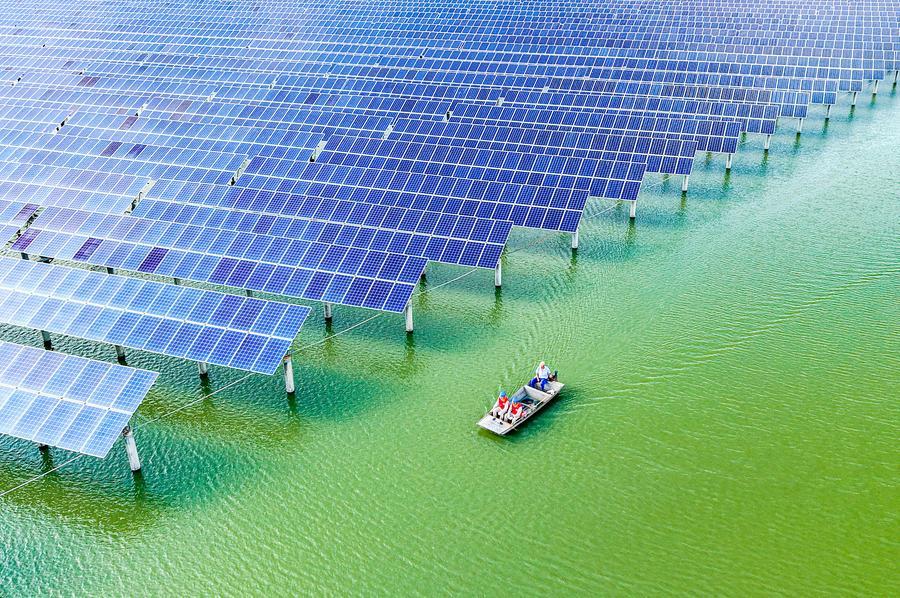
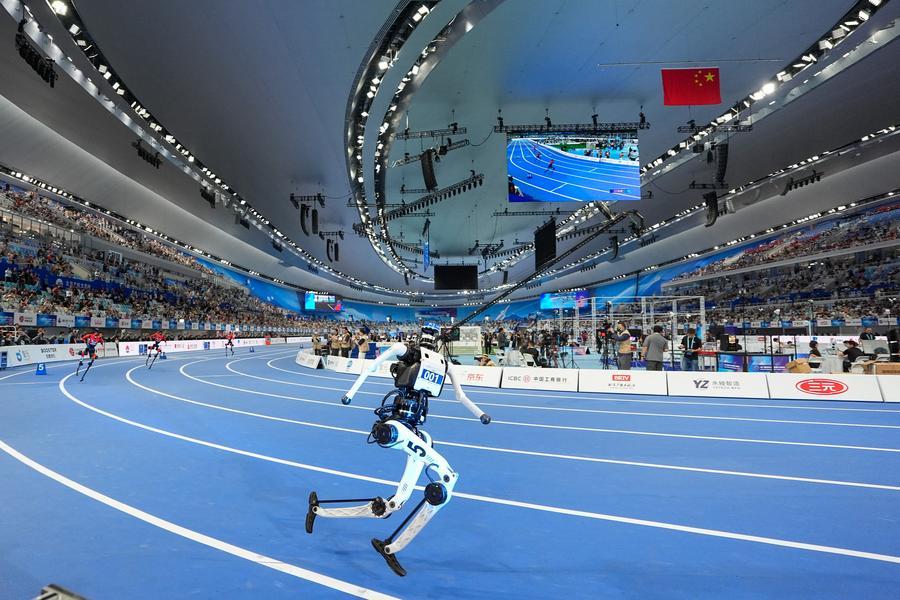
Perhaps one phrase captures this journey best: from "Made in China" to "Designed in China." For decades, much of the world encountered China through the products it manufactured -- a symbol of extraordinary scale and efficiency. But the China I see today is different. It is increasingly a China of electric vehicles, batteries, renewable energy, artificial intelligence, robotics and sophisticated consumer products. Chinese companies no longer compete only on cost and scale, but increasingly on technology, design, quality and consumer experience.
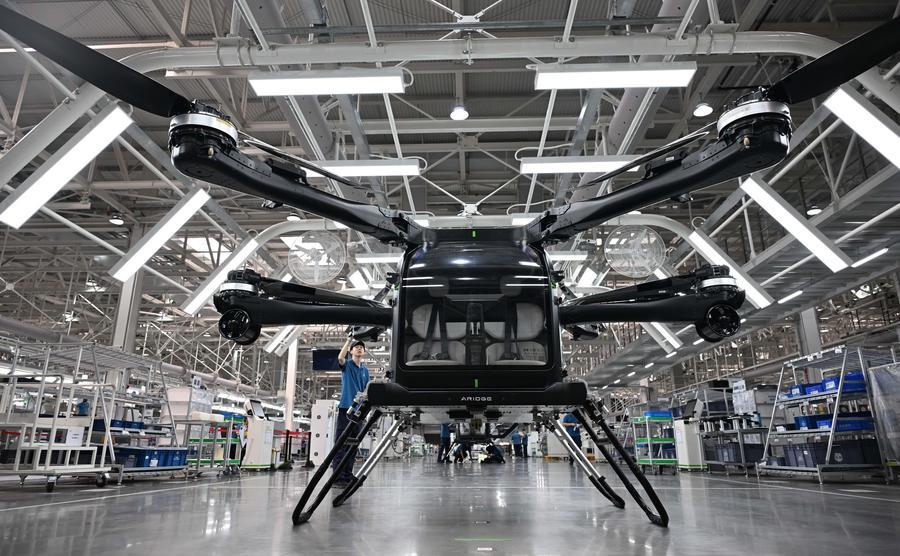
This is more than industrial transformation. It is reputational transformation.
During a recent visit to Urumqi, the capital of northwest China's Xinjiang Uygur Autonomous Region, I experienced a demonstration of autonomous driving technology at the airport. What struck me was not simply the technology itself, but how naturally such innovation seemed to fit into everyday life.
It was a small but telling experience: technologies once associated with the future are increasingly becoming part of the present in China. The journey from "Made in China" to "Designed in China" is becoming visible to consumers.
Yet some of the most revealing changes I have observed since 2013 are not inside factories or technology parks. They are in everyday life.
China's cities today offer a dramatically different consumer experience. Coffee shops and cafés have become woven into urban culture. Domestic brands have grown more confident and sophisticated. Digital payments have transformed daily transactions.
What may appear to be small changes tell us something important: development is ultimately reflected in people's everyday lives, and greater choice is perhaps one of the least discussed dividends of growth.
In many interactions, I repeatedly heard an idea that initially sounded unconventional -- the application of market principles within socialism with Chinese characteristics. Yet China found ways to combine market incentives, entrepreneurship and competition with long-term state guidance and national priorities. What appeared contradictory in theory proved remarkably workable in practice.
What mattered was the willingness to experiment, learn, adapt and scale what worked. From the establishment of the Shenzhen Special Economic Zone to today's advances in batteries, electric vehicles and renewable technologies, China's experience shows that institutions and policies must evolve as the economy evolves.
This matters greatly for the developing world.
Much of traditional development discourse focuses on managing vulnerability: poverty, debt and institutional weaknesses. These are real challenges. But developing societies do not only want to manage scarcity. They also want to create prosperity. They ask how to build productive firms, competitive industries and technological capabilities; how to move from imitation to innovation; and how to climb the global value chain.
China's experience speaks directly to these aspirations -- not as a template to copy, but as evidence that transformation at scale is possible.
Pakistan provides a concrete lens. Through years of working on economic policy and observing China-Pakistan cooperation, I have seen how perceptions change when bilateral ties become tangible to people.
The upgrades to the Karakoram Highway, which have reduced travel times between remote regions; energy projects that have eased chronic power shortages; and affordable technology and educational exchanges all speak more powerfully than diplomatic statements ever could.
Of course, China's experience is neither flawless nor simply transplantable. Every country has its own history, institutions and political economy. But when cooperation translates into lived experiences, those experiences gradually shape a country's reputation.
Perhaps this helps explain why China is increasingly viewed in a more positive light around the world.
People are not simply hearing about China anymore. Increasingly, they are experiencing China -- through its technologies, products, brands, infrastructure, universities and, for millions of visitors, through direct experience of China itself. A country once known mainly for producing what the world designed is increasingly designing what the world wants to use.
Reputation is rarely built by slogans. It is built through experience. And the most enduring influence may be the one people can see, use and remember.
Editor's note: Nadeem Javaid is the vice chancellor of the Pakistan Institute of Development Economics and a member of the Planning Commission of Pakistan.
The views expressed in this article are those of the author and do not necessarily reflect the positions of Xinhua News Agency.■