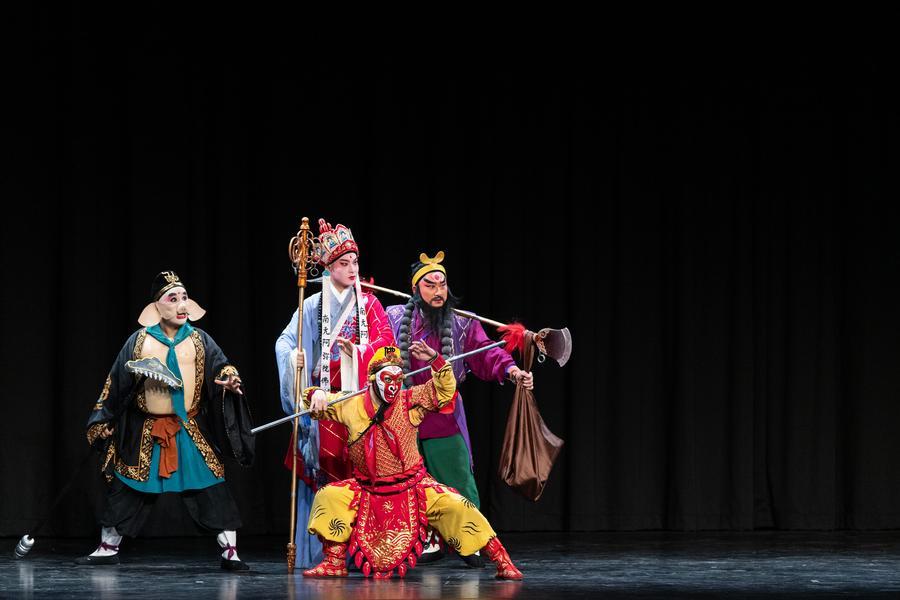
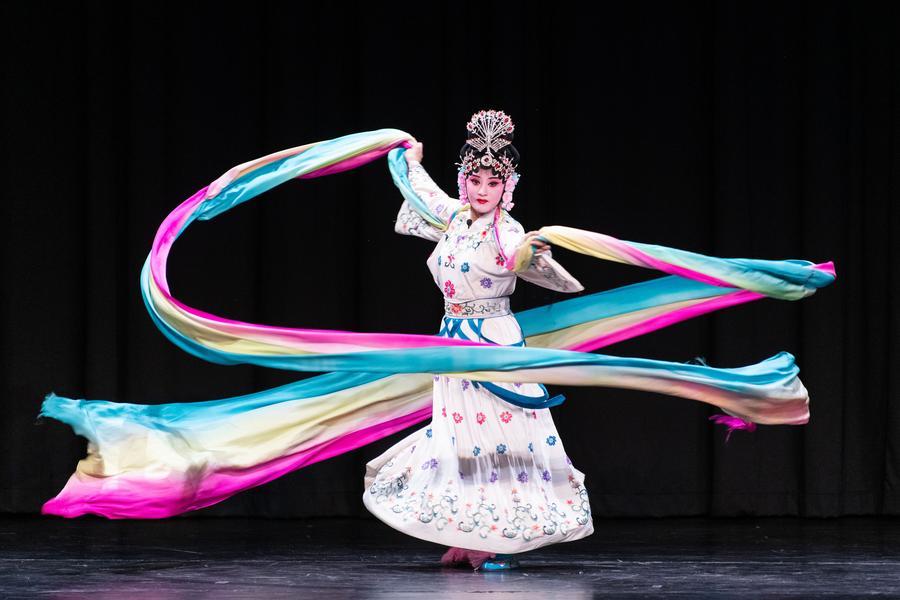
Wu Opera, also known as Jinhua Opera, originated during China's Ming Dynasty (1368-1644) and has a history spanning more than 500 years. Wu Opera has been listed as a national intangible cultural heritage of China.
BERLIN, Sept. 30 (Xinhua) -- Before setting off on a two-week trip to China in about a month, Petra Lehmann had not expected to get such a vivid glimpse of traditional Chinese culture so close to home.
On Tuesday evening, Lehmann, chairwoman of the German-Chinese Friendship Association in Ludwigsfelde, watched intently as performers brought the centuries-old tradition of Wu Opera to life on stage at Urania Berlin.
"When they jump, you can hardly hear a sound. It is as if they were flying," Lehmann told Xinhua.
Having previously seen only brief excerpts of similar Chinese performances, she said the evening gave her a much fuller impression of the art form and made her eager to learn more during her upcoming trip to China.
Lehmann was among more than 800 spectators who packed the theater for a performance by the Zhejiang Wu Opera Troupe from east China's Zhejiang Province. The show featured a range of classic pieces, drawing repeated rounds of applause from the audience.
Wu Opera, also known as Jinhua Opera, originated during China's Ming Dynasty (1368-1644) and has a history spanning more than 500 years. As one of Zhejiang's major regional operatic genres, Wu Opera has been listed as a national intangible cultural heritage of China.
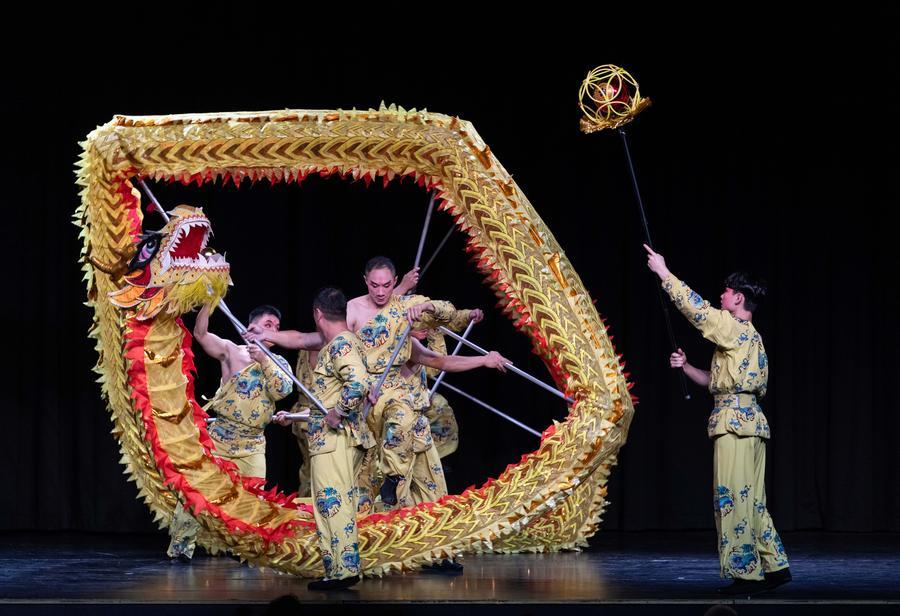
The evening opened with the "Nine-Section Dragon," a folk performance featuring a long, brightly colored "dragon" carried by a team of performers. They ran, jumped, rolled, and spun across the stage, making the "dragon" twist, rise and dive through the air in fast, carefully coordinated movements.
The program went on to showcase other forms of traditional Chinese stage art. One of the highlights was face-changing, a technique in which a performer appears to switch from one colorful mask to another in the blink of an eye.
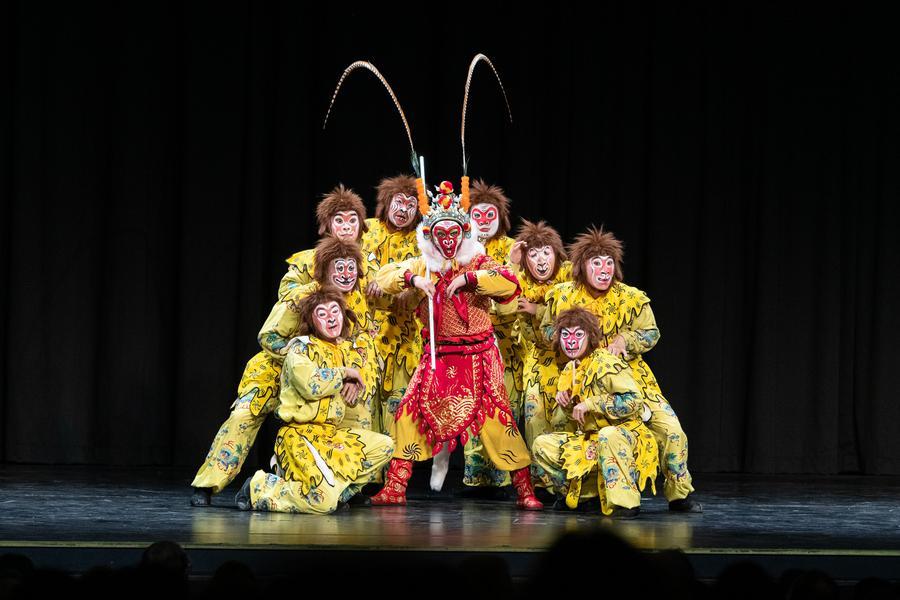
Bringing the evening to a close was "Monkey King Thrice Beats the White-Bone Demon," based on a well-known episode from the Chinese classic "Journey to the West." In the story, the Monkey King sees through the tricks of a demon who repeatedly changes her appearance to fool his companions.
On stage, the actors told the story through powerful singing, fast-paced fight scenes, acrobatics and expressive movements, making it easy to follow even for viewers who did not understand Chinese opera.
The event was jointly organized by the Chinese Cultural Center in Berlin and the Zhejiang Wu Opera Troupe, with support from Bank of China Frankfurt Branch. When the show ended, the audience rose to its feet and applauded as the actors returned for their final bows.
He Wenbo, deputy director of the Chinese Cultural Center in Berlin, said that through classic stories, vivid movement and expressive performance, the show crossed language barriers, offered local audiences a window into Chinese storytelling, and created a meaningful moment of cultural exchange.
"I don't speak Chinese, but I could still follow the story and feel the emotion," Berlin resident Sarah Keller told Xinhua. "I came here knowing very little about Wu Opera, but now I'd love to see more."