
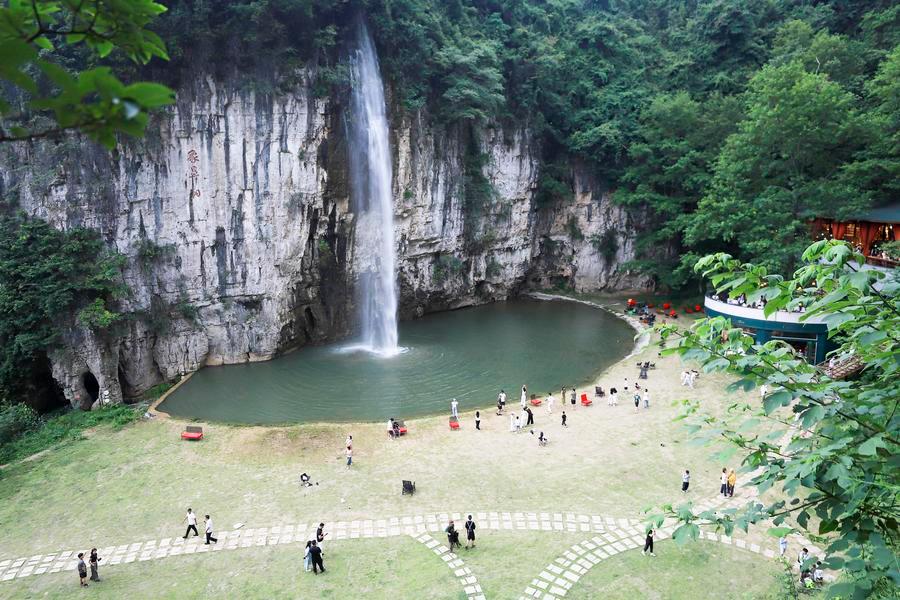
GUIYANG, Sept. 29 (Xinhua) -- Every year by late June, 66-year-old Li Donglai resettles into his summer routine in Anshun, a city in southwest China's Guizhou Province. This is not a tourist holiday, but a seasonal life away from his own home.
Li, from Chongqing, spends more than two months in Anshun each year, drawn by its mild summer weather, nearby hospitals, and everyday conveniences. He buys vegetables at the local market, takes walks around the neighborhood, and heads out to explore attractions within reach.
"I used to think retirement meant staying at home, looking after my grandchildren and remaining in my hometown," he said. "After experiencing seasonal living elsewhere, I realize I can actively choose how to spend my later years."
Li is one of a growing number of Chinese retirees who have moved beyond check-in tourism -- a rushed way of sightseeing. They choose the same place to stay for weeks or months each year and build everyday routines there. What begins as a trip becomes a way of living for part of the year.
MOVING WITH SEASONS
For many retirees, it is the thermometer, not the hometown, that decides where the year is spent.
Zhao Tianlong, who runs a seasonal-living center in Yunnan, sees the effect in his clients every year. From June to September, retirees from hot regions such as Hunan, Sichuan and Chongqing head to cooler Yunnan cities like Kunming and Dali. From November to March, retirees from northern China head south to escape the cold.
Places in Guizhou, Yunnan, Guangxi and Hainan have become popular destinations, combining comfortable climates with well-developed healthcare, transportation and everyday amenities. In Yunnan alone, local reports show seasonal-living visitors topped 5.51 million in 2025, up 41.4 percent from a year earlier, and stayed an average of 83 days.
Li Ying'an, 74, is one of many Chongqing residents who flee the summer heat. He describes life back home as "living in a steamer." He and his wife compared several cities' climates, healthcare and living costs before settling on Qujing in Yunnan, where they have now spent 11 summers.
Liu Yufen, from northeast China's Jilin Province, spends her winters in China's southern island province of Hainan to escape the cold and ease her joint pain. "Take a walk in the park next door in the evening, and you'll hear Northeastern accents everywhere," she said.
FINDING NEW CONNECTIONS
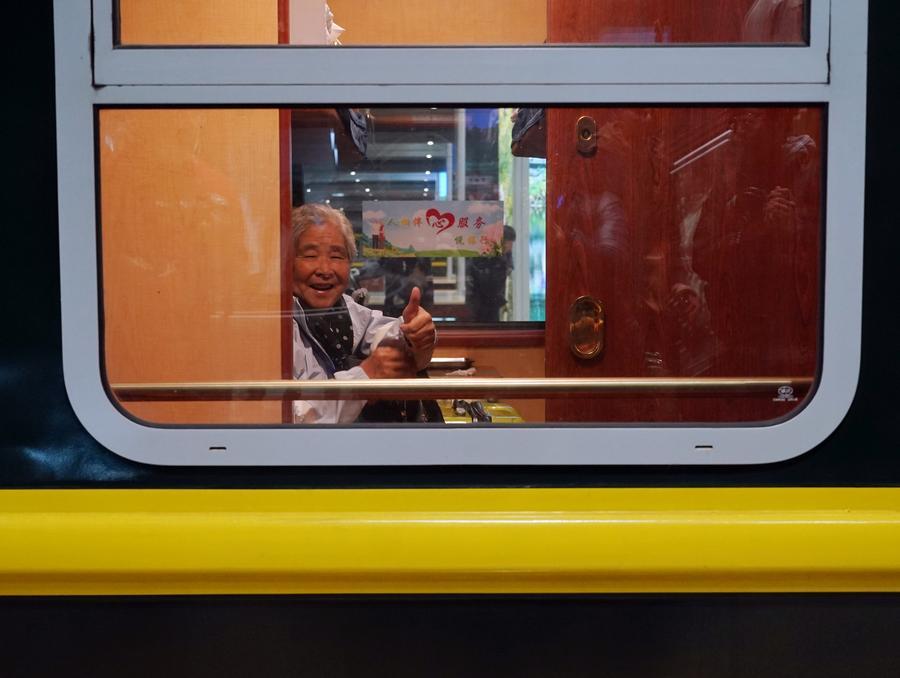
Beyond accommodation, food and sightseeing, seasonal living is also meeting a deeper need for companionship and social connection.
Wang Fei, who heads a department serving seasonal residents in Anshun Economic and Technological Development Zone, puts it simply: climate brings retirees to a destination, but social connections can keep them there.
For many seniors, retirement can mean a shrinking social circle. Zhao Tianlong said many older people living in high-rise apartments in cities barely know their neighbors, while their children are busy with work and their own families. As a result, they often spend much of the day alone or with their spouse.
To bring people together, Zhao has organized paper-cutting, calligraphy, poetry recitation and table tennis at his center. Similar activities have become common in seasonal-living communities, giving retirees opportunities to pursue their interests while making new friends.
"Compared with staying in a nursing home, seasonal living gives us more freedom and flexibility. We can decide how to spend our time, socialize and have fun," said Li Ying'an, who formed an arts group in Qujing with fellow retirees from Sichuan and Chongqing. The group rehearses in parks and performs at local events throughout the summer.
DEVELOPING NEW MARKET
What began as a seasonal escape is now developing into a broader market.
According to a report released by the China National Committee on Aging, China recorded 84.316 million senior-living stays from July 2024 to June 2025, averaging 7.026 million a month. The figure counted monthly stays of people aged 60 and above who spent more than 14 days in a city outside their home province, for up to six months a year.
Ge Lei, secretary-general of the China Tourism Association, attributes the trend to China's aging population, rising demand for higher-quality experiences and a more supportive policy environment.
At the end of 2025, China had 323.38 million people aged 60 or above, accounting for 23 percent of the population. The figure is projected to surpass 400 million around 2035.
"This group of people has the time and financial means to enjoy retirement, a strong sense of how they want to live, and a growing demand for wellness and leisure stays away from home," Ge said.
Policy support has also helped the sector take shape. In 2021, China included senior tourism and seasonal retirement living in its national development plan. Yunnan, Guizhou, Hainan and other provinces have also introduced local action plans to promote and regulate the sector.
As the market grows, destinations are increasingly vying for a share. Jilin, for example, will allocate 100 million yuan (14.83 million U.S. dollars) a year for three consecutive years from 2027 to develop itself as a summer destination for retirees. Kaifeng in Henan Province aims to build partnerships with more than 100 cities by 2027 to share resources and visitors.
After seeing the trend unfold in Anshun, Wang believes seasonal living among retirees is moving from a niche choice to a mainstream way of life, and one that is becoming a normal part of retirement in the years ahead. ■