* European benchmark gas prices have retreated from their mid-September peak but remain far above last year's levels.
* Data from Gas Infrastructure Europe showed EU storage facilities are around 70 percent full. A colder winter depleted inventories, while summer heatwaves increased gas use for power generation.
* Noting that Europe was facing a supply-driven price crisis, EU Energy Commissioner Dan Jorgensen on Friday urged countries to consider measures that sustain storage injections or reduce gas and electricity use where necessary.
WARSAW, Sept. 29 (Xinhua) -- Europe is entering its first full heating season since the outbreak of the Iran war, whose impact is rippling beyond natural gas to diesel prices and household and industrial energy costs.
Four years of efforts to diversify its energy system have given the European Union (EU) more supply options, but the bloc now faces unusually low gas stocks and greater exposure to global price shocks.
The coming heating season will test whether its energy resilience can protect households and industry without another major inflationary hit.
ENERGY SHOCK SPREADS
European benchmark gas prices have retreated from their mid-September peak but remain far above last year's levels.
Dutch TTF front-month gas traded at around 72 to 73 euros (about 81.8 to 83 U.S. dollars) per megawatt hour on Monday, after climbing above 80 euros (90.9 dollars) earlier this month. By comparison, the TTF averaged roughly 32 euros (36.4 dollars) per megawatt hour in September 2025.
The energy shock has pushed up inflation. Euro area annual inflation rose to 3.2 percent in August from 2.9 percent in July, according to Eurostat data. Energy prices contributed 1.29 percentage points to headline inflation.
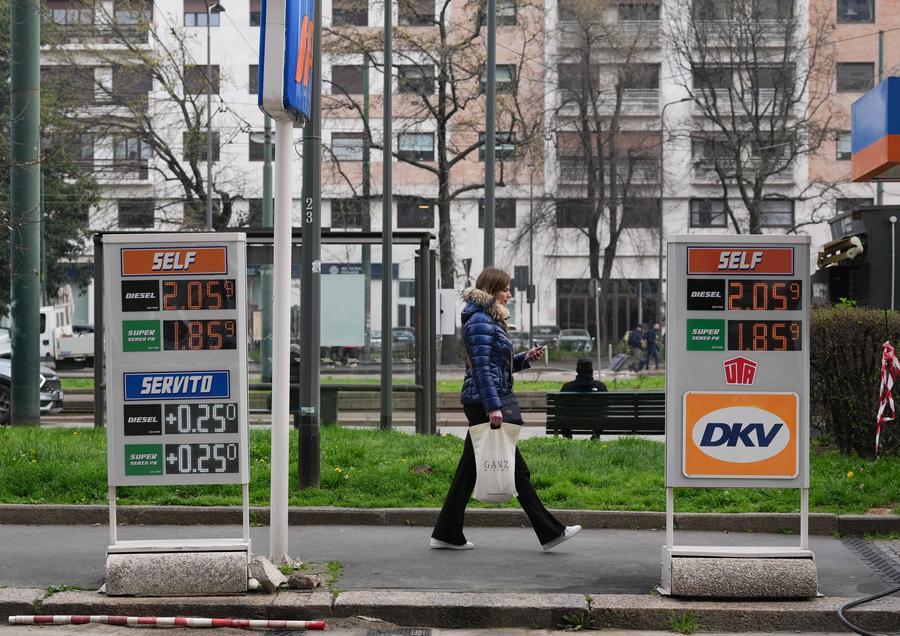
The transmission to consumers could also be faster than during the 2022 energy crisis. A European Central Bank survey found that in more than half of the euro area, changes in wholesale gas prices are now expected to pass through to consumer gas inflation within one to three months, faster than four years ago.
Businesses are also absorbing higher costs. A survey released in July by the German Chamber of Commerce and Industry found that of around 3,100 companies surveyed, 49 percent reported rising electricity costs, while 67 percent said heating had become more expensive.
The strain is no longer confined to gas. The International Energy Agency (IEA) said in its September oil market report that tightness is now particularly acute in refined products, with diesel prices rising more sharply than crude oil.
Net diesel and gasoil exports from Gulf countries averaged about 390,000 barrels per day in August, merely a quarter of pre-war levels, according to the IEA.
LOW STOCKS, HIGH RISKS
Europe is approaching winter with a much thinner gas buffer than usual.
Data from Gas Infrastructure Europe showed EU storage facilities are around 70 percent full. A colder winter depleted inventories, while summer heatwaves increased gas use for power generation.
High wholesale prices and an unfavourable seasonal price spread earlier in the year also weakened the commercial incentive to buy gas and store it for winter.
Europe nevertheless has more supply routes than it did during the 2022 crisis.
In 2025, Norway supplied about 52 percent of the EU's imports of natural gas in gaseous form, followed by Algeria at 17.4 percent, according to Eurostat data.
Meanwhile, its gas system has been reshaped by a sharp increase in liquefied natural gas (LNG) imports.
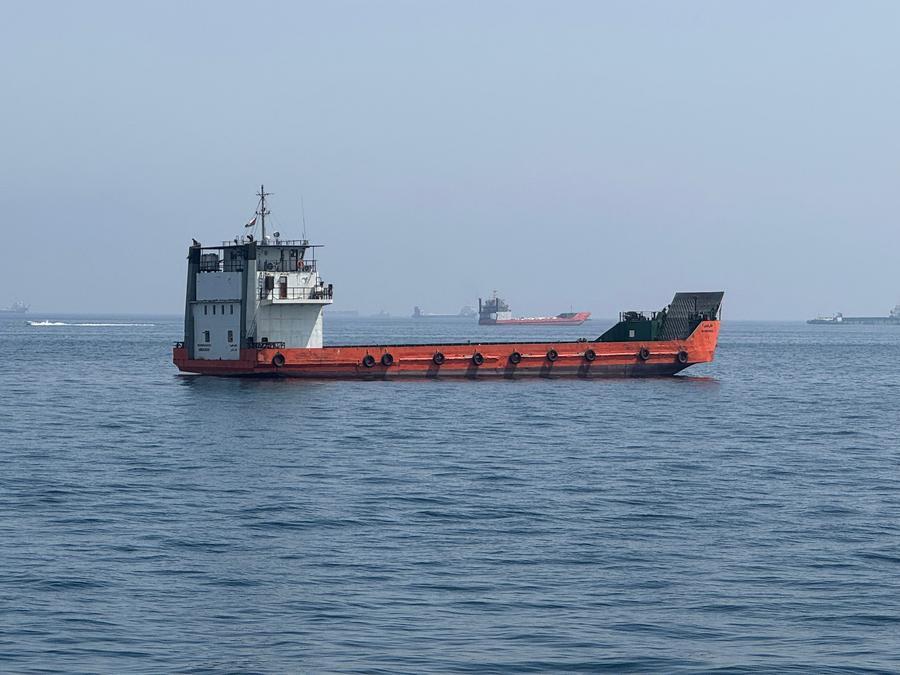
LNG now accounts for nearly half of EU gas supply, according to the EU Agency for the Cooperation of Energy Regulators. The United States supplied 58 percent of the bloc's LNG imports in 2025, equivalent to around one quarter of its total gas demand.
Such diversification has reduced Europe's dependence on individual pipelines, but also tied it more closely to the global LNG market where cargo availability and prices can change quickly when production or shipping routes are disrupted.
The Strait of Hormuz crisis has exposed that vulnerability, with LNG loadings from Qatar and the UAE falling 35 billion cubic meters from a year earlier between March and June, according to the IEA.
And Gulf supplies are recovering more slowly than previously forecast. Qatar said repairs to two LNG trains damaged at Ras Laffan would take about three years, although normal operations could resume within weeks once the strait reopens.
MOVES TO CUSHION PRICE SHOCK
Earlier this month, European Commission President Ursula von der Leyen warned that disruption around the Strait of Hormuz had cost the EU an additional 90 billion euros (102 billion dollars) in fossil fuel imports, "without a single molecule of energy added."
Noting that Europe was facing a supply-driven price crisis, EU Energy Commissioner Dan Jorgensen on Friday urged countries to consider measures that sustain storage injections or reduce gas and electricity use where necessary.
In line with Jorgensen's call, the Dutch government said Friday it plans to maintain a publicly backed strategic gas reserve of 5 terawatt-hours (TWh) a year, enough to cover roughly two weeks of national demand, while requiring suppliers to hold part of their winter needs in physical storage.
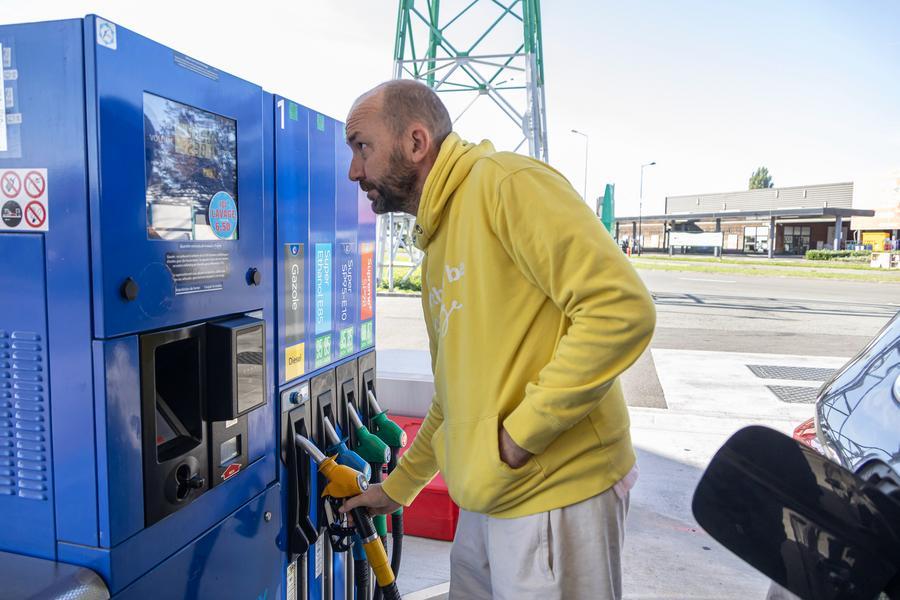
Other European governments have also taken steps to cushion consumers and shore up energy security.
Germany approved a law on Friday to cut energy taxes on petrol and diesel. Taking effect on Oct. 1 and running through the end of the year, the measure is set to cut pump prices by about 17 euro cents (0.19 dollars) per liter, providing some 2.5 billion euros (2.84 billion dollars) in relief.
France announced a 450-million-euro (511.21-million-dollar) package to extend assistance to frequent drivers and fuel-intensive sectors, while President Emmanuel Macron called for a G7 energy meeting to coordinate energy stocks, exports and production capacity, as well as to examine the possible release of strategic reserves.
(Video reporters: Yang Yuchen, Du Zhiqian, Zhang Zhaoqing, Jin Danyi, Cui Kexin, Liu Baiyun, Shao Haijun, Gao Jingyan, Kang Yi, Chen Yufen, Xie Yuan, Song Jia and Sun Yi; Video editors: Zhang Yucheng, Roger Lott, Zhang Yuhong, Cao Ying, Luo Hui, Liu Ruoshi and Zhang Yueyuan) ■