by Klaus Schwab
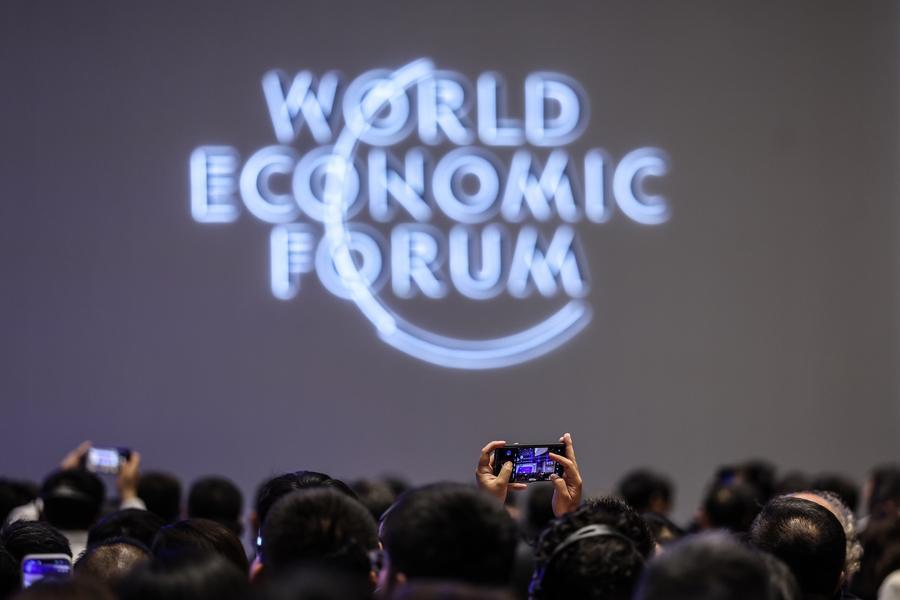
The twentieth anniversary of the World Economic Forum's Beijing office is a deeply personal milestone for me. The office has been present in Beijing since 2006, but my own journey with China -- and the Forum's engagement with China -- began much earlier, in 1979.
In the autumn of 1978, I followed with great interest the first signs of China's reform and opening-up. Deng Xiaoping had emerged as the driving force behind a new course, based on modernization, pragmatism and greater engagement with the world. I was convinced that something of historic importance was beginning. I invited Deng Xiaoping to the 1979 Davos Symposium. He did not attend personally, but China sent a distinguished delegation of economists, led by Professor Qian Junrui of the Chinese Academy of Social Sciences. It was the first official Chinese participation in Davos.
A few months later, I travelled to China for the first time and subsequently led a delegation of 20 European chief executives. China was then very different from the country the world knows today. Its economy was still largely separated from global markets, its international business links were limited, and few outside China anticipated the magnitude of the transformation ahead.
I did.
My belief was not based on economic statistics. It came from what I encountered: the determination to modernize, the enormous human potential of the Chinese people, the importance attached to education and development, and a willingness to learn from the outside world while finding a distinct Chinese path.
Before China had become a global economic power, we decided to build a relationship for the long term. Over the following decades, the Forum became a bridge connecting Chinese leaders, entrepreneurs and scholars with counterparts from around the world. In 2006, we gave this relationship a permanent institutional home by opening our Beijing office. A year later, we launched the Annual Meeting of the New Champions -- the Summer Davos -- in China.
The transformation I have witnessed since my first visit is extraordinary. China has become the world's second-largest economy, a central part of global manufacturing and trade, and an increasingly important source of technological and scientific innovation. More than 800 million people have been lifted out of extreme poverty. Whatever challenges remain, the scale and speed of this development are among the defining developments of our era.
I remember especially President Xi Jinping's participation in Davos in January 2017, the first by a Chinese head of state. At a moment of growing doubts about globalization, he warned: "Pursuing protectionism is like locking oneself in a dark room ... that dark room will also block light and air." It was a striking message about the importance of openness and interdependence.
Today, China's international role is entering another phase. China is no longer only adapting to the institutions of the global system; it is increasingly seeking to contribute ideas and initiatives to the debate about how that system should evolve. In May, Foreign Minister Wang Yi announced that China would host the Xiong'an World Governance Forum this autumn. He linked the initiative to themes including sovereignty equality, international rule of law, multilateralism, a people-centered approach, and real actions.
One need not agree with every proposal advanced by any country to recognize the significance of this development. The great global challenges of the Intelligent Age -- artificial intelligence, climate change, economic fragmentation, security and technological transformation -- cannot be addressed by one nation or one political system. They require mechanisms of cooperation that are more inclusive, more responsive and capable of translating dialogue into action.
China will inevitably have an important voice in shaping that future, just as other major powers, emerging economies, international organizations, business and civil society must have theirs. A responsible global governance system cannot be built through confrontation or exclusion. It must be created through dialogue among different perspectives and interests.
Looking back over almost half a century, I am proud that the Forum recognized China's potential early, long before the scale of its rise had become conventional wisdom internationally. But I am even more convinced that the essential lesson of those years is about the future, not the past.
The bridges that matter most are the ones built before they become indispensable.
That was my conviction when I first travelled to China in 1979. It remains my conviction today.
Editor's note: The author is the founder and builder of the Geneva-based World Economic Forum, a non-governmental international organization dedicated to studying and discussing issues concerning the world economy and promoting international economic cooperation and exchanges.
The views expressed in this article are those of the author and do not necessarily reflect those of Xinhua News Agency.■