by Zhou Yaxin
"My home is by the Songhua River, in northeast China. Forests and coal mines lie there. And soybeans and sorghum stretch across hills and plains."
The ballad On the Songhua River captures the deep grief of people from northeast China, a fertile homeland reduced to a ravaged wasteland during the War of Resistance Against Japanese Aggression.
As one of the cultural emblems of that painful chapter, the ballad has etched the trauma of the September 18 Incident into the collective memory of the Chinese nation.
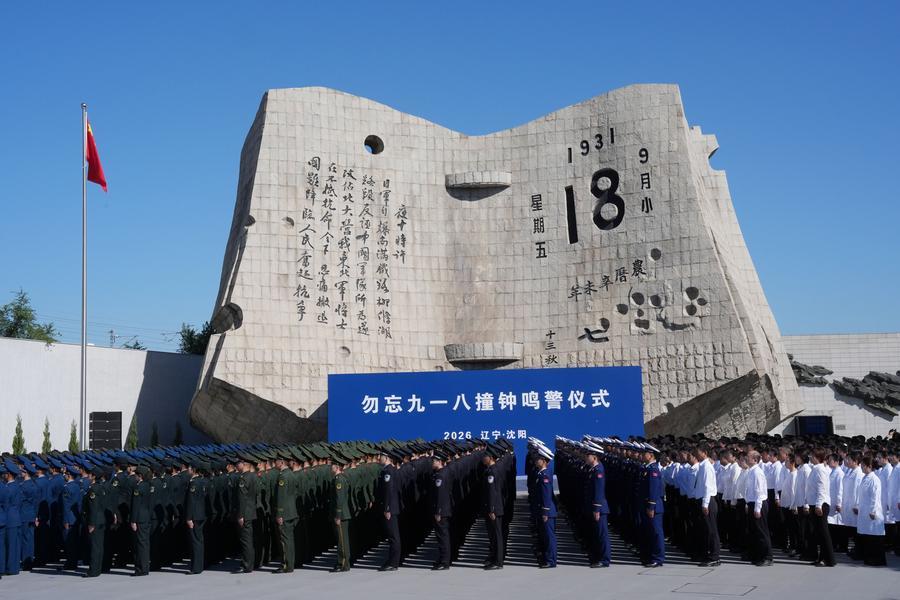
This Sept. 18 marked the 95th anniversary of the incident. Ninety-five years ago, the incident marked the beginning of the 14-year Chinese People's War of Resistance Against Japanese Aggression and set the stage for the World Anti-Fascist War.
Ninety-five years on, the roar of artillery may have long faded into history, but the lessons of that era still echo today.
WHITEWASHING CAN'T CONCEAL AGGRESSIVE NATURE
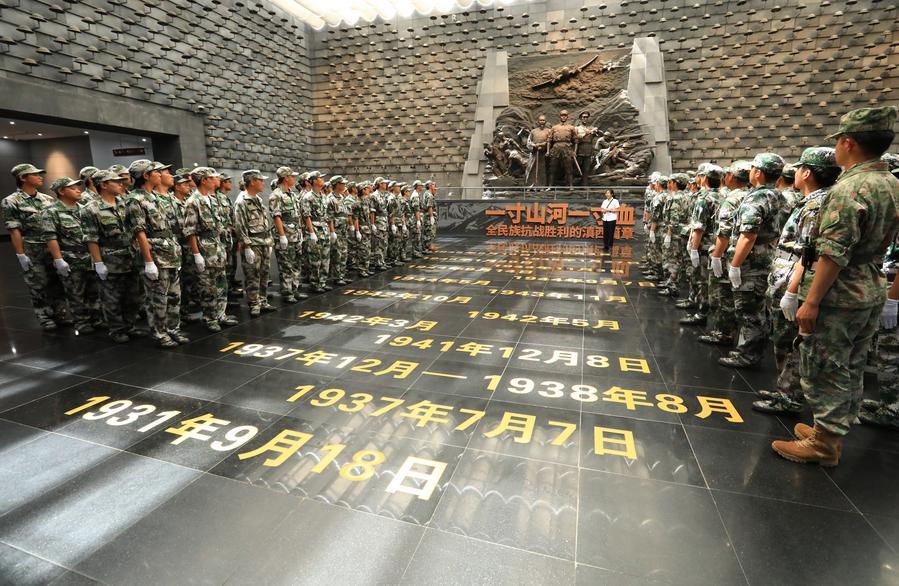
On the night of Sept. 18, 1931, a loud explosion near Liutiaohu on the northern outskirts of Shenyang shattered the peace of northeast China. The Japanese Kwantung Army blew up a section of the South Manchuria Railway, and blamed it on Chinese troops. Under this pretext, it immediately attacked Chinese military barracks and shelled the city of Shenyang.
This was no hasty military provocation, but a meticulously planned operation long in the making.
On the very day of the incident, the Japanese military quickly staged the scene, planted false evidence, and released fact-distorting statements to the international community at the earliest opportunity. Major Japanese newspapers uniformly adopted the narrative that "Chinese troops bombed the railway, forcing the Japanese military to act in self-defense" to shape domestic public opinion.
Simultaneously, the Japanese Ministry of Foreign Affairs provided fabricated photos and testimonies to international news agencies. When the League of Nations discussed the issue of the northeast China, Japan, the aggressor, was the first to portray itself as the victim, putting forward a motion to "punish China severely," and using its status as a permanent council member to steer the direction of the investigation.
To drum up support for the puppet state of Manchukuo in northeast China, various Japanese media and publications dressed up the deliberate aggression through absurd narratives such as "establishing a paradise of the kingly way," "protecting residents in Manchuria," and "maintaining local order."
This bandit logic of portraying aggression as "self-defense" and premeditation as "response" may deceive people for a while, but not forever.
In 1932, the Lytton Commission dispatched by the League of Nations released an investigation report, recognizing China's sovereignty over its northeastern provinces and ruling that Japan's military actions constituted aggression. In 1933, the League of Nations formally demanded Japan withdraw its troops from northeast China.
The verdict of the Tokyo Trials explicitly stated that the war which Japan waged against China began on the night of Sept. 18, 1931. There is no way for Japan to talk its way out of this historical verdict.
APPEASEMENT NEVER DELIVERS GENUINE PEACE
As early as 1927, at its Eastern Conference, the Japanese government established the "national policy" of seizing northeast China. In carrying it out, however, the Japanese military, wary of international backlash, adopted an incremental approach to test the reaction and bottom line of the international community.
In the early days of the September 18 Incident, Japan's top decision-making body internally worried that tough intervention from European and American powers would derail its plans. Hence, it rolled out the so-called "no expansion" policy, claiming that "Japan has no intention of occupying Manchuria."
Unfortunately, the Council of the League of Nations adopted a resolution issuing a "warning" to both Japan and China, failing to distinguish the aggressor from the victim. Such tacit approval and appeasement by European and American powers toward Japan's expansion completely dispelled Japan's concerns and in effect condoned Japanese militarists' act of aggression.
Facts have proved that appeasing Japanese militarism cannot bring genuine peace. On the contrary, it only emboldened Japan to expand its aggression even more recklessly.
Barely four months after the September 18 Incident, over one million square kilometers of land across the three northeastern provinces of China fell entirely under Japanese occupation.
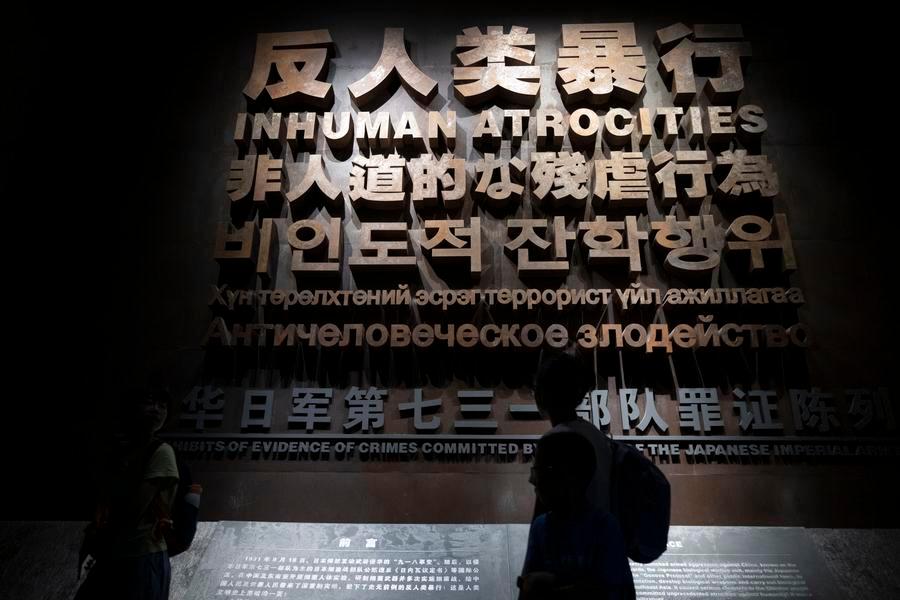
Japan imposed 14 years of oppressive rule over northeast China, plundering resources, perpetrating massacres, subjecting people to forced labor, carrying out germ warfare and human experiments through Unit 731, and imposing education aimed at erasing Chinese national consciousness -- the list goes on and on.
Countless people in northeast China were displaced and forced to be homeless, just as described in the ballad On the Songhua River.
More egregiously still, using northeast China as a springboard, Japanese militarists later launched a full-scale invasion of China.
ENDURING WARNING OF SEPTEMBER 18 INCIDENT
Even to this day, Japan's right-wing forces still refuse to acknowledge the historical facts of aggression such as the September 18 Incident. They keep whitewashing and glorifying the history of aggression, and even fabricate a "victim" narrative.
While denying their crimes of aggression against China, they repeatedly play up the national trauma of the atomic bombings of Hiroshima and Nagasaki. They dress up aggression against China as "the Manchurian Incident and the rise of the military," while describing the establishment of the puppet state of Manchukuo as "declaring the founding of a state," attempting to use seemingly neutral terms to obscure their guilt of aggression and mislead the international community.
Poisoned by such a distorted narrative, young people in Japan have little awareness of the historical crimes of militarism. In recent years, militarist symbols such as samurai swords and the rising sun flag have become increasingly common in Japanese idol groups, e-sports, and film and television productions.
Recently, the Japanese fashion brand WEGO was found to be planning a collaboration with My Hero Academia, a Chinese-insulting anime that sparked massive controversy for naming a character in a way seen as alluding to Unit 731's human experiments. The collaboration was launched on Sept. 18, triggering strong concern among Chinese consumers.
This is just the latest example of the spread of Japan's right-wing views of history.
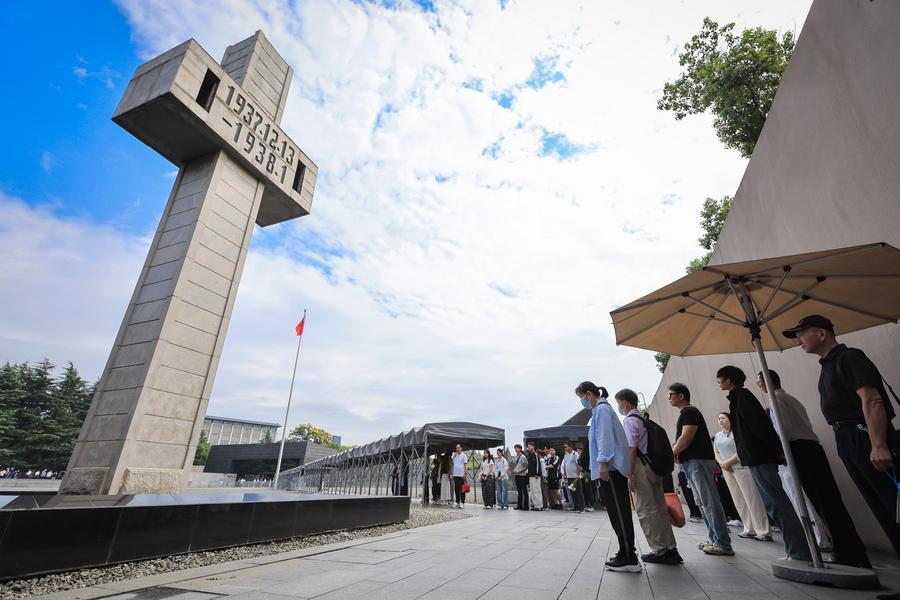
To remember the September 18 Incident is to debunk the false narrative peddled by Japan's right-wing forces. The incident was the first link in the chain of Japanese militarist expansion, making clear that Japan was the outright perpetrator and aggressor, anything but a "victim" of war.
It is completely a double standard to focus only on one's own suffering while ignoring the disasters one has inflicted on others. Such a one-sided narrative is a grave distortion of history, and just hurts countries and peoples that suffered from aggression all over again.
To remember the September 18 Incident is not to fuel hatred, but to set the record straight, cherish peace more, and build a better future.
It is a mirror that reflects the heinous acts of Japanese militarists: systematic manipulation of public opinion, acts of aggression, self-exoneration and distortion of history. It is a line of defense that constantly reminds the world of the importance of upholding historical justice and the post-war international order, and preventing militarism from making a comeback.
Remembering the September 18 Incident and delivering justice to history, to the people and to the international community should be the shared responsibility of all peace-loving people.
Editor's note: The author is an international affairs observer.
The views expressed in this article are those of the author and do not necessarily reflect the positions of Xinhua News Agency.■