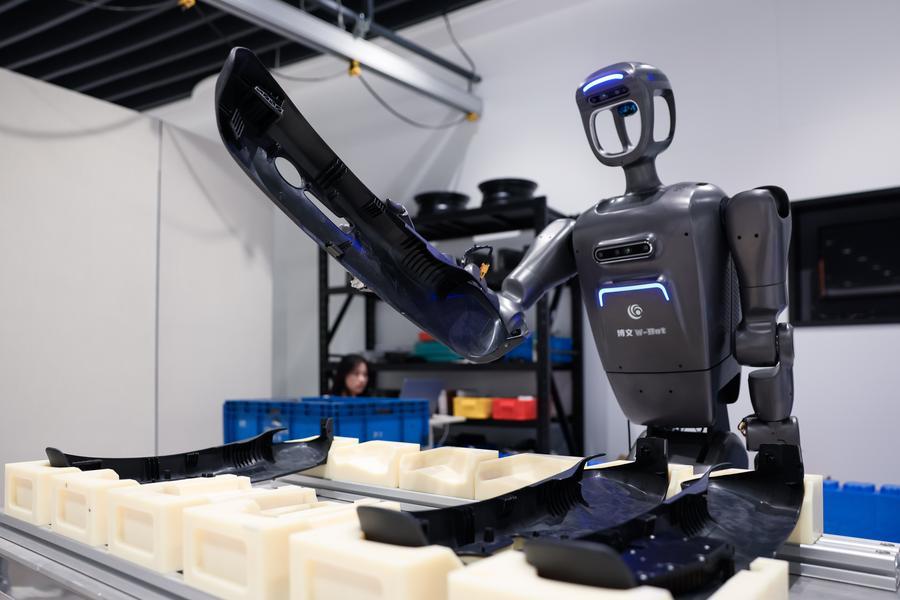
According to the IFR's newly released World Robotics 2026 report, China installed 354,000 industrial robots in 2025, up 20 percent from the previous year and accounting for 59 percent of global installations.
BERLIN, Sept. 24 (Xinhua) -- China is emerging as a global powerhouse in robotics, driven by the rapid adoption of robots across industries, a large and increasingly diverse domestic market and a national strategy supporting the development of robotics and artificial intelligence, said Susanne Bieller, Secretary General of the International Federation of Robotics (IFR).
"From our last visits to China, it was really impressive to see the speed of adoption and the interest across a broad range of industries, but also among people," Bieller told Xinhua in an exclusive interview on Tuesday, coinciding with the release of the IFR's latest World Robotics report.
The IFR, based in Frankfurt, Germany, represents robotics manufacturers and research institutes worldwide and provides industry data and analysis on the development of robotics. It publishes the World Robotics report annually, tracking global trends in industrial robot adoption.
According to the IFR's newly released World Robotics 2026 report, China installed 354,000 industrial robots in 2025, up 20 percent from the previous year and accounting for 59 percent of global installations. The figure was nearly 60,000 units higher than the previous annual record, further consolidating China's position as the world's largest market for industrial robots. Its vast manufacturing base continues to generate strong demand for robots across a wide range of applications.
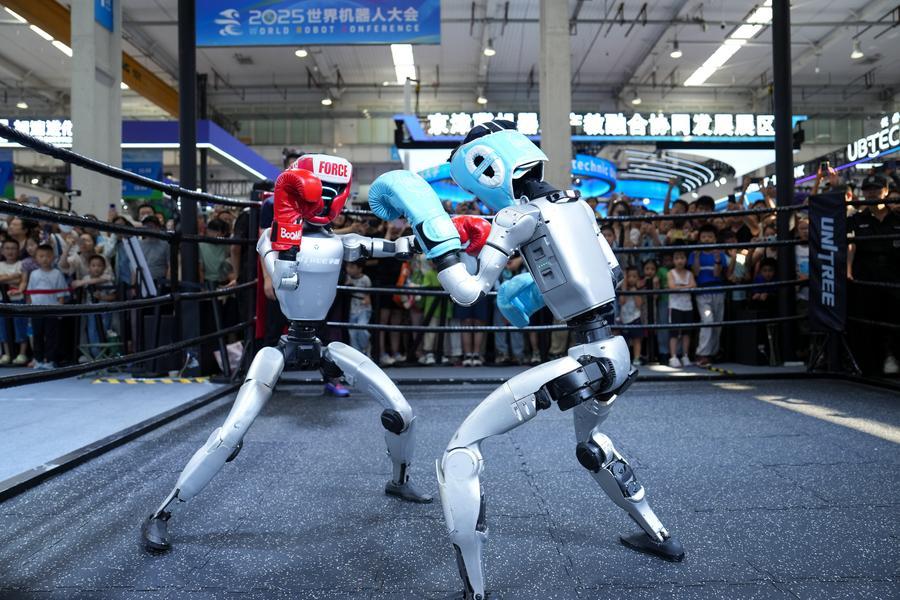
Bieller said several factors were driving demand for robots in China, including industrial modernization, demographic changes and the country's industrial policy and national strategy for robotics.
"There are certain drivers for the demand for robots in China. First of all, the industrialization of the industry and the need for more technology to replace or encounter the demographic shift the country is facing in the years to come," she said.
"There is also the strong industrial policy and the national strategy for robotics, bringing robotics into the market in China. That's driving the demand, as it really looks into which application areas and industries need robots and how to best foster those industries to take up the technology."
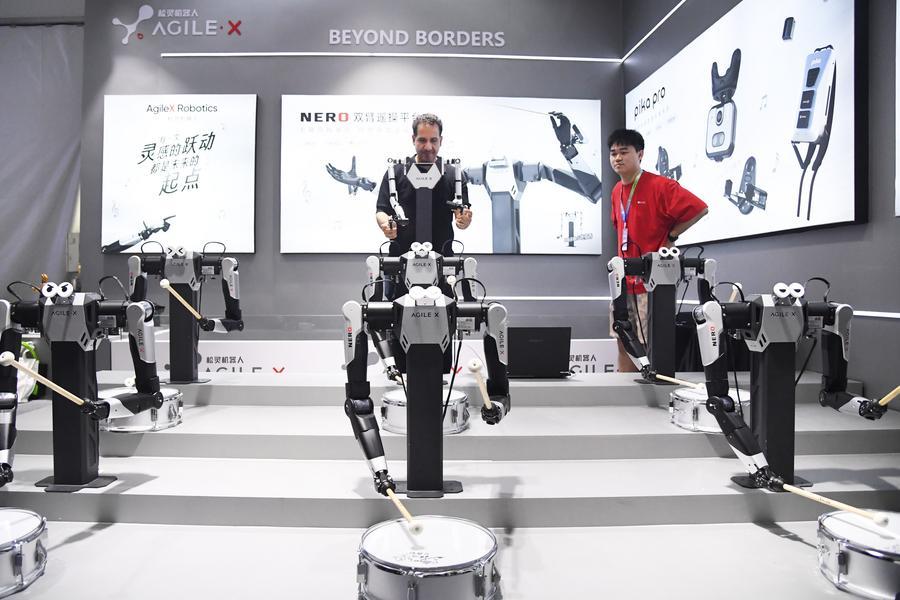
Bieller said China's development of robotics was also closely linked to its broader effort to modernize its industrial system. "There is a well-thought-through strategy behind that, and companies are embracing the technology and looking into new ways to use new technologies, as we see from the humanoids right now," she said.
According to Bieller, the IFR sees China's 15th Five-Year Plan (2026-2030) as placing greater emphasis on technological self-reliance, the modernization of traditional industries and the application of artificial intelligence in the physical world.
The Chinese industrial robot market also has considerable room for further growth. IFR projections indicate that the market could maintain average annual growth of around 5 percent to 10 percent through 2029.
China's domestic robot suppliers have also strengthened their position in the market. Their installations rose 15 percent in 2025 to 195,000 units. According to the latest IFR data, domestic suppliers accounted for about 55 percent of the Chinese market in 2025.
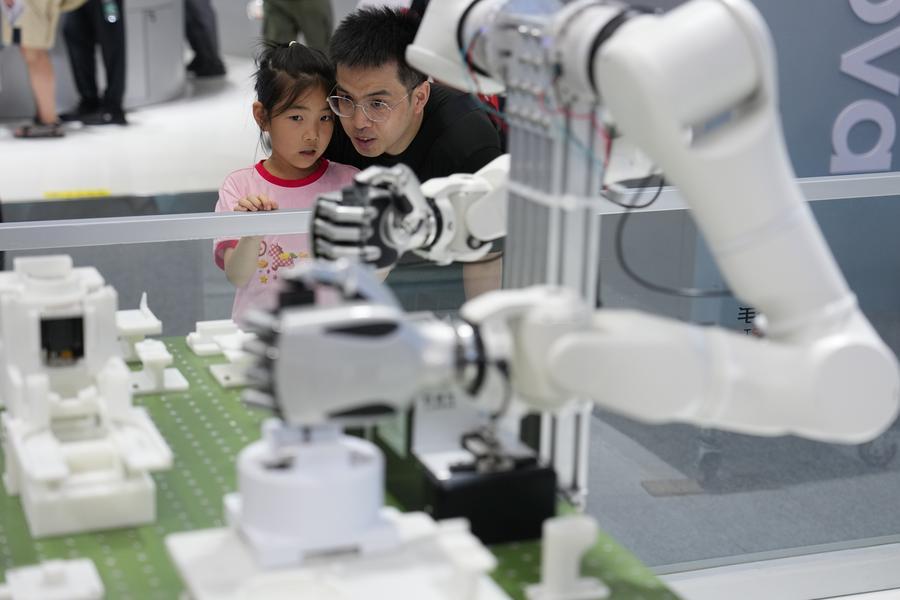
"Chinese companies have grown in competitiveness over the last decade, and the domestic share has increased dramatically," Bieller said. She noted that the growth was not confined to a small number of industries, with "huge opportunities" in sectors that have not invested as heavily in automation as automotive.
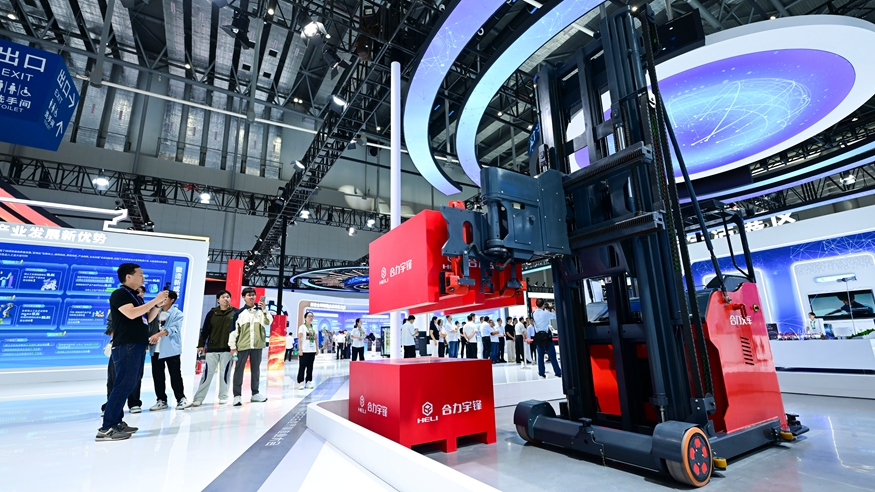
She cited logistics as one area with strong potential and said vehicles beyond passenger cars, as well as food, textiles and paper, could also see further growth in robot adoption. The characteristics of the Chinese market are also encouraging manufacturers to develop robots tailored to specific industrial needs, she said.
"Chinese companies have learned to develop robots that are just fit for the purpose," Bieller said, calling this a strength of Chinese suppliers in developing solutions tailored to specific markets and applications.
The development of China's robotics industry is also reflected in the changing role of manufacturing companies.
During a visit to Shenzhen in April, Bieller visited electric vehicle manufacturer XPeng's factory and saw robots being used in vehicle production. She said XPeng was also developing quadruped and humanoid robots.
"They are a customer of robots for their electric vehicle factory, but at the same time they are developing their own quadruped and humanoid robots," she said.