
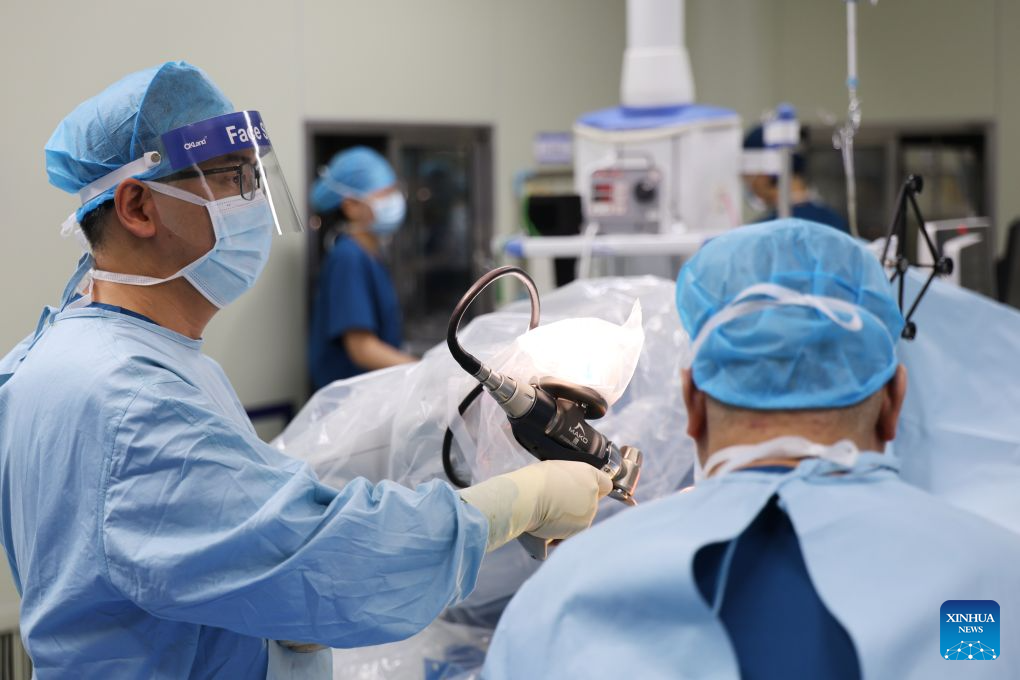
A surgeon guides the Mako robotic arm during a knee replacement surgery at Beichen Hospital of Nankai University in north China's Tianjin, Sept. 24, 2026. Doctors at Beichen Hospital of Nankai University in Tianjin performed a robot-assisted knee replacement procedure on Thursday.
The procedure was assisted by the Mako robotic arm, which works with a patient-specific 3D CT-based surgical plan.
According to doctors at the hospital, robot-assisted surgery can improve surgical precision and allow for more personalized treatment, while potentially reducing surgical risks and supporting postoperative recovery. (Xinhua/Li Ran)
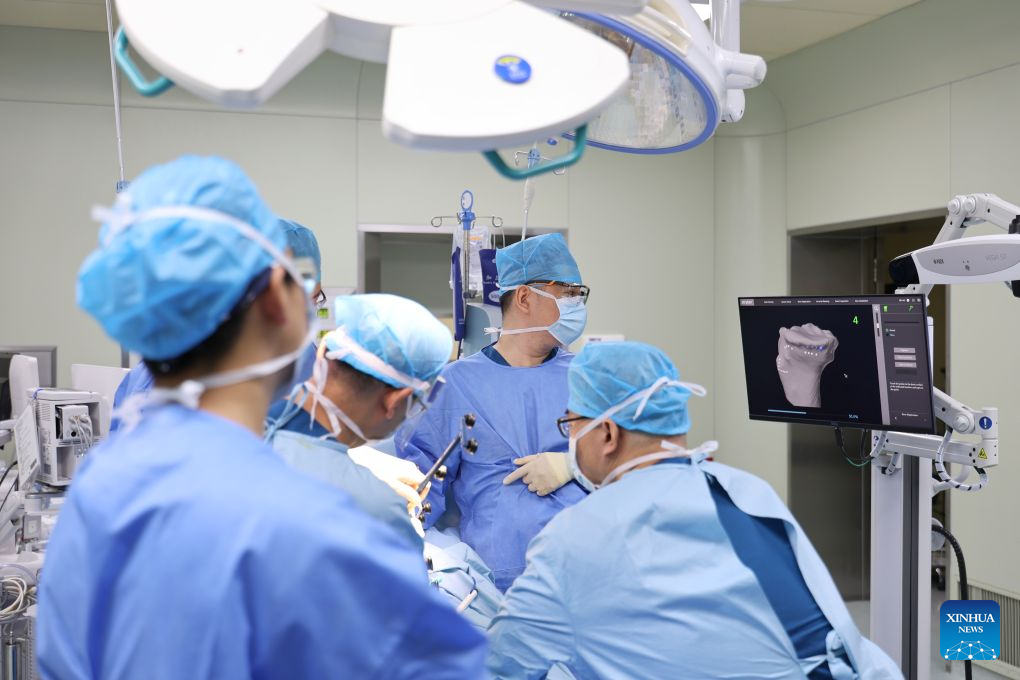
Medical members are pictured during a knee replacement surgery at Beichen Hospital of Nankai University in north China's Tianjin, Sept. 24, 2026. Doctors at Beichen Hospital of Nankai University in Tianjin performed a robot-assisted knee replacement procedure on Thursday.
The procedure was assisted by the Mako robotic arm, which works with a patient-specific 3D CT-based surgical plan.
According to doctors at the hospital, robot-assisted surgery can improve surgical precision and allow for more personalized treatment, while potentially reducing surgical risks and supporting postoperative recovery. (Xinhua/Li Ran)
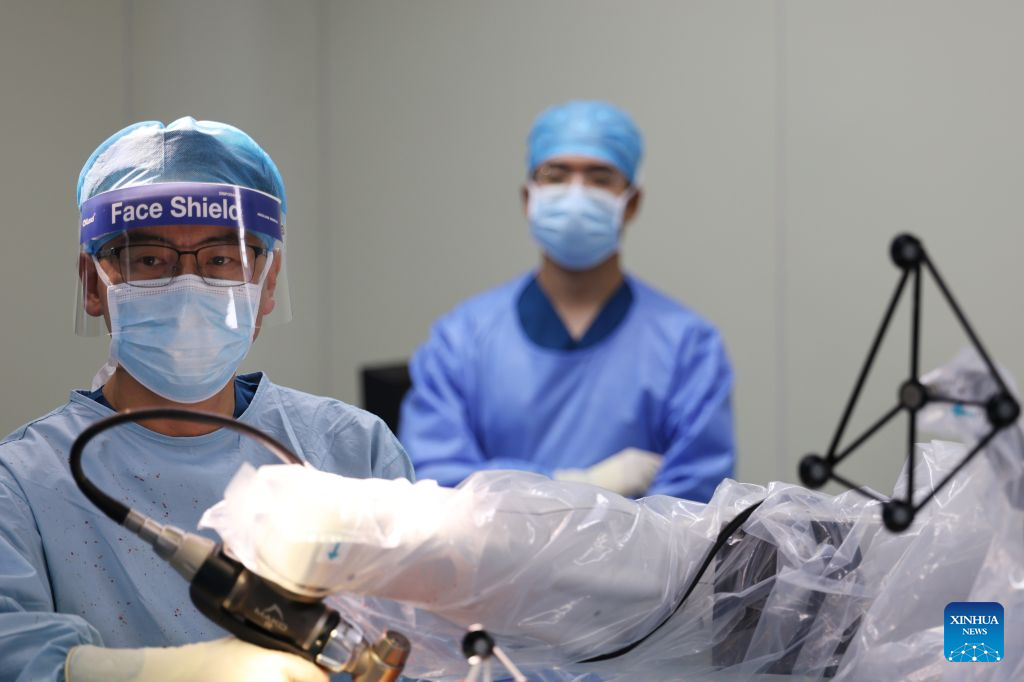
A surgeon guides the Mako robotic arm during a knee replacement surgery at Beichen Hospital of Nankai University in north China's Tianjin, Sept. 24, 2026. Doctors at Beichen Hospital of Nankai University in Tianjin performed a robot-assisted knee replacement procedure on Thursday.
The procedure was assisted by the Mako robotic arm, which works with a patient-specific 3D CT-based surgical plan.
According to doctors at the hospital, robot-assisted surgery can improve surgical precision and allow for more personalized treatment, while potentially reducing surgical risks and supporting postoperative recovery. (Xinhua/Li Ran)
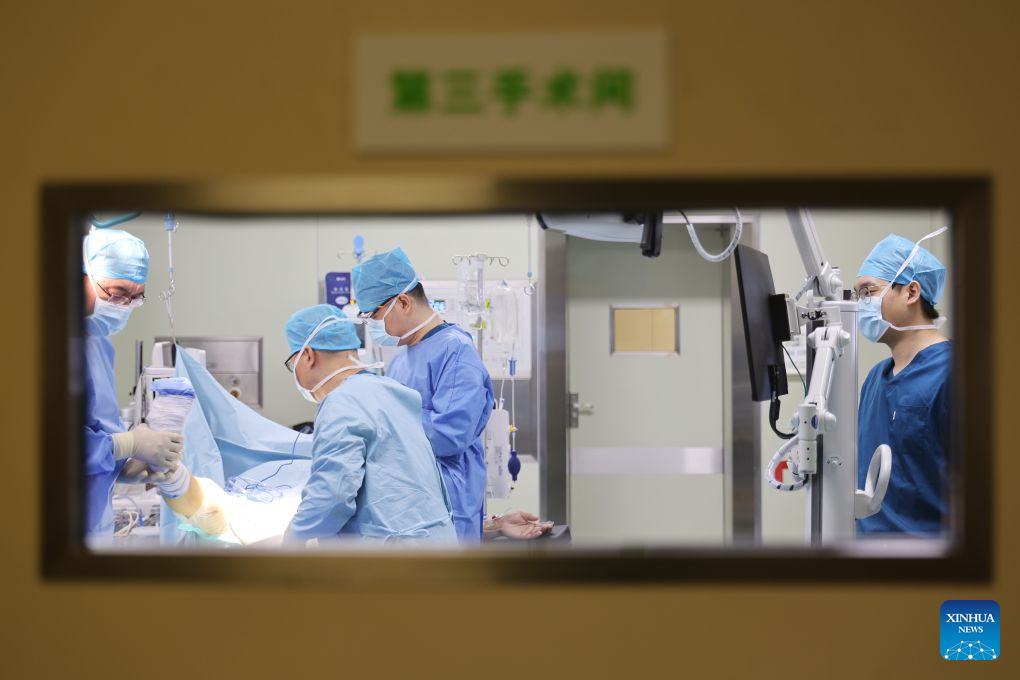
Medical members are pictured during a knee replacement surgery at Beichen Hospital of Nankai University in north China's Tianjin, Sept. 24, 2026. Doctors at Beichen Hospital of Nankai University in Tianjin performed a robot-assisted knee replacement procedure on Thursday.
The procedure was assisted by the Mako robotic arm, which works with a patient-specific 3D CT-based surgical plan.
According to doctors at the hospital, robot-assisted surgery can improve surgical precision and allow for more personalized treatment, while potentially reducing surgical risks and supporting postoperative recovery. (Xinhua/Li Ran)
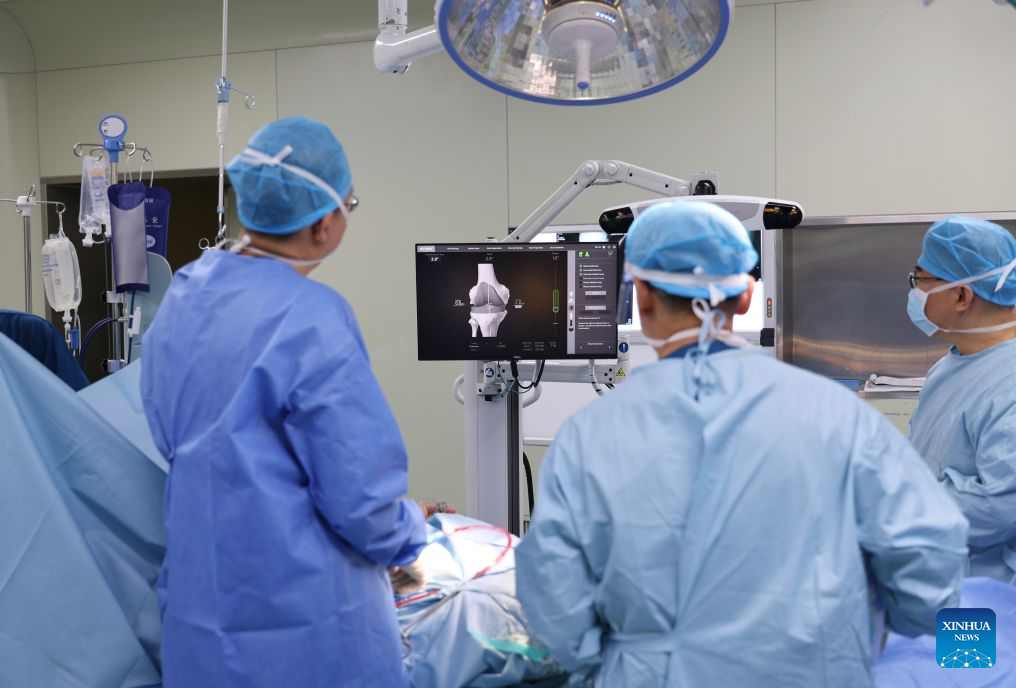
Medical members are pictured during a knee replacement surgery at Beichen Hospital of Nankai University in north China's Tianjin, Sept. 24, 2026. Doctors at Beichen Hospital of Nankai University in Tianjin performed a robot-assisted knee replacement procedure on Thursday.
The procedure was assisted by the Mako robotic arm, which works with a patient-specific 3D CT-based surgical plan.
According to doctors at the hospital, robot-assisted surgery can improve surgical precision and allow for more personalized treatment, while potentially reducing surgical risks and supporting postoperative recovery. (Xinhua/Li Ran)
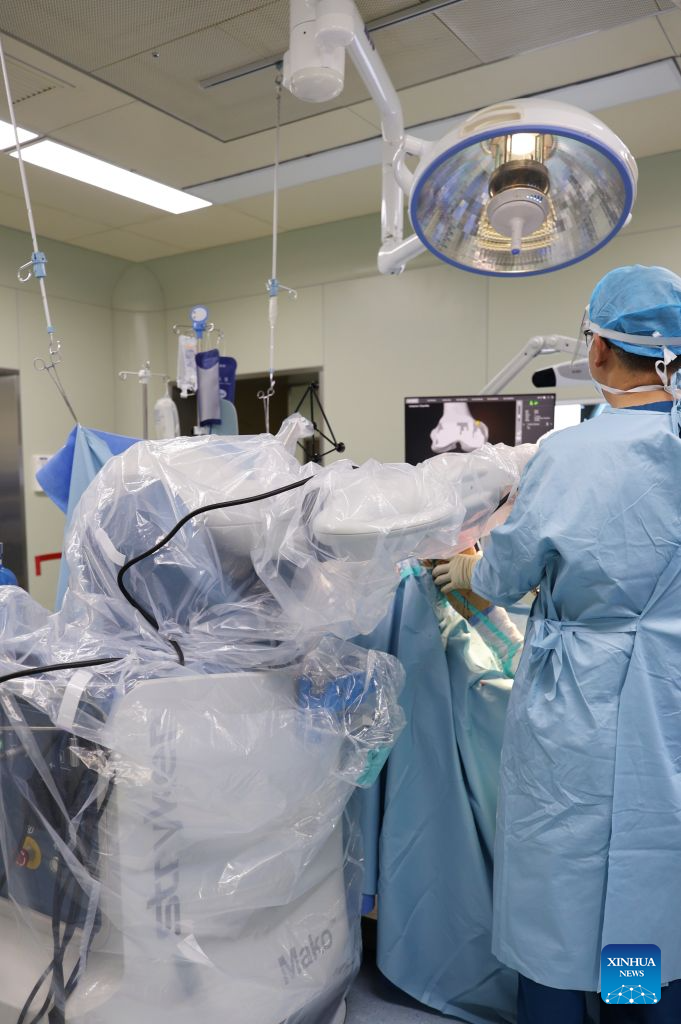
A surgeon guides the Mako robotic arm during a knee replacement surgery at Beichen Hospital of Nankai University in north China's Tianjin, Sept. 24, 2026. Doctors at Beichen Hospital of Nankai University in Tianjin performed a robot-assisted knee replacement procedure on Thursday.
The procedure was assisted by the Mako robotic arm, which works with a patient-specific 3D CT-based surgical plan.
According to doctors at the hospital, robot-assisted surgery can improve surgical precision and allow for more personalized treatment, while potentially reducing surgical risks and supporting postoperative recovery. (Xinhua/Li Ran)


