* Across China, consumers are increasingly seeking cultural experiences, leisure activities and services alongside goods, creating new opportunities for businesses to meet more diverse demand.
* China's National Bureau of Statistics began releasing the broader indicator of combined retail sales of consumer goods and services in June to provide a more complete picture of the changing consumption market.
* For local businesses, the changing demand is prompting efforts to turn temporary popularity into sustained consumption through improved services and more diverse experiences.
BEIJING, Sept. 24 (Xinhua) -- At a barbecue restaurant in Badaju Market in Zibo, east China's Shandong Province, the dining experience now extends beyond sizzling skewers and local delicacies to performances that introduce visitors to the city's history and culture.
"If visitors come just for the food, their visit is too short for them to get to know Zibo better," said Zheng Feng, who runs the restaurant.
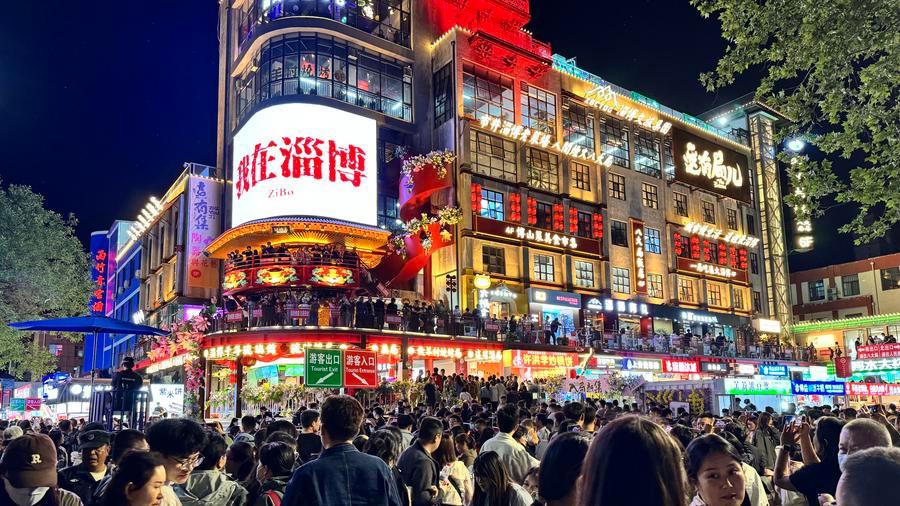
The approach is part of a broader transformation at Badaju, a traditional neighborhood market that became an internet sensation in 2023. Since then, it has expanded its offerings to include cultural performances, handicrafts and creative products.
Over the past three years, the market has received more than 18 million visits annually on average, with over 430 merchants offering more than 100 business formats.
Across China, consumers are increasingly seeking cultural experiences, leisure activities and services alongside goods, creating new opportunities for businesses to meet more diverse demand.
In the first eight months of 2026, China's combined retail sales of consumer goods and services rose 2.5 percent year on year, with retail sales of services increasing 4.9 percent, compared with 1 percent growth in retail sales of goods, official data showed.
As incomes rise, service consumption is growing faster than goods consumption, a trend consistent with broader economic development, said Lin Jian, vice president of the Chinese Academy of International Trade and Economic Cooperation under the Ministry of Commerce, on China Economic Roundtable, an all-media talk show hosted by Xinhua News Agency.
Lin noted that per capita spending on services accounted for 46.1 percent of China's total per capita consumption expenditure in 2025, up 3.5 percentage points from 2020, and expected the share to surpass 50 percent during the 2026-2030 period.
China's National Bureau of Statistics began releasing the broader indicator of combined retail sales of consumer goods and services in June to provide a more complete picture of the changing consumption market.
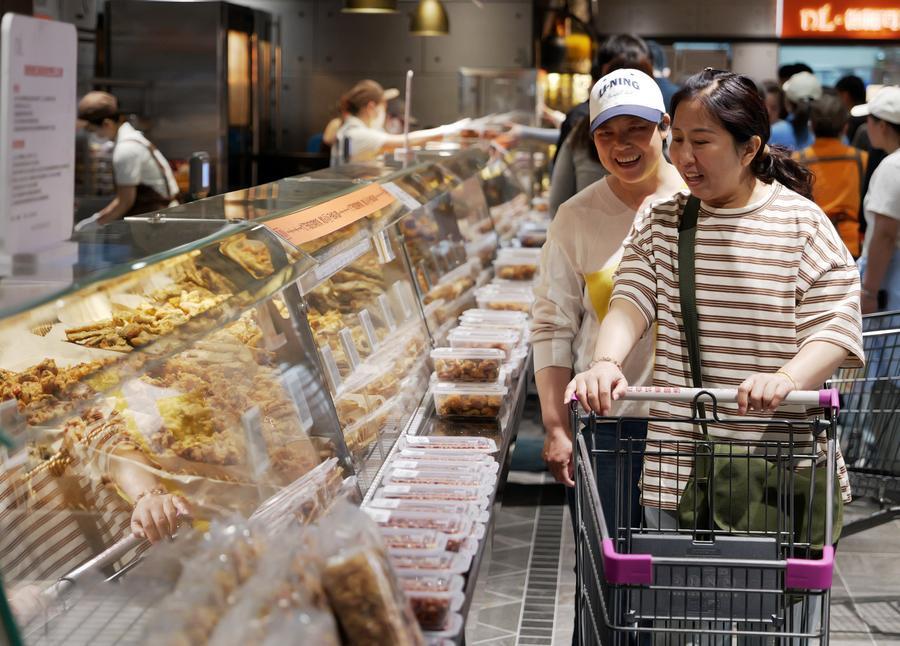
For local businesses, the changing demand is prompting efforts to turn temporary popularity into sustained consumption through improved services and more diverse experiences.
Zhang Weihua, deputy head of Shandong's provincial culture and tourism department, said Badaju's continued appeal lies in its combination of consumer trust, local culture and interactive experiences.
The market has introduced clearer pricing, consumer complaint services and infrastructure improvements, while incorporating local cultural traditions into commercial activities and retaining its functions as a neighborhood market.
A similar change is taking shape in Changsha, capital of central China's Hunan Province, where small theaters and immersive performances are creating new spaces for cultural consumption.
At the city's Houhu Ximatou theater, an immersive street play titled "Changsha" takes audiences back to the 1990s, telling a story of friendship and entrepreneurship through scenes from the city's past.
Actors interact directly with audiences in recreated neighborhood settings, with some spectators even offering tissues to performers during emotional scenes, said Jin Xingzhou, an actor in the production.
Changsha had established 111 new performing arts venues by the end of June this year, with performances at these venues totaling 14,000 in the first six months and attracting 3.63 million audience visits, according to local cultural authorities.
Zhang Dandan, head of the Changsha New Consumption Research Institute, attributed the emergence of new consumption formats to changing consumer needs, which are driving innovation in products, services and business models.
At the national level, China's consumption expansion plan for the 15th Five-Year Plan period (2026-2030) calls for expanding service consumption, upgrading goods consumption, developing new consumption scenarios and improving the consumption environment.
The plan aims to boost China's total retail sales of consumer goods to around 60 trillion yuan (about 8.89 trillion U.S. dollars) by 2030. It also calls for expanding high-quality cultural and tourism offerings, improving the supply of performing arts products, and supporting the development of immersive and interactive venues for consumers.
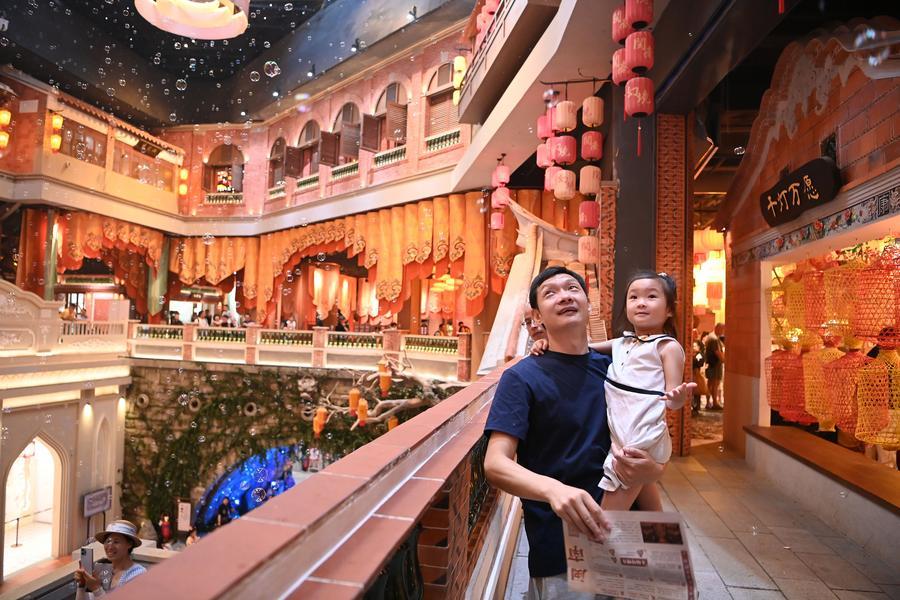
Efforts similar to Zibo and Changsha are taking shape across China, with 50 cities participating in a national pilot program to develop new consumption formats, models and scenarios.
These cities have a combined resident population of over 480 million and account for more than half of China's total retail sales of consumer goods, according to the Ministry of Commerce.
As of early July, the pilot cities had collected proposals for more than 6,000 projects, with the potential to attract over 300 billion yuan in investment, the ministry said.
Lin said cities should develop distinctive consumption offerings based on their own cultural, ecological and industrial resources, supported by better services, consumption facilities and the business environment.
"Events attract consumers, supply turns interest into spending, and a supportive environment sustains long-term appeal," said Lin.
(Video reporters: Yang Shiyan and Zhao Jiale; Video editors: Yang Zeyi, Roger Lott, Zhao Xiaoqing and Hong Yan) ■