XI'AN, Sept. 24 (Xinhua) -- For Zhang Chengyong, a college student spending the summer working behind a coffee counter at a resort in Ningshan County, northwest China's Shaanxi Province, the job has offered more than a break from campus.
He serves more than 100 cups of coffee a day, and over 200 when visitors surge. Most customers are young travelers seeking experiences beyond city life, giving the sophomore tourism management major a glimpse into his future career.
One such visitor, a tourist surnamed Zhang from the provincial capital Xi'an, found the resort online and booked a three-day family getaway, spending more than 3,000 yuan (about 445 U.S. dollars) during her stay.
She chose the resort for one simple reason: it offered a break from the city and more time outdoors for her child.
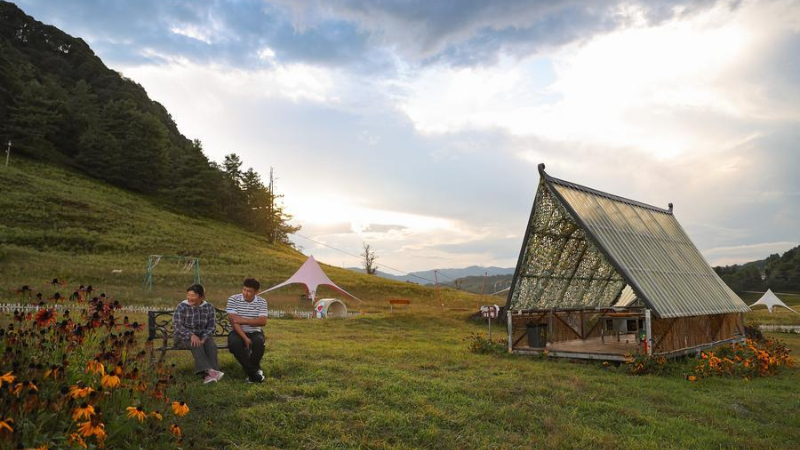
Unlike conventional homestays, the resort combines accommodation and dining with hands-on cultural and nature-based activities, from making crested ibis-themed souvenirs to plant printing and painting traditional lacquer fans.
"Most rooms were booked throughout the summer. Young people are less interested in highly commercialized attractions, but are willing to pay for the relaxed atmosphere of the countryside," said Xue Rong, the resort's manager. About 80 to 90 percent of its visitors come from Xi'an, she added.
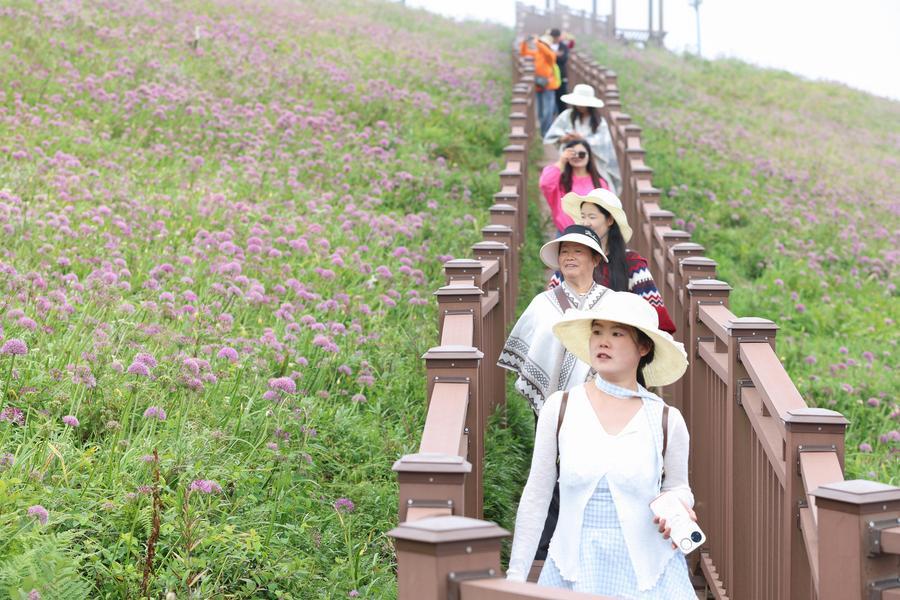
The resort reflects a broader shift in young people's travel preferences. Instead of rushing from one landmark to another, many are seeking nature, local culture and hands-on experiences, and are increasingly willing to pay for them.
Cheng Chaogong, chief researcher at Tongcheng Research Institute, said county tourism is gaining popularity because counties combine rich natural landscapes, distinctive local culture and rural tourism resources, offering experiences that large cities cannot easily replicate.
That shift is reflected in spending data. Meituan, a major local services platform, said spending in counties by visitors from outside their home areas rose 14.1 percent year-on-year in the first half of 2026. Average spending per transaction reached about 58 yuan, roughly 50 percent higher than that of local residents, while experience-based spending continued to grow.
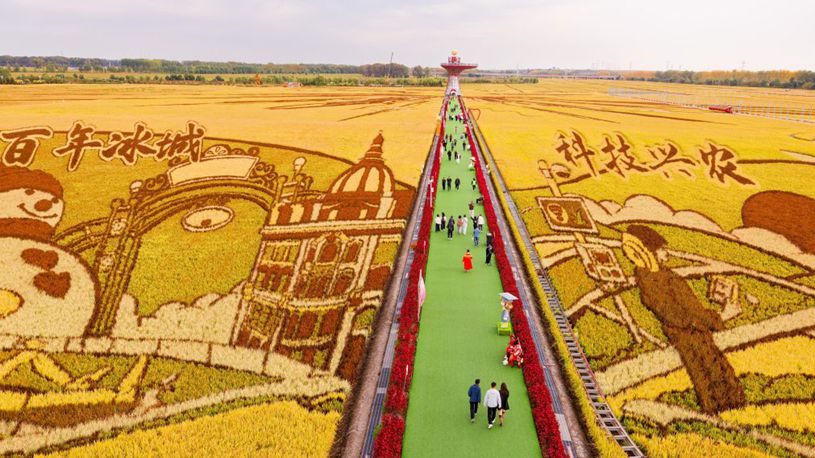
The trend is spreading beyond Shaanxi, with counties across China turning local culture and traditions into tourism attractions.
In Sandu Shui Autonomous County in southwest China's Guizhou Province, for example, traditional horse racing has evolved into a popular tourism brand, attracting visitors to watch races, ride horses and experience Shui ethnic embroidery.
The county recorded 3.22 million tourist visits in the first half of 2026, up 11 percent year on year, while tourism revenue reached 3.3 billion yuan, up 13.1 percent, according to local authorities.
Policy support is also helping accelerate the trend. A set of measures released by the Ministry of Commerce and eight other government departments in August called for deeper integration of commerce, agriculture, culture, tourism and sports, as well as the development of distinctive rural tourism destinations.
Improved infrastructure is making more of these destinations accessible to travelers. By the end of 2025, high-speed rail covered 97 percent of Chinese cities with urban populations of more than 500,000, while 97 percent of county-level regions had A-rated scenic areas during the 14th Five-Year Plan period (2021-2025).
The expansion of county tourism is part of a broader effort to make culture and tourism stronger drivers of domestic consumption and economic growth.
China's newly released 15th Five-Year Plan (2026-2030) for cultural and tourism development calls for making the sectors pillars of economic development while improving people's livelihoods and sense of well-being.
Chinese tourists spent 6.3 trillion yuan on domestic trips in 2025, according to official data. The Ministry of Culture and Tourism expects the figure to reach 7.7 trillion yuan by 2030. ■