By sportswriters Gao Meng, Qian Zheng
TOKYO, Sept. 24 (Xinhua) -- Shin Ohashi may spend his spare time on his phone, enjoy junk food and, according to his coach, resemble an ordinary Japanese high school student.
In the pool, the 17-year-old is anything but ordinary.
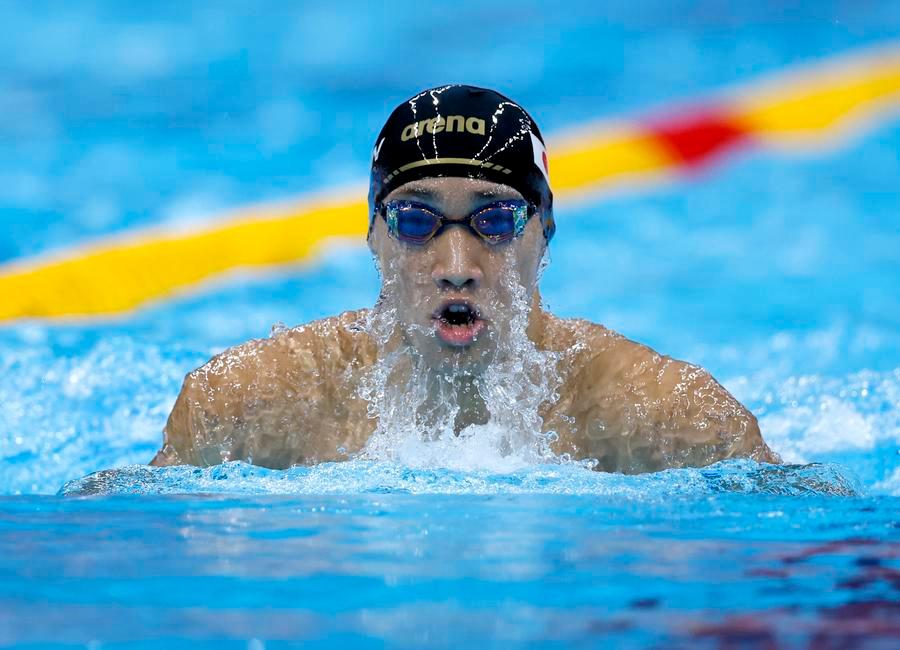
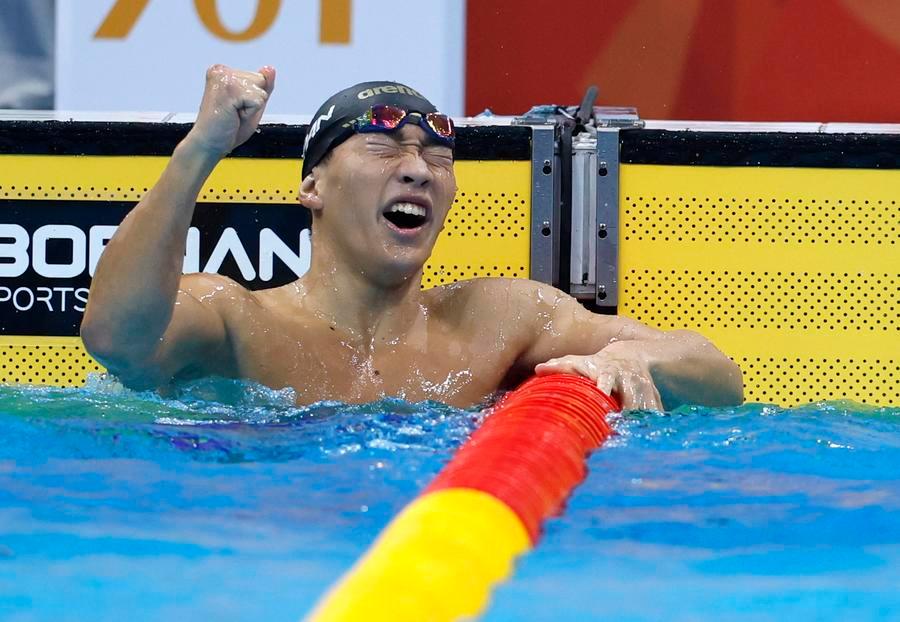
Ohashi broke the men's 200-meter breaststroke world record at the 2026 Asian Games on Thursday, clocking 2 minutes, 4.83 seconds to become the first swimmer to set a world record at the Games.
"I was able to put into the race what I had been training for, so I think it was a perfect race," Ohashi said.
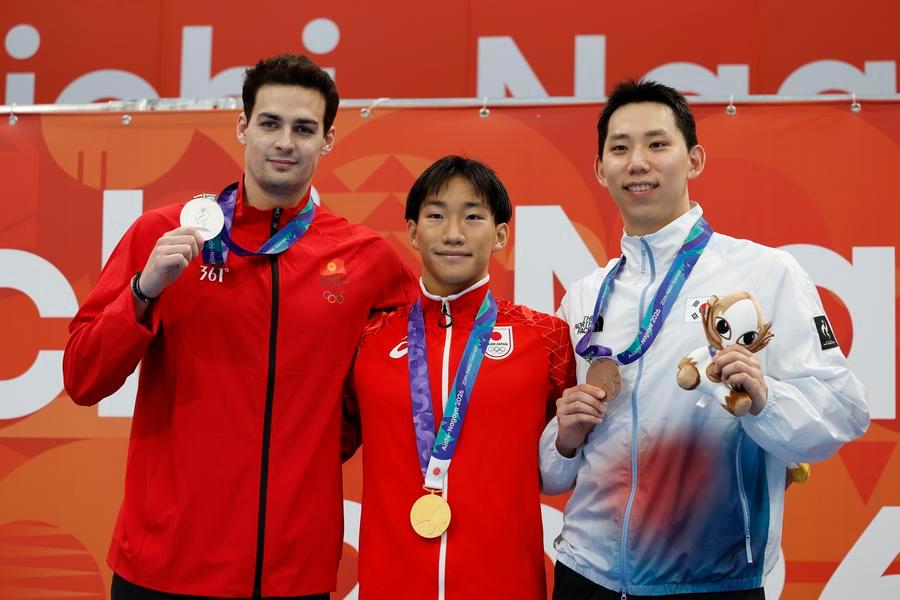
The performance has attracted the attention of some of swimming's biggest names, including France's Leon Marchand.
"I'm scared. I'm very scared of him," Marchand said with a laugh. "He's still so young. His coach is really good. I think his entourage, the people around him, are really good, so I hope he's going to keep improving."
"His breaststroke is amazing, and I'm very excited, also stressed about it, to race him," the Frenchman added.
Ohashi's rise has been rapid. At the Pan Pacific Swimming Championships in August, he clocked 2:08.27 in the 200m breaststroke. Just over a month later, he had lowered that mark by more than three seconds.
His preparation for the Asian Games was far from ideal. Ohashi developed a fever in the days before the competition and subsequently tested positive for COVID-19.
According to his coach Shin Ota, there was no wholesale rebuilding of Ohashi's training program between the Pan Pacific Championships and the Asian Games. Instead, the biggest change came in the teenager's approach to training.
Ohashi had previously been reluctant to undertake some breaststroke training but became more disciplined in his preparation, continuing to complete the assigned work even when his training times were unimpressive.
The plan for Thursday's final had been to control his pace over the first half before maintaining his speed down the stretch. Instead, Ohashi attacked from the start.
"Once I saw that his technique hadn't broken down, I knew his time would be very good," Ota said.
At 1.69 meters tall, Ohashi is relatively small by the standards of elite male swimmers. Ota said his build led the coaching team to identify a high stroke rate as one of the qualities that could become a major strength.
But Ota believes Ohashi's greatest asset lies elsewhere.
"He may look carefree, as if he doesn't think about much, but he really loves swimming, and he really likes to study it," Ota said.
Ohashi regularly analyzes his own swimming, makes adjustments and experiments with different ways of moving through the water. Ota said the teenager often works out technical changes for himself rather than relying on constant instruction from his coach.
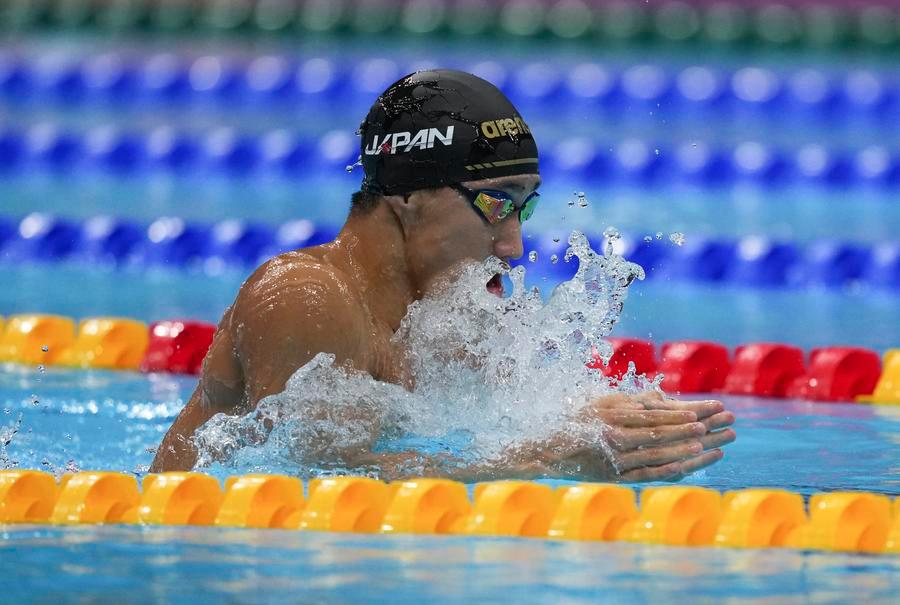
Away from the pool, however, the newly crowned world-record holder remains recognizably 17.
Ota said Ohashi enjoys spending time on his phone and eating junk food, adding that "overall, I think he's just an ordinary high school student you could find anywhere."
Ohashi's ambitions are considerably less ordinary.
His immediate goal is gold at next year's World Championships, followed by the 2028 Los Angeles Olympic Games. Asked which swimmer he hopes one day to emulate, Ohashi named Kosuke Kitajima, Japan's four-time Olympic breaststroke champion.
Ota said Kitajima's ability to deliver victories under the weight of expectation was particularly difficult to replicate, and that Ohashi still needs experience and greater mental strength before reaching that level.
For now, Ohashi sees little conflict between the sacrifices required to become an elite swimmer and experiencing life as a teenager.
"Swimming really is my life," he said. "Because of swimming, there may have been times when I couldn't go out and play. But it is also because of swimming that I have been able to get to where I am today. So I don't look at those things so negatively." ■