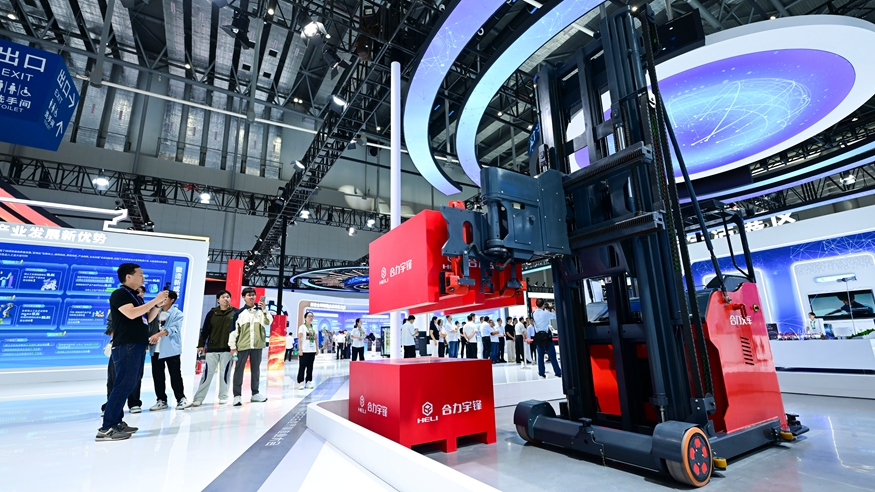
* Against tightening global fertilizer supply rattled by geopolitical headwinds, China's targeted measures have secured agricultural supplies and underpinned national food security.
* Complementing stable material supplies, advanced agricultural technology has helped China mitigate the impact of natural disasters and lift grain yields, helping secure a resilient autumn harvest.
* China's grain production has stayed on firm footing this year. Official data released in July put summer grain output at 150.7 billion kilograms, up 0.7 percent year on year, marking the first time the harvest has topped 150 billion kilograms. The country is on track to meet its annual grain output target of around 700 billion kilograms.
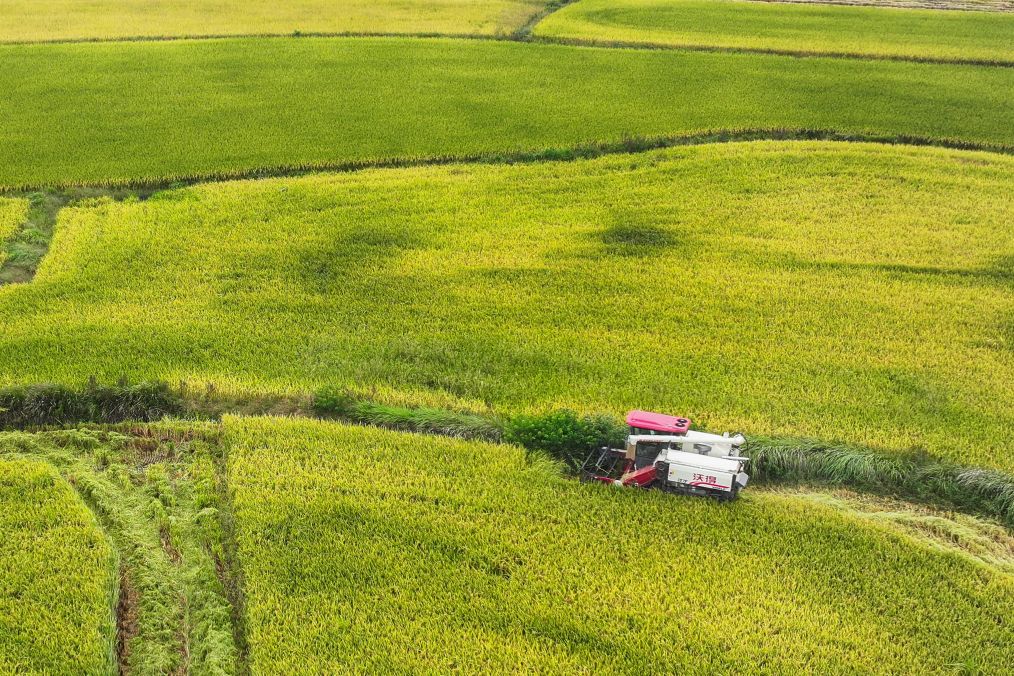
WUHAN/HARBIN, Sept. 23 (Xinhua) -- As combine harvesters bring the autumn harvest to a close across central China's Hubei Province, local farmer Fu Pengcheng is preparing his 1,000 mu (66.7 hectares) of farmland for winter wheat rotation, reassured by stable fertilizer supplies heading into the upcoming planting season.
The 42-year-old farmer has stockpiled 40 tonnes of fertilizer at 3,065 yuan (454.29 U.S. dollars) per tonne. "Though slightly higher compared with last year, the price is still reasonable," said Fu, adding that his county has ample fertilizer stocks for him to replenish at any time.
Like Fu, farmers across China today no longer have to scramble for fertilizer or stockpile it during the busy farming season, nor do they have to worry about fertilizer price spikes. Against tightening global fertilizer supply rattled by geopolitical headwinds, the country's targeted measures have secured agricultural supplies and underpinned national food security.
China's grain production has stayed on firm footing this year. Official data released in July put summer grain output at 150.7 billion kilograms, up 0.7 percent year on year, marking the first time the harvest has topped 150 billion kilograms. The country is on track to meet its annual grain output target of around 700 billion kilograms.
STABLE FERTILIZER SUPPLY
Fertilizer, an essential input for grain farming, faces severe global supply strains in 2026. Escalating geopolitical tensions in the Gulf region have disrupted vessel traffic through the Strait of Hormuz, a critical export route for fertilizers. The disruption has severely fragmented global fertilizer supply chains.
The World Bank forecasts a 31 percent overall surge in global fertilizer prices for 2026. Most economies are grappling with fertilizer shortages and soaring farming costs, which pose growing threats to their food security.
As the world's major fertilizer producer and consumer, China has rolled out targeted measures to counter global market volatility, stabilize domestic fertilizer supply and underpin food security against external challenges.
Early this year, China's top economic regulator issued a guideline to ensure year-round fertilizer supply and price stability for spring plowing, requiring multiple departments to coordinate efforts to boost fertilizer production, cut farming costs, optimize reserve management and promote scientific fertilization practices.
Across the country, fertilizer producers have responded by expanding output and diversifying procurement.
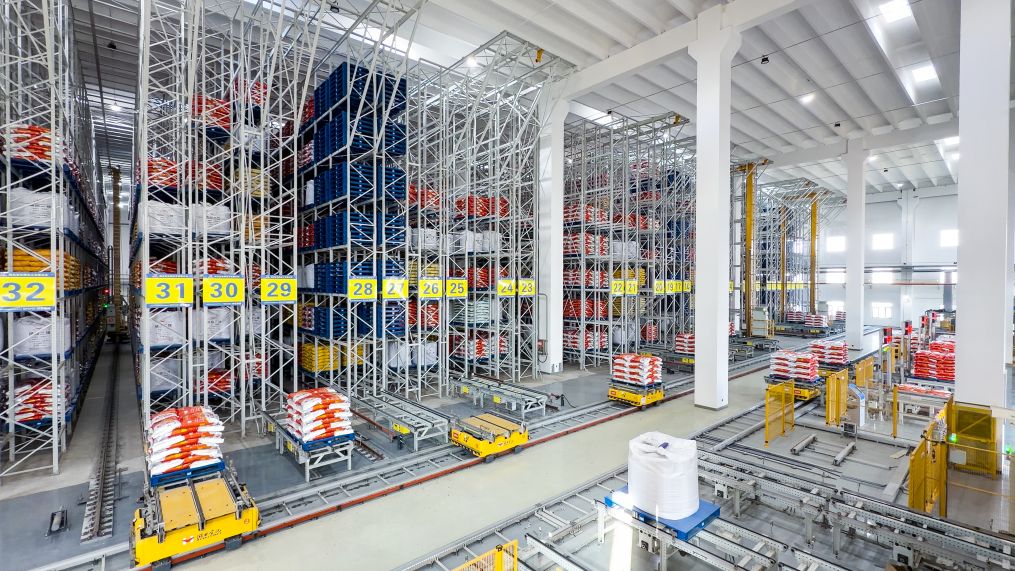
At the production park of Hubei Yihua Group Co., Ltd. in Yichang, Hubei Province, intelligent production lines are running at full speed. Bags of fertilizer are automatically filled, sealed and palletized before being quickly transferred to the finished product warehouse through an intelligent loading system.
Faced with sharp price increases and supply fluctuations of fertilizer raw materials such as sulfur, the company has actively expanded diversified overseas procurement channels to stabilize external import sources.
It has also deepened cooperation with major central state-owned enterprises such as Sinopec and PetroChina, signing long-term raw material procurement agreements to lock in preferential procurement terms and supply quotas. In the first eight months of this year, the company's total domestic fertilizer output reached 2.95 million tonnes.
Beyond corporate efforts, China's systematic reserve and distribution network forms the backbone of fertilizer supply security. The country has a commercial fertilizer reserve system, with a full-spectrum reserve framework covering nitrogen, phosphorus, compound, potash and disaster-relief fertilizers across major agricultural provinces, said Ye Xingqing, a researcher with the Development Research Center of the State Council.
A nationwide agricultural supply network further ensures efficient distribution, with over 4,800 agricultural input enterprises and 280,000 grassroots service outlets across rural areas. During this year's spring plowing season, China released more than 10 million tonnes of state commercial fertilizer reserves, strongly supporting stable grain production.
Thanks to coordinated policy regulation, expanded industrial output and industry self-discipline, domestic fertilizer prices have stayed largely stable this year, in stark contrast to sharp global price hikes driven by geopolitical conflicts, said Wang Xiaoxue, an official with the China Agricultural Means of Production Association.
SMART FARMING TECHNOLOGY
Complementing stable material supplies, advanced agricultural technology has helped China mitigate the impact of natural disasters and lift grain yields, helping secure a resilient autumn harvest.
Henan, a key grain-producing province in central China, has leveraged drone monitoring and smart field management to improve disaster response after Typhoon Dolphin struck in August. Rather than sending teams to inspect fields on foot, researchers use surveillance drones to send real-time soil and waterlogging data to smart platforms. This allows fast drainage and targeted loss control.
Wang Qiang, an associate professor at Henan Agricultural University, led the practice at an agricultural demonstration park, deploying drones to assess damage instead of wading into fields. His smart farm project in Luohe City of Henan, uses patrol drones to stream real-time field data to a smart management platform. "We spot waterlogged areas and activate drainage promptly to curb losses," Wang said.
He added that agricultural demonstration sites nationwide let farmers test new technologies on the ground. These projects speed up the upgrade of China's farm machinery fleet and make it smarter.
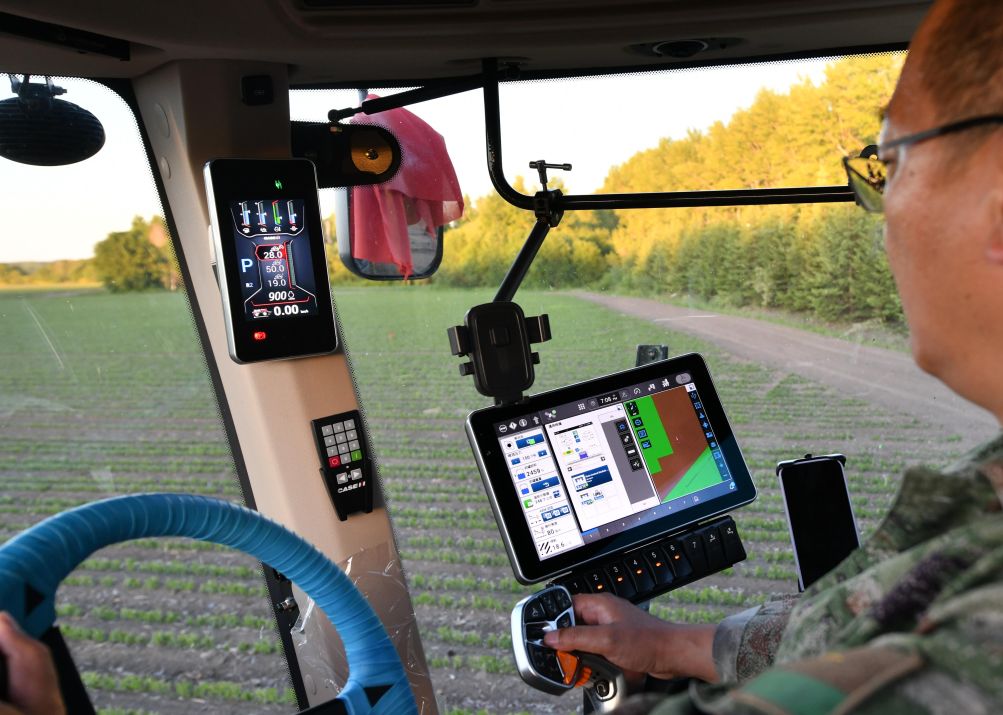
The province has achieved a 90-percent comprehensive mechanization rate for crop planting and harvesting, with wheat and corn production fully mechanized.
Nationwide, BeiDou-guided autonomous tractors, intelligent seeders, automated water-fertilizer irrigation systems and straw balers now cover the entire planting, management and harvesting cycle, powering precision farming.
In Heilongjiang, China's largest grain-producing province, autumn harvesting is underway. Its overall farm planting and harvesting mechanization rate has led the country for years, surpassing 99 percent. Widely seen as a cornerstone of national food security, the province is rolling out new technology to boost per-hectare yields and crop quality.
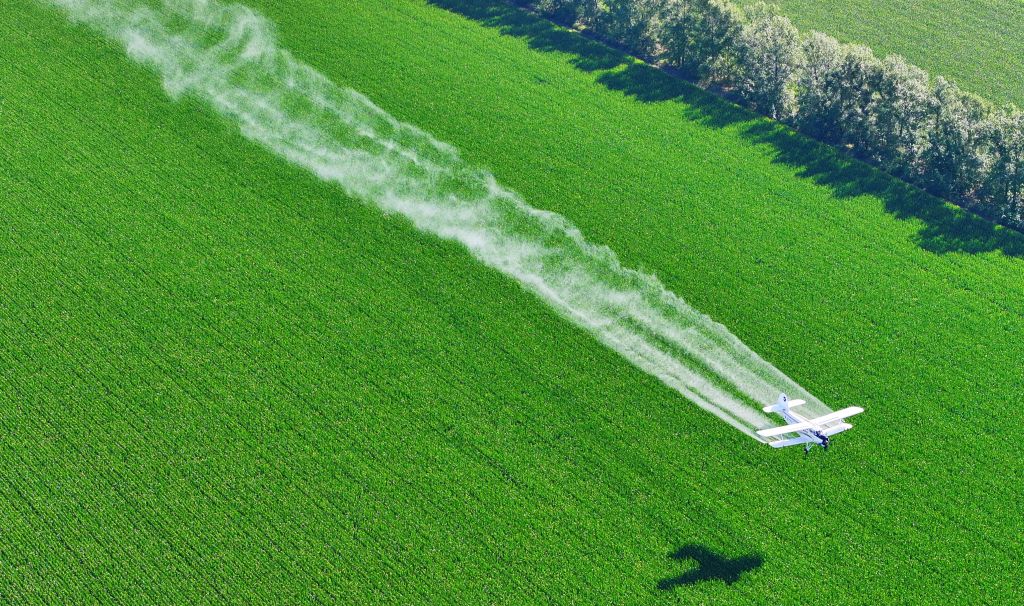
The province deployed over 25,000 precision seeders and 33,000 crop-protection drones this year to lift farm operation standards and efficiency, said Zhu Huasheng, deputy director of the provincial agriculture and rural affairs department.
Official figures also show Heilongjiang has dispatched more than 26,000 agricultural officials and experts to the fields so far this year, guiding farmers to adopt new technologies.
Cheng Guoqiang, dean of the National School of Food Security Strategy at Renmin University of China, said that in a year of tightening global grain supplies, China's steady grain production has helped stabilize global market expectations. ■
(Reporting by Qiang Lijing, Fang Ning, Rong Jiaojiao, Tian Zhongquan, Sun Xiaoyu, Hou Wenkun and Yuan Yueming; Video reporters: Fang Yadong, Hou Wenkun, Tian Zhongquan, and Sun Xiaoyu; Video editors: Li Ziwei, Zhao Xiaoqing and Roger Lott.)