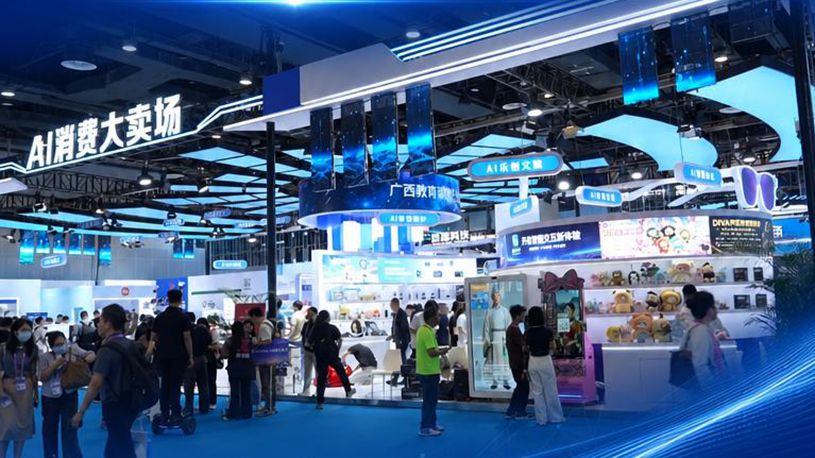
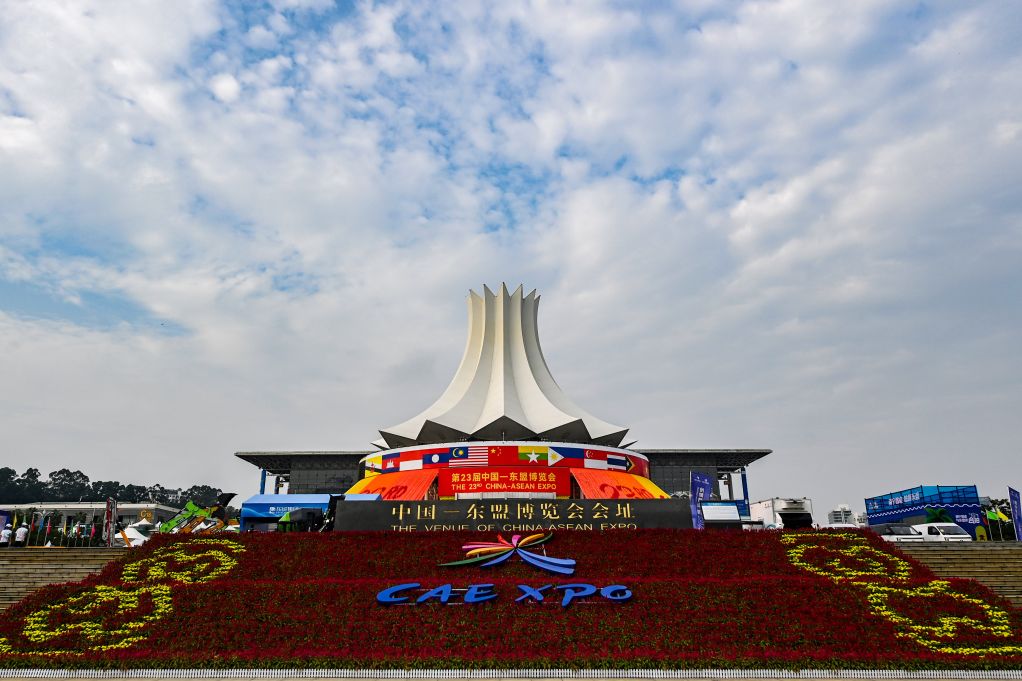
NANNING, Sept. 20 (Xinhua) -- At the ongoing 23rd China-ASEAN Expo, a QR code has become an unexpected star attraction. Visitors scan it to access a virtual reality tour of the newly opened Pinglu Canal, a new trade corridor that is expected to boost economic ties between China and ASEAN.
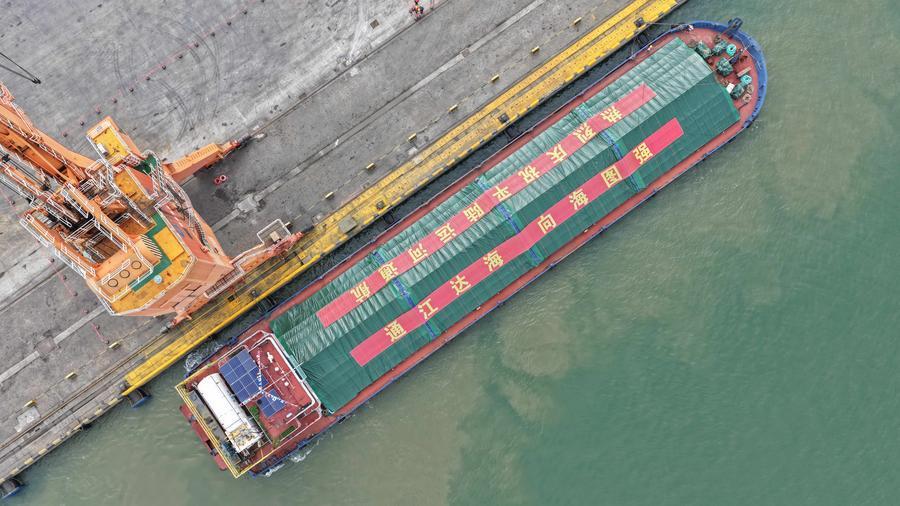
The 134.2-kilometer canal, opened to navigation on Wednesday, is the first river-to-sea canal project planned and coordinated at the national level since the founding of the People's Republic of China in 1949.
Running from Hengzhou in south China's Guangxi Zhuang Autonomous Region to the Beibu Gulf, it gives China's landlocked southwest a shortcut to the coast and overseas markets.
The economic logic is straightforward. The canal is expected to reduce overall logistics costs by 18 to 30 percent and save more than 5 billion yuan (about 740.51 million U.S. dollars) in transportation costs each year.
China's trade with ASEAN exceeded 1 trillion U.S. dollars for the first time last year. In the first seven months of 2026, total trade between the two sides reached 744.41 billion U.S. dollars, an increase of 24.7 percent year on year, accounting for 21.8 percent of China's total foreign trade during this period.
For businesses moving goods between China and ASEAN, China's largest trading partner, even a small reduction in shipping time or cost can translate into significant competitive advantage.
"This is a canal of significant historical dimension, meaning that it will not only benefit China alone," said Kao Kim Hourn, secretary-general of ASEAN. "I hope that both ASEAN and China take advantage of this great opportunity to deepen our economic cooperation."
Kao added that the canal will cut comprehensive logistics costs for goods moving between China and ASEAN, thereby boosting regional economic competitiveness.
For Timor-Leste, attending the expo for the first time as ASEAN's 11th member and an official co-host, the canal represents new opportunities.
"The Pinglu Canal will serve as a help to get more products from Timor-Leste to come to market in China," said Elias de Jesus Fatima, director-general of commerce at Timor-Leste's Ministry of Commerce and Industry. "Hopefully one day we can engage more of the private sector in China and Timor-Leste to have a deal in cooperation, especially in trade."
Chakra Yodmani, deputy permanent secretary of the Ministry of Commerce in Thailand, echoed the sentiment. "The canal will make it much easier and faster to ship our fresh produce to Southwest China," Yodmani said, noting that time is critical for perishable goods.
"The savings will benefit both businesses and consumers," Yodmani added.
Beyond the shipping route itself, the canal's green construction, smart operations and modern management are also under the spotlight.
Environmental protection was a priority during construction. The canal includes a fish passage more than 480 meters long and a dedicated wildlife crossing for land animals including leopard cats and squirrels.
A monitoring system powered by BeiDou navigation, cloud computing and artificial intelligence enables early warning of navigation risks across the entire route.
After a field visit to the Pinglu Canal, Vietnamese Ambassador to China Pham Thanh Binh praised the project's rapid progress and its use of advanced technologies and innovative approaches.
He said the experience gained in its operation and management is worth drawing on for other countries, including Vietnam, and that the project demonstrates China's technological capabilities and its determination to advance regional connectivity.
Experts point out that these practices, from ecological protection to smart shipping, align with ASEAN countries' needs for green development and digital transformation.
"The experience gained in the canal's construction and operation provides a new reference for regional water transport infrastructure and connectivity," said Jiang Chenxian, a researcher with the Academy of China-ASEAN International and Regional Studies at Guangxi Minzu University.
Now that the canal is open to navigation, the focus is turning to operation and industrial development.
Zhang Lei, deputy director of the Institute of Southeast Asian Studies at the Guangxi Academy of Social Sciences, noted that the focus will shift to how to make good use of the canal, particularly whether operational factors can deliver stable advantages and translate into tangible, sustainable gains for businesses.
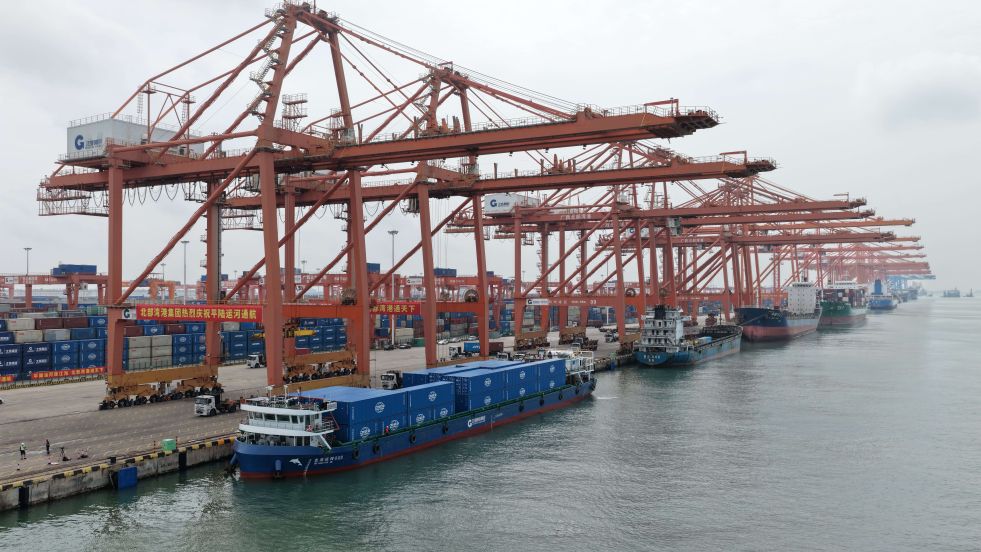
Local authorities have rolled out supporting policies covering cargo sourcing and vessel access standards.
The new artery carries particular significance for China's southwest, which has long lagged behind the more prosperous eastern coast and faced higher costs getting goods to seaports. Coal, ore, grain, new-energy materials and auto parts from the region can now take a more direct route to overseas markets.
"In the near term, the canal is likely to reshape existing cargo flows," said Meng Shuang, an associate professor at Central University of Finance and Economics.
Over time, Meng said, the lower cost of reaching the sea could generate new trade, draw investment inland and reshape industrial development along the canal.
The changes are also visible to enterprises. Along the canal, pillar industries, including modern green chemicals, artificial intelligence and next-generation information technology, are accelerating their clustering.
A petrochemical industrial park in Guangxi's Qinzhou City has gathered more than 60 green petrochemical producers with annual output value exceeding 100 billion yuan.
PetroChina Guangxi Petrochemical Company, located within the park, is closely watching market opportunities arising from the canal's opening.
"For enterprises, this means water transport, warehousing and transshipment costs are expected to drop further," said Wu Xiaopeng, an official of the company.
"The corridor is changing more than just transportation distance," Wu added. "The combination of corridor advantages and industrial clustering will also create more favorable conditions for the landing of projects." ■