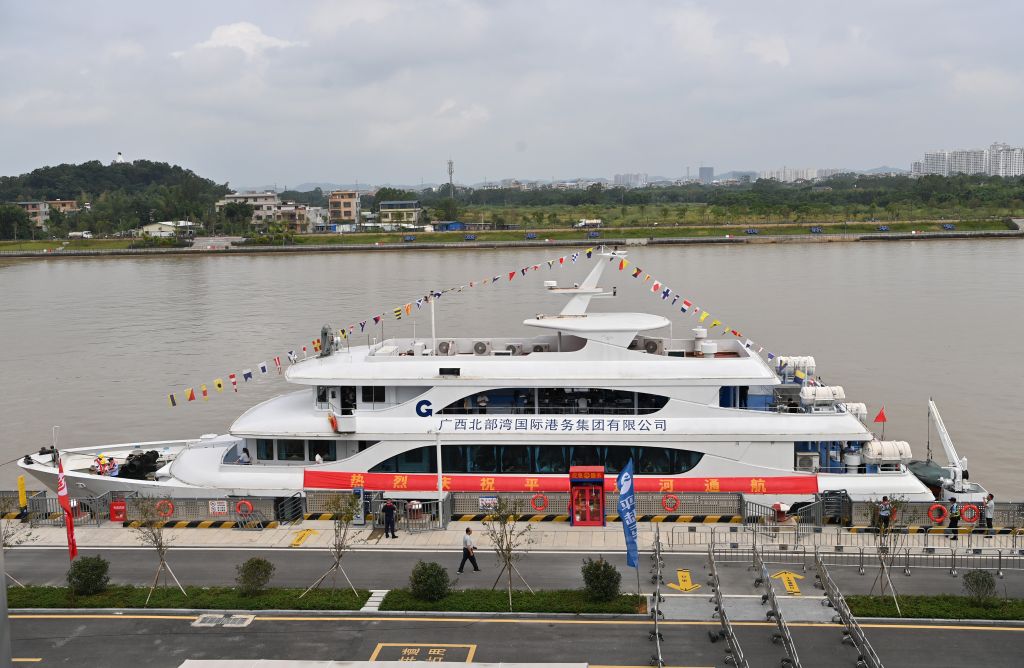
HONG KONG, Sept. 20 (Xinhua) -- The Pinglu Canal, China's first national-level river-sea navigation waterway built since 1949, officially opened to traffic Wednesday, marking another milestone in the country's infrastructure development for opening up.
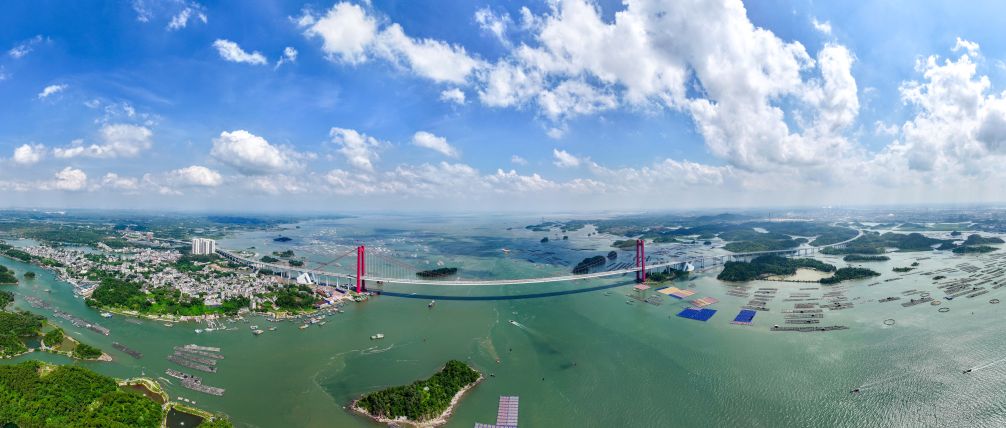
Spanning 134.2 km and designed for vessels up to 5,000 tonnes, the canal runs from Hengzhou, a county-level city in south China's Guangxi Zhuang Autonomous Region, to the Beibu Gulf, the closest maritime outlet for much of southwest China.
The canal stretches along the New International Land-Sea Trade Corridor, a strategic trade route connecting China's inland regions with ASEAN and other global markets.
Functioning as an open regional public good rooted in development-oriented cooperation, the canal underpins the physical conditions for the upgraded China-ASEAN Free Trade Area 3.0 and is expected to reinforce broader regional economic integration in various ways.
EASIER MARKET ACCESS TO CHINA
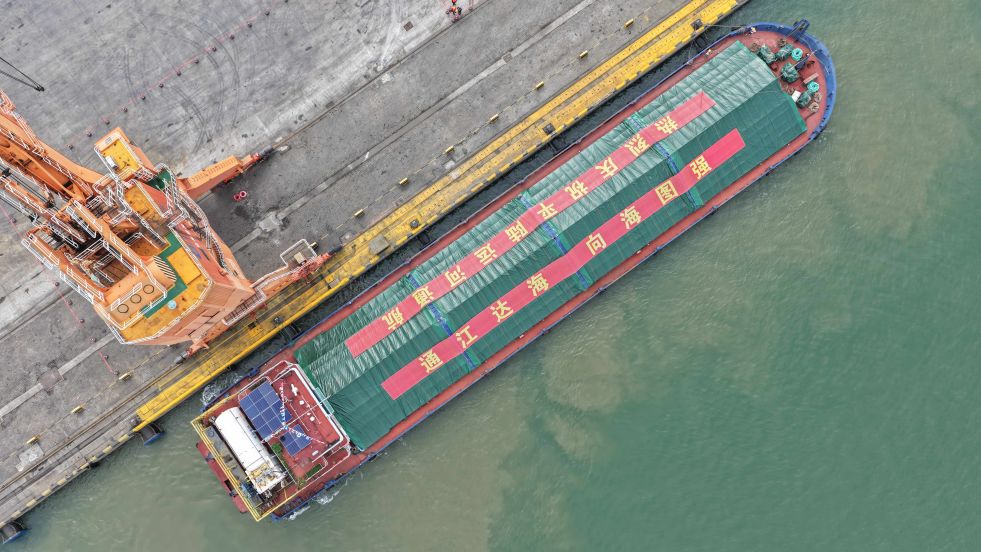
The Pinglu Canal cuts the inland shipping distance for southwest-China-bound cargo to the sea by more than 560 km and reduces comprehensive logistics costs by 18-30 percent.
The canal delivers a cost-competitive river-sea intermodal shortcut connecting ASEAN producers with the vast consumer market in southwest China. Tropical fruits, aquatic products, grain, rubber, minerals and other bulk commodities from ASEAN can reach Guangxi and China's inland southwest via Beibu Gulf ports and the canal network at lower freight costs and with greater delivery reliability.
"The canal becomes the region's shortest and most economical sea-access corridor," Vietnam's Danang News observed in its online report, adding that it will create new impetus for freight transport and trade with ASEAN.
For maritime-reliant economies including Singapore, Thailand, Malaysia and Indonesia, the waterway offers an additional viable logistics option for their export-oriented goods, according to Zhang Hongshi, president of the Guangxi Academy of Social Sciences, who added that for land-locked ASEAN member Laos, the canal complements the China-Laos Railway and New International Land-Sea Trade Corridor block trains to expand its connectivity to regional and global markets.
Liu Yingkui, researcher at the Academy of China Council for the Promotion of International Trade, noted that ASEAN small-and medium-sized trading enterprises also stand to benefit from new avenues to tap China's inland consumption base.
DEEPER CROSS-BORDER INDUSTRIAL COOPERATION
Beyond facilitating commodity trade, reduced logistics costs drive shifts in bilateral trade patterns and foster more integrated regional supply chains.
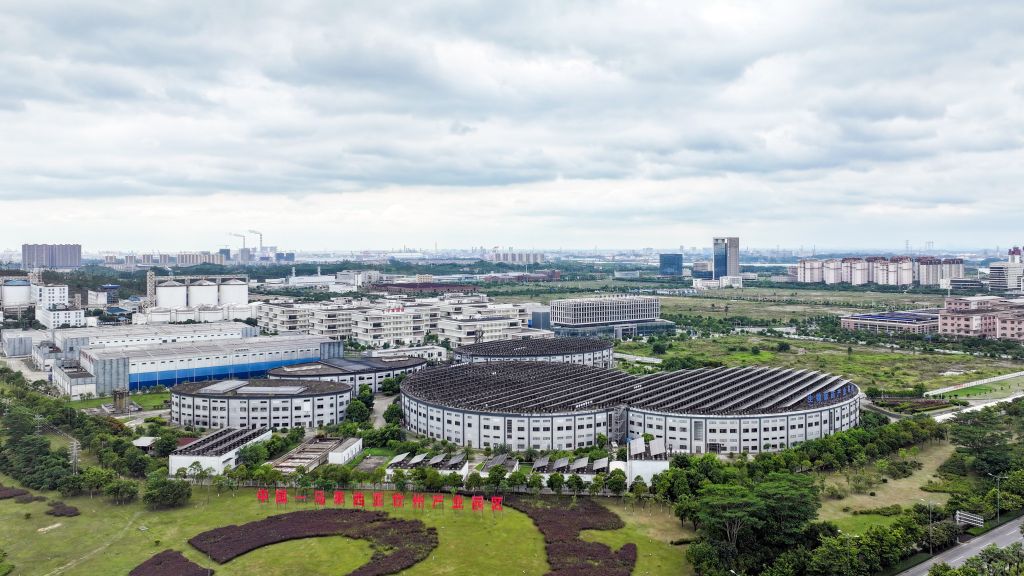
ASEAN mineral resources, agricultural produce and seafood can be transported efficiently to southwest China for deep-processing. In return, Chinese manufactured products such as new-energy vehicles, power batteries, photovoltaic equipment and engineering machinery flow to Southeast Asia along the same route, noted Yu Hong, senior research fellow at the East Asian Institute, National University of Singapore.
This will boost growth in intermediate-goods trade and closer upstream-downstream industrial collaboration, Yu said.
"Large-scale circulation of capital, technology, talent and labor will spur new cross-border investment and industrial-cooperation projects and enable more efficient integration of regional industrial and supply chains," said Lu Xinning, vice chairperson of the regional government of Guangxi.
Meanwhile, enhanced connectivity is expected to support the expansion of port-side processing and cross-border logistics services across ASEAN, generating local jobs and enabling fuller participation in RCEP-led labor division, Liu added.
CATALYZING INSTITUTIONAL UPGRADES, BROADER OPENING-UP
Infrastructure alone cannot automatically deliver full economic dividends, as realising the canal's potential hinges on effective "soft connectivity," Yu said, citing the importance of alignment on customs clearance procedures, mutual recognition of inspection and quarantine results, seamless river-sea intermodal transfer and digital logistics platforms.
Yu pointed out that the Pinglu Canal's operational experience in multi-modal transport coordination, standardized vessel specifications and smart customs clearance offers referable practices for ASEAN countries building their own inland-coastal transport systems.
Wilson Lee Flores, a columnist for The Philippine Star, believed the canal's significance goes beyond cargo. "Ultimately, infrastructure such as the Pinglu Canal can turn geographic proximity into practical economic opportunity."
"If efficiently operated and complemented by good trade policies and sustainable development, it can become an important new link in the ASEAN-China economic relationship, a potential win-win corridor for entrepreneurs, traders, investors, workers, students, farmers, scientists, artists and consumers on both sides," said Flores.
Lu said the canal will help build a global hub for opening up.
"It will not only greatly elevate China-ASEAN regional cooperation, but also connect China-ASEAN ties with the Belt and Road Initiative by reaching north toward Eurasia, expanding regional opening-up and bringing benefits to ports and transport corridors along its route," Lu said.■