* The skills that carried African competitors to skills competitions like the World Vocational College Skills Competition are among the everyday subjects in classrooms that China and Africa run together. For some, success in competition has opened the door to employment.
* Young Africans across the continent are gaining practical skills as China-Africa cooperation in vocational education continues to grow. For many, mastering a skill is ultimately about finding a job, or even starting a business. The longer game is not training one class of students, but enabling African schools to train their own.
by Liu Jie and Lin Jing
WINDHOEK, Sept. 20 (Xinhua) -- In a workshop in Ongwediva, northern Namibia, fabric rustles as Wilhemina Amadhila measures, cuts and stitches.
"Each stitch comes together to form a stunning outfit," said the 22-year-old woman who will take the craft to the 48th WorldSkills Competition to be held on Sept. 22-27 in Shanghai, China.
Amadhila and 16 other young Namibians will compete in different categories of the competition. Besides Namibia, other African countries such as Kenya, Egypt, South Africa and Morocco are also taking part in the contest to showcase their technical and vocational skills.
This is not the first time African competitors have taken part in skills competitions in China. Their active participation offers a glimpse of growing China-Africa cooperation in vocational education, which has helped endow many Africans with practical skills and opportunities.
LEARNING THROUGH PRACTICE
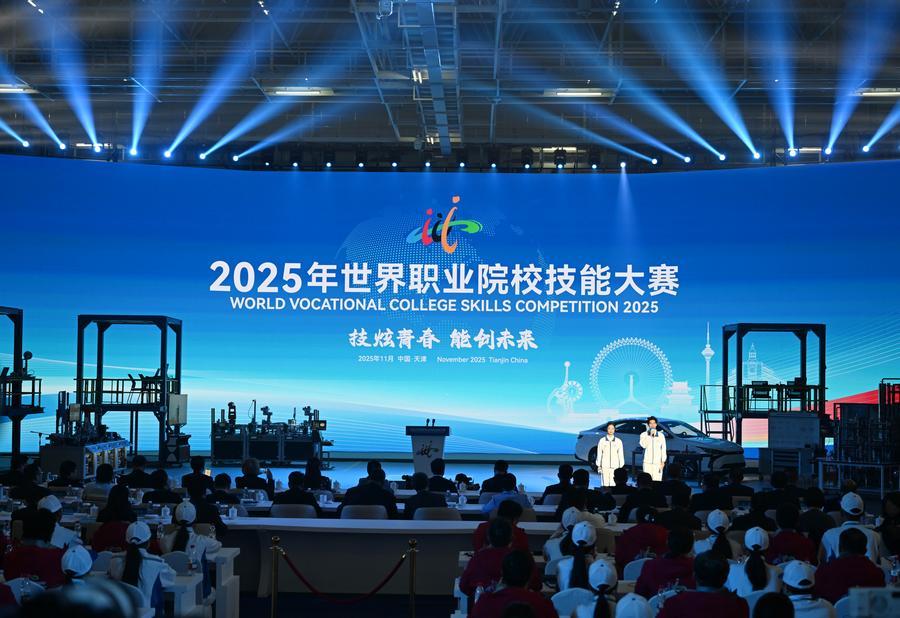
At the 2025 World Vocational College Skills Competition held in north China's Tianjin, Angolan student Massak Ventura Noquena Eduardo took silver on the strength of industrial robotics and automated production-line skills learned from Chinese teachers. "I hope to apply what I have learned to Angola's industrialization," he said.
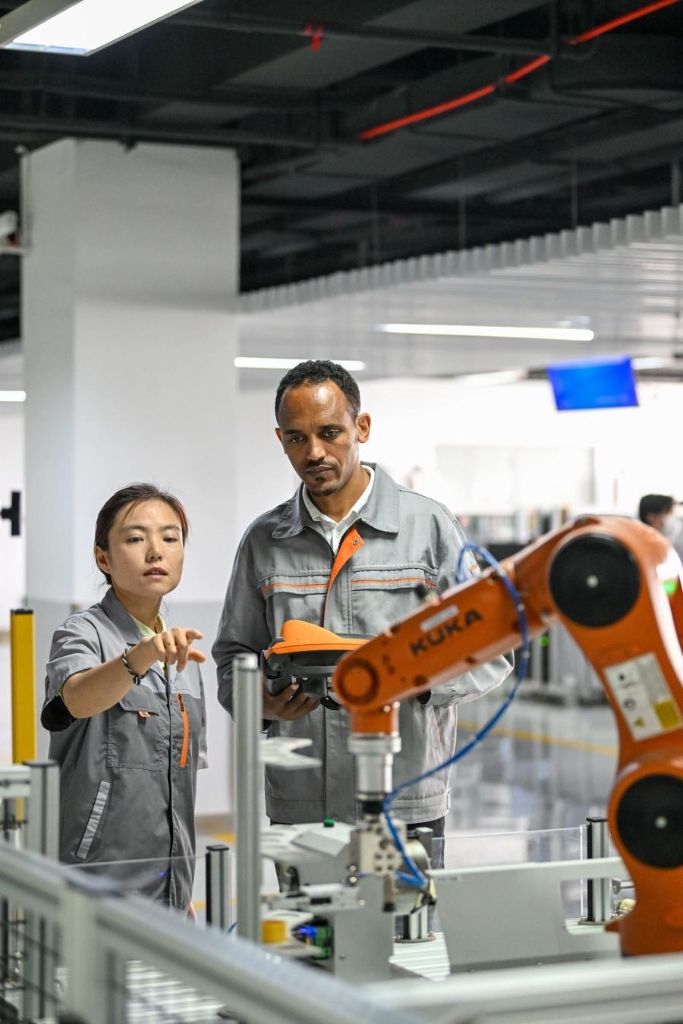
The skills that carried him to the podium are among the everyday subjects in classrooms that China and Africa run together. At the Angola-China Institute of Technology, students study mechatronics, industrial robotics and automation.
Guo Xiaoyu, a teacher from Baotou Vocational and Technical College in north China's Inner Mongolia Autonomous Region, remembers students who were at first hesitant to even use a multimeter or an oscilloscope.
"Vocational education cannot be based on theory alone. Students have to do things with their own hands," Guo said. After a semester of practice in circuit assembly and fault diagnosis, more than 90 percent of them met the required standard.
At Ethiopia's Holeta Polytechnic College, Chinese instructor Ma Yujie demonstrated surgical suturing as animal science students gathered around the table, taking turns practicing on training pads.
"We are now participating in practical demonstrations," Lemi Abera, 22, said. "With our Chinese instructors linking classroom concepts to practical animal health practices."
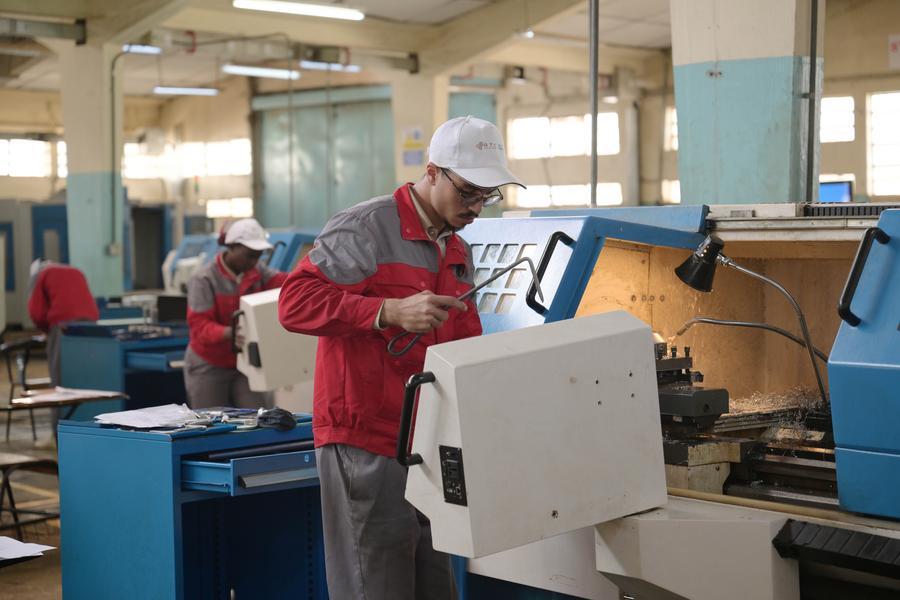
Ma is one of 20 Chinese teachers working at six vocational colleges across Ethiopia. "The students really cherish the opportunities to practice on training models, to the extent that some are willing to spend extra time in the laboratory after class," she said.
In Cameroon, the classroom has moved onto the construction site.
In early August, China First Highway Engineering Co., Ltd. teamed up with Cameroon's Ministry of Higher Education and the National Advanced School of Public Works to run the country's first certification course for surveyors.
Cameroon's Minister of Higher Education Jacques Fame Ndongo said the program turns construction sites into "open-air classrooms" and builds a direct bridge between universities and major projects.
This cooperation is not just about building roads; it is about training people, and about the future of Cameroon's workforce, the minister added.
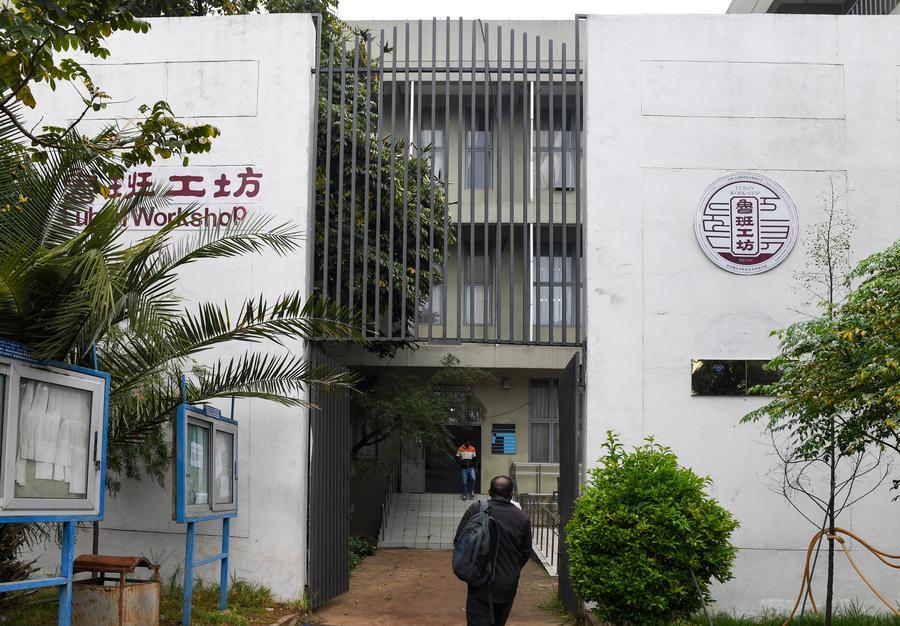
According to an action plan released at the 2024 Beijing Summit of the Forum on China-Africa Cooperation, China will continue vocational education with Africa, build with African countries schools of engineering technology, set up or upgrade 10 Luban Workshops, and offer 60,000 training opportunities aimed chiefly at African women and youth.
China has established 17 Luban Workshops in 15 African countries and trained tens of thousands of professionals.
FROM SKILLS TO LIVELIHOODS
For many young Africans, mastering a skill is ultimately about finding a job, or even starting a business.
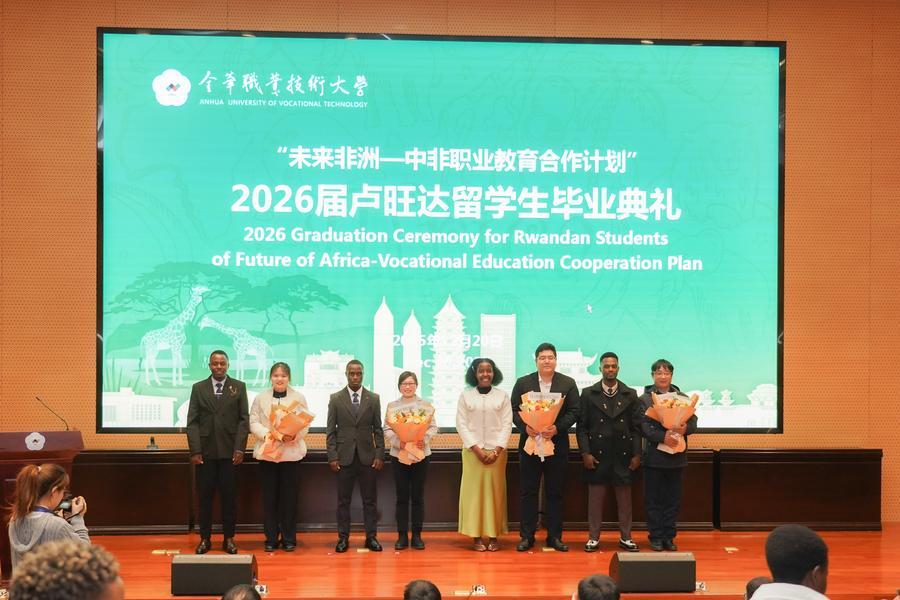
At the end of 2025, 30 Rwandan students came home from a year of advanced training at Jinhua University of Vocational Technology in east China's Zhejiang Province.
Aimable Tuyishime, a 23-year-old e-commerce graduate who studied logistics, warehouse management and data analysis there, is now building an online shopping platform for Rwandan consumers.
"This is the right time to put all the skills and experience I gained into practice," he said.
In Tanzania, the Kilimanjaro Institute of Technology and Management launched a Chinese culinary program early this year, combining video lessons from chefs in China with practice in local kitchens.
"These are skills that make you different, and I can even start my own restaurant one day," said hospitality student Ruth Washima Seni.
For some, success in competition has opened the door to employment. At last year's Namibian national skills contest, the gold medalists in cooking and restaurant service also won three-month apprenticeships with a local hospitality group.
SEEDS THAT STAY
The longer game is not training one class of students, but enabling African schools to train their own.
In Cote d'Ivoire, seven modern vocational schools built by Chinese contractors opened last September. Spanning some 83,000 square meters, they can take about 5,600 students in 15 trades, from machining to auto repair and agro-processing.
Moreover, 184 Ivorian teachers and administrators from the schools spent four months in China learning to use and maintain equipment, while 15 school managers studied school management there. Two Chinese vocational institutions now help operate five of the schools.
In Kenya, China-supported vocational education cooperation is entering a new phase: 69 institutions will receive equipment for 70 training workshops, and 1,190 instructors and technicians will be trained in both countries.
"A trained instructor can train many generations of trainees; (and) a modern workshop can continuously produce skilled workers," said Esther Thaara Muoria, principal secretary of the State Department for Technical and Vocational Education and Training in Kenya's Ministry of Education.
Wu Jiashun, who heads the central Africa regional center of China First Highway Engineering, put it more plainly: a young person trained today will work for 30 years, and will bring up more young people along the way. "That is how a country learns to build its own roads."
For Amadhila and her teammates, Shanghai will be more than a place to compete. It will serve as a global classroom where they can test their skills, learn from their peers and bring new ideas home.
Behind these young Africans are more classrooms like these, where young people across the continent are gaining practical skills as China-Africa cooperation in vocational education continues to grow.■